

Panorama Medical Imaging Files IPO Prospectus to Build a Nationwide Diagnostic Imaging Network
Universal Medical
Healthcare Service Provider
Since 2013, the Chinese government has introduced a series of preferential policies to encourage private capital investment in healthcare. These measures include supporting third-party institutions in building medical information-sharing platforms for medical imaging, health records, laboratory test reports, and electronic medical records; encouraging collaboration between public and private medical institutions to promote mutual recognition of examination and test results; and advancing the development of tiered diagnosis and treatment, medical consortia, and telemedicine. This favorable policy environment has spurred the rapid emergence and systematic development of numerous third-party independent medical imaging centers across China.
To date, “third-party independent medical imaging centers” have proliferated across China, attracting not only capital investment but also the participation of major medical imaging equipment manufacturers.
As a renowned enterprise representing third-party independent medical imaging centers, Universal Medical has established nine medical imaging centers (operational and under construction) across China since its inception in 2011, emerging as the “leader” in the field of third-party independent medical imaging centers.
“The core value of Universal Medical is to provide high-quality medical diagnostics for clinical practice,” said Peiming Ju, Co-Founder of Universal Medical.
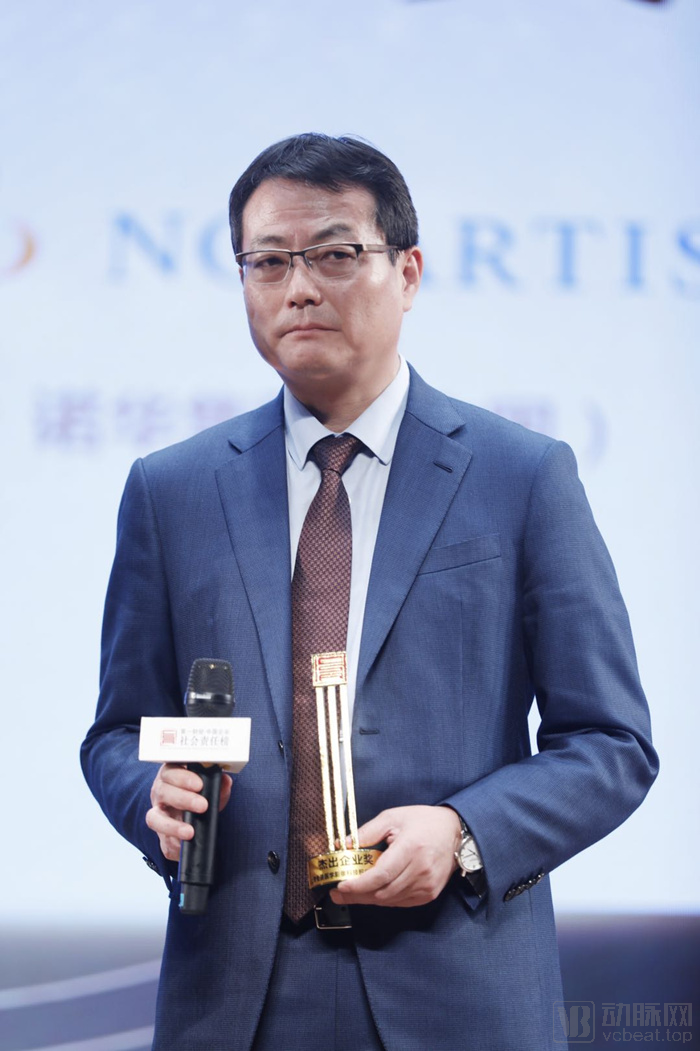
Mr. Ju Peiming, Co-Founder and Executive Director of Universal Medical Imaging Diagnostic
How Did Universal Medical Break Through in the Increasingly Competitive Field of Third-Party Independent Medical Imaging Centers? What Advantages Propelled It to the Forefront of the Industry? Recently, VCBeat conducted an exclusive interview with Ju Peiming, Co-Founder and Executive Director of Universal Medical, who provided insights into these questions.
Independent Medical Imaging Diagnostic Center/Medical Imaging Center refers to a medical institution that is independently established and utilizes modern imaging technologies such as X-ray, CT, MRI, and ultrasound to examine the human body. It combines patient history, clinical symptoms, physical signs, and other auxiliary examinations for comprehensive analysis and issues imaging diagnostic opinions. This definition excludes medical imaging diagnostic departments embedded within other medical institutions.
Although independent medical imaging centers appear to be a blue ocean market full of opportunities in China, their development actually lags behind that of the United States by a full 30 years. Independent medical imaging centers in the U.S. started earlier and have developed into a highly mature industry.
Data released by the consulting firm Frost & Sullivan shows that the U.S. medical imaging diagnostics market grew from $4.66 billion in 2009 to $8.71 billion in 2015, with 40% of the market contribution coming from third-party independent imaging centers. There are more than 6,800 independent imaging centers in the United States.
According to a report by Guojin Securities, the scale of China's medical imaging market is approximately RMB 200 billion. The market size for medical imaging centers in provincial capital cities is estimated at RMB 25–30 billion, while that in county-level cities amounts to approximately RMB 30 billion.
“In fact, China is still in a relatively nascent stage,” commented Ju Peiming. Nevertheless, the U.S. development model reflects the enormous potential of China’s independent medical imaging market.
Universal Medical was first registered in September 2011. “Our decision to enter the medical imaging sector was driven both by national policy incentives and by the market opportunities we identified after participating in investments in imaging equipment at public hospitals in 2005,” introduced Ju Peiming.
After four years of preparation, the first third-party imaging diagnostic center in Shanghai’s Xuhui District—and the first such facility in China approved by the National Health and Family Planning Commission—officially commenced operations in 2015. In the following years, Universal Medical Imaging Diagnostic Centers in Hangzhou, Guangzhou, Chongqing, and Tianjin were successively opened.
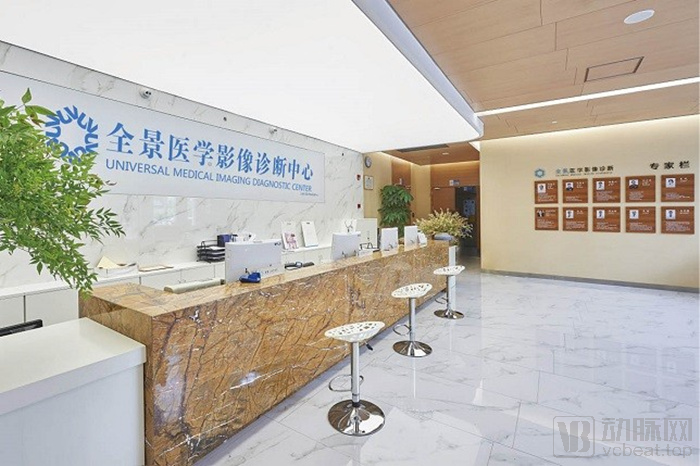
Universal Medical Imaging Diagnostic Center - Xuhui Branch
The rapid expansion also underscores the strength and advantages of Universal Medical. According to Ju Peiming, the core strengths of Universal Medical lie in its professional capabilities and technological advantages.
Professional competence is primarily reflected in talent reserves. Radiologists have long been in short supply, and from its inception, Universal Medical has prioritized talent acquisition as a critical component. According to Ju Peiming, Universal Medical boasts a medical team comprising leading figures in radiology such as Zhou Kangrong, along with renowned experts including Yang Chunshan, Zhou Zhiyang, Chen Ping, and He Zhiyan. In terms of internal talent development, Universal Medical implements a discipline leader program to establish a well-structured, tiered talent pipeline. This approach leverages the mentorship role of expert-level professors to enhance the overall professional proficiency of its physician teams. Furthermore, it enables the rapid replication of each center’s specialty strengths across all Universal Medical centers, thereby consolidating the company’s collective competitive advantage.
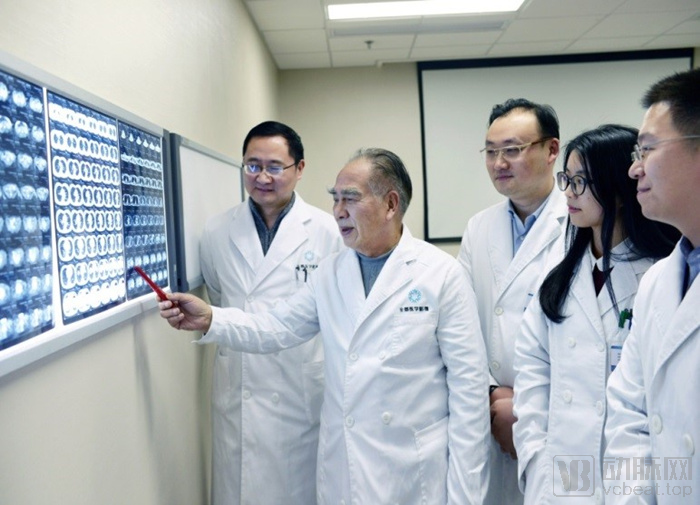
The Universal Medical Imaging Expert Team Led by Professor Zhou Kangrong
Furthermore, in terms of external talent development and exchange, we have promoted the integration and communication between radiology and clinical practice by “seeking guidance from clinical departments.” This approach enables us to truly understand clinical needs, collaborate on research projects, and enhance the scientific research and innovation capabilities of our personnel. Meanwhile, leveraging Universal Medical’s national medical imaging diagnostic network platform, we have developed new business models centered around the strengths of medical imaging, such as multidisciplinary consultations (MDTs). Led by imaging specialists, we integrate high-quality clinical resources across China to provide diagnosis and treatment plans for major diseases—including cancer, cardiovascular and cerebrovascular disorders, and neurological conditions—through both online and offline channels.
“We place great emphasis on providing physicians with a favorable environment. Here, ‘environment’ refers not only to competitive compensation and benefits but also to robust opportunities for professional growth. In recent years, Universal Medical has hosted a series of high-profile academic conferences integrating the three major disciplines of radiology, nuclear medicine, and clinical medicine,” introduced Ju Peiming.
“He shared that at the 2018 and 2019 Annual Meetings of the Society of Nuclear Medicine and Molecular Imaging (SNMMI), a total of seven abstracts from Universal Medical physicians were accepted, including five top-tier oral presentations and two poster presentations, one of which received the 2018 ERF-SNMMI Abstract of the Year Award. ‘It is fair to say that we are the only private healthcare provider delivering such presentations,’ said Ju Peiming.”
In addition to talent, technological advantages are also a key factor in the development of medical imaging. Ju Peiming introduced that Universal Medical is equipped with imaging diagnostic equipment from Siemens, GE, and Philips, including the globally advanced “multi-modal” imaging screening device PET/MR, as well as a series of high-end imaging diagnostic equipment such as PET/CT, Flash dual-source spiral CT, and 3.0T MRI, covering imaging diagnosis for all types of diseases.
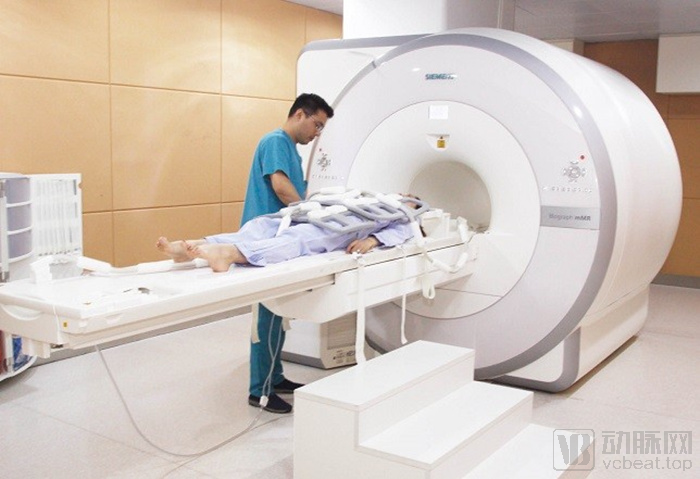
A patient is undergoing a PET/MR scan at Universal Medical.
The complexity and high entry barriers of the healthcare industry stem from the fact that, in addition to talent and equipment, medical institutions must establish robust quality control and management systems to ensure medical safety and quality.
According to Ju Peiming, Universal Medical implements a quality management system in accordance with international standards. By adopting specialized systematic grouping, joint consultations, a three-tier report review process, and a physician-led rotating on-site scanning protocol, it provides professional diagnostic evidence and precision medicine services of international quality for clinical practice.
Ju Peiming told VCBeat that, leveraging a range of service advantages, Universal Medical serves more than 300,000 diagnostic patients annually.
According to Ju Peiming, one crucial aspect of running a third-party independent medical imaging center well is the ability to provide sustained value to society.
Since the outbreak of the COVID-19 pandemic, Universal Medical has donated over RMB 2 million worth of epidemic prevention supplies to society free of charge, including masks, gloves, goggles, protective suits, isolation gowns, and disinfectants. The recipients comprised more than 100 entities, such as frontline medical institutions engaged in pandemic response, medical teams aiding Hubei Province, the Red Cross Society, over ten provincial and municipal government offices stationed in Shanghai, and neighborhood communities. This donation of supplies serves as a tribute to the heroes and represents a continuation of Universal Medical’s long-standing commitment to public welfare.
Furthermore, Universal Medical provides free remote image interpretation services nationwide, with a particular focus on epidemic-affected areas, and grants medical institutions across China free access to the Universal Cloud Platform.
“During the pandemic, we received 400 imaging scans from both individuals and medical institutions. Using our equipment, we provided them with efficient and safe medical diagnostics,” said Ju Peiming.
“We often see ourselves as a ‘complement’ to public hospitals. Third-party independent medical imaging requires not only professionalism and equipment, but also sufficient patience to refine our services, delivering truly professional healthcare that benefits society,” said Ju Peiming.
In February 2020, Universal Medical completed a Series B financing round exceeding RMB 600 million. The round was co-led by Cathay Innovation, Vertex Ventures China, and Future Industry Fund of China Everbright Securities Capital, with participation from TEDA Group, Sumec Junxin Capital, and existing shareholder Haida Venture Capital, among others. China Everbright Securities Capital served as the exclusive financial advisor for this financing round.
Ju Peiming told VCBeat that part of the funds would also be used to build a national medical imaging diagnostic network. He explained that with the development of telemedicine, remote image interpretation will become the norm and offer significant market potential. Universal Medical plans to establish 15–20 imaging centers across China to comprehensively build a national medical imaging diagnostic network.
“We hope to provide specialized services to primary healthcare institutions through telemedicine in the future, achieving full coverage of medical imaging services in central cities,” said Ju Peiming.