

Element Science Secures $145.6M Series C Funding to Advance AI-Powered Wearable Defibrillator for Sudden Cardiac Death Prevention

Element Science
Wearable Device R&D and Manufacturer
Recently,Foreign innovative medical technology company Element Science announced the completion of a $145.6 million Series C financing round, led by the prestigious Qiming Venture Partners and Deerfield Healthcare, with participation from Cormorant Asset Management and Invus Opportunities, as well as Third Rock Ventures and Google.。
As early as 2014, Element Science completed its Series A financing. At the time, Element Science was still a small startup, yet it achieved what seemed nearly impossible. According to a document filed with U.S. securities regulators, the company raised $12.5 million in the first quarter of 2014.
What Is It About Element Science That Has Attracted Numerous Companies to Participate in Its Funding Rounds, with Substantial Capital Raised?
Element Science is an innovative medical device and digital health company headquartered in San Francisco, founded in 2011,Focused on developing clinical-grade wearable devices and proposing solutions based on machine learning algorithms and life-saving therapies to prevent and treat sudden cardiac death (SCD), meeting the needs of high-risk cardiovascular patients.。
Element Science has operated in stealth mode since its inception, with scant public information available beyond its financing details disclosed on investment and funding platforms.
In fact, based on available information, the company has secured substantial venture capital funding, and its first-generation product is now in the final stages of development.
Uday Kumar, the founder of Element Science, is a cardiologist and also the founder and Chief Medical Officer of iRhythm Technologies. He has alsoHe serves as a Clinical Instructor in Cardiovascular Medicine and an Instructor in Bioengineering at Stanford University, having previously been a Biodesign Cardiovascular Innovation Fellow.

Founder&CEO Uday Kumar
Image source: Element Science official website
From 1998 to 1999, he helped found a biomedical modeling company that utilized rapid prototyping technology to create models from imaging data for use in numerous medical fields.
Of course, Uday Kumar alone is insufficient to win the confidence of numerous investors; what investors value are the team’s strength, product design, practicality, and marketability.
Element Science has an excellent team with expertise in wearable devices and machine learning algorithms, as well as extensive experience ranging from successful startups like iRhythm to top-tier medical device companies such as Abbott and Boston Scientific.
Element Science also has a scientific advisory board composed of leaders, including Dr. Robert Harrington, Chair of the Department of Medicine at Stanford University; Dr. Jeremy Ruskin, Founder and Director Emeritus of the Cardiac Arrhythmia Service at Massachusetts General Hospital; and Dr. Harlan Krumholz, Director of the Center for Outcomes Research and Evaluation at Yale-New Haven Hospital. Such a robust team serves as a significant confidence booster for numerous investors.
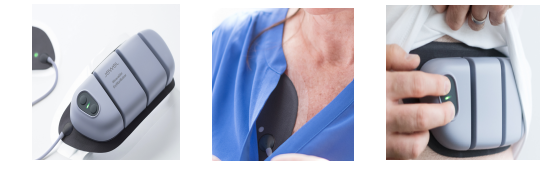
Element Science’sThe primary product is a patch-sized wearable cardioverter defibrillator (P-WCD), which mainly consists of ECG sensing patch electrodes, defibrillation electrodes, and a defibrillator main unit. The defibrillator main unit is worn at the waist and features function keys and indicator lights., which can be used without implantation surgery, offering greater convenience to patients.
This product monitors the patient’s cardiac status and provides protection via ECG-sensing patch electrodes. When the ECG-sensing patch electrodes detect that the patient’s heart rate exceeds the normal range, the P-WCD will issue a vibration alert and flash lights; if the anomaly persists, the P-WCD will automatically charge and deliver biphasic defibrillation shocks.
In terms of design, this patient-centric product is user-friendly and lightweight, providing continuous protection during daily activities such as bathing and sleeping, while enabling smart connectivity with mobile phones to facilitate interconnected care.
Sudden cardiac death is the most common and most lethal cause of death. In the United States, approximately 325,000 people die from sudden cardiac death each year; therefore, the prevention and treatment of SCD are urgently needed.
Sudden cardiac death primarily manifests as chest pain and shortness of breath caused by cardiac issues. Patients die within one hour after the acute onset. There are often no warning signs before the event, and once it occurs, the window for effective resuscitation is brief.
Currently, the most effective preventive measure for sudden cardiac death (SCD) is the implantation of an implantable cardioverter-defibrillator (ICD), with an efficacy rate as high as 99%. However, ICD implantation has certain limitations, such as high cost, the need for surgical intervention, and the risk of surgical site infection.
Moreover, some patients are at risk of sudden cardiac death (SCD) only during specific periods and are not suitable for implantable cardioverter-defibrillator (ICD) implantation; additionally, some high-risk SCD patients have contraindications to ICD implantation. Meanwhile, due to the sudden onset of sudden cardiac death, it is difficult for patients to receive professional monitoring and treatment when symptoms occur.
In this regard,Element Science’s P-WCD effectively monitors the user’s heart in real time, provides early warnings at the onset of symptoms, and delivers defibrillation therapy, ensuring maximum protection during the critical window and significantly improving the prevention and treatment rate of sudden cardiac death.。
Indications for P-WCD: high-risk patients in the early phase after acute myocardial infarction (AMI); high-risk patients with ventricular tachycardia/ventricular fibrillation after revascularization therapy; high-risk patients with non-ischemic cardiomyopathy who develop acute heart failure; patients awaiting heart transplantation or requiring ventricular assist device therapy; patients with syncope suspected to be caused by rapid arrhythmias; and patients who require protection during interruption of ICD therapy or prior to planned ICD implantation.
Given that the P-WCD is non-invasive, easy to operate, and incurs lower costs for short-term use, it is more readily accepted by patients, thereby facilitating more comprehensive diagnosis and treatment.
The product is currently in a critical phase of clinical research and has not yet been launched on the market, but this has not prevented numerous investors from placing high hopes in it.
Currently,Element Science plans to allocate the funds raised in its Series C financing round toward clinical research on its P-WCD. If progress remains on track, the product will soon complete all testing and regulatory approvals, ultimately launching into commercial operation and unlocking its true market potential.。
In addition, these funds will be used to develop a series of digital wearable devices based on the same platform. The new devices support therapeutic and diagnostic functions, with a design focus on simplicity and wearability to promote high adherence and effectiveness, thereby addressing previously unresolved issues such as SCD treatment for hospitalized patients and diagnosis of cardiac deterioration in discharged patients.
Neil Exter, a board member and initial investor at Element Science and Third Rock Ventures, stated: “Given Dr. Uday Kumar’s background and the patient- and physician-centric design of P-WCD, which truly represents a significant advancement in therapeutic digital wearables, we are delighted to have these distinguished investors join us to ensure that this life-saving therapy reaches patients.”
Today, Element Science is a pioneer in next-generation digital wearables. Its exceptional team, strong investment partners, and products on the verge of completing clinical studies all demonstrate that Element Science is poised to become an industry leader and benchmark in the near future.
Currently, there is substantial market demand in China for portable and wearable cardioverter-defibrillators (WCDs). However, due to high technical barriers and the specialized nature of their application, WCDs available on the market are predominantly sourced from foreign companies.
Because WCD products have not been widely adopted in China, they are currently available only to a small number of patients at select top-tier hospitals. Given China’s large population base, once WCDs adapt to the local economic conditions and are promoted across the Chinese market, they are poised to create a massive market with hundreds of millions of potential users.
Overall, the main issues with wearable cardioverter-defibrillators in China are technological immaturity and inadequate service coverage. Furthermore, given the lengthy research and development cycle for medical devices, substantial financial support is required.
As an entrepreneur, one must consider how to identify the unique advantages of their products, promote and market them efficiently, differentiate them from competitors’ offerings, and transform these strengths into the company’s defining brand identity.