

Tech-Enabled Remote Diagnosis Empowers Grassroots Healthcare: Ping An's Precision Medical Support During the Pandemic
Zaoyang Xinglong Central Health Center is one of the 38 designated institutions with fever clinics for novel coronavirus pneumonia (NCP) in Zaoyang City, Xiangyang, Hubei Province. After NCP patients are diagnosed here, they are transferred to Zaoyang No. 1 People’s Hospital for centralized and designated treatment. During the epidemic, Xiangyang—a city in northwestern Hubei Province with a population of over 6 million—reported nearly 1,200 confirmed NCP cases, with more than 900 patients cured. Compared with some areas in the province that experienced concentrated outbreaks, the situation here was relatively better.
However, as many primary-care physicians are more accustomed to using CT imaging for the initial assessment of pulmonary inflammation in patients, the number of patients waiting for consultations has surged sharply. Several radiologists have not had any time off since before the Lunar New Year. On February 5, the National Health Commission, together with the National Administration of Traditional Chinese Medicine, issued the “Trial Version 5 of the Diagnosis and Treatment Protocol for Novel Coronavirus-Infected Pneumonia,” which for the first time included suspected cases with pneumonia-like imaging features as a diagnostic criterion for clinically diagnosed cases within Hubei Province, undoubtedly placing greater responsibility on the Department of Radiology.
Long after dinner hour, Dr. Yang from the Radiology Department of Zaoyang Xinglong Central Health Center uploaded the last challenging lung CT scan of the day to the “Ping An Hao Yingxiang” platform, awaiting an online diagnostic report from the on-duty expert. Due to a shortage of experienced medical professionals, the advancement of medical imaging diagnosis at primary care levels has been consistently slow. During the pandemic, ensuring timely isolation and treatment for suspected patients while minimizing cross-infection became a common challenge for most primary healthcare institutions like Xinglong Central Health Center. Ten minutes later, the system indicated that the remote expert had responded. The expert provided a diagnostic opinion of ordinary bacterial infection in the returned report, bringing relief to Dr. Yang and all his colleagues involved in the case.
Zaoyang Xinglong Central Health Center is a partner institution of Ping An Health (Testing) Center, under Ping An Medical Technology, for outsourced image interpretation services. To alleviate the strain on radiology departments and radiologists in hospitals in some epidemic-affected areas, as well as to reduce long patient wait times, Ping An Health (Testing) Center established a volunteer physician team starting January 28. Led by its internally appointed Chief Medical Officer, Professor Gong Honghan, along with Professors Zheng Suisheng, Ding Shiyi, and Li Guang, more than 70 imaging specialists provide rapid remote secondary diagnostic image interpretation services 24/7, offering distant support to frontline epidemic control efforts.
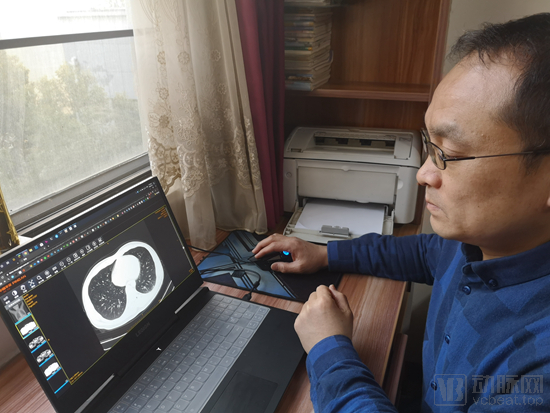
As required, at least two radiologists are online simultaneously during the same time slot, implementing a “one writer, one reviewer” model. AI-assisted image interpretation provides a “double safeguard,” ensuring precision and timeliness while playing a significant role in assessing disease progression and treatment efficacy. By mid-March, “Ping An Good Imaging” had completed more than 5,000 online image interpretations, identified over 300 suspected cases of novel coronavirus pneumonia, with volunteer imaging experts completing nearly 100 case reviews per day.
The “Ping An Hao Yingxiang” platform used by Dr. Yang to upload patient imaging data is a remote imaging medical platform independently developed by Ping An Health (Testing) Center, which was officially launched in November 2017. Centered on expert physician resources, “Ping An Hao Yingxiang” provides mobile imaging medical services through local and cloud-based PACS systems. Its functional modules include remote image interpretation, imaging data hosting, remote consultation, cloud PACS, physician platforms, and imaging AI. The platform is characterized by flexibility and convenience, standardization and efficiency, as well as high quality with low burden.
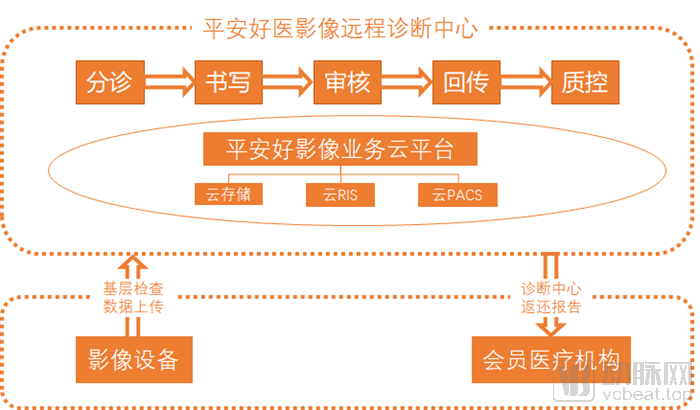
In support of the fight against the epidemic, doctors need only log in to the "Ping An Good Imaging" platform, request a diagnosis, and upload imaging data—including patients' electronic medical records and digital DR or CT images obtained from hospital examinations—after filling in the consultation information. They can then await the imaging diagnostic report returned by remote experts in the shortest possible time and access patient imaging data anytime, anywhere.
It is reported that, except for a very small number of patients with ordinary-type COVID-19 who show no abnormal findings on CT scans in the early stage of onset, significant radiological lesions will appear in the lungs as the disease progresses. On CT images, COVID-19 patients commonly present with multiple patchy ground-glass opacities and consolidations in both lungs, predominantly distributed along the bronchovascular bundles and subpleural regions. Thickened vascular markings are visible within these areas, manifesting as fine reticular patterns known as the "crazy-paving sign," or as extremely faint ground-glass opacities with localized ground-glass shadows surrounding small blood vessels.
Since February, an increasing number of frontline healthcare workers have called for using CT imaging as the primary basis for screening patients with novel coronavirus pneumonia (COVID-19), and for implementing isolation and treatment for patients who are asymptomatic or test negative for nucleic acid but show corresponding pneumonia manifestations on CT scans. However, some clinical experts argue that if nucleic acid tests are negative, centralizing hospitalization based solely on CT findings may instead increase the risk of infection during their hospital stay.
Due to the inherent characteristics of imaging diagnosis, the phenomenon of “different diseases presenting with similar imaging findings” results in low specificity, inevitably leading to overdiagnosis. If patients classified as “clinically diagnosed cases” are centrally isolated, those who are false positives face the risk of true infection; if they are isolated individually, the costs are prohibitively high, potentially exceeding the capacity of existing medical resources. Extensive experience in image interpretation is crucial for improving the accuracy of early diagnosis of COVID-19, which is a key reason why Ping An Health (Testing) Center promptly opened its remote diagnosis center free of charge to grassroots medical institutions.
On February 19, the CT Remote Diagnosis System of Ping An Health (Testing) Center integrated the “Intelligent Image Reading for COVID-19” system from Ping An Smart City’s Smart Healthcare division (hereinafter referred to as “Ping An Smart Healthcare”).
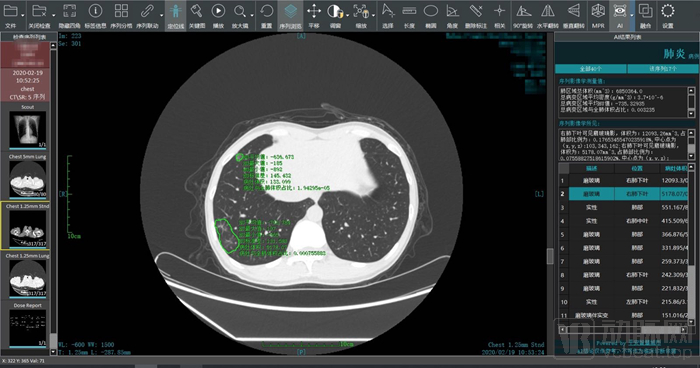
According to the introduction, the intelligent AI-based imaging system for COVID-19 supports remote AI interpretation and electronic film image sharing. It can generate intelligent analysis results in approximately 15 seconds with an accuracy rate of up to 97%, assisting radiologists in accurately identifying lesions and issuing reports more efficiently. Meanwhile, the sharing of electronic film images helps reduce redundant scans, enabling earlier detection, faster reporting, and improved patient prognosis.
Furthermore, the “Intelligent Image Reading System for COVID-19” leverages an artificial intelligence analysis engine to perform intelligent analysis and quantitative assessment of CT images of COVID-19. It conducts comparative analyses of serial scans from the same patient, quantitatively measuring changes in lesions, thereby assisting physicians in intelligently evaluating disease progression, treatment efficacy, and clinical outcomes, and contributing to the success of epidemic prevention and control efforts.
According to Xing Liping, CEO of Ping An Haoyi Investment Management Co., Ltd., during the pandemic, Ping An Health (Testing) Center implemented a “4+1” anti-epidemic initiative, which included four key measures: collaborating with its Japanese joint-venture partner to launch overseas fundraising campaigns; serving as a designated institution for COVID-19 nucleic acid testing; dispatching 64-slice mobile CT vehicles for on-site support; and providing remote online image interpretation to assist in diagnosis. Meanwhile, the company fully leveraged its professional expertise to continuously release a series of science-based health education materials.
During the pandemic response, Ping An Health (Testing) Center actively leveraged its capabilities to support the diagnosis and rapid admission of COVID-19 patients in Hubei Province, particularly in Wuhan, the hardest-hit area.
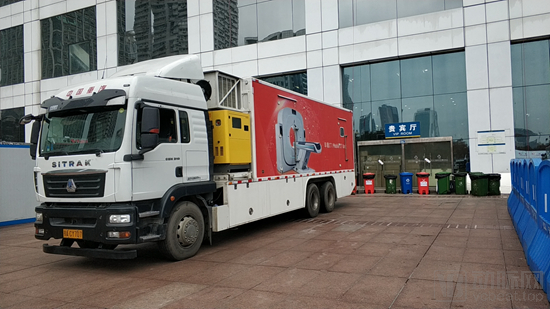
Ping An’s Mobile CT Imaging Vehicles Provide Frontline Support, Remote Systems Connect Experts, and AI Offers Intelligent Assistance, Creating an Efficient Screening-to-Diagnosis Closed Loop in CT Diagnostics. It is reported that Ping An Health (Testing) Center has fully leveraged the advantages of technological innovation to empower healthcare by developing 64-slice mobile CT imaging vehicles. In addition to meeting the testing needs for major epidemic diseases, their portability and mobility enable deployment to communities, sub-districts, and various emergency rescue sites. Through coordination with multiple parties, mobile CT imaging vehicles were urgently dispatched to support Hubei Provincial People’s Hospital and Wuhan Fangcang Shelter Hospitals. The daily average number of lung screenings reached up to 220 cases, exceeding the daily average of 100 cases at Grade IIIA hospitals. This significantly improved bed turnover rates in Fangcang hospitals and helped prevent cross-infection.
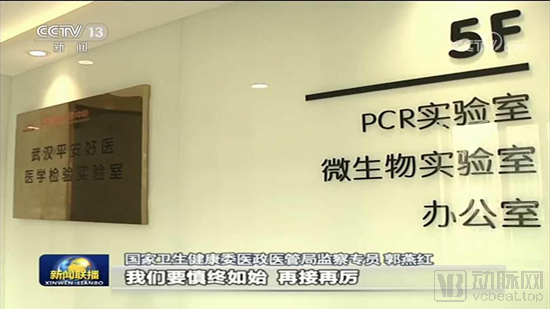
On the other side of Wuhan, the Wuhan Ping An Haoyi Medical Laboratory, a subsidiary of Ping An Health (Testing) Center, holds qualifications including accreditation as a clinical gene amplification testing laboratory and Biosafety Level 2 (BSL-2) certification. It was designated as one of the first batch of 13 third-party institutions for novel coronavirus nucleic acid testing by the Novel Coronavirus Pneumonia Epidemic Prevention and Control Command. Since February 2, the laboratory has begun accepting samples, successively receiving test specimens from the Centers for Disease Control and Prevention in Wuhan’s Jiang’an, Qiaokou, and Huangpi districts. Logistics personnel collect samples during the day, while laboratory technicians complete PCR reactions and process results overnight, with an average daily sample volume exceeding 1,000.
In addition, Ping An Health (Testing) Centers across various regions actively responded to the call from local Health Commissions to combat the epidemic. The Xiangyang Ping An Health (Testing) Center promptly dispatched three nurses to support frontline nursing care at the local infectious disease hospital. The nursing and customer service teams of the Chongqing Ping An Health (Testing) Center joined public epidemic prevention efforts in Yuzhong District, providing temperature monitoring and fever re-screening services for nearly 100,000 members of the mobile population.
Heroes of the Nation: Clad in white coats, they reassured the public, advanced against the tide, and fought bravely. Capable individuals on the front lines spared no effort to join forces, while citizens vied to contribute generously. The epidemic battle spanning the end of the Year of the Pig (Jihai) and the spring of the Year of the Rat (Gengzi) touched everyone. On March 16, the National Health Commission announced four newly confirmed cases in Hubei Province that day, all from Wuhan. It seemed as if this long-awaited spring was drawing near.