

Misunderstood and Overlooked: A Chronicle of Private Healthcare's Role in the Pandemic
"Benevolence is the heart of medicine."
During this outbreak, there was a group of people who, unlike the medical staff in public hospitals, were not officially considered the “regular forces” in the fight against the epidemic. Nevertheless, they flocked to the front lines to battle the virus, regardless of personal gain or direction.
According to incomplete statistics (data sourced from the National Health Commission), 593 private medical institutions across China have participated in frontline efforts against the epidemic, cumulatively treating 2,111 confirmed cases and 1,627 suspected cases, with 1,112 patients cured and discharged. A total of 259 medical teams comprising 3,984 healthcare professionals have been dispatched. Cumulative donations include 837,845 masks, 41,500 pairs of goggles, 21,131 sets of protective clothing, as well as cash and other supplies.
Public hospitals and private healthcare providers: due to the difference in their labels, the former is enveloped in the gentle affection of the media and the Chinese people, while the latter is largely obscured and even misunderstood.
In fact, whether public or private, “benevolent practitioners” deserve praise.
Since the reform and opening-up, a certain number of privately run medical institutions have emerged in China; however, due to policy restrictions, they have struggled to gain widespread traction, let alone achieve scale.
It was not until 2001, with the gradual reform of medical policies, that the government began to appropriately encourage private healthcare provision. Starting late and with a weak foundation, private healthcare lacks the state financial support and strong risk resistance enjoyed by public hospitals; it must “rely entirely on itself.” Precisely due to these inherent weaknesses, the private healthcare sector has long faced the dilemma of “a severe shortage of talent,” which is a significant factor hindering its healthy development. Currently, private medical institutions must base their operations on basic medical insurance and further leverage assistance and cooperation from public hospitals to achieve sustainable growth.
A physician once shared their experiences of transitioning from a public hospital to a private practice in an article:
“Working in a public hospital draws envious glances from others; working in a private hospital leads people to assume you couldn’t find a job elsewhere, or even that you are motivated solely by money and lack professional ideals. Therefore, those with wavering resolve should proceed with caution.”
“In public hospitals, you need not fear job loss, as you can rely on the shelter of a powerful institution; in private hospitals, however, you fear not only unemployment but also making mistakes, for when errors occur, you stand alone with no one to back you up—any support offered is tenuous at best. Proceed with caution if your stress tolerance is low.”
“In public hospitals, there are clear systems for professional title promotion, as well as structured pathways for training and academic learning. In contrast, at private hospitals, you must explore and seek out information on your own; no one will guide you along the way. Those who lack self-discipline should proceed with caution!”
Thus, the differences between public and private hospitals are evident, revealing that conditions for social capital to establish medical institutions remain inadequate in many respects.
With the onset of the COVID-19 pandemic, private healthcare providers, which must rely on “self-generated revenue” to survive, have faced even greater operational challenges. In terms of operating costs, personnel salaries and property rents remain fixed expenses; the sluggish business performance clearly cannot support these already escalating fixed costs. In previous years, the first quarter was typically slow for private healthcare institutions, with most relying on the traditional peak season in March to offset the general downturn caused by the Spring Festival holiday. However, with the pandemic still ongoing, it remains uncertain when normal operations can resume. Since most private healthcare providers do not primarily specialize in treating critical, severe, or complex diseases, they are inevitably bound to experience a prolonged period of stagnation or dismal performance.
From a specialty perspective, consumer healthcare sectors such as medical aesthetics, dentistry, and ophthalmology are bearing the brunt of the impact. Not only did their businesses suffer significant damage in the first quarter, but they are also expected to experience substantial declines throughout the first half of the year. As target customers face shrinking personal incomes amid the broader economic downturn, private medical institutions are inevitably seeing their revenues affected.
These are the short-term impacts of the epidemic on private healthcare, but in the medium to long term, private healthcare actually has great potential.
Policy-wise, the overarching direction of healthcare reform—namely, tiered diagnosis and treatment and encouraging private investment in healthcare—will remain unchanged.By the end of 2018, the number of privately run medical institutions reached 459,000, accounting for 46% of the total; the number of privately run hospitals reached 21,000, representing 63.5%. The proportions of beds, personnel, and patient visits in privately run medical institutions continued to grow steadily. On June 12, 2019, the National Health Commission, together with nine other ministries and commissions, issued the “Opinions on Promoting the Sustained, Healthy, and Standardized Development of Privately Run Medical Institutions,” proposing to strengthen government support for privately run healthcare by expanding development space and increasing land supply, among other measures.
In terms of demand, the domestic market remains vast, with the fundamental drivers of a large population base and upgrading consumption patterns unchanged. The unprecedented super-dividend this generates will continue for a considerable period ahead. Private healthcare still holds significant promise, becoming increasingly standardized and poised for greater achievements.
From a capital perspective, an increasing amount of investment has flowed into the private healthcare sector in recent years. Backed by this capital, the strategic direction for establishing medical institutions has become clear, operational models are gradually being upgraded, and the sector as a whole is showing positive momentum toward sustainable development.
Earlier this year, several private healthcare institutions announced positive news regarding their planned initial public offerings.
On February 11, China Oral Healthcare Group Co., Ltd. submitted its IPO prospectus to the Hong Kong Stock Exchange. Despite bearing a name with the “China” prefix, the company is a private dental care provider headquartered in Wenzhou, Zhejiang Province. According to 2019 revenue statistics, China Oral Healthcare Group was the largest private dental service provider in Wenzhou, holding approximately 24.1% and 11.9% market shares in the city’s private and overall dental services markets, respectively. Its revenue primarily derives from providing comprehensive dental services to individual patients, mainly covering four specialties: general dentistry, prosthodontics, implant dentistry, and orthodontics.
On February 17, Hygeia Healthcare Holdings Co., Ltd. (“Hygeia Healthcare”), a leading oncology healthcare group in China, filed for an initial public offering (IPO) on the Main Board of the Hong Kong Stock Exchange. Since its establishment in 2009, Hygeia Healthcare has operated or managed a network of ten hospitals with oncology as their core specialty, across seven cities in six provinces in China, through direct equity ownership or management rights, driven by organic growth, a series of strategic acquisitions, and collaborations with hospital partners.
After the epidemic ends, private healthcare will undoubtedly recover rapidly and return to a growth trajectory.
In the wake of the outbreak, the first private healthcare provider to come under public scrutiny was United Family Healthcare (UFH), following news of its temporary closure of fever clinics. Many questioned whether private hospitals had turned tail in the face of the pandemic, triggering a wave of criticism against the private healthcare sector. It later became clear that this was merely a misunderstanding: UFH had simply undertaken emergency renovations of its fever clinics in compliance with regulatory requirements. Subsequently, a large number of private medical institutions stepped forward to volunteer their services during the epidemic, demonstrating their resolve and sense of responsibility.
Bethune Medical Foundation, Xi’an International Medical Center Hospital, Hunan Want Want Hospital, Haier Healthcare, as well as Wuhan Asia Heart General Hospital, Wuhan Puren Hospital, and Wuhan Hanyang Hospital, which were requisitioned as designated hospitals for patient admission, along with Taikang Tongji Wuhan, Deji Hospital, United Family Healthcare, Wuhan Guangfa Cancer Hospital, and Jianxiang Hospital… private medical institutions engaged in the fight were distributed across China.
By the end of February, under the organization and mobilization of the Non-Public Medical Institutions Association, the Bethune Foundation, and other non-public medical institutions,Nearly 600 private medical institutions across China participated in the war effort or were deployed to the front lines of epidemic prevention and control.
The newly established Guiqian International General Hospital dispatched a medical team to Jianshan Hospital for the epidemic response. Led by Professor Hu Jianlin, Director of the Department of Respiratory and Critical Care Medicine at the hospital—who served as the chief leader of the Third Military Medical University’s team deployed to Xiaotangshan Hospital during the SARS outbreak 17 years ago—the team comprises 10 medical professionals from departments including Respiratory and Critical Care Medicine, Critical Care Medicine, Emergency Department, Cardiology, and Dermatology. These members possess extensive experience in the prevention, control, and treatment of respiratory infectious diseases, as well as critical care. Although they have transitioned from public hospitals to a private healthcare institution, they remain steadfast in their mission.
When the Bethune Foundation sounded the assembly call for its “Hemodialysis Medical Team,” it received over 3,000 registrations from across China within 24 hours. United by fervent dedication, hemodialysis professionals joined hands with countless other healthcare workers nationwide, charging toward the front lines at great personal risk to safeguard the health of the people.
January 24,Fosun InternationalLaunched a global medical supply allocation plan. Within 12 hours, 200,000 masks and 50,000 sets of medical-grade protective suits from overseas were secured. Global partners, the overseas business team, and the chief representative system were fully mobilized; orders continued to increase, and transportation channels back to China were being established. A few days later, the first batch of emergency medical supplies procured by Fosun’s global network traveled over 9,000 kilometers via air and truck freight, arriving in Wuhan. Fosun’s global allocation efforts brought back 1.01 million protective suits, 1.24 million masks, 75,000 pairs of goggles, and 110,000 pairs of medical gloves, totaling 2.435 million pieces of medical protective equipment, plus 240 ventilators. All these supplies were delivered directly to the frontline of the epidemic response.
February 3, Xi'an International Medical Center HospitalA team of 212 medical professionals departed to provide emergency support to Wuhan No. 8 Hospital (Zall Yangtze Emergency Hospital). On the front lines of the fight against the epidemic in Wuhan, Li Jing, a medical staff member at the hospital, celebrated her 36th birthday. She said that the best gift was the thumbs-up from patients as their conditions improved.
February 7, Taikang Tongji (Wuhan) HospitalThe First Medical Emergency Team Deploys. Taikang Tongji (Wuhan) Hospital is a large-scale, high-quality medical center built to Grade 3A standards and international first-class levels, with an investment of nearly RMB 4 billion by Taikang Insurance Group, a Fortune Global 500 company, and managed in collaboration with Wuhan Tongji Hospital. The hospital was originally scheduled to open in the first half of 2020. At that time, Hubei Province was in a critical phase of combating the novel coronavirus pneumonia epidemic. Facing significant shortages of both medical personnel and treatment beds, Taikang Insurance Group actively responded to the call from the Wuhan Novel Coronavirus Pneumonia Epidemic Prevention and Control Command. Through various channels, the group proactively offered its assistance to the Wuhan Municipal Party Committee and Municipal Government. Medical staff stationed outside the city "went against the flow" by rapidly returning to Wuhan; medical protective supplies were urgently mobilized; and infrastructure construction was accelerated. A facility with 800 beds was quickly prepared, and more than 400 medical professionals were organized to join the anti-epidemic effort. From ward renovation to admitting patients, Taikang Tongji (Wuhan) Hospital took only three days. It transformed a general hospital into a specialized infectious disease hospital within 48 hours. As the military medical team supporting Hubei stationed in, the hospital began admitting patients in batches within 72 hours, with a single-day admission peak of 383 patients.
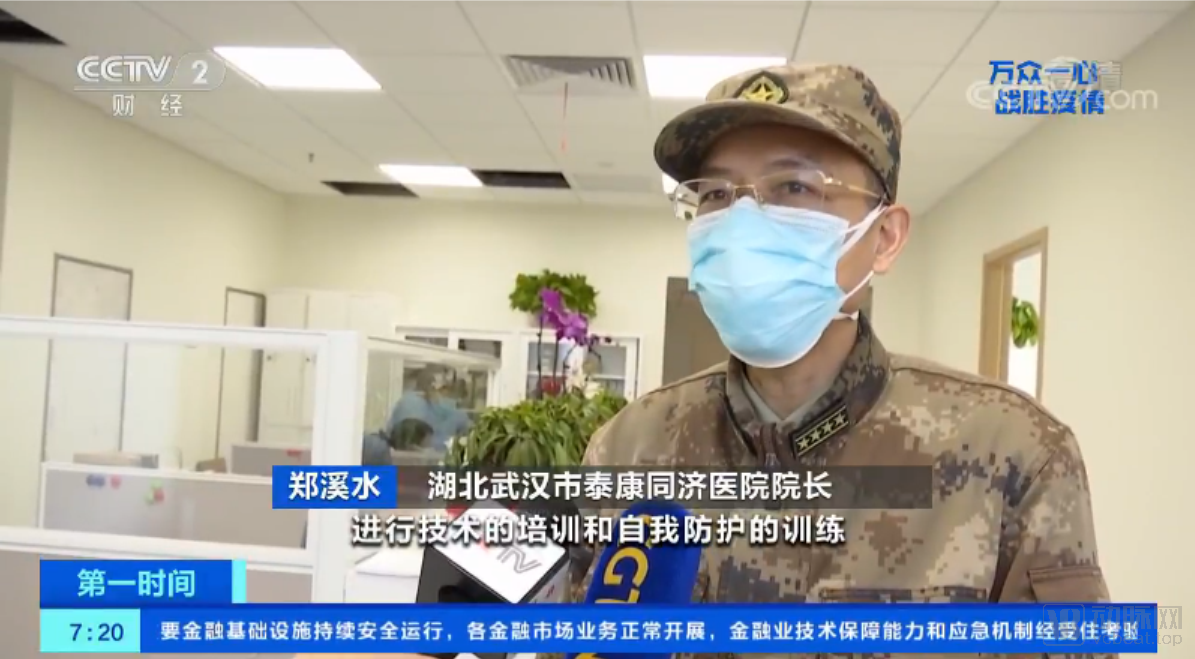
According to CCTV, on February 14, a military medical team was deployed to Wuhan Taikang Tongji Hospital, with Zheng Xishui, Director of the PLA Center for Disease Control and Prevention, serving as the hospital’s president.
February 8, a nine-member Shanghai private healthcare medical team, composed of professionals from critical care medicine and emergency intensive care, departed from Shanghai to provide aid to Wuhan. This is the first private medical rescue team dispatched by Shanghai to support Wuhan. They also carried one and a half months’ worth of medical supplies in their vehicles, valued at over RMB 4 million. This team comes fromDeji Hospital, Dean Guo Hui stated in an interview: “The state has trained us healthcare professionals. We may grumble or even vent our frustration when encountering injustices in our daily lives. However, when social disasters strike, we must shoulder the social responsibility inherent to our profession. If we do not take on this responsibility, are we to expect those without medical training to do so? That is simply impossible!”
February 9,Wuhan Asia Heart General HospitalAs one of the fourth batch of designated hospitals, it was requisitioned as a specialized facility for treating suspected and confirmed cases of novel coronavirus (2019-nCoV) pneumonia. At the outset of the epidemic response, Wuhan Asia Heart General Hospital and Wuhan Asia Heart Hospital became among the first institutions to establish fever clinics on January 9, 2020. Later, Wuhan Development Zone Dunkou Fangcang Hospital, the tenth makeshift cabin hospital in Wuhan, was jointly managed by medical teams from Wuhan Asia Heart Hospital, Wuhan Asia Heart General Hospital, and healthcare professionals from Gansu, Guangxi, Chongqing, Heilongjiang, and Inner Mongolia, totaling more than 600 medical staff. During this outbreak, Wuhan Asia Heart General Hospital also made the ultimate sacrifice: Dr. Liang Wudong, Chief Physician of the Department of Otolaryngology at Wuhan Asia Heart General Hospital, contracted the novel coronavirus and passed away on January 25.
February 9, Aier Eye HospitalTwenty nursing staff were dispatched from Wuhan to support the Fangcang Shelter Hospital at the Party School of the Hubei Provincial Committee of the Communist Party of China; it took them only six hours from receiving the notice to departure. Subsequently, Aier Eye Hospitals across various regions immediately mobilized more than 1,000 medical personnel to combat the epidemic. In addition, Aier Eye Hospital Group and its affiliated hospitals nationwide have donated a cumulative total of over RMB 25 million yuan to support epidemic prevention and control efforts. Chen Bang, Chairman of Aier Eye Hospital Group, stated in a media interview, “The nation is Aier’s strong backing. We firmly believe that no winter is insurmountable, and no epidemic is unconquerable.”
February 13,As a well-known private medical institution in the Foshan region,Guangdong Jianxiang Hospital GroupFour core medical staff members were dispatched to participate in this support mission. Long Xiangyu, Chairman of Guangdong Jianxiang Hospital Group and President of Jianxiang Hospital, stated, “After receiving the emergency mobilization order from the Health Bureau at 1:00 a.m. yesterday, we immediately organized personnel overnight to join the effort to support Wuhan, while urgently arranging the necessary accompanying supplies. We have sent four elite core professionals to provide support in Wuhan.”
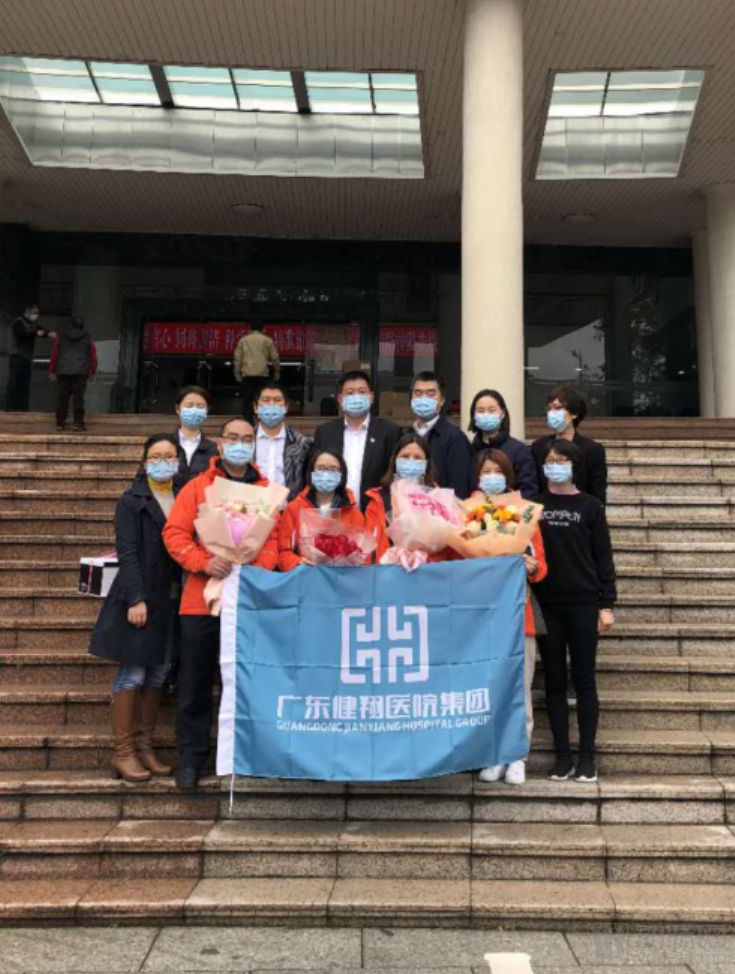
Jianxiang Hospital’s Medical Staff Deployed to the Intensive Care Unit of Wuhan No. 1 Hospital
February 21, the Hunan Provincial Health Commission decided to dispatch another medical team of 170 members to aid Hubei in combating the epidemic. That afternoon,Hunan Want Want HospitalThe hospital dispatched a 16-member medical team comprising specialists from the Department of Critical Care Medicine, the Department of Respiratory Medicine, and the Department of Infectious Diseases to rush to Hubei Province. As the first private general hospital in Hunan Province to be mobilized for epidemic control efforts, Want Want Hospital was also among the first batch of designated hospitals in Changsha for the treatment of COVID-19 patients, as announced by the Hunan Provincial Health Commission. The hospital’s fever clinic has been operating 24 hours a day without interruption since January 24, the eve of the Lunar New Year, necessitating that relevant diagnostic departments and wards maintain sufficient medical staff on-site around the clock.
For private hospitals in Wuhan, there is a document that showcases their achievements.On January 31, the Chinese Non-State Medical Institutions Association published a “Statement” on its website: In response to the severe epidemic situation, Wuhan had previously requisitioned 24 private hospitals in three batches as designated facilities for treating patients with fever. Upon receiving the requisition notices, these private hospitals prioritized national interests and actively supported the government’s decision. Facing the grim epidemic landscape, medical staff at private hospitals such as Wuhan Puren Hospital, Wuhan Hanyang Hospital, and Wuhan Asia Heart General Hospital devoted themselves to the front lines of the fight against the novel coronavirus pneumonia outbreak, setting an exemplary model worthy of emulation for private healthcare providers across China.
The above stories of private institutions fighting the epidemic are just a microcosm of the entire industry rising to the challenge and combating the outbreak.
Although private hospitals lag behind public hospitals in terms of medical resource capacity, social trust, and policy support,Since the outbreak of the epidemic, there has been no gap in their compassion and sense of responsibility.
On March 5, the National Health Commission, the Ministry of Human Resources and Social Security, and the National Administration of Traditional Chinese Medicine conferred the title of “Advanced Individual in the Prevention and Control of COVID-19 in the National Health System” upon 472 comrades, including Ding Xinmin, and posthumously awarded the same title to 34 comrades, including Xu Hui. The awardees shall enjoy the treatment accorded to recipients of provincial-ministerial level commendations and awards.Among them, 11 members of the Wuhan Non-Public Medical Association were awarded the title of “Advanced Individual in the Prevention and Control of COVID-19 in the National Health and Health System,” including Dr. Liang Wudong, Chief Physician at Wuhan Asia Heart General Hospital (deceased), and Dr. Wang Bing, Attending Physician at the Wang Bing Western Medicine Internal Medicine Clinic in Hongshan District, Wuhan.
These awards serve as an affirmation of the blood, sweat, and tears shed by professionals in the private healthcare sector during this pandemic.
The COVID-19 pandemic has demonstrated the selfless and fearless dedication of healthcare workers on the front lines, as well as the determination of the entire Chinese population to unite in combating the outbreak. However, it has also exposed weaknesses in China’s healthcare service system, including uneven distribution of medical resources, the need for further advancement of the tiered diagnosis and treatment system, and an inadequate public health emergency management framework.
To this end, in recent years, the government has adopted various measures to encourage private investment in healthcare, guide social forces to participate in the development of medical and health services, and gradually form a new pattern of multi-level and diversified medical services. New resources are increasingly being allocated to non-public medical institutions.The proportion of private hospitals among the total number of hospitals increased from 48.5% in 2014 to 63.5% in 2018 (a year-on-year increase of 3.1 percentage points). The share of hospital beds in private hospitals out of the total number of hospital beds rose from 16.84% in 2014 to 26.3% in 2018 (a year-on-year increase of 2 percentage points). The proportion of outpatient and emergency visits handled by private hospitals increased from 10.8% in 2014 to 14.8% in 2018, while the share of admissions in private hospitals also showed an upward trend, rising from 12.7% in 2014 to 18.3% in 2018.
These figures indicate that private healthcare has consistently remained on an upward growth trajectory.
Moreover, comprehensive reforms in public hospitals have been fully rolled out, with the complete elimination of drug markups, adjustments to medical service prices, and full implementation of supporting policies. Statistical results show that in 2018, the average outpatient cost per visit increased by 6.7% year-on-year at current prices, while the average inpatient cost per person rose by 4.5% compared to the previous year. The proportion of pharmaceutical costs in average outpatient expenses was 40.9% (a decrease of 1.8 percentage points from the previous year), and the proportion of pharmaceutical costs in average inpatient expenses was 28.2% (a decrease of 2.9 percentage points from the previous year).
As policies such as “tiered diagnosis and treatment,” “separation of prescribing from dispensing,” and “separation of medical services from hospital operations” are progressively implemented, private healthcare holds significant promise.
Although large hospitals possess significant advantages in brand equity and diagnostic and treatment capabilities, they also suffer from notable drawbacks, such as overcrowding and the time-consuming, labor-intensive nature of seeking care. This is particularly true during outbreaks of highly contagious diseases, when widespread fear of cross-infection leads patients to significantly weigh these pros and cons in their healthcare decisions. During such critical periods, the disadvantages of large hospitals are sharply amplified, overshadowing their advantages. From this perspective, there is an objective impetus driving the implementation and enforcement of tiered diagnosis and treatment systems.
In the aftermath of this epidemic, people’s healthcare-seeking psychology and habits are likely to shift in the short to medium term, with such changes in consumer mindset being particularly pronounced in the consumer healthcare sector.
As “large hospitals” are no longer the sole first choice for medical care, private healthcare is poised for greater market opportunities, especially in a future where the trends of physicians practicing at multiple institutions and partnering to start ventures become unstoppable.
References:
1. Lin Zhanggui, “Post-COVID-19, Private Healthcare Will Embrace Transformation Opportunities!”
2. Wang Jiexian, Xing Liyu, “Shoulder to Shoulder on the Frontline: China’s Private Hospitals Were Not Absent in the Fight Against the Epidemic”
3. Zhu Guowang, Guo Wenpei, “In the Battle Against the Epidemic, Did Private Hospitals Really Absent Themselves?”
4. Earth Knowledge Bureau, “What Did Private Hospitals Do This Time?”
5. Zhong Gai, 1978, “My Professional Reflections: From Public Hospitals to Private Hospitals”