

Junlin Healthcare New Drug Bulletin Issue 9, 2020: Highlights and Pipeline Updates
Mar 16, 2020 18:00
CST Updated
18:00

This week, there were 9 new drug data entries, including 3 for oncology, 2 for metabolic diseases, 1 for antiviral, 1 for CNS, 1 for respiratory system, and 1 for ophthalmology.
❖Boehringer Ingelheim and Eli Lilly Announce FDA Grants Fast Track Designation to Empagliflozin (Jardiance) to Reduce the Risk of Kidney Disease Progression and Cardiovascular Death in Adult Patients with Chronic Kidney DiseaseEmpagliflozin, launched in August 2014, belongs to the class of sodium-glucose cotransporter-2 (SGLT-2) inhibitors. It has been proven to block glucose reabsorption in the kidneys, excreting excess glucose from the body and thereby lowering blood glucose levels. Amidst fierce competition among oral hypoglycemic agents, empagliflozin carved out a unique path by becoming the first type 2 diabetes medication clinically demonstrated to reduce the risk of cardiovascular death. This distinction directly enabled empagliflozin to capture nearly 50% of the SGLT inhibitor market, with sales reaching approximately $2.5 billion in 2018. Now, Boehringer Ingelheim and Eli Lilly are seeking to further expand and solidify their market share by leveraging the benefits observed in patients with kidney disease.
❖BMS announced that the FDA has approved the combination of Opdivo and Yervoy for the treatment of patients with hepatocellular carcinoma (HCC) who have previously been treated with sorafenib. Opdivo plus Yervoy is the first and only dual immunotherapy approved by the FDA for this patient population. As BMS’s momentum with PD-1 monotherapy lags significantly behind Merck’s Keytruda, the company has sought to gain a competitive edge through combination therapies. The Opdivo-Yervoy regimen had previously received U.S. approval for the treatment of unresectable or metastatic melanoma; as first-line therapy for patients with intermediate- or high-risk advanced renal cell carcinoma; for the treatment of microsatellite instability-high (MSI-H) or mismatch repair-deficient (dMMR) metastatic colorectal cancer in adults and pediatric patients aged 12 years and older; and its Biologics License Application (BLA) for first-line treatment of patients with metastatic or recurrent non-small cell lung cancer (NSCLC) without EGFR or ALK mutations had also been accepted by the FDA, with approval expected within 2020.
Engage Therapeutics Announces That Its Orally Inhaled Therapy, Staccato Alprazolam, Met the Primary Endpoint in the Phase 2b StATES Clinical Trial for the Treatment of Patients with Epilepsy
Staccato Alprazolam is a compact, handheld, orally inhaled emergency treatment for seizures that combines the FDA-approved Staccato delivery technology with the marketed drug alprazolam.
The StATES trial is a randomized, double-blind, Phase 2b clinical study involving 116 patients.
The results showed that 50 out of 76 patients achieved the primary endpoint, defined as cessation of seizures within two minutes of treatment administration and no recurrence within two hours.
Boehringer Ingelheim Announces FDA Grants Fast Track Designation to Its SGLT2 Inhibitor Empagliflozin (Brand Name: Jardiance) to Reduce the Risk of Kidney Disease Progression and Cardiovascular Death in Adult Patients with Chronic Kidney Disease
By inhibitingThe transporter SGLT2 in the glomerulus; empagliflozin can reduce glucose reabsorption in the kidneys, causing it to be excreted in urine, thereby lowering bloodGlucose levels in
In the EMPA-KIDNEY trial, a total of 6,000 patients with chronic kidney disease were enrolled, regardless of whether they also had diabetes.
Previous results indicated that empagliflozin reduced the risk of onset and progression of kidney disease and cardiovascular disease by 39% in adult patients with type 2 diabetes; further results from the EMPA-KIDNEY trial are pending publication.
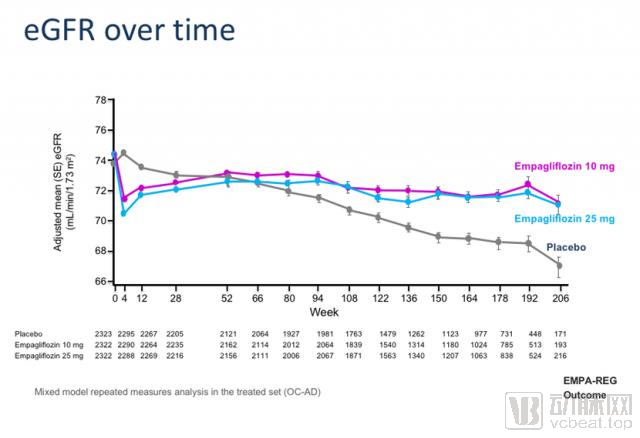
Data Source: BI
BMS Announces FDA Approval of Opdivo in Combination with Yervoy for the Treatment of HCC Patients Previously Treated with Sorafenib; Opdivo + Yervoy Is the First and Only Dual Immunotherapy Approved by the FDA for This Patient Population
Opdivo (nivolumab) and Yervoy (ipilimumab) are immune checkpoint inhibitors developed by Bristol Myers Squibb (BMS) that enhance T cell-mediated anti-tumor immune responses by inhibiting the PD-1 and CTLA-4 immune checkpoint proteins, respectively.
In the CheckMate-040 phase 1/2 clinical study, patients with hepatocellular carcinoma (HCC) who had previously received sorafenib treatment were followed up for at least 28 months.
33% (16/49; 95% CI: 20–48) of patients achieved a response; 8% (4/49) achieved a complete response (CR). The duration of response (DOR) ranged from 4.6 to 30.5+ months, with 88% lasting at least 6 months, 56% at least 12 months, and 31% at least 24 months.
Janssen Announces FDA Breakthrough Therapy Designation for Bispecific Therapy JNJ-6372 in Patients with Metastatic Non-Small Cell Lung Cancer (NSCLC) Harboring EGFR Exon 20 Insertion Mutations
JNJ-6372 is a bispecific antibody targeting EGFR and MET. It not only blocks the binding of ligands to EGFR and MET, promoting receptor degradation, but also triggers antibody-dependent cellular cytotoxicity.
In an open-label, multicenter Phase 1 clinical study, investigators will evaluate JNJ-6372 as monotherapy and in combination with lazertinib for the treatment of advanced non-small cell lung cancer (NSCLC) in adults; lazertinib is an innovative third-generation EGFR tyrosine kinase inhibitor (TKI).
Results to be disclosed later
ViiV Healthcare announced that its long-acting, innovative two-drug combination therapy for HIV met the primary endpoint in the Phase 3 ATLAS-2M clinical trial. This regimen consists of cabotegravir, developed by ViiV Healthcare, and rilpivirine, developed by Janssen.
Rilpivirine is an oral non-nucleoside reverse transcriptase inhibitor (NNRTI) already approved in the United States and the European Union, while cabotegravir is an integrase inhibitor (INI) under development.
In 1,045 patients infected with HIV-1, the antiviral activity and safety of a combination regimen consisting of long-acting cabotegravir and rilpivirine administered every 8 weeks were evaluated in comparison to administration every 4 weeks.
Trial results demonstrated that, in adults with HIV-1 infection, the dual-drug combination regimen administered every 8 weeks met the non-inferiority criterion for viral suppression compared with the every-4-week dosing regimen after 48 weeks of treatment.
(ILDs) Patients
Boehringer Ingelheim Announces U.S. FDA Approval of Ofev (nintedanib) for Patients with Chronic Progressive Fibrosing Interstitial Lung Diseases (ILDs), Marking the First FDA-Approved Therapy for Progressive Chronic Fibrosing ILDs
Ofev is a small-molecule tyrosine kinase inhibitor that simultaneously blocks three growth factor receptors, including vascular endothelial growth factor receptor, platelet-derived growth factor receptor, and fibroblast growth factor receptor, effectively inhibiting signaling pathways involved in the fibrotic process.
In the Phase III INBUILD clinical trial, investigators assessed the safety and tolerability of Ofev.
At Week 52, assessment of forced vital capacity (FVC) demonstrated that Ofev reduced the decline in lung function by 57%, thereby achieving the primary endpoint of the trial.
Kala Pharmaceuticals Announces That Eysuvis (KPI-121) Met Primary and Secondary Endpoints in the Phase 3 STRIDE 3 Clinical Trial for the Treatment of Patients with Dry Eye Disease (DED)
Eysuvis is a novel loteprednol etabonate nanoparticle formulation that leverages Kala Pharmaceuticals’ proprietary Mucus-Penetrating Particles (MPP) technology to target and enhance penetration into ocular tissues.
In the Phase 3 clinical trial, 901 patients with dry eye disease were enrolled.
Eysuvis Met Both Primary Efficacy Endpoints. After 15 Days of Treatment, Patients in the Intent-to-Treat Population and Those with Severe Ocular Discomfort Achieved Statistically Significant Improvements in Ocular Discomfort Severity (ODS).
(Cushing’s disease) patients
The U.S. FDA Announces Approval of Novartis’ Isturisa (osilodrostat) Oral Tablets for the Treatment of Adult Patients with Cushing’s Disease Who Are Unable to Undergo Pituitary Surgery or Who Have Persistent Disease Following Pituitary Surgery
Isturisa is the first FDA-approved therapy that directly addresses cortisol overproduction by blocking 11β-hydroxylase, thereby inhibiting cortisol synthesis.
In a study of 137 adult patients, the mean age was 41 years. The majority had persistent disease after pituitary surgery or were not candidates for surgery. Patients initially underwent 24 weeks of treatment, followed by an additional 8 weeks of therapy in a subset of patients.
After 24 weeks of treatment, cortisol levels decreased to within the normal range in nearly half of the patients. During the subsequent 8 weeks, 86% of patients receiving Isturisa maintenance therapy maintained cortisol levels within the normal range, compared with 30% in the placebo group.
Treatment Options for Cushing's Disease
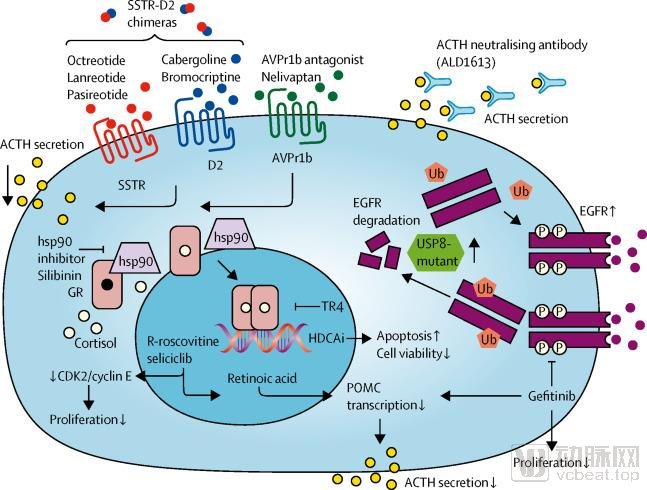
Data source: Novartis
MorphoSys Announces U.S. FDA Acceptance of BLA for Tafasitamab Combination Therapy in Patients with Relapsed/Refractory DLBCL
MorphoSys Announces U.S. FDA Acceptance of Biologics License Application (BLA) for Tafasitamab in Combination with Lenalidomide for the Treatment of Patients with Relapsed/Refractory Diffuse Large B-Cell Lymphoma (DLBCL)
Tafasitamab is a humanized monoclonal antibody targeting the CD19 antigen.
In the Phase 2 L-MIND clinical trial, 80 patients with relapsed/refractory DLBCL who were ineligible for intensive chemotherapy or stem cell transplantation received combination therapy consisting of tafasitamab and lenalidomide.
Patients receiving treatment achieved an objective response rate (ORR) of 60% and a complete response rate (CR) of 43%. At a median follow-up of 17.3 months, the median progression-free survival (PFS) was 12.1 months.
❖Kymera Therapeutics recently announced the completion of a $102 million Series C financing round to advance multiple investigational therapies into clinical development. Kymera’s proprietary Pegasus targeted protein degradation platform leverages the body’s natural protein recycling machinery to degrade disease-causing proteins. It enables a small-molecule-based approach to target proteins that are undruggable by traditional small-molecule inhibitors, with IRAK4 currently serving as its primary target.
❖Thermo Fisher Scientific Inc. (hereinafter referred to as “Thermo Fisher”) and QIAGEN jointly announced that their respective boards of directors have unanimously approved Thermo Fisher’s proposal to acquire QIAGEN for €39 per share in cash. Thermo Fisher will commence the acquisition of all outstanding ordinary shares of QIAGEN. At current exchange rates, the transaction values QIAGEN at approximately $11.5 billion.
❖According to the Hong Kong Stock Exchange’s official website, InnoCare Pharma Limited (-B) (09969.HK) has disclosed its global offering and listing documents. The company is offering 250,324,000 shares globally, with an indicative offer price ranging from HK$8.18 to HK$8.95 per share. The net proceeds are expected to be between HK$1.908 billion and HK$2.093 billion (approximately US$250 million), implying an anticipated market capitalization at issuance of HK$10.2 billion to HK$11.2 billion (approximately US$1.3 billion to US$1.43 billion).
❖Harbour BioMed Announces Completion of $75 Million Series B+ Financing Round. New investors in this round include SK Holdings (South Korea), Greater Bay Area Co-Home Development Fund, Yifeng Capital, Zheshang Venture Capital, Zhejiang University Future Venture Capital, and Jiatai New Century. Existing investors Legend Capital, Shangcheng Capital, and GIC (Government of Singapore Investment Corporation) continued their participation.