

Wuhan Medical Imaging Experts Convene in Full-Day Online Forum on Combating COVID-19
As the medical community’s understanding of viruses continues to deepen, it has been recognized that COVID-19 has a prolonged incubation period, mild early symptoms, and even asymptomatic cases, which may still be infectious. These factors pose significant challenges to epidemic prevention and control. Since individuals with mild or no symptoms often present with radiological findings, timely screening of infected populations through imaging is of great significance for epidemic prevention and control.
On February 13, Hubei Province included clinically diagnosed cases in the newly reported cases of COVID-19 for the first time, with the majority of daily new cases being clinically diagnosed. The imaging progression of the novel coronavirus has attracted widespread attention.In response to frontline demands, medical imaging diagnostic companies donated a large number of imaging devices, such as CT and DR systems, to help address equipment shortages at hospitals including Huoshenshan and Leishenshan. In addition to accelerating production, some companies immediately initiated the research and development of box-type CT scanners, remote diagnosis, and AI-assisted diagnostic technologies to support epidemic prevention and control efforts.
On January 29, Neusoft Medical donated high-end CT equipment and software valued at RMB 27 million; on February 3, Mindray successfully completed the installation of approximately 1,800 medical devices at Wuhan Huoshenshan Hospital; on February 8, Mingfeng Medical’s Ark CT arrived at Wuhan Fangcang Shelter Hospital and underwent power-on commissioning; on February 10, United Imaging Healthcare’s artificial intelligence solutions provided comprehensive support for the anti-epidemic efforts……
From the hospital perspective, designated fever clinics for novel coronavirus in cities such as Wuhan have seen a large number of suspected patients queuing for chest CT scans, posing a significant risk of cross-infection. How can physicians provide recommendations more quickly and accurately, reduce patient waiting times, and mitigate the risk of cross-infection among patients and between patients and healthcare workers? This has become an urgent challenge for hospitals. In Wuhan, at the forefront of the epidemic response, how can hospital management and medical imaging diagnosis be effectively maintained amid strained medical resources and high-load operations of the healthcare system?
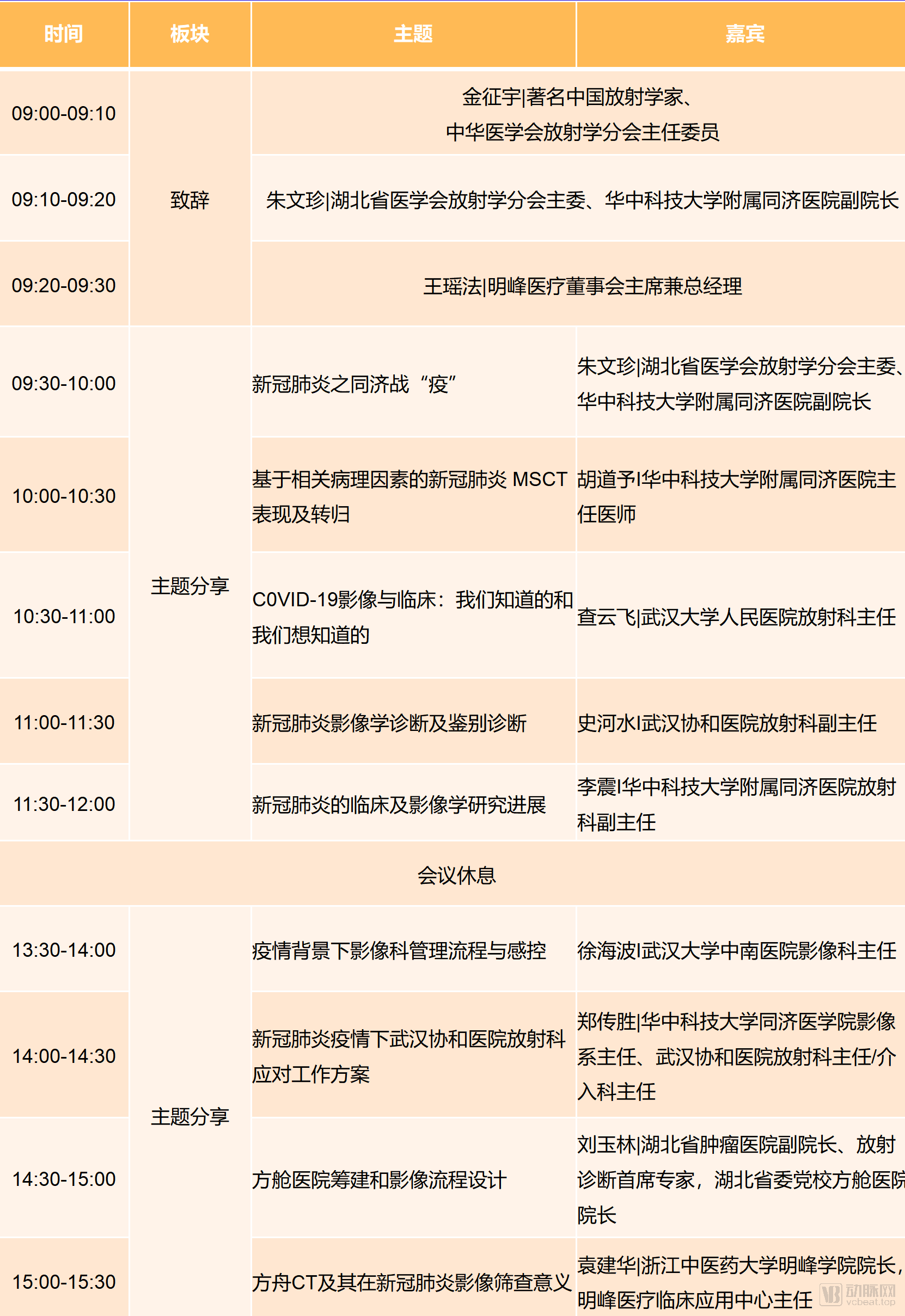
Friday, March 20, 202009:00-15:30,Hosted by the Radiology Branch of the Hubei Medical Association, co-organized by Mingfeng Medical Systems Co., Ltd., and undertaken by VCBeatMedical Imaging in the Fight Against the Epidemic: Cloud ClassroomFull-day courses are about to begin. This online cloud classroom will inviteDepartment Directors and Professors from Major Hospitals Deeply Engaged in the Fight Against the Epidemic,Medical Imaging Equipment in the Technological Battle Against the EpidemicIn-depth sharing and discussion on departmental emergency response plans, clinical CT applications, and research progress. Scan the 2D code at the end of the articleScan the code or click the link for more information,http://t.cn/AiFW8ary
Cloud Classroom Keynote Speaker

Guest Speaker on Anti-Epidemic Practice Sharing
*Listed in order of guest speakers' presentations



Friday, March 20, 202009:00-15:30, Medical Imaging “Anti-Epidemic” Cloud Classroom, classes held throughout the day. Scan the QR code or click the link to join the group for more information.http://t.cn/AiFW8ary

Scan the QR code to join the group for more information