

Karrytech Achieves 100% Annual Product Growth, Solving Integrated 'People, Finance, and Assets' Management Challenges for Healthcare Institutions
Following the 2003 SARS outbreak, China’s hospitals saw substantial development in front-end operational systems, including Hospital Information Systems (HIS), Laboratory Information Systems (LIS), Picture Archiving and Communication Systems (PACS), integration platforms, and remote consultation services. These systems played a critical role during the recent COVID-19 pandemic. However, shortages of medical supplies and chaotic allocation processes have exposed numerous information silos within hospitals’ back-end support systems, indicating significant room for improvement.
HRP system development in Chinese hospitals is still in its infancy. Many hospitals have yet to recognize the importance of HRP implementation, resulting in limited participation in hospital operational management systems. Kangbojia Information Technology (Beijing) Co., Ltd. (hereinafter referred to as “Kangbojia”) stands out as one of the pioneers in this field.
Kangbojia serves private high-end chain medical institutions both domestically and internationally, dedicated to providing comprehensive informatization solutions. Its KTHRP (Hospital Integrated Operations Management System) meets the needs of private hospitals (groups) for integrated management of “personnel, finance, and materials.” Growing at an annual rate of 100%, it now serves an increasing number of high-end medical institutions, helping them deliver high-quality medical services to patients.
How Does KTHRP Address the Pain Points of Healthcare Institutions and Empower Them? In Response to New Directions in Healthcare Informatics, What Strategies Will Kangbojia Adopt? To Explore These Questions, VCBeat Interviewed Zu Kai, Founder and CEO of Kangbojia, to Analyze the Application of KTHRP in Healthcare Institutions.
Data released in 2019 showed that private hospitals accounted for half of all medical institutions in China, yet they handled only 15% of total patient visits. This current situation is shaped by both external and internal factors. External factors include public hospitals and industry policies; however, non-public medical institutions have limited ability to influence these external elements. To achieve better development, it is essential to focus on internal improvements and seek solutions to address internal challenges.
What Are the Operational Pain Points Constraining the Development of Non-Public Healthcare? Zu Kai, CEO of Kangbojia, Provides an Analysis from Four Perspectives.
Four Major Pain Points in the Operation of Non-Public Healthcare
1. The first is “few,” meaning few patients. Compared with public hospitals, which have a history of several decades or even over a century, healthcare institutions established by social capital are still a new phenomenon. Coupled with the varying quality of participants, it will take more time and greater industry self-discipline to gradually earn broader market recognition.
2. The second characteristic is “small.” The scale of privately funded hospitals is relatively limited, with most facilities having a capacity of approximately 100–200 beds; hospitals with more than 1,000 beds are exceedingly rare. This small scale results in high fixed costs, poor marginal effects, and weak market bargaining power.
3. The third issue is “fragmentation.” Many private hospitals backed by social capital belong to the same group but are distributed across different cities. Even under the same brand, human resources, material resources, capital, and costs are managed independently at each hospital, failing to leverage the advantages of the group.
4. The fourth issue is “heterogeneity.” Information system construction within the group is highly fragmented and inconsistent. Not only do individual hospitals across different regions operate with various information silos, but the group also lacks unified data standards and a centralized data center. Consequently, data sharing and data empowerment remain elusive. Yet, these capabilities are foundational for differentiated competition between grouped healthcare entities and the public healthcare system. The gap between this ideal and current reality represents a significant pain point for socially funded medical institutions.
HRP Systems: An Effective Means to Standardize Operations within Healthcare Institutions
KTHRP is a next-generation management system solution developed by Kangbojia based on years of experience in hospital operations management. By introducing intelligent solution concepts, it supports the daily medical service and operational management of multi-campus hospitals, while acquiring comprehensive and granular management data. Leveraging big data analytics, it enhances performance and cost management capabilities.
Columbia China Healthcare Group, Jiahui Health, and Raffles Medical Group are all clients of Kangbojia’s HRP.
Among them, Columbia Healthcare Group is a typical example of Kangbojia’s many partners. This large healthcare group was jointly invested in by Columbia Hospital Corporation of America and Temasek Holdings of Singapore, with a total investment of $1 billion. Its typicality lies in its diverse and complex business formats: its affiliated institutions include general hospitals, specialty clinics, nursing homes, and investment companies. Moreover, each business segment encompasses institutions at three different stages of development—newly built, acquired, and mature.
In this context, group-level management has become a key focus and challenge in the operational development of Columbia Medical Group. Kangbojia provided Columbia Medical Group with an integrated “Group + Hospital” solution, centrally deploying the KTHRP platform—which integrates financial management, supply chain management, and human resources management—across three hospitals, multiple elderly care institutions, and clinics, all under unified group-level control.
Furthermore, Kangbojia has established an Operational Data Center (KTODR) for Colombia Medical Group. Leveraging comprehensive operational data, it provides visualized data metrics to hospital senior management and middle-level department heads to support decision-making. Notably, the data source for Hospital Resource Planning (HRP) systems is the Hospital Information System (HIS), which presents a significant challenge in data integration. With 15 years of practical experience in healthcare informatization, Kangbojia possesses a robust HIS system that has been validated by numerous high-quality clients and demonstrates a profound understanding of clinical diagnosis and treatment workflows. This constitutes the most significant distinction between Kangbojia and other domestic and international HRP vendors.
HRP was originally a management tool extended from enterprise ERP systems to hospitals. How has Kangbojia applied it in hospital settings, and why has it gained favor among numerous high-end private medical institutions?
Zu Kai believes that Kangbojia HRP has three core advantages, including a proven and robust product, 15 years of accumulated industry experience, and a customer-centric service attitude.
First and foremost, a high-quality product.KTHRP collaborates with large-scale hospitals to establish a comprehensive management system for human resources, finances, and materials, focusing on five key areas: medical operations, internal team development, operational costs, data optimization and management, and group-level control. In addition to basic functional modules such as personal portals, HR, payroll, accounting, accounts payable, accounts receivable, expense management, consumables, supplies, pharmaceuticals, and fixed assets, KTHRP also offers advanced management modules designed to enhance managerial capabilities, including performance management, budgeting, project funding, contract management, Supplier Relationship Management (SRM), and Business Intelligence (BI).
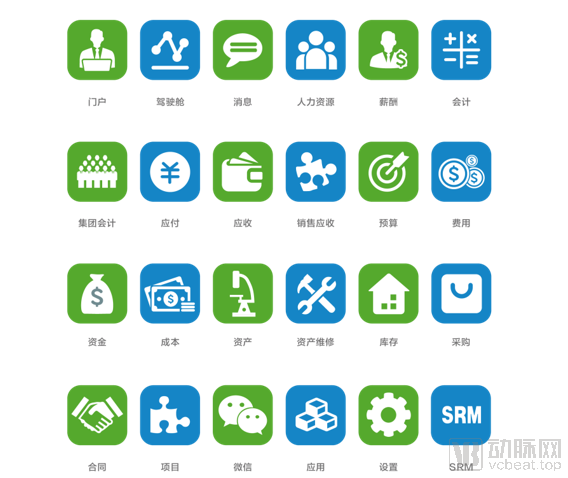
Kangbojia KTHRP Functional Modules (Image Provided by the Company)
HRP enables refined management of “personnel, finances, and materials.” For “personnel,” KTHRP offers user-friendly HR process management and flexible compensation and performance systems. For “finances,” KTHRP establishes data-chain linkages across all processes in the hospital’s revenue and expenditure management workflow, enabling full traceability of upstream and downstream documentation. For “materials,” KTHRP provides tailored management solutions based on the distinct handling requirements for various hospital supplies (high-value, low-value, and non-medical items), including basic procurement, inbound and outbound inventory management, batch tracking, barcode management, expiration date control, chargeable item and pricing management, and replenishment management.
“Create a closed-loop management process.” Zu Kai explained, “This system helps hospitals track the source and use of every penny. A single payment can even be traced back through the system to the invoice, goods receipt, purchase contract, purchase requisition, and budgeting stages.”
Secondly, 15 years of accumulated industry experience.
Last year’s healthcare reform policies prominently highlighted the integration of Medical Consortia and Urban Medical Groups, aiming to achieve unified management of “personnel, finances, and materials.” This model has long been implemented in non-public medical institutions. The non-public healthcare providers served by Kangbojia all operate under chain-based, group-level management structures. Their extensively accumulated and refined expertise in centralized operational management can effectively support public hospitals.
Third, prioritize reputation and emphasize service attitude.“The customer is our bread and butter” is a value deeply ingrained in the blood of every Kangbojia employee. Service capability and service attitude are the two core principles that Kangbojia has consistently upheld. Years of persistence have yielded substantial rewards: 70% of Kangbojia’s clients proactively seek collaboration through word-of-mouth referrals, and 100% of clients have completed final payments and entered the paid maintenance phase—a track record unparalleled in the industry.
The foremost challenge in the development of healthcare informatization is the lack of a universally recognized standard. This has resulted in the absence of unified standards and interfaces both within individual healthcare institutions and among different institutions, which not only complicates management for single entities but also hinders the overall development of the healthcare industry. Zu Kai believes that standardization and lightweight architecture—specifically, adoption of Software-as-a-Service (SaaS) and cloud-based solutions—represent the future direction for healthcare information management systems.
Therefore, in addition to its independently incubated “Cloud Clinic SaaS Service Platform,” Kangbojia comprehensively advanced the cloud migration of its existing products in 2020. In 2019, it developed KTSRM (Kangbojia Supplier Relationship Management System) based on a cloud-based SaaS model. This system is an interconnected procurement business platform dedicated to helping healthcare institutions improve partner relationships and enhance supply chain efficiency. It currently serves nearly 2,000 suppliers and healthcare institutions in the medical industry.
Impacted by the pandemic, numerous industries have suffered setbacks. The uneven distribution of medical resources in China was fully exposed during this outbreak; however, cloud-based services such as online consultations and remote multidisciplinary team meetings have seen substantial advancement. Zu Kai predicts that in the coming years, China’s healthcare market will enter a new phase of rapid industry development, reminiscent of the period following the 2003 SARS epidemic. While increasing state investment in the healthcare sector, the government will also strengthen policy support for private capital participation in healthcare delivery. Through these dual approaches, overall medical service capacity is expected to improve significantly, and healthcare informatization is likely to be designated by the state as a key area within healthcare investment.
Looking ahead, Zu Kai stated that Kangbojia will intensify its R&D and marketing efforts in cloud computing, aiming to deploy its mature cloud-based Hospital Resource Planning (HRP) system in as many public and private healthcare institutions as possible, thereby helping them build a business support infrastructure based on cloud computing.Institutions interested in the company, please contact the financing assistant Xiaoyun: DongMai_Investent