

Yijia Files IPO Prospectus: Building a Modern Community-Based Integrated Care Model with 'Medical, Elderly Care, Rehabilitation, Nursing, and Insurance' After Two Rounds of Central SOE-Backed Funding
VCBeat (WeChat ID: vcbeat) has learned that Yijia (Shanghai) Elderly Care Service Co., Ltd. (“Yijia”) and PICC Capital Equity Investment Co., Ltd. (“PICC Equity”) have recently entered into a strategic partnership to jointly explore an integrated modern community-based medical and elderly care service system encompassing five pillars: medical care, elderly care, rehabilitation, nursing, and insurance.
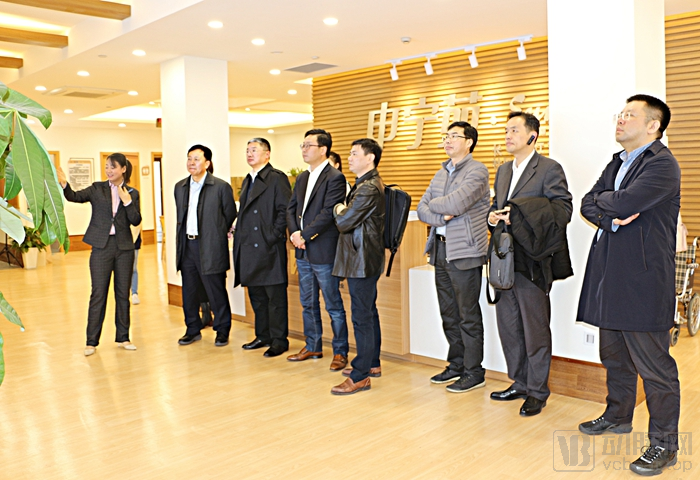
PICC Capital President Wang Hao and Delegation Visit (Image source: Provided by the enterprise)
Founded in 2013, Yijia is a professional organization deeply rooted in communities, providing integrated medical, nursing, and elderly care services. With the mission of “safeguarding the health of every Chinese family,” the company is committed to becoming a service leader and standard-setter in the field of home-based health management. Shanghai Yijia An Nursing Station, a subsidiary of Yijia, underwent accreditation by the Joint Commission International (JCI) in September 2018, becoming the first home care institution in China to achieve JCI certification.
As early as 2017, Yijia introduced China Resources Health to complete its Pre-A financing round. In recent years, Yijia has significantly enhanced its strategic management capabilities, operational management capabilities, and financial management standards. In 2019, the annual service volume exceeded 2 million person-times, with its service coverage extending to the Yangtze River Delta and Pearl River Delta regions.
Birth rate and life expectancy are key determinants of population structure.
On the one hand, the average life expectancy of Chinese residents has been continuously increasing. In 1990, the average life expectancy in China was 68 years; data from 2015 showed it had risen to 76 years, representing an increase of 8 years over a 25-year period. On the other hand, the number of births in China has continued to decline. In 1990, the birth rate was 21.06‰, but by 2018, it had dropped to only 10.94‰. Relevant agencies predict that by 2050, China’s aging rate will exceed 28%, with the elderly population reaching 400 million.
As for the elderly care market itself, China is facing irreversible population aging, and the period from 2020 to 2030 will witness a sharp acceleration in this trend. The scale of the elderly care industry is projected to reach RMB 10 trillion by 2030.
Yijia told VCBeat that Japan and China share certain cultural similarities, and based on Japan’s experience, the community-based home care model is more popular. From a policy perspective, the national advocacy also emphasizes “home-based care supported by community services.” Therefore, Yijia has chosen to enter the home- and community-based elderly care sector, focusing on an integrated care system. By leveraging various service formats such as community nursing stations, day care centers, elderly care homes, and comprehensive care complexes, it aims to build a small-scale, multi-functional, and regional service network.
Leveraging long-term care insurance (see the VCBeat article “What Is the Next Focus for the Development of Commercial Long-Term Care Insurance in Addressing Payment Challenges for Disabled Elderly?”), Yijia started with home-based care services and gradually enriched its community service infrastructure. A variety of service models—including nursing stations, adult day care centers, elderly care homes, nursing homes, integrated care complexes, senior activity centers, traditional Chinese medicine rehabilitation clinics, and neighborhood hubs—have been progressively implemented and put into operation, achieving comprehensive coverage of facility types. By integrating three functional platforms—Yijia’s home-based care service sites, Yijia nursing stations, and health service stations within community health service centers—the company has upgraded them into a “three-stations-in-one” community medical and elderly care service facility.
Currently, China’s elderly care industry is still in its nascent stage, characterized by disordered competition and unregulated growth. The sector suffers from low market concentration, a generally low level of professionalism among staff coupled with high turnover rates, inconsistent service quality, and an overall poor industry reputation.
In response to the nascent state of the industry, Yijia has established a comprehensive service standard system. As early as September 2018, Shanghai Yijia An Nursing Station, a subsidiary of Yijia, passed the accreditation review by the Joint Commission International (JCI), becoming the first home care institution in China to receive JCI accreditation.
Furthermore, Yijia’s integrated business model—spanning home-based care, community services, and small-scale nursing homes—is more competitive and easier to replicate in other regions.
It is understood that Yijia, relying on the basic service requirements of long-term care insurance (LTCI), continuously develops products that meet the personalized needs of the elderly. The service industry always revolves around two key aspects: quality and cost-effectiveness. Yijia told VCBeat that currently, there is insufficient consumer awareness in the elderly care industry, and LTCI prices are fixed. Therefore, companies can only consider cost savings from the cost side and improve efficiency from the system, such as dispatching orders nearby. At the same time, they save on operational costs.
Yijia achieved break-even in 2019.
Following the introduction of China Resources Health in the 2017 Pre-A funding round, Yijia achieved significant improvements in strategic management, operational management, and financial management capabilities. Anchored by four service tiers—“medical care, nursing, rehabilitation, and elderly care”—and leveraging diverse service formats including home-based, facility-based, and institutional care, Yijia has gradually built a community-based medical and elderly care service network with its own distinctive characteristics, exploring a business model suited to the features of the domestic market and meeting the needs of local elderly populations.
Yijia stated that, compared with other investment institutions in the market, it places greater emphasis on PICC Property and Casualty Company’s industrial resources. Following the introduction of PICC P&C in this round of financing, both parties will engage in deep collaboration in areas such as business synergy and resource sharing. Building upon long-term care insurance, they aim to establish a “government–insurer–care provider” community-based home care chain, thereby providing accessible, affordable, and sustainable elderly care services for Chinese seniors to address the challenges of population aging.
Zhang Lingjia, President of PICC Equity, stated, “This collaboration with Yijia represents a strategic move by PICC to build a vibrant elderly care ecosystem characterized by branding, chain operations, and productization. It is a key initiative in advancing PICC’s ‘3411 Project’ and demonstrates the social responsibility undertaken by central state-owned enterprises. Community-based home care will become the predominant model for elderly care in China. As the only nursing institution in China accredited by JCI, Yijia boasts an excellent management team, emphasizes systematic standardization, strictly ensures operational compliance, and maintains a reasonable equity structure. We are optimistic about Yijia’s future and look forward to jointly exploring a commercially viable and replicable new model of ‘insurance + services.’”
Future Plans: On one hand, Yijia will focus on enhancing its informatization capabilities, building a comprehensive training system, and implementing “insurance + elderly care” products. On the other hand, it will further expand its business in the Yangtze River Delta and Pearl River Delta regions to establish a regional integrated medical, elderly care, rehabilitation, and nursing service network.