

Infervision's AI-Powered Medical Solution Rushed to Italy, Showcasing China's Innovation in AI Healthcare

Infervision
Artificial Intelligence Product Developer
As the COVID-19 pandemic spreads globally, confirmed cases continue to rise in many countries. All 27 European Union member states have been affected, and the World Health Organization (WHO) has designated Europe as the “epicenter” of the coronavirus pandemic. To contain the outbreak, many European countries have begun strictly restricting movement and tightening border controls. Italy entered a nationwide lockdown on March 10, with Prime Minister Giuseppe Conte acknowledging that the country is facing its “darkest hour.”
On the evening of March 16, Chinese President Xi Jinping held a telephone conversation with Italian Prime Minister Giuseppe Conte at the latter’s request. President Xi pointed out that the Italian government had taken a series of resolute prevention and control measures to combat the epidemic, which China firmly supports. He expressed full confidence in Italy’s ability to overcome the outbreak. China will respond urgently to Italy’s needs by dispatching additional medical expert teams and providing assistance in medical supplies and other areas to the best of its ability. China stands ready to work with Italy to contribute to international cooperation against the epidemic and to build a “Health Silk Road.” It is believed that through joint efforts in fighting the pandemic, the traditional friendship and mutual trust between the two countries will be further strengthened, paving the way for broader prospects in all-around China-Italy cooperation.
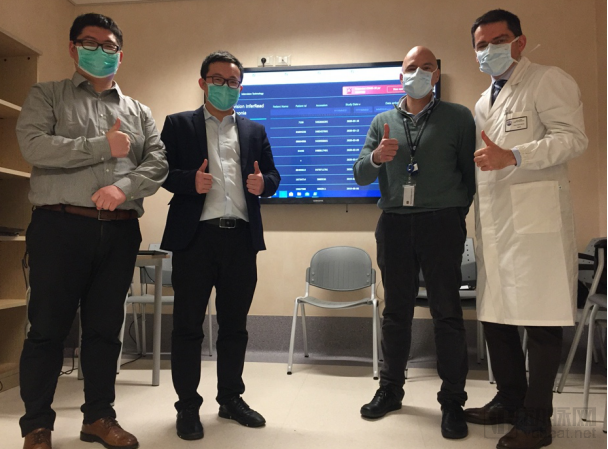
Amid the relentless spread of the COVID-19 pandemic, Italian healthcare institutions have been under immense pressure. As the number of patients surged, critical limitations in PCR testing for COVID-19—namely prolonged turnaround times and limited capacity—became increasingly pronounced. It has thus become imperative to leverage chest CT imaging for diagnosis as the first line of defense in epidemic screening. However, Italian medical personnel have had very limited experience in diagnosing and treating COVID-19. Therefore, it is of paramount importance to effectively apply the valuable lessons learned from China’s anti-epidemic efforts to support Italian healthcare workers.
Affiliated Hospital of the Free University of Biomedical Sciences in Rome, Italy (Unicampus Bio-medicine Rome Hospital) promptly sought assistance from Infervision’s European branch, hoping to deploy Infervision’s “Intelligent AI-Assisted Screening and Epidemic Monitoring System for Pneumonia” within its facilities as soon as possible.
Founded in 1991, the Free University of Biomedical Sciences in Rome is one of Italy’s most modern medical schools. Its affiliated hospital, established in 1994, is located within the expansive Decima Malafede Nature Reserve in the EUR district of Rome, Italy, offering a uniquely favorable environment for convalescence and rehabilitation. The hospital’s imaging department is equipped with three of the world’s most advanced CT scanners, and the institution plays a pivotal role in clinical care, medical education, and related scientific research.
Although this hospital was not a designated treatment center for COVID-19 during the outbreak, it assumed greater responsibility for the rapid screening of highly suspected cases to prevent nosocomial cross-infection. Amid the current surge of infections in Italy, screening and early warning efforts have become a top priority in the Italian government’s fight against the epidemic.
Sun Yipeng, head of Infervision’s European division, led his team in urgently mobilizing products and personnel, driving from Frankfurt to Rome. At Italy’s most perilous hour, Infervision staff resolutely moved “against the flow” toward the front lines of the pandemic response. A mix of urgency, fear, tension, and anxiety weighed heavily on their minds. “We had to go. Infervision’s AI-assisted screening system for pneumonia and its epidemic monitoring platform are built on real case data directly from the frontline of the Wuhan outbreak. For Italian healthcare workers, this is a life-saving tool more precious than gold,” said Sun Yipeng.
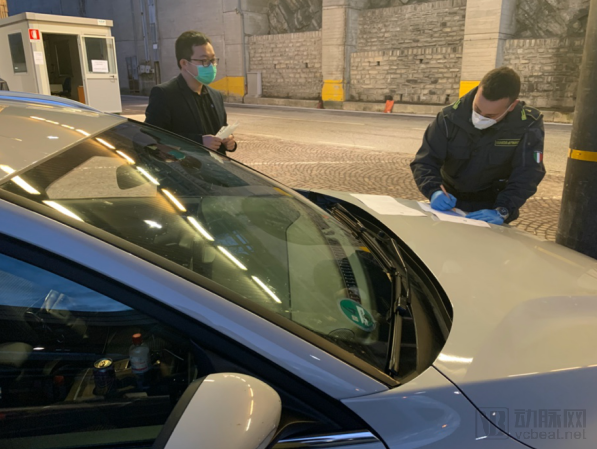
Racing Through the Night: Infervision’s European Team Travels 12 Hours to Reach the Frontlines of Italy’s Epidemic Response, Arriving in Rome at 2:00 AM on March 16, 2020 (Local Time). With Italy under a nationwide lockdown, Infervision staff were stopped by Italian soldiers at the Swiss-Italian border near the foot of the Alps and asked to present entry documentation. After showing the certificate provided by the hospital, an Italian soldier, while registering their information, said in broken English, “Thank you for helping Italy in this time of danger!” “In that moment, we were all deeply moved. Infervision has always been doing the right thing. Leveraging advanced technology to benefit humanity is our aspiration and core value,” Sun Yipeng told us.
According to reports, Infervision’s “Intelligent Auxiliary Screening and Epidemic Monitoring System for Pneumonia” was developed in close collaboration with Tongji Hospital in Wuhan. The hospital helped train Infervision’s models by providing typical case data from the Wuhan region. Additionally, Infervision engaged in scientific research collaborations on imaging diagnosis of COVID-19 with multiple frontline hospitals fighting the epidemic, including Zhongnan Hospital of Wuhan University. As such, this AI product is truly derived from real cases at the forefront of the Wuhan outbreak and has been applied directly in frontline epidemic response efforts.
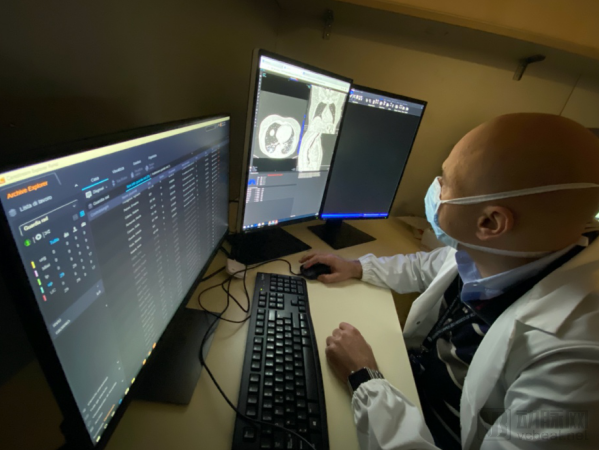
Sun Yipeng, Head of Infervision’s European Division, stated that the “Intelligent Auxiliary Screening and Epidemic Monitoring System for Pneumonia” holds significant practical value for current medical institutions in Europe. When the system encounters CT images suggestive of novel coronavirus pneumonia, the AI system immediately alerts physicians, indicating a potential COVID-19 infection and urging prompt action. This helps accelerate diagnostic speed, facilitates timely feedback of diagnostic results to client hospitals, and reduces the risk of epidemic spread. Furthermore, it assists physicians in accurately assessing patients’ conditions, providing a basis for diagnosis and treatment, formulating precise diagnostic and therapeutic plans tailored to patients’ specific symptoms, and enhancing the standardization and quality of pneumonia care.
According to feedback from Infervision’s frontline engineering team in Italy, the team did not rest after arriving at the hospital in the early hours of the 16th (Rome time) and immediately devoted themselves to intensive tasks such as go-live debugging and system integration. As of press time, debugging has been completed and accepted by the hospital. It is believed that Infervision’s AI system for pneumonia will soon be deployed for related auxiliary applications at the hospital.
According to available information, in early 2020, Infervision’s AI-powered medical product, InferRead, obtained CE certification for medical devices from the European Union, a mandatory requirement for market access of medical devices in the EU. This certification marks the first CE approval granted to a Chinese AI product for chest imaging and signifies that Infervision, as a pioneer in the internationalization of China’s medical AI industry, will formally commence the global market access and commercialization of its AI products.
As early as November 2018, Infervision’s European division had already initiated implementation partnerships for AI-powered chest imaging across various European countries. Currently, Infervision AI has been deployed in more than ten medical institutions in Germany, France, Switzerland, Spain, and other countries, including top-tier hospitals in both clinical practice and scientific research. Notable examples include the University Hospital Zurich, one of the largest hospitals in Switzerland with 48 departments, and the University Medical Center of Mainz in Germany, a globally leading institution in oncology with 1,500 beds.
Affiliated Hospital of the University Campus Bio-Medico of Rome, Italy
(Unicampus Bio-medicine Rome Hospital)
Founded in 1991, the Free University of Biomedical Sciences in Rome is one of Italy’s most modern medical schools. Its affiliated hospital, established in 1994, plays a pivotal role in clinical care, medical education, and related scientific research initiatives.
The affiliated hospital of Libera Università Mediterranea di Roma (LUM) is located within the expansive Decima Malafede Nature Reserve in the EUR district of Rome, Italy’s capital, offering a uniquely conducive environment for comfortable recuperation. The hospital comprises more than 30 independent departments, with over 300 beds, 9 intensive care units, and 11 operating rooms. Its imaging department is equipped with the world’s most advanced CT scanners. The facility provides both public and private healthcare services, including outpatient care and multidisciplinary wards tailored to varying levels of nursing intensity.
Infervision Medical Technology Co., Ltd.
Infervision is a globally leading high-tech enterprise specializing in AI-driven medical innovation. Adhering to the belief of “leveraging advanced technology to address public livelihood issues,” Infervision utilizes deep learning technologies to develop a comprehensive, end-to-end medical AI platform that includes an AI deployment management platform, an AI big data mining and research platform, and an AI clinical application platform. The company creates medical AI products for quality control, health management, and scientific research innovation, delivering advanced, intelligent, and systematic services to governments, healthcare institutions, physicians, and patients, truly embodying its mission to “advance technology with the healthcare sector in mind.”
As of January 2020, Infervision’s deployment sites had covered all 32 provincial-level administrative regions across China. While expanding its presence in the Chinese healthcare market, Infervision also completed its strategic layout in North America, the Asia-Pacific region, and Europe. Its medical AI services now span nine countries worldwide, with an average of over 53,000 AI quality control computations performed daily and a cumulative total of more than 15 million cases processed. Infervision’s medical AI solutions are rapidly evolving into a large-scale AI healthcare service system.