

Tactile Systems Technology Serves 275 Million Users with Home-Based Therapeutic Devices for Chronic Swelling

Tactile Medical
A Medical Device Company
VCBeat (WeChat ID: vcbeat) has learned that Tactile Systems Technology, a medical technology company dedicated to developing medical devices for the treatment of chronic swelling conditions, recently announced its full-year 2019 financial results and released its financial outlook for 2020.
As of December 31, 2019, Tactile Systems Technology reported total revenue of $189.85 million and net income of $11 million for the year 2019, representing year-over-year increases of 32% and 66%, respectively. Adjusted EBITDA amounted to $25.3 million, a 46% increase from the prior year.
Total revenue in the fourth quarter of 2019 was $57.1 million, with a net profit of $4.3 million, representing year-on-year increases of 23% and 82%, respectively. Adjusted EBITDA rose by 26% year on year to $10.4 million.
Tactile Systems Technology, founded in January 1995 and headquartered in Minnesota, was formerly known as Tactile Medical and underwent restructuring with its wholly-owned subsidiary in July 2006.Founded by Irene Waldridge, who served as CEO until stepping down in March 2010; the current CEO is Gerald R. Mattys.。
On October 4, 2012, Tactile Systems Technology announced the completion of a $10.4 million Series B financing round led by Radius Venture. The funding supported Tactile Systems Technology’s plan to acquire leading products and lymphedema-related intellectual property, provided capital for product and technological growth, and expanded its existing product portfolio.
In January 2016, Tactile Systems Technology filed its IPO prospectus and officially listed on the NASDAQ on July 28, 2016.。
Tactile Systems Technology’s team comprises seasoned executives with extensive business experience and professors specializing in academia.Current CEO Gerald R. Mattys previously served as CEO of Medisyn Technologies and Vice President of Nellcor Puritan Bennett.. The Scientific Advisory Committee is composed of professors from various universities and department heads from hospitals.
Lymphedema refers to the proliferation of subcutaneous fibrous connective tissue and hardening of fat caused by impaired lymphatic drainage in certain parts of the body, leading to recurrent soft tissue infections. Lymphedema is difficult to cure, and patients require long-term compression therapy for the affected areas.Currently, there are as many as 5 million patients with lymphedema in the United States, which is more than the combined total of those with muscular dystrophy, multiple sclerosis, and Parkinson’s disease.。
Tactile Systems Technology’s primary focus is advancing the treatment of lymphedema and chronic venous insufficiency.In response, Tactile Systems Technology has developed a series of products and established a platform to provide home healthcare solutions, enabling patients to undergo treatment with greater convenience and flexibility.
The Flexitouch® Plus System is an advanced intermittent pneumatic compression device., providing patients with a comfortable and convenient wearing experience while enabling self-management of lymphedema and non-healing venous leg ulcers. Designed with a patient-centric approach, the product allows simultaneous treatment of both legs, features adjustable sizing for easy donning, and offers multiple therapy options to deliver targeted, personalized care. In addition to leg treatments, the product line includes corresponding series for the neck and torso.
This product features a programmable controller with multiple program options to meet the individual needs of patients. During use, the air chambers inflate and deflate sequentially, directing lymphatic fluid from areas with impaired lymphatic function to healthy regions of the body. Each air chamber inflates for only a few seconds, and at any given time, only one chamber is fully inflated, simulating the sequence and duration of manual therapy.
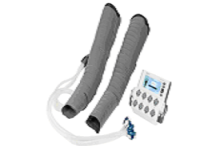
Image source: Tactile Systems Technology official website
Enter System is a basic pneumatic compression device., indicated for the treatment of conditions such as chronic edema, venous ulcers associated with lymphedema, and chronic venous insufficiency. Compared with traditional pneumatic compression devices, the Enter System features eight chambers, enabling more refined and comprehensive therapy for patients.
Enter System reduces venous hypertension by mimicking the calf muscle pump. The chambers are arranged from bottom to top. During operation, the chambers inflate sequentially until all are fully inflated, applying pressure to the leg. Before the next inflation cycle begins, all chambers simultaneously release pressure.
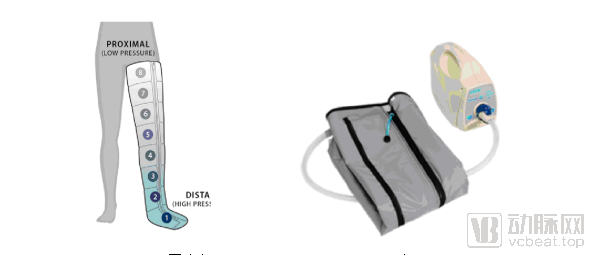
Image source: Tactile Systems Technology official website
Airwear is a static pressure device that accurately delivers the required level of compression to patients via pneumatic bladders, thereby managing leg swelling.. The product features breathable fabric, allowing for use in any weather and making it suitable for wearing under everyday clothing. Additionally, this product is a patented offering from Tactile Systems Technology.
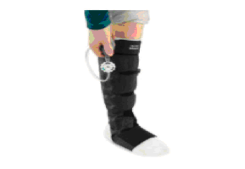
Image source: Tactile Systems Technology official website
Actitouch is a dynamic contact adaptive compression therapy device for the treatment of lymphedema, with its primary therapy being dual compression therapy based on intermittent and continuous pneumatic compression.Clinical evidence demonstrates that dual compression therapy delivers significant efficacy in reducing lymphedema and accelerating the healing of venous ulcers. Actitouch incorporates an internal monitor to track and assess patient usage, providing therapeutic feedback. Additionally, during Actitouch use, internal pressure is recalibrated every 30 minutes to ensure optimal pressure levels are consistently maintained for each patient.
Actitouch utilizes a wrap-around compression band and its corresponding app to ensure a snug fit on the leg, generate pneumatic pressure, and simulate calf muscle movement. This helps reduce venous stasis and interstitial edema, creating an optimal environment for wound healing. The device can be used for two hours daily with the leg elevated, actively promoting venous return.
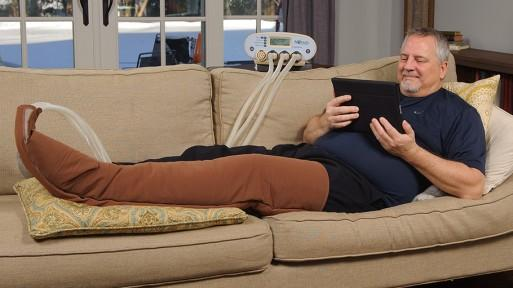
Image source: Tactile Systems Technology official website
As early as 2012, randomized controlled trials of the Flexitouch Plus System were already being conducted. The primary objective of these trials was to compare the efficacy of two different pneumatic compression devices in treating secondary lymphedema caused by breast cancer, specifically comparing the Flexitouch Advanced Pneumatic Compression Device (APCD) with the standard pneumatic compression devices (SPCD) already available on the market.
Experimental results indicate that following breast cancer treatment, the average incidence of edema in patients using APCD decreased by 29%, whereas no significant improvement was observed in those using SPCD. For lymphedema induced after breast cancer treatment, APCD adjunctive therapy demonstrates superior efficacy compared to SPCD.。
Pinar Karaka published an article in JAMA Dermatology in December 2015, which outlined the outcomes and costs associated with the use of APCD over a 12-month period in patients with lymphedema.
Studies have shown that during the 12 months of APCD treatment, the incidence of cellulitis decreased by 79%, outpatient visit rates decreased by 29%, and related costs decreased by 37% among patients with cancer-related lymphedema; among patients with non-cancer-related lymphedema, the incidence of cellulitis decreased by 75%, outpatient visit rates decreased by 34%, and related costs decreased by 36%. The Flexitouch Plus System is the only pneumatic compression device clinically proven to reduce the incidence of cellulitis, improve lymphatic function, and lower patient treatment costs.
According to the financial results released by Tactile Systems Technology, sales and rentals of the Flexitouch® Plus System constitute the primary source of the company’s revenue. Sales of the Entre™ System and ActiTouch® have also been growing year over year, and AirWear® has already entered the market.
The company's revenue growth was primarily driven by the following factors:
First, the commercialization of the Flexitouch Plus System has contributed to the company’s financial performance, and with ongoing design improvements and feature enhancements, an increasing number of physicians are encouraging patients to use the system.
Second,The company has increased its investment in and development of the sales team.Tactile Systems Technology is not only the manufacturer of the Flexitouch system but also its distributor. The company’s products are sold to vascular and lymphedema healthcare institutions and clinics across the United States. Data analysis indicates that Tactile Systems Technology has business relationships with at least one clinician in more than 4,700 high-end diagnostic facilities, and it plans to strengthen and expand these relationships with such institutions and clinicians in the future.
Third,Emphasizing online promotion and developing digital platforms. By the end of 2018, the platform had reached over 275 million users, accounting for approximately 90% of the U.S. insured population.Providing products directly through online platforms reduces the cost for users to purchase products, which helps promote the sales process.
In July 2018, Tactile Systems Technology entered into a contract with a major payment platform to expand payment channels between consumers and the company. Meanwhile, this new contract provided Tactile Systems Technology with direct network access to patients.
In addition, Tactile Systems Technology’s market also includes Medicare and Veterans Health Administration insurance, with Medicare accounting for a larger share. In terms of Veterans Health Administration insurance, the company’s sales performance primarily benefits from contracts under the Federal Supply Schedule program.