

Beijing Yanhua Hospital Becomes City's First to Enable Internet-Based Medical Consultations with Real-Time Health Insurance Reimbursement in Just 12 Days
Recently, to meet the needs of epidemic prevention and control, the National Healthcare Security Administration and the National Health Commission jointly issued a document to include eligible “Internet+” medical service fees in the scope of medical insurance payment.
On March 2, the very day the policy document was issued, the Beijing Municipal Healthcare Security Administration enabled insurance payment channels for internet-based medical consultations. With support from its technical and operational teams, Beijing Yanhua Hospital processed the city’s first-ever insurance reimbursement for an online follow-up visit.
Beijing Yanhua Hospital is a tertiary-level private non-profit hospital. The company that provided it with health insurance payment system upgrades is Beijing Phoenix Medical Union Technology Co., Ltd. (hereinafter referred to as “Phoenix Medical Union”), an IT enterprise established less than a year ago.
Through the collaborative efforts of both parties, the system overhaul and acceptance testing at Beijing Yanhua Hospital were completed in just 12 days, making it the first in Beijing to enable medical insurance payments for internet-based diagnosis and treatment. How did Phoenix Medical Alliance achieve this? What steps are required for system modification? What key considerations should be noted during acceptance testing? Li Meitian, General Manager of Phoenix Medical Alliance, provided detailed answers to these questions.
Let us first examine the urgent need for internet-based medical consultations in Beijing’s epidemic prevention and control efforts.
Having experienced the 2003 SARS outbreak, Beijing moved screening checkpoints forward through rigorous community-based prevention and control measures, complemented by robust medical treatment resources, thereby bringing the COVID-19 epidemic under effective control. Nevertheless, the situation remains challenging.
First, Beijing has a large population of non-local residents. According to data from the Beijing Municipal Bureau of Statistics, at the end of 2019, the city’s permanent resident population was 21.536 million, with 7.456 million being non-local permanent residents, accounting for as high as 34.6% of the total. As the epidemic situation in China initially stabilized and various regions began to implement orderly work resumption and production restart in selected industries, Beijing also launched related efforts. At this time, Beijing faced dual pressures: implementing transportation-based epidemic prevention and control measures for individuals returning to the city, and managing crowd-related risks associated with the resumption of work and production after their return.
On February 18, the Beijing Municipal Leading Group for Novel Coronavirus Pneumonia Prevention and Control established a Work Resumption and Epidemic Prevention Task Force, responsible for managing epidemic prevention and control measures related to the resumption of work and production across industrial, commercial, service, and construction enterprises citywide.
Secondly, as an international metropolis, Beijing boasts a vast network of international air routes. According to the official website of Beijing Capital International Airport, nearly 1,700 flights operated by 94 airlines connect Beijing with 244 cities in 54 countries on a daily basis. Amid the rapid global spread of the pandemic, Beijing has been facing escalating risks and pressures from imported cases.
On February 29, Beijing began reporting imported cases. As of 12:00 on March 18, a cumulative total of 54 confirmed imported cases had been reported. In addition to treating confirmed cases, routine screening of close contacts and other inbound travelers has once again placed pressure on offline clinical services at Beijing’s medical institutions.
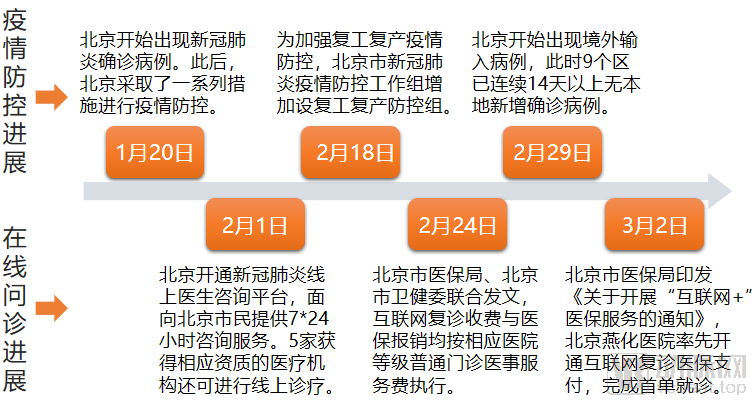
Progress of Epidemic Prevention and Control in Beijing and the Development of Internet Diagnosis and Treatment, Chart by VCBeat
Consequently, Beijing has remained in a severe situation under the combined influence of multiple factors, including local epidemic prevention and control, infection control during the resumption of work and production, and prevention of imported cases.
Isolating specific populations, reducing non-essential personnel movement and gatherings, and leveraging the internet to improve the efficiency of medical services remain the most fundamental response measures.
At the outset of the pandemic, Beijing established an online consultation platform for COVID-19. In addition to thousands of physicians providing online consultations, five accredited medical institutions were authorized to deliver internet-based diagnosis and treatment services, with Beijing Yanhua Hospital being one of them.
To further meet the healthcare needs of patients with common and chronic diseases requiring follow-up visits, on February 24, the Beijing Municipal Healthcare Security Administration and the Beijing Municipal Health Commission jointly issued the "Notice on Establishing Pricing for Internet-Based Follow-Up Consultation Services and Medical Insurance Reimbursement Policies," incorporating internet-based follow-up consultations into medical insurance coverage. The fees are charged in accordance with the general outpatient consultation service fees corresponding to the hospital's classification level, and reimbursed according to the medical insurance policies applicable to general outpatient consultation service fees at that same hospital classification level.
On March 2, the Beijing Municipal Healthcare Security Administration issued the “Notice on Launching ‘Internet+’ Healthcare Insurance Services,” which sets forth specific provisions regarding supplementary agreements for incorporating internet-based medical consultations into healthcare insurance coverage, real-time settlement, and the upgrading and maintenance of information systems.
On March 2, Beijing Yanhua Hospital became the first in Beijing to enable medical insurance payment for internet-based diagnosis and treatment services. Located in Fangshan District, the hospital is a tertiary non-profit general hospital under Phoenix Medical Group, primarily serving local residents.
Fangshan District, located in southwestern Beijing, covers a total area of 2,019 square kilometers, making it one of the largest district-level administrative divisions in the city. The district’s terrain is evenly divided among plains, hills, and mountainous areas, each accounting for one-third of the total area. It administers 28 towns and subdistricts, 459 administrative villages, and 154 community residents’ committees. Patients residing in these villages and towns are relatively dispersed.
To improve patients’ efficiency in seeking medical care, Beijing Yanhua Hospital launched its “Internet+” initiative and developed an online service platform in 2018, following the issuance of internet healthcare-related policies by the General Office of the State Council and the National Health Commission.
The platform officially commenced construction in late 2018 and went live in March 2019, launching 13 patient-friendly services, including appointment registration, point-of-care payment, report retrieval, medical record access, inpatient itemized bill inquiry, hospitalization deposit payment, physical examination report lookup, and waiting queue status check.
To further enhance the patient experience, Beijing Yanhua Hospital subsequently launched online text-and-image and video consultation services, improved the functionality for prescription renewals via video consultations, and initiated the application process for relevant qualifications.
In November 2019, Beijing Yanhua Hospital applied to the Beijing Municipal Health Commission for qualification to conduct internet-based diagnosis and treatment. The approval was granted on December 20, making it one of the first hospitals in Beijing to obtain such qualification.
During the COVID-19 pandemic, Beijing Yanhua Hospital launched free online fever clinics and psychological counseling services. Following the initiation of medical insurance schemes for internet-based diagnosis and treatment by the Beijing Municipal Healthcare Security Administration, Beijing Yanhua Hospital, as a medical institution qualified for online follow-up consultations, responded swiftly and participated in the pilot program.
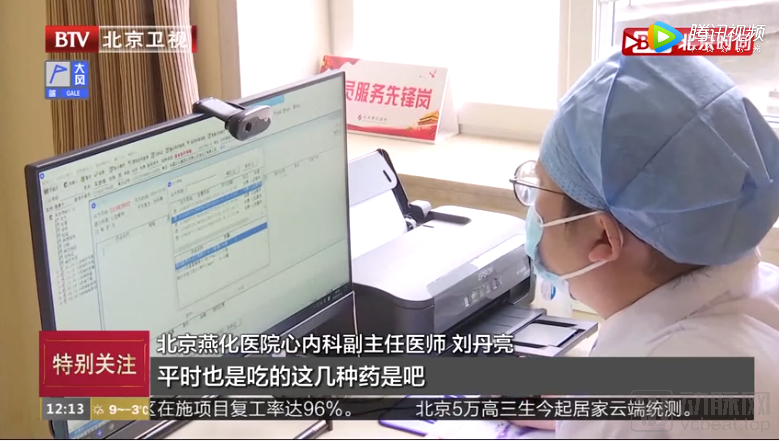
Beijing Yanhua Hospital Doctors Conduct Online Follow-up Consultations for Patients
On February 19, the project was officially launched and undertaken by Phoenix Medical Consortium. The project passed acceptance inspection on March 1 and formally commenced internet-based medical consultation services with medical insurance reimbursement on March 2. From initiation to launch, the entire process took a total of 12 days.
On its launch day, Beijing Yanhua Hospital enabled online medical insurance reimbursement for follow-up visits in eight departments: Cardiology, Neurology, Respiratory and Critical Care Medicine, Endocrinology, Gastroenterology, Oncology, Otolaryngology, and General Surgery. This service was subsequently expanded to cover common and chronic disease follow-ups in other departments, with over 80 physicians available to conduct online consultations and issue prescriptions.
Patients with chronic diseases who have designated Beijing Yanhua Hospital as their selected medical institution can access online services—including appointment scheduling, follow-up consultations, prescription issuance, medication delivery, and medical insurance reimbursement—by downloading the Beijing Yanhua Hospital APP or the Phoenix Good Nurse APP.
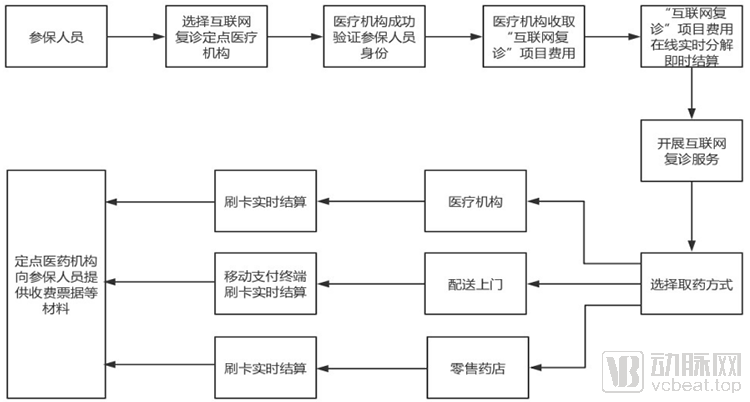
Beijing “Internet+” Medical Insurance Service Settlement Flowchart, Source: Official Website of the Beijing Municipal Healthcare Security Administration
In accordance with the plan of the Beijing Municipal Healthcare Security Administration, patients may choose one of three methods for obtaining medications after a medical consultation: self-pickup at the hospital, home delivery by the hospital, or pickup at designated retail pharmacies covered by medical insurance. All three methods support real-time settlement using the medical insurance card.
How Does Phoenix Medical Alliance Help Beijing Yanhua Hospital Achieve the Above-mentioned Functions Step by Step? Overall, It Includes 4 Steps and 8 Sub-steps.
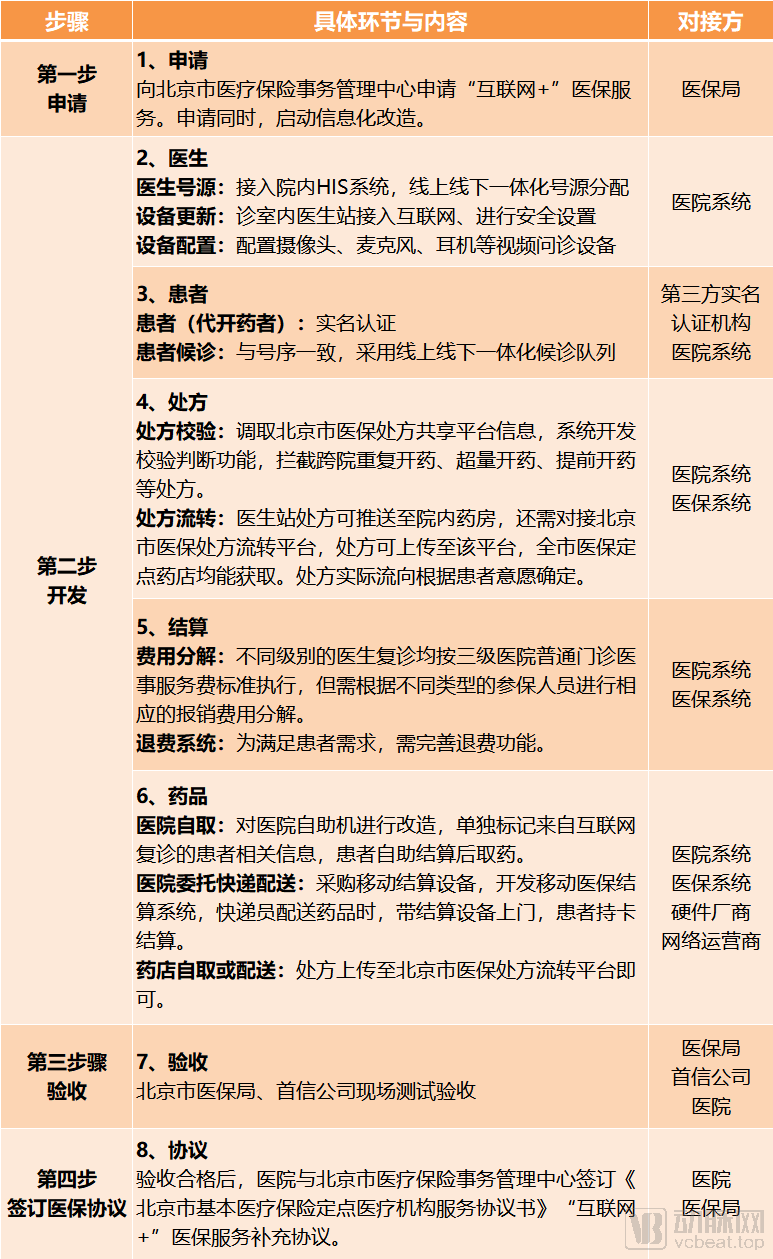
Key Steps for Phoenix Medical Alliance to Enable Health Insurance Payment for Internet-Based Diagnosis and Treatment at Beijing Yanhua Hospital
VCBeat Compilation and Charting
The development process involves coordination with multiple parties and is cumbersome.
Among the four overall steps, the second step—development—takes the longest time. Its sub-tasks involve both online system modifications and the procurement and commissioning of offline equipment; they also require coordination with systems and personnel both within and outside the hospital.
Online system upgrades include real-name authentication, prescription verification and routing, as well as fee breakdown and refund processing. Offline equipment primarily consists of cameras, microphones, and headsets required for physicians’ video consultations, along with mobile payment terminals needed for settlement of home delivery services. Within the hospital, integration is mainly conducted with departments such as Information Technology, Medical Insurance, and Medical Affairs. Externally, the primary interface is with the contractor of the Beijing Medical Insurance System, namely Capital Information Development Co., Ltd. (hereinafter referred to as “Shouxin Company”).
Li Meitian introduced that the more cumbersome steps mainly lie in:
First, integration with real-name authentication. When patients seek offline medical care using medical insurance, they complete real-name verification by swiping their medical insurance cards for registration, followed by hospital verification. However, since card swiping is not feasible for online appointment scheduling and follow-up consultation fee settlements, patients must undergo real-name authentication when registering on the app prior to their initial visit. Phoenix Medical Union needs to integrate with third-party real-name authentication providers by accessing data interfaces to authenticate patient identities.
Furthermore, if family members obtain medications on behalf of the patient, the system must verify their identity through real-name authentication and maintain comprehensive records throughout the process.
Second, fee breakdown and refund functionality. First, the system needs to add internet-based follow-up consultation items and their charging standards to the service catalog. The follow-up consultation fee at tertiary hospitals is 50 yuan, but different types of medical insurance patients have different reimbursement policies. Therefore, it is necessary to call the medical insurance system interface to break down the fees according to the insured person's type. This process also requires joint debugging with Shouxin Company.
If a patient cancels their appointment after registration and requests a refund, the system must support refunds via the original payment method.
Third, prescription verification and circulation. To prevent non-compliant prescribing, information from the Beijing Medical Insurance Prescription Sharing Platform must be accessed to verify and adjudicate prescriptions involving patients obtaining duplicate medications across different hospitals, filling prescriptions prematurely, or physicians issuing excessive quantities, with timely interception of such cases.
It is understood that Beijing has previously connected all designated medical institutions across the city through an interoperable and intelligent monitoring system, enabling physicians participating in the medical insurance program to access patients’ consultation records at Beijing’s designated medical facilities within the past 50 days, thereby reducing the incidence of duplicate prescriptions across different hospitals.
Internet-based medical consultations also adhere to offline standards, ensuring seamless information exchange between online and offline channels and eliminating the waste of medical insurance funds caused by non-compliant prescribing.
The above information is retrieved from the Prescription Sharing Platform. After Beijing Yanhua Hospital issues an internet-based follow-up prescription, if the patient chooses to have the prescription filled externally, the system must also push the prescription to the Medical Insurance Sharing Platform. Only then can designated medical insurance pharmacies across the city download the prescription, allowing patients to collect their medications.
Fourth, equipping mobile payment terminals for home medication delivery services. In accordance with regulations, hospital-based home medication delivery is one of the methods for dispensing prescriptions. Under such circumstances, it is necessary to procure mobile payment terminals, develop settlement software, and integrate with network operators to enable mobile payment functionality.
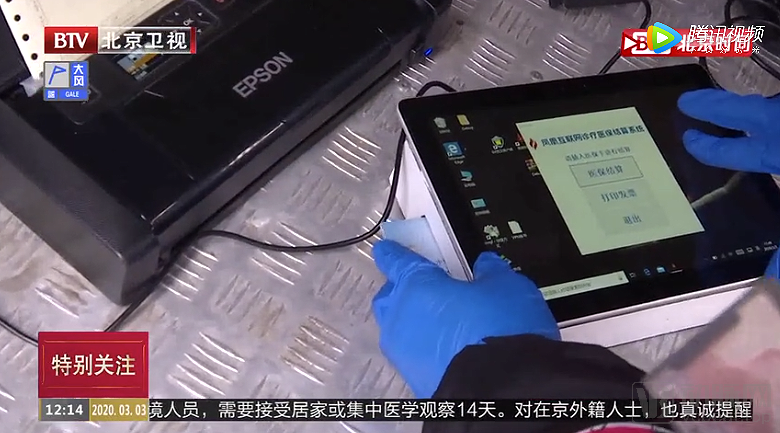
Couriers Deliver Medications to Doorsteps with Mobile Payment Terminals and Process Medical Insurance Settlements
Meanwhile, as patients need to use their medical insurance cards for settlement, the mobile payment terminals must also be equipped with medical insurance card readers. The hospital entrusts a courier service with home delivery of medications and signs an agreement with the courier company regarding the custody of the terminal devices. Upon delivering the medications, the courier also brings the payment device; after the patient completes the payment, the courier returns the device to the hospital.
Due to pandemic control measures, couriers were unable to deliver packages directly to patients’ doorsteps. Consequently, the card payment for medication was completed outside the patient’s residential community, marking Beijing Yanhua Hospital’s first delivery of prescription drugs following an online follow-up consultation.
5. Hospital Self-Service Kiosk Upgrades. Picking up medications at the hospital is another option available to patients. Although this method may not be frequently used, the system must support the corresponding functionality.
Phoenix Medical Alliance has installed self-service kiosks in the lobby of Beijing Yanhua Hospital, enabling patients to independently swipe their cards for payment and collect medications from the pharmacy—functions that were already available. However, as these patients are returning for follow-up consultations via the internet, the kiosks need to be upgraded to separately flag patient information.
Because online follow-up consultations differ from card-based registration, self-service kiosks can read patients’ historical cost records, medical insurance benefits, and other relevant information directly from their physical cards during card-based registration. In contrast, in a cardless scenario, such information must be retrieved from the medical insurance system and linked to the patient’s online follow-up consultation data.
Key Acceptance Checks Across Multiple Stages Prior to Launch
Upon completion of the system upgrade, an application for acceptance inspection was subsequently submitted.
Beijing’s medical insurance system, under the “Specification for Settlement of ‘Internet+’ Medical Insurance Services,” imposes multiple requirements on healthcare institutions that connect internet-based follow-up consultations to medical insurance payment channels:
When providing internet-based follow-up consultation services to insured individuals, electronic real-name authentication shall be conducted first; for those who have not undergone real-name registration for medical treatment, the insured individuals shall be required to correct their relevant information.
Ensure network stability, safeguard the cybersecurity of data related to internet-based follow-up consultation services, and prevent data breaches;
Regularly update standard dictionaries for disease diagnoses, medications, and medical service items to improve the accuracy of data uploads;
Strengthen supporting management for the sharing of internet-based medical order information, promptly download historical medical visit records of insured individuals to mitigate operational risks to the medical insurance fund, and enhance analysis of data feedback related to the storage of costs for internet-based follow-up consultations and other relevant metrics, thereby avoiding payment denials.
Electronic medical records, online prescriptions, and medication purchase records for insured individuals shall be established and properly maintained to ensure full traceability across the entire process of diagnosis and treatment, prescription issuance, transactions, and delivery, thereby achieving comprehensive monitoring of information flows, capital flows, and logistics.
In summary, the key points are: emphasizing data protection and full traceability of the entire medical consultation process to ensure patient safety; and prioritizing real-name authentication and end-to-end monitoring of fund flows to safeguard the security of medical insurance funds.
Li Meitian introduced that during the acceptance inspections conducted by the Healthcare Security Administration and the Health Commission, the inspection teams also focused on these key aspects for Beijing Yanhua Hospital and Phoenix Medical Consortium.
The primary focus is on identity verification for online follow-up consultations, including verification of individuals obtaining prescriptions on behalf of others, as well as the online itemization, collection, and refunding of follow-up consultation fees.
Furthermore, there are stringent requirements and acceptance criteria for prescribing processes, including prompts for the duration of medication, retrieval of city-wide shared prescription data, identification of duplicate, early, or excessive prescriptions across hospitals, and review of patient visit histories. Additionally, the functionality for external prescription dispensing must be enhanced to facilitate patients in obtaining medications at nearby pharmacies.
Next is data consistency validation, which involves verifying the consistency of all prescription, cost, and other related information across the Hospital Information System (HIS), medical insurance systems, and internet platforms.
“On the morning of March 1, the on-site acceptance review was conducted from 9:30 a.m. to nearly 12:00 p.m.” According to Li Meitian, a 10-member acceptance team from the Healthcare Security Administration, Shouxin Company, Beijing Yanhua Hospital, and Phoenix Medical Consortium participated in the review in the conference room of Beijing Yanhua Hospital.
During the process, other technical personnel from Phoenix Medical Union provided remote support. In addition to the key functionalities mentioned above, the acceptance team systematically tested all other features; each function and control point met the specified requirements, resulting in a successful acceptance.
In summary, the “Internet+” medical insurance service project at Beijing Yanhua Hospital involves integration with the hospital’s HIS system, the internet diagnosis and treatment platform, and the medical insurance system, encompassing six medical insurance interfaces and 15 internet platform interfaces.
Phoenix Medical Alliance was established in April 2019. How did it manage to rapidly complete critical projects while ensuring quality within less than a year of its founding? Li Meitian believes that, in addition to the team’s overtime efforts during this period, the key factors were years of technological accumulation and efficient communication and coordination.
In fact, Phoenix Medical Union was incubated by the information technology department of Phoenix Healthcare Group. Prior to its establishment, the focus was on developing in-hospital information systems; after its establishment, the focus shifted to internet-based system development. Its core technical personnel are all industry veterans with over 10 years of experience in healthcare informatization.
Even during the company’s incubation phase, the team conducted field visits to regions such as Zhejiang and Guangdong, where the development of internet hospitals started earlier, to study their experiences.
Prior to the medical insurance projects, the Phoenix Medical Consortium team had already developed the Hospital Information System (HIS), internet service platform, and internet diagnosis and treatment platform for Beijing Yanhua Hospital, as well as the “Phoenix Good Nurse” online nursing service platform.
Therefore, Phoenix Medical Alliance has accumulated technical expertise in previous projects, sufficient to support rapid system transformation requirements.
Currently, Phoenix Medical Alliance possesses independent capabilities in internet hospital platform development, operational management, and brand building. It provides services such as medical informatics software development, system integration, and consulting, and holds nearly 20 software copyrights. Its main products include an online diagnosis and treatment platform, an on-demand nursing service platform, a health management platform, and Cloud HIS.
Secondly, Phoenix Medical Alliance and Beijing Yanhua Hospital both belong to the Phoenix Healthcare Group, which ensures high efficiency in system integration and personnel communication. “The internal integration at Beijing Yanhua Hospital involved in this project, including internet-based diagnosis and treatment, the Hospital Information System (HIS), and self-service kiosks, was all developed and configured by our team. Therefore, unlike other medical institutions that need to coordinate with multiple IT vendors, we have significantly reduced communication costs,” introduced Li Meitian.
While Phoenix Medical Alliance provides internet-based diagnosis and treatment technology support to Beijing Yanhua Hospital, the hospital also serves as a physical resource backbone for Phoenix Medical Alliance. Li Meitian stated, “We frequently communicate with hospitals and physicians to gather feedback on their user experience and identify emerging needs, continuously refining and enhancing our products to ensure greater practicality.”
In the future, Phoenix Medical Consortium plans to develop an independent comprehensive internet diagnosis and treatment service platform, gradually opening it up to third-party hospitals that meet the requirements. It will provide technical and operational support for physical hospitals to create a closed-loop online and offline diagnosis and treatment service, comprehensively improving the efficiency of internet transformation for physical hospitals and providing new pathways for them to offer internet medical services.
From March 2, when the “Internet+” medical insurance services were launched, to March 18, Beijing Yanhua Hospital has conducted a total of 109 online follow-up consultations, with 68 instances of medication home delivery settled through medical insurance.
As this was a new service model, Beijing Television covered it in the news. After seeing the report, patients flocked to call the hospital to inquire about consultation details. In response, the hospital specially launched a 24-hour hotline to explain the service process to patients.
Li Meitian introduced that, in addition to local patients in Fangshan District, patients from other districts in Beijing, such as Chaoyang, Haidian, and Xicheng, have also called for consultations. Most of these patients have their designated hospitals located within their respective districts and must select Beijing Yanhua Hospital as their designated medical insurance hospital to qualify for online follow-up visit reimbursements. “Although chronic disease patients are not all transitioning to online platforms overnight, the current changes in consultation volumes and the high volume of telephone inquiries indicate that an increasing number of patients are accepting this model, which will become a major trend in the future.”
According to incomplete statistics, during the COVID-19 pandemic, provinces and municipalities including Jiangsu, Zhejiang, Shanghai, Shaanxi, Guangdong, and Hubei have incorporated internet-based medical consultations into their medical insurance payment systems, with real-time insurance settlement implemented in certain hospitals.
Hospitals that have implemented real-time medical insurance settlement for online consultations are primarily internet hospitals or online diagnosis and treatment platforms led by physical hospitals. Additionally, WeDoctor, as an enterprise-led platform-type internet hospital, has connected to the medical insurance systems in Wuhan and Tai’an, while Haier Sen Internet Hospital, under Medlinker, has enabled online payments using personal medical insurance accounts in Chengdu.
The advantage of being led by physical hospitals lies in the ability to complete a closed-loop online and offline healthcare process within the institution. In addition to consultations, prescription issuance, medication delivery, and payment, this model can be integrated with services such as diagnostic tests, report inquiries, and bed reservations, thereby better meeting patients’ local medical needs.
The advantage of enterprise-led platform-based internet hospitals lies in their ability to consolidate high-quality resources from various regions, promote the balanced distribution of medical resources, and enable patients to consult top specialists without leaving home. Furthermore, leveraging robust user operation capabilities, platform-based internet hospitals can attract a larger number of physicians across a wider range of specialties, thereby offering patients a broader selection.
Regardless of the type, integrating health insurance payment into the process makes the entire online consultation workflow more complete.
Before the pandemic, health insurance coverage remained a long-standing bottleneck for internet healthcare that had yet to be broken through. The demands of pandemic control helped gradually remove this obstacle. Although some provinces and cities have indicated that inclusion is temporary or limited to pilot programs, if internet healthcare can effectively facilitate appropriate patient triage, enhance hospital management efficiency, and better safeguard the security of health insurance funds through technological means, the pace of improving health insurance integration will accelerate in the future.