

Huami Releases 2019 China Sleep White Paper: Worsening Sleep Habits Among Youth Raise Concerns
Sleep is crucial to human health. On March 21, as the 20th World Sleep Day approached, Huami Technology (NYSE: HMI) and Sleemon Mattress jointly released the “2019 White Paper on Sleep in China” (hereinafter referred to as the “White Paper”). Based on tens of millions of sleep health data points from the Mi Fit app and more than 100,000 online survey responses, the report analyzed and examined the sleep characteristics of Chinese people in 2019 across multiple dimensions, while also calling on the public to pay attention to personal sleep health and develop good sleep habits.
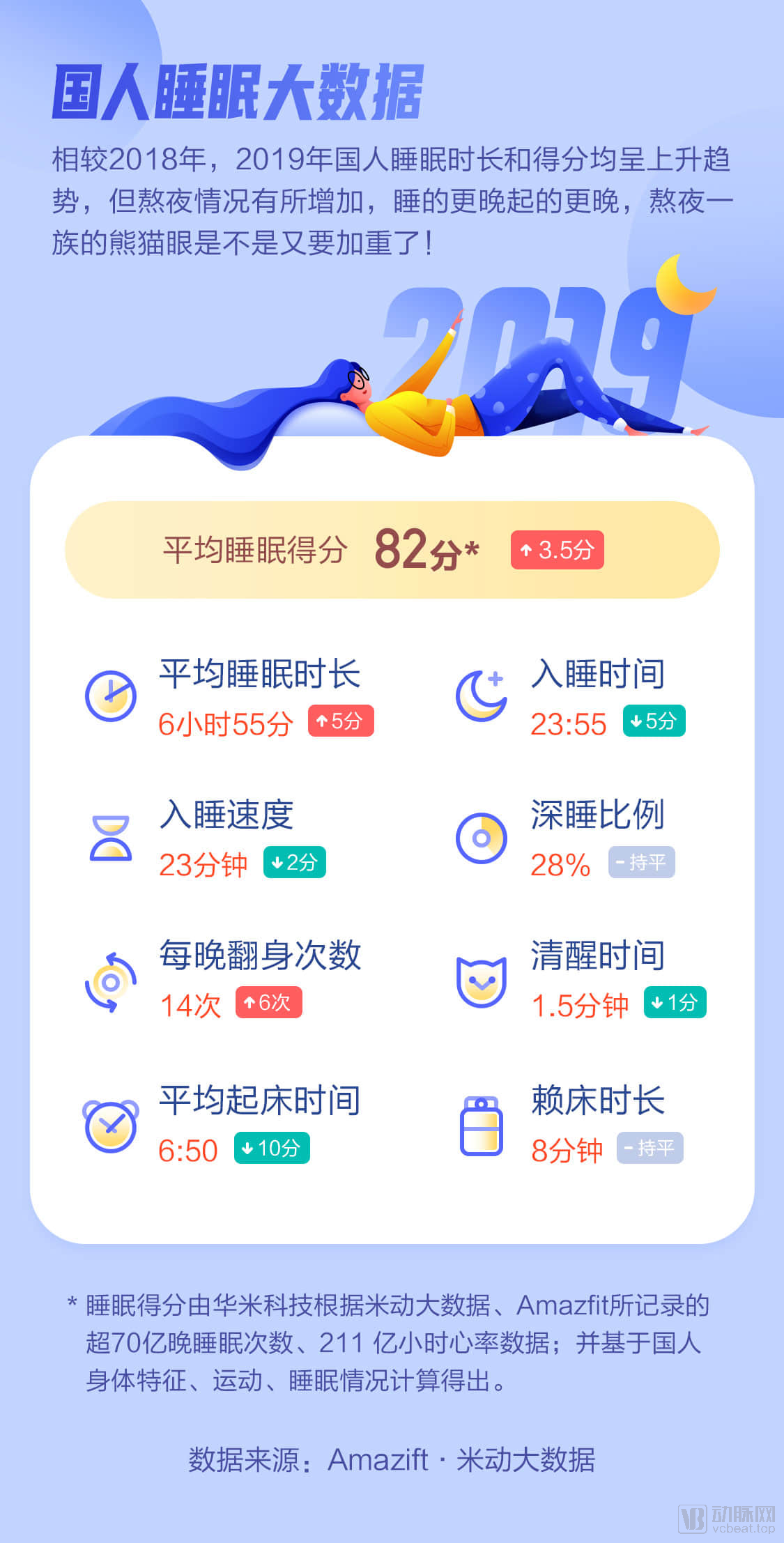
Compared with 2018, the average sleep score of Chinese people increased slightly in 2019, and sleep duration increased marginally.
In 2019, the average sleep score for Chinese people was 82 points, and the average sleep duration increased by 5 minutes compared to 2018. However, staying up late became more prevalent in 2019, with the average bedtime at 23:55, which was 5 minutes later than in 2018 and 32 minutes later than in 2017.
Women’s sleep habits are significantly better than men’s. Data show that women sleep an average of 21 minutes longer per night than men, fall asleep at 23:40—23 minutes earlier than men—and wake up 2 minutes earlier. The average sleep score for women is 83.5, compared with 81 for men. In terms of sleeping position, men prefer sleeping on their backs, while women favor lying on their right side.
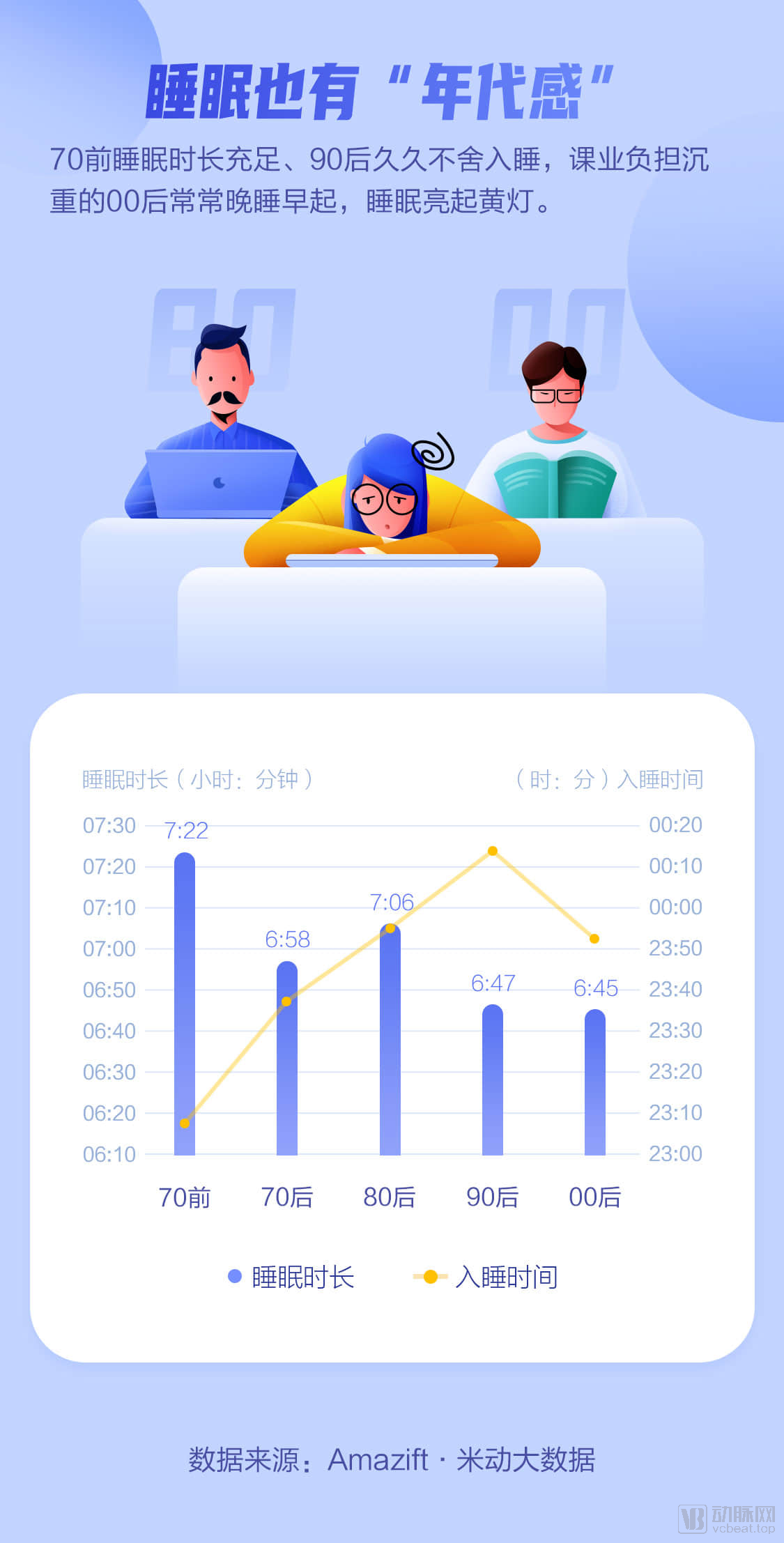
By age group, older individuals tend to have more health-conscious sleep patterns. Among all age groups, only those born before the 1970s and those born in the 1980s average more than seven hours of sleep per night, with the pre-1970s cohort enjoying the most sufficient sleep duration at approximately 7.4 hours per night on average. Sleep habits among those born in the 1990s and 2000s are concerning; surveys reveal that 43% of the post-90s generation and 27% of the post-00s generation stay up late every day.
Individuals born in the 2000s are predominantly students; although they tend to go to bed slightly earlier than those born in the 1990s, they have the shortest sleep duration, averaging only 6.8 hours per night. Those born in the 1990s exhibit the most severe pattern of staying up late, with an average bedtime after midnight, and their total sleep time is merely two minutes longer than that of the post-2000s cohort.
Additionally, young people are more open-minded about their sleepwear, with 15% of those born in the 1990s preferring to sleep naked. Among individuals who fall asleep with pets, those born in the 1990s and 2000s account for 56.3%.
In 2019, the top three cities for sleep scores were Weihai, Yantai, and Baishan. Among first-tier cities, Beijing had the highest sleep score, while Guangzhou had the lowest. The city with the best deep sleep was Lijiang in Yunnan Province. The cities with the earliest bedtimes and wake-up times were both in Northeast China: Yichun and Jixi in Heilongjiang Province, respectively. Due to their longitudinal locations, the cities with the latest bedtimes and wake-up times were both in Xinjiang: Kashgar and Altay, respectively. The cities with the fastest and slowest sleep onset were Maoming in Guangdong Province and Longnan in Gansu Province, respectively.
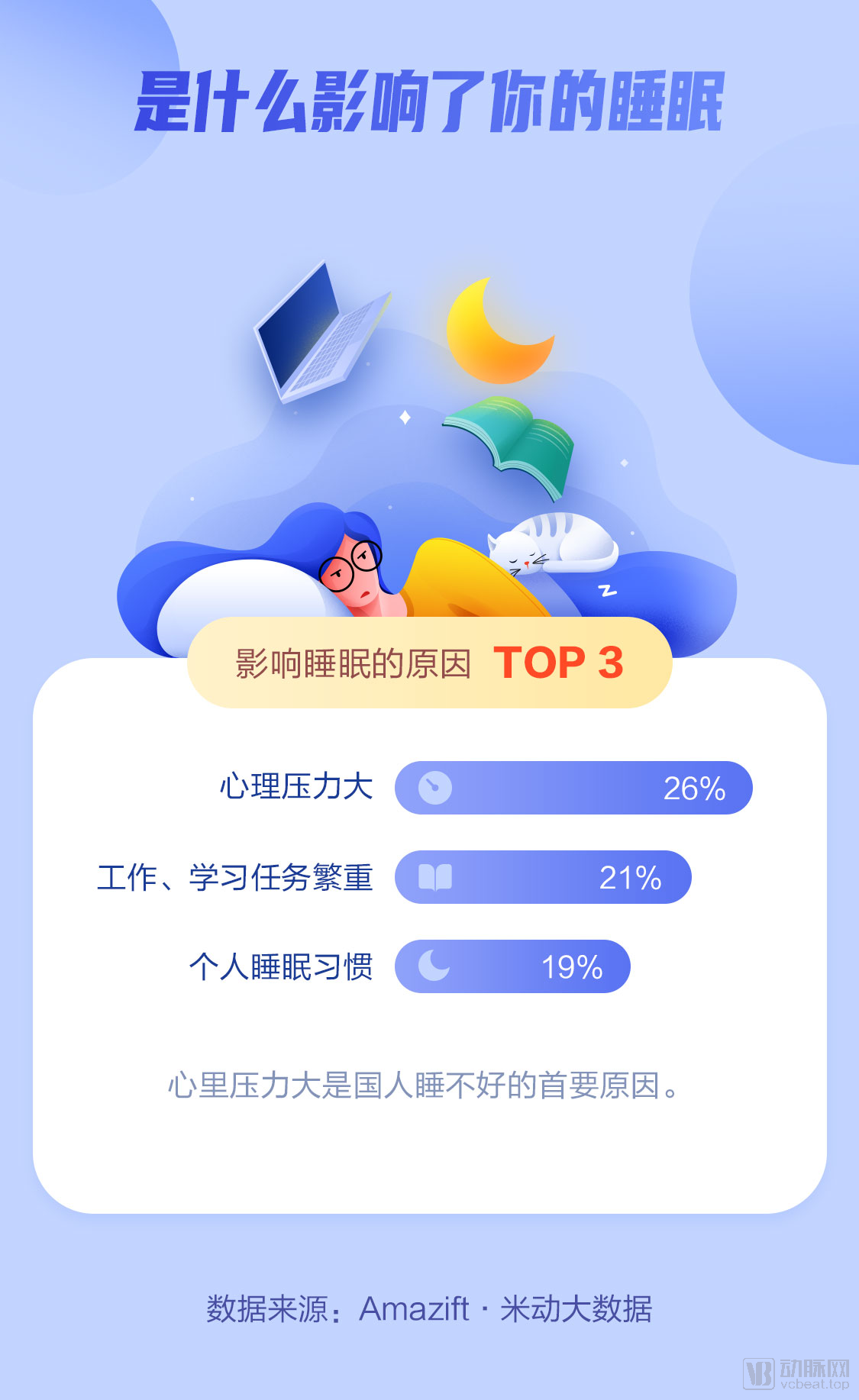
The White Paper shows that nearly 80% of people are quite concerned about their sleep. High psychological stress and heavy work or study loads are two major factors affecting sleep quality. Only 30% of people wake up feeling fully energized, while most experience some discomfort upon waking. Specifically, 38% still feel very tired after waking, and 43% use their mobile phones to pass the time before bed. More than 90% of people feel the need for daytime napping. Getting a good night’s sleep has become exceedingly difficult for people today!
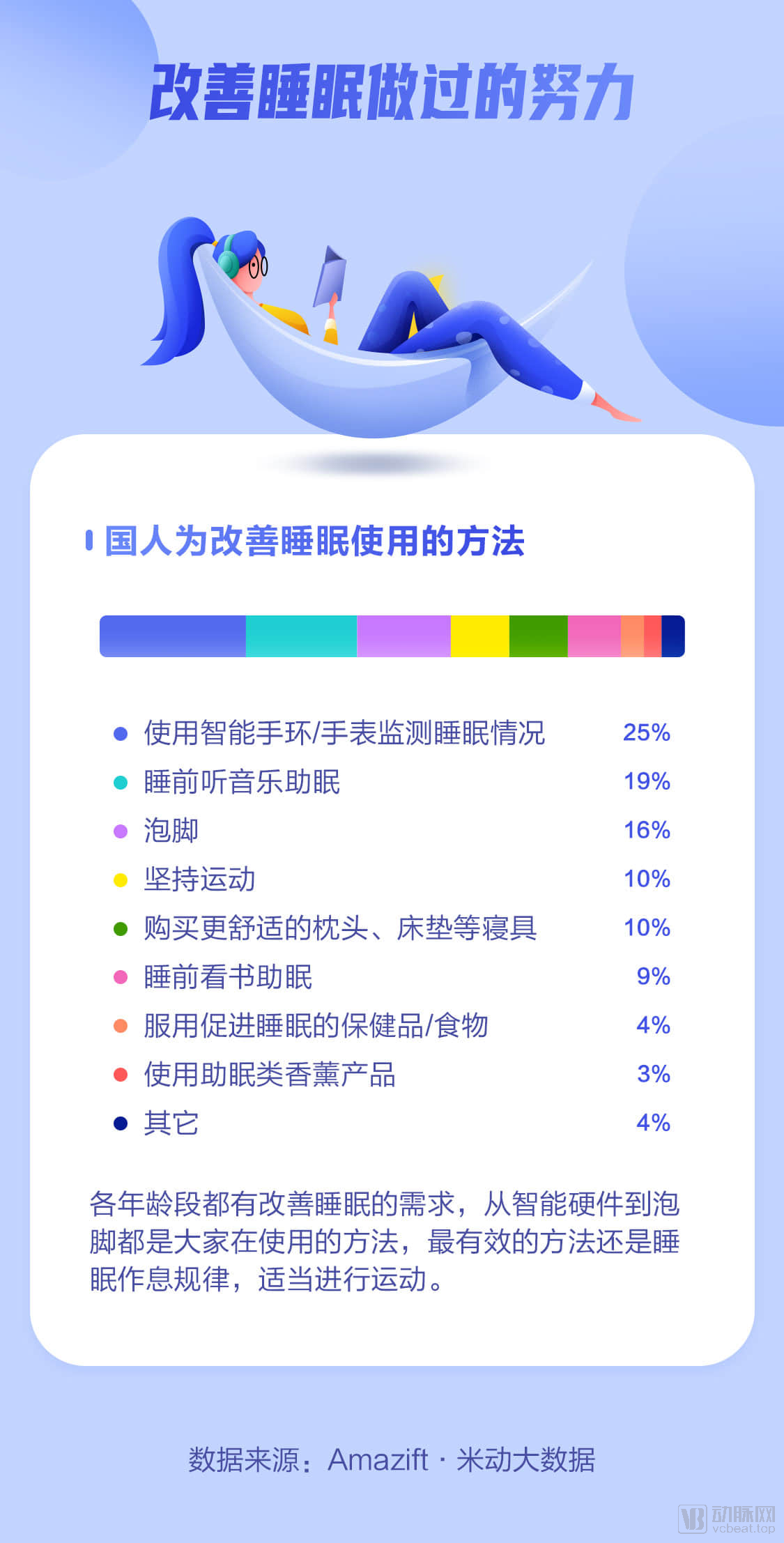
Chinese people have made significant efforts to improve their sleep. In addition to wearing smart bracelets or watches to monitor sleep, the most commonly adopted methods include listening to music, soaking feet in hot water, and maintaining regular exercise. Other approaches include purchasing more comfortable bedding and reading books.
Huami Technology was founded in 2013 and listed on the New York Stock Exchange (NYSE: HMI) in February 2018. As a global leader in innovative smart wearables, the company has achieved cumulative shipments of over 100 million smart devices. Huami Technology possesses vast amounts of sports and human health data and has launched its health cloud services.
As of September 30, 2019, Huami Technology’s smart wearable devices had recorded a cumulative total of 81.2 trillion steps, 7 billion nights of sleep data, and 21.1 billion hours of heart rate monitoring, while the accumulated number of ECG (electrocardiogram) records reached 14.89 million.
In recent years, Huami has repeatedly released white papers such as the "Sports White Paper," "Sleep White Paper," and "Heart Health White Paper," continuously focusing on the sports, sleep, and heart health of Chinese people, and committed to popularizing the concept of a healthy lifestyle through exercise to the whole society.