

ResMed-KDTE Launches Innovative Online + Remote Diagnostic Model for Obstructive Sleep Apnea
RESMED China
Sleep Apnea Solution Provider
Shanghai, China — As World Sleep Day approaches, ResMed KaiTai, a globally leading brand in sleep and respiratory care, issues an initiative: Amid the pandemic, attention to sleep health must not be overlooked. Quality sleep is a vital means of boosting physical immunity; however, snoring, a relatively common sleep phenomenon, has long been neglected by many.
Sleep apnea induced by severe snoring causes nocturnal hypoxia, which can trigger or exacerbate various chronic diseases, forming a bidirectional causal relationship with conditions such as hypertension and obesity.
Currently, the world is in a phase of collaborative cooperation against the COVID-19 pandemic. Improving the efficiency of medical resource utilization from various aspects and strengthening self-management and monitoring for patients with chronic diseases are the common goals of the global healthcare industry.
To this end, we have pioneered an online plus remote diagnosis model for obstructive sleep apnea (hereinafter referred to as OSA) in China, providing convenience for potential OSA patients, optimizing the allocation of high-quality medical resources, and enhancing the precision, accessibility, and reach of medical diagnostics.
According to the World Health Organization, 27% of the global population suffers from sleep disorders. There are as many as 90 diseases that occur during sleep, with insomnia and obstructive sleep apnea (OSA) being the most common. As one of the most dangerous sleep disorders, OSA causes respiratory arrest during sleep in 3,000 people worldwide every day due to snoring. Snoring is an important clinical indicator of OSA. Furthermore, OSA is associated with various high-risk chronic diseases, posing a threat to life.
OSA and Coronary Heart Disease
Patients with OSA exhibit significant nocturnal heart rate variability, characterized by bradycardia during apneic episodes and tachycardia upon their resolution. This fluctuating heart rate exacerbates the onset of coronary heart disease. In extreme cases, it may lead to sudden cardiac death during sleep.
OSA and Hypertension
Patients with obstructive sleep apnea (OSA) are prone to hypoxia and recurrent microarousals during sleep, which trigger vascular tension. Involuntary vasoconstriction and narrowing occur, leading to increased vascular resistance and elevated blood pressure.
OSA and Diabetes
OSA and diabetes often coexist as comorbid conditions. Domestic studies have shown that the prevalence of OSA is higher in patients with diabetes than in the general population, while the prevalence of diabetes is also higher in patients with OSA than in the general population.
At the press conference for “2020 World Sleep Day” hosted by the Chinese Sleep Research Society, Han Fang, Secretary-General of the World Association of Sleep Medicine and Professor at Peking University People’s Hospital, stated that sleep disorders have a broad impact, encompassing more than 90 types of sleep diseases categorized into three major groups: “difficulty falling asleep, difficulty waking up, and poor-quality sleep.” Currently, there are approximately 60 million patients with obstructive sleep apnea (OSA) in China who require treatment. Given the existing departmental structures and diagnostic and therapeutic efficiency, the capacity falls far short of meeting the demand for comprehensive diagnosis.
Over the past three decades, China has witnessed increasingly rapid development in the field of sleep-disordered breathing. Although more than 3,000 medical institutions across the country currently offer sleep medicine services, their capabilities still require enhancement. In response, Professor Han Fang has, in recent years, repeatedlyCall for StrengtheningTelemedicine Service Platform: Implementing Home-Based Monitoring and Treatment to Reduce the Incidence of Future Complications.
ResMed’s innovative online and remote diagnostic model for obstructive sleep apnea (OSA) encompasses a complete closed-loop process, from initial screening to precise diagnosis. During the COVID-19 pandemic, this approach spared potential OSA patients the inconvenience of seeking in-person medical care and exposure to crowded settings; in the long term, it is poised to become a new trend in OSA diagnosis.
Prior to the launch of the online-plus-remote diagnostic model for obstructive sleep apnea (OSA), individuals suspected of having OSA were required to spend an overnight stay at a hospital or designated diagnostic facility to obtain a formal diagnostic report. With this innovative online-and-remote approach, patients can simply sleep in their own familiar beds at home as usual and conveniently receive a professional diagnostic report.
Mianyun Sara APP, an online application developed by ResMed CareTech, serves as the “online” component of this innovative model and will assist potential OSA patients in completing initial disease screening.
Leveraging cloud-based end-to-end data management and ResMed KaiTai’s extensive professional medical expertise in the field of sleep-disordered breathing, Mianyun Sara generates clear preliminary screening reports categorizing patients into low, moderate, or high risk. This is achieved by analyzing overnight snoring recordings using algorithms, combined with patient-specific questionnaire assessments. Clinical validation against polysomnography (PSG) results from three Grade A tertiary hospitals has demonstrated an accuracy rate exceeding 80%.
Upon receiving the sleep report issued by Mianyun Sara, patients can determine their subsequent service needs based on the OSA severity assessment contained therein, including applying for the Apnea Air monitoring device from Aipulin via the platform. Users may choose to pick up the device at an offline experience store or have it delivered by mail. The Aipulin Apnea Air device is a professional Level III sleep monitoring device capable of recording indicators such as nasal airflow, snoring, blood oxygen saturation, pulse, respiratory effort, and sleep position.
This device is widely used in hospital sleep monitoring departments to monitor patients. Meanwhile, due to its ease of use, an increasing number of patients prefer to conduct self-monitoring at home. Upon completion of monitoring, the data is transmitted via cloud connectivity to professional medical personnel, who generate detailed and accurate sleep reports for patients, providing robust and comprehensive data support for subsequent treatment. Additionally, users can apply online to trial ventilator therapy.
With population aging and the accelerating pace of modern life, the efficiency of chronic disease management will challenge every healthcare professional. The online integrated self-testing solution for obstructive sleep apnea (OSA), developed by ResMed KaiDiTai, takes a long-term view and aligns with the trends of medical digitalization and remote diagnosis, playing a positive role during the pandemic.
Since the outbreak of the COVID-19 pandemic, ResMed CareTech has closely monitored China’s efforts in combating the virus. As a leading brand in the ventilator industry, ResMed CareTech has actively participated in donating high-end ventilators, equipping frontline healthcare workers with essential tools and providing life-saving support to critically ill patients.
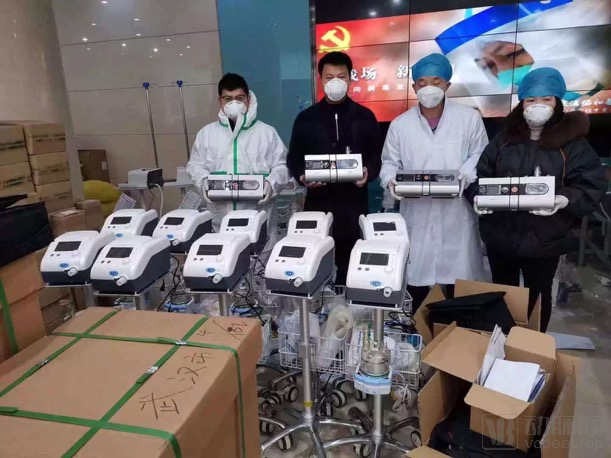
Within just one month, ResMed KaidiTai joined forces with its Wuhan-based partners to fight on the front lines, assisting hospitals in installing and testing over a thousand ventilators, while also entering patient wards to guide medical staff in standardized operations. ResMed KaidiTai ventilators were delivered to multiple designated hospitals, including Wuhan Jinyintan Hospital, Wuhan Central Hospital, and Wuhan Pulmonary Hospital. Owing to their leading performance and first-class service, ResMed KaidiTai’s ventilator product line was also selected by numerous public welfare organizations as the preferred brand for donated ventilators.
ResMed KaiDiTai’s ventilator products span both hospital and home settings, and are widely used in the treatment of respiratory conditions such as chronic obstructive pulmonary disease (COPD) and sleep apnea.