

Epidemic as the Ultimate Test: AKang Health Safeguards the Frontline of Primary and Internet Healthcare
AKangHealth
Prescription Drug Operation Service Provider
At AKangHealth, a relay race themed “Medication Must Not Stop” has been ongoing since January.
Since the onset of the COVID-19 pandemic, many community clinics and pharmacies have remained shuttered, with the exception of emergency hospitals. Under home quarantine measures, patients venturing out indiscriminately to purchase medications face the risks of unavailability and cross-infection, making “difficulty in accessing medications” a stark reality for many individuals with chronic diseases. This contradiction is even more pronounced at the primary care level due to the scarcity of medical resources.
“Channels may halt, but the supply of medicines must not.” said Wang Lijue, Chairman of AKangHealth. He introduced that during the pandemic, the demand for chronic disease medications at the grassroots level surged dramatically. As a new-type pharmaceutical distribution enterprise with the mission of “making no medicine hard to find,” AKangHealth leveraged its years of accumulation in the chronic disease field and implemented multiple emergency measures to maximize the guarantee of medication for grassroots chronic disease patients when the epidemic struck. This helped tens of thousands of chronic disease patients solve their difficulties in accessing medications. Meanwhile, it was designated by the Science, Industry, Commerce and Information Bureau of Baiyun District, Guangzhou City as a collection and storage unit for epidemic prevention and control materials, and became one of the national key enterprises supported by the People's Bank of China’s special funds for epidemic prevention and control.
As a 15-year veteran deeply entrenched in the pharmaceutical distribution sector, how has AKangHealth efficiently responded to the challenges posed by the pandemic? Amidst the outbreak, what “new directions” in the industry has AKangHealth, known for its unconventional approach, uncovered? Recently, VCBeat conducted an exclusive interview with Wang Lijue, Chairman of AKangHealth, offering a comprehensive interpretation from the perspective of a pharmaceutical professional.
For patients with chronic diseases, taking medication is as essential as eating and drinking are for the average person. “My medication was running out, but I had nowhere to buy more. Staying in the countryside, I couldn’t go out; yet if I did venture out, I worried about getting infected…” said Aunt Zhang from Guangzhou. Suffering from coronary heart disease and requiring long-term medication, she was deeply distressed by her inability to find the necessary drugs due to the impact of the pandemic.
Aunt Zhang is not an isolated case. “The difficulty in obtaining medications has continued to escalate during the pandemic, compounded by traffic control measures that prevented many express and logistics shipments from reaching their destinations. In particular, major carriers such as SF Express and the ‘Four Tongs and One Da’ did not gradually resume operations until March,” introduced Wang Lijue. The current pandemic has had a significant impact on pharmaceutical distribution companies; in addition to logistical disruptions, the fulfillment rate for upstream procurement orders reached only 50%.
AKangHealth, established in 2005, is a novel pharmaceutical distribution company built on the circulation of medications for chronic diseases, critical illnesses, and rare diseases, serving the trends of prescription outflow and the separation of prescribing from dispensing. Over the past 15 years, AKangHealth has expanded from its initial B2B pharmaceutical model to a disease-centric approach, creating an integrated supply chain system that combines DTP (Direct-to-Patient) with CDC (Chronic Disease Care), B2B with B2C, and online with offline services. This evolution has gradually formed an ecological closed loop encompassing “healthcare + disease-specific management + pharmaceuticals + insurance.”
To combat the epidemic, AKangHealth initiated a "non-stop during Spring Festival" warehousing service mechanism on January 23. On January 31, AKangHealth urgently resumed full-scale business operations, prioritizing the mobilization of upstream centralized procurement of anti-epidemic supplies to ensure an unobstructed supply chain from the source.
Targeted procurement was conducted to combat the epidemic, including oseltamivir phosphate capsules (Kewei) for viral prevention, Lianhua Qingwen capsules, Banlangen granules, antiviral oral liquid, and Qingkailing oral liquid, as well as medications to enhance recovery and immunity such as human albumin, intravenous immunoglobulin (IVIG), and interferon. Through dedicated efforts, specialized pharmaceutical procurements valued at nearly RMB 80 million were promptly stocked and made available. Meanwhile, in collaboration with Zhejiang Chinese Medical University and other partners, an initiative was launched to provide Traditional Chinese Medicine (TCM) support overseas. Together with numerous Chinese pharmaceutical companies engaged in international anti-epidemic efforts, the first batch of TCM proprietary medicines, represented by Lianhua Qingwen capsules and Fangfeng Tongsheng pills, was donated.

(Photo provided by AKangHealth)
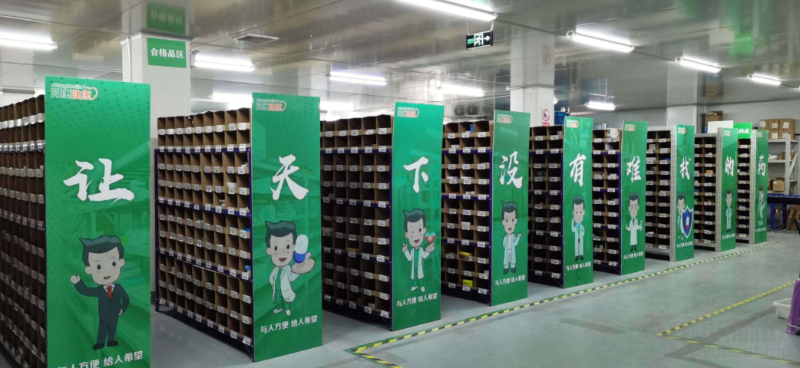
Secondly, comprehensive measures were taken to ensure medication access for patients with chronic diseases at the primary care level affected by the pandemic. Wang Lijue introduced that safeguarding primary care was the main objective of this epidemic response. During the Spring Festival, the primary care sector faced increased population flow and high demand, yet its supply chain remained fragile. During the epidemic, AKangHealth increased investment in warehousing and logistics to meet order demands from primary care platforms such as Jicengtong, Cloud Pharmacy Warehouse, and Cloud Pharmacy. By efficiently allocating inventory, prioritizing supply and delivery to primary care areas, medications were rapidly delivered to primary care clinics, chain pharmacies, community health centers, village doctors, and patients.
Online coverage, rapid scaling, and outreach to chronic disease patients: AKangHealth demonstrated its strong capabilities during the pandemic. Wang Lijue introduced that during this outbreak, AKangHealth’s business volume achieved 100% growth, with B-side account registrations rising to over 10,000 in February—two to three times the usual level.
(Photo provided by AKangHealth)
“A journey of a thousand miles begins with a single step.” AKangHealth’s years of strategic exploration and deployment in primary healthcare have laid a crucial foundation for its current “Fight the Epidemic, Protect Primary Care” initiative.
Wang Lijue introduced that over the past three years, AKangHealth has made substantial investments in primary healthcare.
AKangHealth has established a closed-loop ecosystem integrating pharmaceuticals, diagnostics, and medical services through initiatives such as the Primary Care Chronic Disease Rehabilitation Project, central prescription dispensing pharmacies, joint academic promotion with brand-name manufacturers, rural cloud pharmacies, and primary care diagnostic testing. By collaborating with pharmaceutical companies, healthcare institutions, and clinical laboratories, AKangHealth has significantly contributed to enhancing the quality of diagnosis and treatment at the primary care level.
AKangHealth’s Chronic Disease Rehabilitation Program enables village doctors to access over 14,000 hospital-prescribed medications via the “Jicengtong” platform, covering 21 medical specialties, 1,500 chronic disease types, and more than 5,000 medication solutions.
“In 2019, AKangHealth conducted over one hundred training sessions for primary care physicians in more than 100 counties and districts across Guangdong Province, reaching over 25,000 village doctors. In Guangdong, we have established more than 2,500 cloud pharmacies to facilitate follow-up consultation pathways between primary care physicians and villagers,” introduced Wang Lijue. He noted that, had it not been for the pandemic this year, the company would have proceeded with its original plan to launch training programs for primary care physicians in three provinces, thereby strengthening its presence at the grassroots level.
Regarding the next phase of its grassroots strategy, Wang Lijue stated that AKangHealth will continue to deepen its engagement in primary healthcare. For instance, in the upstream segment, AKangHealth plans to collaborate with more branded pharmaceutical manufacturers—particularly those specializing in medications for chronic diseases—to expand academic promotion activities covering the primary care market.
“During the pandemic, AKangHealth also conducted numerous live streams and video lectures to extensively educate primary care physicians by disseminating expert insights from major hospitals through our channels. In the future, we will further deepen integration in this area,” said Wang Lijue.
At Present: Internet Healthcare Enters Its Spotlight Moment,
AKangHealth’s “Home Delivery of Medications” Fully Builds a Closed-Loop Medical and Pharmaceutical Ecosystem
Since the outbreak of the pandemic, most industries have been in a deep freeze, while the internet healthcare sector has ushered in an early spring driven by the epidemic.
According to monitoring data from Analysys Qianfan, during the 2020 Spring Festival holiday (from the 29th day of the 12th lunar month to the 6th day of the first lunar month), the peak daily active users (DAU) for independent apps in the online consultation segment of internet healthcare reached 6.712 million, representing a maximum increase of nearly 1.6 million users and a growth rate of 31.28%.
To meet the needs of epidemic prevention and control, on March 2, the National Healthcare Security Administration and the National Health Commission jointly issued a document to include eligible “Internet+” medical service fees within the scope of medical insurance reimbursement. Internet-based medical institutions may issue electronic prescriptions online for insured individuals, who can then obtain medications through various flexible offline dispensing methods while enjoying medical insurance coverage.
The intensification of policy support has undoubtedly further propelled the development of internet healthcare.
“With the relaxation of policies regarding ‘Internet + Medical Insurance’ and the gradual exploration of online payment for medical insurance, I believe this epidemic has been a significant force in opening the door to internet healthcare,” said Wang Lijue.
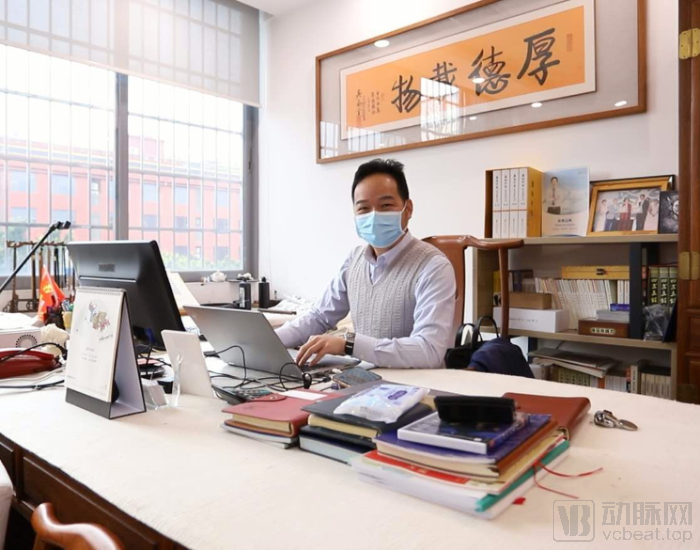
(Pictured: Wang Lijue, Chairman of AKangHealth)
He stated that as early as one year ago, AKangHealth had already established partnerships with over 100 internet healthcare platforms. During the recent pandemic, upstream pharmaceutical manufacturers saw a significant increase in demand for internet healthcare services. In response, AKangHealth rapidly integrated more than 50 additional internet healthcare platforms to forge deep connections with the pharmaceutical industry, thereby meeting the medication needs of physicians and chronic disease patients on the industrial side.
“Since the outbreak of the pandemic, we have collaborated with internet healthcare platforms online to ensure medication access at the grassroots level through online consultations and delivery of medications for chronic diseases,” said Wang Lijue.
He stated that during the outbreak, AKangHealth collaborated with numerous leading domestic internet healthcare platforms, including WeDoctor, DXY Doctor, Ping An Good Doctor, Chunyu Doctor, Gancao Doctor, Kuaiwen TCM, and Yilian Platform, to launch 24-hour online free clinics. Meanwhile, as the medication dispensing service provider for over 80 mainstream internet healthcare platforms in China, it activated its “Non-Stop Service During Spring Festival” contingency plan to comprehensively support platforms, doctors, and patients on the front lines, ensuring an uninterrupted supply of medications for patients with serious, critical, and chronic conditions. During the epidemic, the daily shipment volume of internet healthcare prescriptions exceeded 10,000 orders, effectively guaranteeing timely and safe access to consultations and medications for online patients.
A Single Move Affects the Whole System. Internet healthcare is ushering in unprecedented historical development opportunities, and for the pharmaceutical distribution market, this trend serves as an invisible “catalyst” accelerating its growth. How should pharmaceutical distribution enterprises respond?
Wang Lijue introduced that, in the case of AKangHealth, the first step to adapt to changes is to fully ensure “drug availability” through supply chain solutions. The second step involves strengthening pharmacist services while providing medications to patients, enhancing medication adherence and pharmacists’ capability in medication management, and promptly feeding information back to partner internet healthcare platforms to establish a closed-loop information system for initial and follow-up consultations. The third step is to deepen collaboration with internet healthcare platforms, promote rational drug use and cost containment, and prepare for the integration of online medical insurance payments and commercial insurance coverage.
“As the importance of internet healthcare in medical insurance reimbursement grows, AKangHealth is strengthening its collaboration with internet healthcare platforms to enhance service capabilities in response to these changes. This includes ensuring the reliable delivery of prescription drugs, promoting rational drug use, and comprehensively upgrading its supply chain and warehousing systems. Meanwhile, the company will assist specialized internet hospitals in establishing pharmacies, managing inventory reserves, and ensuring stable supply,” said Wang Lijue.
Trend: The future of pharmaceutical distribution will evolve into a B2B2C model,
Front-end Procurement and Last-mile Delivery Enable a Big Data-Driven, Refined Circulation System
What Will the Future Landscape of Pharmaceutical Distribution Look Like? Wang Lijue Shared the Following Points:
I. Service Upgrade. In the future, pharmaceutical distribution will gradually shift from serving large business clients (large B-end) to small business clients (small B-end), and even to consumers (C-end). The industry is increasingly returning to the essence of healthcare, refocusing on patient-centric service systems.
II. Continuously enhance empowerment for B-side clients, including market penetration and collaborative initiatives. For instance, AKangHealth partners with primary care physicians at the grassroots level to establish cloud pharmacies and cloud clinics, thereby helping these physicians improve their capacity to serve patients.
III. Enhancing Big Data Computing CapabilitiesThe traditional pharmaceutical distribution industry suffers from weak computing capabilities, prolonged inventory turnover cycles, and extended service lead times, resulting in low operational efficiency and high costs. In the future, pharmaceutical distribution enterprises will leverage data control over small-to-medium business (SMB) clients and provide technological empowerment to B-end partners. This approach aims to enhance their data management and operational capabilities, thereby further improving cargo turnover efficiency and reducing costs.
4. The supply chain will be upgraded into a closed loop of “medical care + pharmaceuticals + diagnostics + insurance.” “The future supply chain is not merely an industrial system; it requires the integration of diagnostics, insurance, and other elements, going beyond simple drug distribution.” He cited the example of the U.S.-based ESI Group, which evolved from providing pharmaceutical supplies to managing disease and medication benefits, eventually growing into a comprehensive pharmaceutical services conglomerate with annual revenues exceeding $10 billion. This model may serve as a reference for the future development of China’s pharmaceutical distribution industry, with policy, capital, and market forces driving the transition toward this paradigm.
He is full of expectations for the future of the pharmaceutical distribution industry.
As early as 2017 and 2018, AKangHealth had already completed its angel round and Series A financing, raising tens of millions of yuan. Wang Lijue stated that the company hopes to attract more capital from investors with industrial backgrounds and health insurance expertise to accelerate its growth.
“Although we are currently adopting a B2B model, we aim to achieve coverage of the consumer (C-end) market through word-of-mouth. For small-scale business clients at the grassroots level, they serve as the primary traffic gateway to end consumers. In the future, we will leverage our B2B model to better serve end consumers; therefore, from a capital perspective, we will consider strategic integration with the medical and health insurance industries,” said Wang Lijue.
As the pandemic in China nears its end, the healthcare industry—having weathered a profound trial—is setting sail once again. What lies ahead for the pharmaceutical and medical sectors? In the wake of black swan events, we believe new surprises are on the horizon.