

Junlian Medical New Drug Bulletin 2020 Issue 10 – Prospectus Filing Announcement
Mar 23, 2020 18:00
CST Updated
18:00

This week, there were 8 new drug data entries, including 2 for anti-infectives, 2 for oncology, 2 for neurological disorders, 1 for vaccines, and 1 for dermatological conditions.
❖Pfizer announced that it would jointly develop and commercialize BioNTech’s mRNA-based COVID-19 vaccine candidate, BNT162. Buoyed by the rebound in U.S. stocks and multiple positive developments, BioNTech’s share price surged 66.5% on the day. Founded in 2008 and headquartered in Mainz, Germany, BioNTech is a major player in the field of mRNA therapeutics and listed on the Nasdaq in October 2019. Currently, the companies most closely associated with COVID-19 in the mRNA arena are Moderna, CureVac, and BioNTech. Due to high levels of attention, these companies have remained in the spotlight, with numerous business development (BD) partnerships emerging. Among them, BioNTech plans to launch global clinical trials for its COVID-19 vaccine in late April, pending regulatory approval. The trials will span Europe, the United States, and China. Fosun Pharma will be responsible for conducting clinical trials, filing for marketing approval, and handling market sales of the vaccine in mainland China as well as the Hong Kong, Macao, and Taiwan regions, bearing the corresponding costs and expenses.
❖Merck KGaA has released the latest results from its clinical study of M7824, a proprietary bifunctional immunotherapy targeting PD-L1 and TGF-β, for the second-line treatment of advanced non-small cell lung cancer (NSCLC). The overall objective response rate (ORR) across all patients was 21.3% (17/80), which is modest. However, in the 1,200 mg dose cohort, the ORR reached 36.0% (10/27) among patients with PD-L1 positivity (≥1%) and an impressive 85.7% (6/7) among those with high PD-L1 expression (≥80%). Following the dominance of Opdivo and Keytruda across major cancer indications, the global pharmaceutical industry has been striving to identify new breakthroughs. Multinational corporations (MNCs) that previously missed out on earlier opportunities highly value the potential of M7824. For instance, GlaxoSmithKline (GSK) and Merck KGaA entered into a global collaboration agreement for the joint development and commercialization of M7824, under which GSK paid an upfront fee of approximately $343 million, with potential additional payments totaling $3.871 billion.
ViiV Healthcare Announces Launch of Long-Acting HIV-1 Therapy Cabenuva in Canada for the Treatment of Patients with Suppressed HIV-1 Virus
ViiV Healthcare Announces the Launch of Cabenuva, a Long-Acting HIV-1 Therapy, in Canada: The World’s First Once-Monthly Injection to Effectively Suppress HIV-1 as a Replacement for Existing Antiretroviral Regimens in Patients with Viral Suppression
Cabenuva is a long-acting antiretroviral therapy administered via intramuscular injection. It consists of two active ingredients: rilpivirine and cabotegravir.
Results from Two Pivotal Phase 3 Clinical Trials in Over 1,100 Patients Across 16 Countries
Monthly intramuscular injection of Cabenuva into the gluteal muscle demonstrated comparable efficacy to daily oral antiretroviral therapy in suppressing HIV-1 RNA levels in patients after 48 weeks of treatment.
ViiV's Product Portfolio in the HIV Field
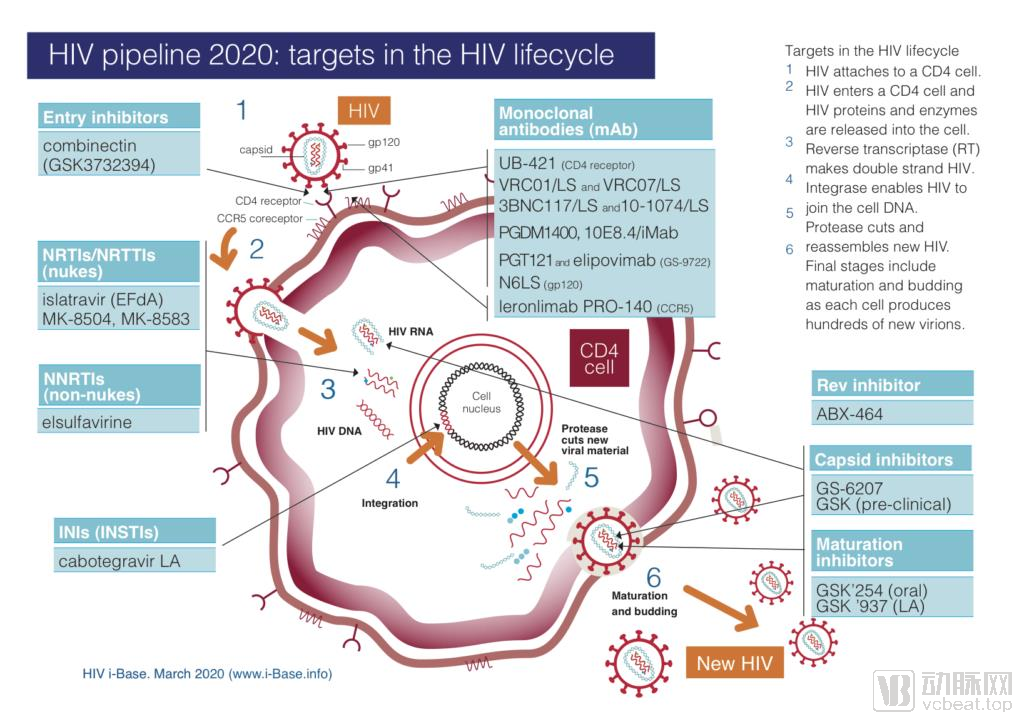
Data source: ViiV Healthcare
Soligenix Announces Positive Topline Results from Phase 3 Clinical Trial of Photodynamic Therapy SGX301 for the Treatment of Cutaneous T-Cell Lymphoma
Soligenix Announces Positive Top-Line Results from Phase 3 Clinical Trial of SGX301, a First-in-Class Photodynamic Therapy for the Treatment of Cutaneous T-Cell Lymphoma (CTCL)
SGX301 is applied topically as an ointment containing synthetic hypericin to skin lesions, where it is absorbed by malignant T cells. After 16–24 hours, SGX301 can be activated by low-energy fluorescent light; the activated hypericin inhibits the proliferation of malignant T cells and induces their apoptosis.
In the Phase 3 clinical trial named FLASH, a total of 169 patients received treatment with SGX301 or placebo.
The trial results showed that, after the first course of treatment, 16% of patients in the SGX301 group achieved at least a 50% reduction in lesions, compared with 4% in the control group (p=0.04).
Janssen Announces Submission of New Drug Application (NDA) for Ponesimod to the U.S. FDA for the Treatment of Adults with Relapsing Multiple Sclerosis (MS)
Janssen, a subsidiary of Johnson & Johnson, announced the submission of a New Drug Application (NDA) to the U.S. FDA for ponesimod for the treatment of adult patients with relapsing multiple sclerosis (MS).
Ponesimod is a selective S1P1 receptor modulator. This class of drugs reduces the number of circulating lymphocytes by inhibiting S1P1 receptor activity, thereby sequestering lymphocytes within lymph nodes.
In the Phase 3 clinical trial, ponesimod was compared with the approved therapy teriflunomide; a total of 1,133 patients with multiple sclerosis (MS) participated in the trial, which lasted up to 108 weeks.
Ponesimod reduced the annualized relapse rate (ARR) in multiple sclerosis (MS) by 30.5% compared with the active control group. Furthermore, the key secondary endpoint of fatigue improvement was also met.
Pfizer Announces That Its Investigational 20-Valent Pneumococcal Conjugate Vaccine Demonstrated Favorable Safety and Immunogenicity in Adults in Phase 3 Clinical Trial
Pfizer announced that its investigational 20-valent pneumococcal conjugate (20vPnC) vaccine demonstrated safety and immunogenicity comparable to those of the approved vaccine Prevnar 13 in adults aged 18 years and older in a Phase 3 clinical trial evaluating the prevention of pneumonia and invasive diseases caused by Streptococcus pneumoniae infection.
Conjugate Vaccine: A conjugate vaccine is produced by chemically linking polysaccharide or oligosaccharide antigens to a protein carrier. It can more effectively stimulate immune responses in both adults and children.
In the Phase 3 clinical trial, a total of 3,880 adults aged 18 years and older who had not previously received pneumococcal vaccination were enrolled.
The trial results demonstrated that, compared with Prevnar 13, non-inferiority criteria for immunogenicity were met for all 13 serotypes in adults aged 60 years and older one month after vaccination with the 20vPnC vaccine.
Pfizer Announces That Its Oral JAK1 Inhibitor Met the Primary Endpoint in a Phase 3 Clinical Trial for Adult Patients with Moderate-to-Severe Atopic Dermatitis
Pfizer Announces That Its Oral JAK1 Inhibitor Abrocitinib Met the Primary Endpoint in the Phase 3 JADE COMPARE Clinical Trial for Adult Patients With Moderate-to-Severe Atopic Dermatitis (AD)
Pfizer’s abrocitinib is an oral small-molecule selective JAK1 inhibitor.
In this Phase 3 clinical trial, patients with moderate-to-severe atopic dermatitis received abrocitinib, an active comparator (dupilumab), or placebo, in addition to topical therapy.
The proportion of patients treated with two different doses of abrocitinib who achieved the primary efficacy endpoint at Week 12 was significantly higher than that in the placebo group, and this efficacy was maintained through Week 16.
The lopinavir/ritonavir combination did not provide significant benefits over standard care in adult patients with severe COVID-19.
For COVID-19, the use of lopinavir/ritonavir combination therapy did not provide significant benefits for adult patients with severe disease compared to standard care.
Lopinavir/Ritonavir is a combined protease inhibitor.
The clinical trial enrolled a total of 199 patients with laboratory-confirmed COVID-19. Ninety-nine were assigned to the lopinavir/ritonavir treatment group, and 100 to the standard care group.
Compared with standard care, lopinavir/ritonavir did not provide a significant benefit in the intention-to-treat (ITT) population regarding the median time to clinical improvement, which was 16 days in both groups (hazard ratio for clinical improvement, 1.31; 95% CI, 0.95–1.85; P=0.09).
Biohaven Pharmaceuticals Announces That Its Myeloperoxidase Inhibitor Has Been Granted Fast Track Designation by the U.S. FDA for the Treatment of Patients with Multiple System Atrophy
Biohaven Pharmaceuticals Announces That Its Oral Myeloperoxidase (MPO) Inhibitor Verdiperstat (BHV-3241) Has Been Granted Fast Track Designation by the U.S. FDA for the Treatment of Patients with Multiple System Atrophy (MSA)
MPO is a key driver of oxidative and inflammatory processes, with significantly elevated levels observed in a range of brain disorders. Inhibiting MPO activity represents a promising therapeutic strategy for neuroinflammation and neurodegenerative diseases, including multiple system atrophy (MSA).
Phase 2a Clinical Trial
After 12 weeks of treatment, the score in the placebo group decreased by 4.6 points, whereas the scores decreased by 3.7 points and 2.6 points in patients receiving BHV3241 at 300 mg twice daily and 600 mg twice daily, respectively.
Verdiperstat Has Neuroprotective Effects
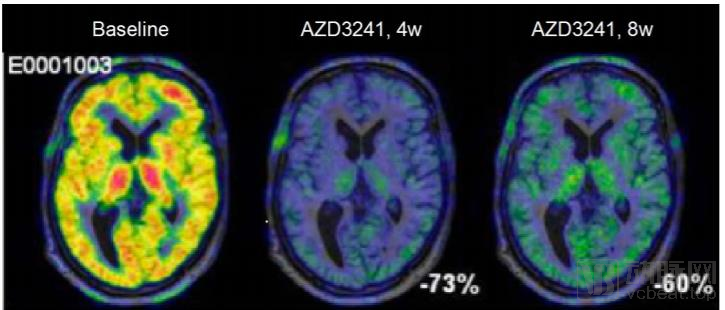
Data source: Biohaven
AstraZeneca Announces That Imfinzi Demonstrates Sustained and Significant Improvement in Overall Survival in Phase 3 Trial for First-Line Treatment of Small Cell Lung Cancer
AstraZeneca Announces That Its Immunotherapy Imfinzi (durvalumab), in Combination with Standard of Care, Demonstrated a Sustained and Significant Improvement in Overall Survival (OS) in the Final Analysis of the Phase 3 CASPIAN Trial for First-Line Treatment of Patients with Extensive-Stage Small Cell Lung Cancer (ES-SCLC)
Imfinzi, developed by AstraZeneca, is a humanized anti-PD-L1 monoclonal antibody that relieves immunosuppression by preventing PD-L1 from binding to the PD-1 and CD80 receptors.
In the open-label, randomized, global Phase 3 CASPIAN trial, patients with extensive-stage small cell lung cancer (SCLC) received either Imfinzi-based combination therapy or standard chemotherapy regimens.
Imfinzi-based combination therapy can provide patients with a clinically meaningful improvement in overall survival. The combination therapy adding an anti-CTLA-4 antibody did not meet the primary endpoint of the trial.
❖IDEAYA Biosciences Announces Clinical Research Collaboration Agreement with Pfizer to Evaluate the Efficacy of Combining IDEAYA’s Investigational Small-Molecule Protein Kinase C (PKC) Inhibitor IDE196 and Pfizer’s MEK Inhibitor Binimetinib in Patients with Solid Tumors Harboring GNAQ or GNA11 Mutations
❖Hengrui Medicine Released Its 2019 Annual Report: The Company Achieved Operating Revenue of RMB 23.289 Billion, a Year-on-Year Increase of 33.70%; Net Profit Attributable to Shareholders of the Parent Company Reached RMB 5.328 Billion, a Year-on-Year Increase of 31.05%. In Terms of R&D and Innovation, Cumulative R&D Expenditure in 2019 Amounted to RMB 3.896 Billion, an Increase of 45.90% from the Previous Year, with R&D Intensity Reaching 16.73% of Sales Revenue.
❖Hansoh Pharmaceutical’s Class 1 innovative drug, almonertinib mesylate tablets, has been approved for marketing by the NMPA for the treatment of adult patients with locally advanced or metastatic NSCLC who have progressed after prior EGFR TKI therapy and are T790M mutation-positive.
❖Tigermed Announces Proposed H-Share Issuance and Listing on the Main Board of the Hong Kong Stock Exchange. Tigermed stated that the number of H shares to be issued shall not exceed 15% of the company’s total share capital after the issuance (prior to the exercise of the over-allotment option), and an over-allotment option of up to 15% of the aforementioned number of H shares will be granted to the underwriters.