

Strengthening External Defense and Internal Immunity: Digital Technologies Pave a New Path for Virus Resistance
On March 24, 2020, the COVID-19 pandemic caused by the novel coronavirus had spread to more than 150 countries and regions worldwide, with cumulative confirmed cases exceeding 370,000. This sudden crisis has severely impacted social stability and economic development, emerging as a major global public health issue and sounding an alarm for humanity’s health awareness.
In the face of the pandemic, the human body’s immune system serves as the most critical internal defense and the primary force in the race against viruses. A growing number of people have recognized the importance of immunity; however, strengthening it is not an overnight achievement but rather the result of accumulated healthy lifestyle habits and proactive health management interventions. As we emerge from the long, turbulent night of the pandemic, a new era of digital health management has arrived. Forward-looking enterprises are dedicating themselves to this field, collaborating with multiple stakeholders to enhance the health literacy of the entire population.
According to traditional thinking, the emergence of infectious diseases is mostly controlled by biological means, and vaccines and specific drugs have become effective methods for prevention and treatment. However, it takes a certain amount of time to develop new coronavirus vaccines and targeted specific drugs. Before that, it is necessary to control the source of infection, cut off the transmission route, and protect the susceptible population.
It is well established that viruses such as SARS-CoV-2 are highly contagious, with significant knowledge gaps remaining. The general population lacks specific preventive measures and targeted diagnostic and therapeutic options, making clustered and high-density living communities particularly susceptible to cross-infection. Therefore, precise and rapid diagnosis, swift screening and triage, home-based isolation and observation, and interruption of transmission routes are undoubtedly the most effective means of controlling the spread of the epidemic. During the fight against this outbreak, digital health technologies have opened up new avenues for governance in grassroots prevention and control efforts.
During the pandemic, medical resources were scarce across all sectors, and visiting hospitals posed a risk of cross-infection for residents, making home monitoring of relevant health indicators particularly essential. Smart thermometers and pulse oximeters can dynamically monitor physiological signs such as body temperature and blood oxygen saturation, aiding in the early detection of common clinical symptoms of COVID-19, namely persistent high fever accompanied by a sudden drop in blood oxygen levels.
After Wuhan announced its lockdown, the health technology company Miao Jiankang donated 10,000 smart home self-test kits free of charge to Wuhan residents. The kits included two types of smart testing hardware with data connectivity—thermometers and blood oxygen monitors—as well as an online solution package. Residents could perform real-time self-tests, with data synchronized to the cloud to enable community-based population classification and management, fully demonstrating the advantages of remote monitoring.

In addition, as the epidemic situation improved, the biggest challenge in resuming work and production was assessing the public’s health status. On February 9, Alipay launched the Health Code in Yuhang District, Hangzhou, before rapidly rolling it out nationwide. Based on real-world data, the Health Code is generated after users self-report their information online, serving as a key electronic credential for local access and movement.
It is evident that digital technology, organized on a community basis, is fully integrating various information resources to establish primary healthcare information systems. This approach facilitates the timely acquisition of data essential for prevention and control, effectively addresses the problem of information silos, enhances monitoring efficiency, and improves quality of life.
During the course of the epidemic, many members of the public, lacking a clear understanding of the virus’s pathogenesis and transmission mechanisms, were susceptible to various medical rumors. In response to the urgent public demand for authoritative protection information and knowledge, numerous technology platform companies stepped forward promptly to launch special guidelines on scientific protective measures for residents. They continuously debunked rumors to foster positive public opinion and prevent social panic during the epidemic.
For example, on January 23, Tencent launched a fever clinic map in Guangzhou, allowing users to navigate via mobile phones to the nearest fever clinic; Baidu, in collaboration with the National Clinical Research Center for Infectious Diseases and the State Key Laboratory for Diagnosis and Treatment of Infectious Diseases, released the “Self-Check Manual for Novel Pneumonia Protection,” providing one-stop authoritative knowledge on epidemic prevention; Tencent News’ “Jiaozhen” platform launched a special feature on “Real-Time Epidemic Rumor Refutation”; Dingxiang Doctor also added a “Rumor Refutation and Prevention” section to its real-time updated epidemic map, among other initiatives.
In terms of online guidance, to meet the health management needs during the pandemic, Miao Health introduced lifestyle medicine from the Canada Wellness Institute (CWI), the No. 1 chronic disease management organization in North America, into its app. It launched the CWI Training Camp to support home-based epidemic prevention, allowing users to receive free professional guidance from health management teams without leaving their homes. Improving health literacy and cultivating public health management capabilities during home confinement is one of the most fundamental, cost-effective, and efficient measures for epidemic prevention and control.
According to relevant reports from expert groups during the pandemic, children, pregnant women, the elderly, and individuals with chronic diseases constitute populations susceptible to coronavirus disease and require special attention during this critical period. Meanwhile, these four groups are also identified as the key populations targeted for specialized health management initiatives in the Healthy China Action (2019–2030) issued in 2019.
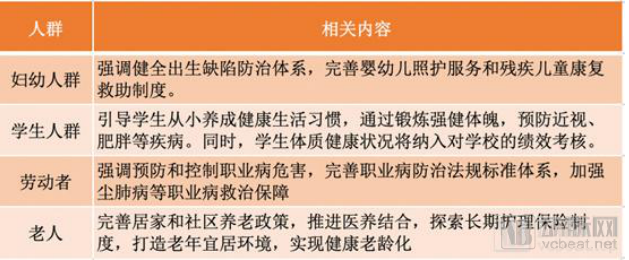
“Healthy China Action (2019–2030)”: Content on Health Management for Four Special Populations
Prevention is far more important than treatment. It is essential to improve the health literacy of the entire population and encourage everyone to prioritize their own health management. On February 5, Zhong Nanshan’s team released guidelines on pneumonia prevention for the elderly, pointing out that in addition to necessary measures such as avoiding exposure to infectious sources, interrupting transmission routes, and strengthening personal hygiene, other key recommendations include maintaining a reasonable diet, adopting healthy lifestyle habits, sustaining a positive psychological state, and actively managing underlying chronic conditions. These principles apply not only to the elderly but also to young and middle-aged adults, significantly increasing the likelihood of staying ahead of viral infections.
Prior to the pandemic, the “Healthy Wuhan” app had already partnered with Miao Health to lay the groundwork for digital health management. As the only officially certified public mobile medical and health service platform spearheaded by the Wuhan Municipal Health Commission, “Healthy Wuhan” integrated with Miao Health’s “Miao+” IoT health data platform. This integration endowed the app with health data analytics capabilities, expanding its scope from pharmaceutical consultations to comprehensive health services and enabling a precise AIoT-based health management model.
It is evident that the continuous refinement of digital technologies will position the internet, big data, and IoT devices as powerful technological tools in combating viruses. This advancement not only facilitates seamless information interoperability between communities and healthcare institutions but also lays a solid foundation for establishing an intelligent online-offline integrated medical and health system. Consequently, personalized, AI-driven health interventions tailored to each individual will soon become a reality.
On a global scale, China’s large-scale application of digital technologies in epidemic prevention and control marks a world-first. In other words, technology companies have leveraged their respective domain-specific capabilities to innovate scenarios for combating the pandemic through technology. In fulfilling their corporate social responsibility, they have also facilitated national technological upgrading, industrial transformation, and supply-side structural reform, thereby demonstrating the immense potential of “digital technology + health.”
From a macro perspective, the construction of digital government systems connects various urban functional departments, including healthcare, transportation, public security, community services, urban management, and government affairs. Key technologies such as AI, big data, and the Internet of Things (IoT) have enabled the comprehensive digitalization and online migration of epidemic prevention and control efforts across China, further enhancing their efficiency and effectiveness. Digital technology is also becoming deeply integrated with healthcare, driving industrial transformation.
The “Healthy China Action (2019–2030)” issued by the State Council emphasizes the national goal of promoting health management and disease management, and enhancing the health literacy of the entire population. Healthy lifestyles and robust technological support are fundamental elements for achieving Healthy China. More technology companies are contributing their efforts toward this goal, assisting the government in continuously improving the public health system and building infrastructure.
In the development of digital health cities in Xingtai and Hefei, the presence of More Health, a health technology enterprise, has been notable. Leveraging its technological strengths in big data and AIoT, along with its offline health management capabilities through CWI, More Health provides high-quality health databases for governments, medical institutions, and residents. It offers services such as comprehensive resident health records, continuous health data monitoring, interactive management, and one-stop health intervention solutions. These efforts have not only improved residents' health outcomes but also reduced overall regional healthcare expenditures.
Taking Smart Xingtai as an example, Miao Health primarily leverages its Sino-Canadian joint venture subsidiary, Canada Wellness Inc. (China) [hereinafter referred to as “CWI (China)”], to support the establishment of the Xingtai Digital Health Management City Headquarters. It provides a comprehensive lifestyle medicine health management solution based on AIoT technology. Local residents can experience a closed-loop service encompassing full-scenario health and chronic disease management, which includes on-site risk screening and health assessment, prescription issuance, on-site prescription implementation and chronic disease intervention, professional outcome evaluation, prescription adjustment, and post-discharge remote health guidance.
On an individual level, everyone must have the capacity to assume responsibility in the face of the virus’s devastating impact. As UK Prime Minister Boris Johnson stated, this pandemic is the most severe public health crisis facing this generation, and he warned British families that many would lose loved ones to the virus. We should therefore think rationally: immunity is the most effective “antiviral drug.” By enhancing our health literacy and prioritizing health management capabilities, we can prevent such tragedies from occurring.
Nietzsche said, “What does not kill me makes me stronger.” In recent days, medical aid teams from across the country who were dispatched to Hubei Province have begun to return home. This battle against the epidemic has achieved a phased victory. Let us not forget the healthcare workers who made significant contributions, the enterprises that provided support through various technological means, and always keep in mind the importance of strengthening our own immunity.
The enemies of health are not just viruses. Between life and death, winning and losing, fate is often in our own hands, depending on how we choose to respond. Each individual is not only the primary person responsible for their own health but also the gatekeeper of family health. By leveraging readily accessible digital health management tools to improve health-related behaviors and habits, we can start with ourselves and inspire those around us—family and friends alike—to embrace a healthier future together.