

Menxlab Files IPO Prospectus Amid Booming $100B+ Male Hair Loss Market Driven by Gen-Z and Millennials
Are Post-90s Already Going Bald? But Never Give Up on Treatment!—The self-deprecating humor of today’s young people far surpasses that of our parents’ generation, matched only by their increasingly “chilling” receding hairlines.
How Many People in China Are Affected by Hair Loss? According to survey data on hair loss released by the National Health Commission of China in 2019, the number of people suffering from hair loss in China has exceeded 250 million, meaning that one in every six individuals is affected. Among this population, those aged 20 to 40 account for a significant proportion. Within this age group, men are particularly prone to hair loss. Relevant research data reveal that nearly one-quarter of men begin experiencing hair loss at age 21, and 66% of men will encounter hair loss by age 35.
The fast-paced modern lifestyle and immense work-related stress have spread hair loss anxiety across diverse demographics, meaning it is no longer the “standard issue” for specific groups such as programmers. The phrase “While others are finding partners, I’m losing my hair” may sound like a joke, but it actually reflects a sense of helplessness. Age is no longer an excuse for hair loss either; individuals under 30 can already experience significant thinning. “When a problem transcends demographic and age boundaries, it demonstrates both the severity of the issue and the current lack of adequate solutions—hair loss is a case in point,” remarked the co-founder of Menxlab (hereinafter referred to as “Menxlab”) in an interview. Menxlab is his latest serial entrepreneurial venture, building upon his team’s extensive prior experience in internet startups.
Menxlab was founded with the original intention of addressing the numerous health issues faced by modern men, choosing to enter the broader men’s health sector by first tackling male hair loss. The co-founder of Menxlab explains the rationale behind its precise positioning in men’s health management: “While there are many personal care brands for women on the market, few truly cater to men. Men have long been at the bottom of the consumer chain, with their needs either overlooked or lacking professional responses. However, as public awareness of health and wellness continues to rise, an increasing number of male consumers are paying greater attention to their appearance and health management, actively seeking solutions. Menxlab aims to provide systematic and comprehensive support to this group.”
According to 2018 data from the Japanese website Infographics, the United States has approximately 127 million people affected by hair loss, while Japan ranks first in Asia with a hair loss rate of 26.78%, corresponding to approximately 34 million individuals. In China, the number of people affected by hair loss has currently exceeded 250 million, which is more than seven times that of Japan and nearly twice that of the United States.
“The trend of receding hairlines and the lowering age threshold for hair loss” has been corroborated by the proliferation of anti-hair-loss products and the shifting demographic of their primary consumers. Globally, the demand from individuals experiencing hair loss is robust and continuously intensifying, giving rise to multiple multi-billion-dollar markets spanning topical washes and care therapies, oral supplements, hair transplantation, and wigs. However, there remains a lack of comprehensive, full-spectrum, medical-grade hair health management platforms.
Meanwhile, Chinese consumers are actively seeking solutions. The stress caused by hair loss reflects the pursuit of self-development and a healthy self-image among different groups. The maturation of psychological awareness has driven them to proactively seek solutions, thereby compelling the consumer market to provide more professional products and higher-quality services. Notably, younger demographics are more willing to try technology-backed products, items recommended by social media influencers, and fashionable brands with a strong online presence.
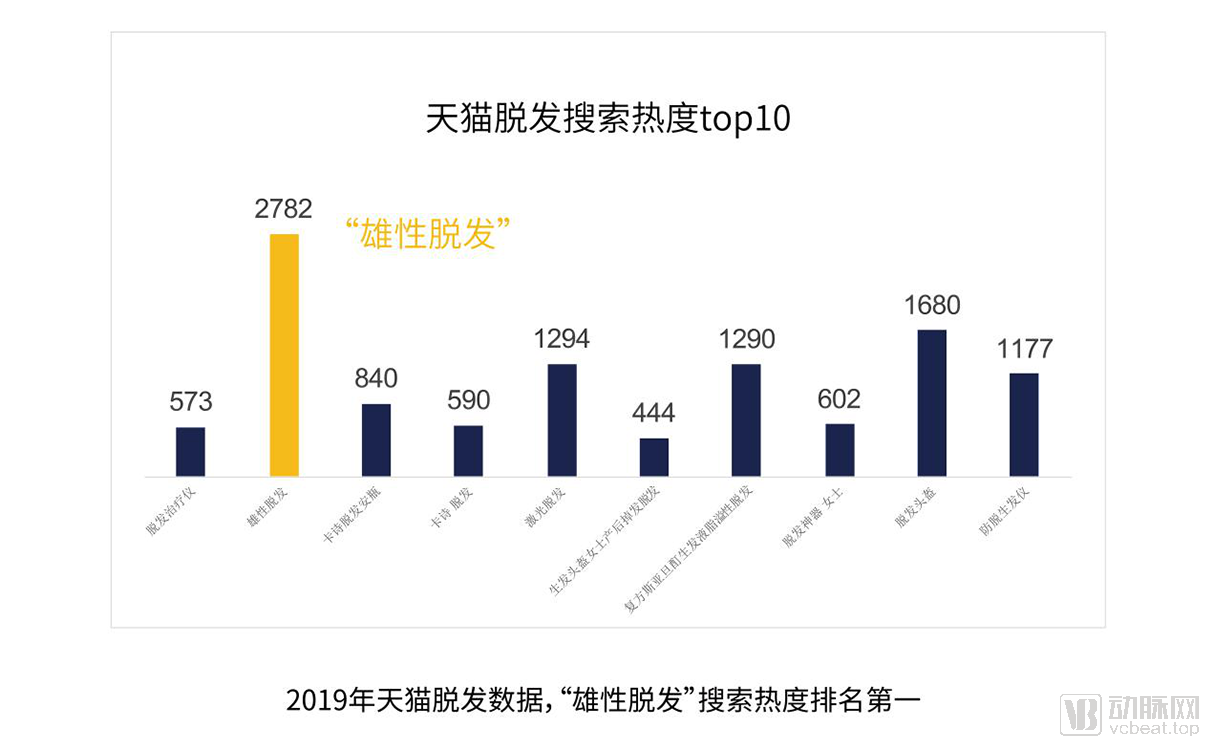
Currently, the domestic market for anti-hair loss and hair regrowth products is experiencing exponential growth, with a market size exceeding 400 billion yuan. However, persistent issues remain, including limited product diversity and exaggerated efficacy claims. Anti-hair loss products are predominantly shampoos and serums, with ginger-containing formulations being particularly appealing to consumers, although their actual anti-hair loss efficacy remains debatable.
“Menxlab” primarily targets high-net-worth males aged 20 to 45, addressing their health concerns related to hair loss prevention and regrowth, general wellness, and skincare, while providing diversified medical-grade consumer solutions. To meet varying user needs, Menxlab offers a tiered product and service matrix, including basic and professional packages for hair loss prevention and regrowth. Users at different stages and severity levels of hair loss can personalize their solutions across multiple dimensions. Those in the early stages can opt for entry-level products focused on early intervention, which enhance scalp care, slow hair loss, and promote new hair growth. Meanwhile, users with moderate hair loss can achieve anti-hair loss and regrowth effects through professional-grade treatments such as minoxidil, finasteride, and medical devices, ultimately realizing a combined approach of early prevention and mid-stage treatment.
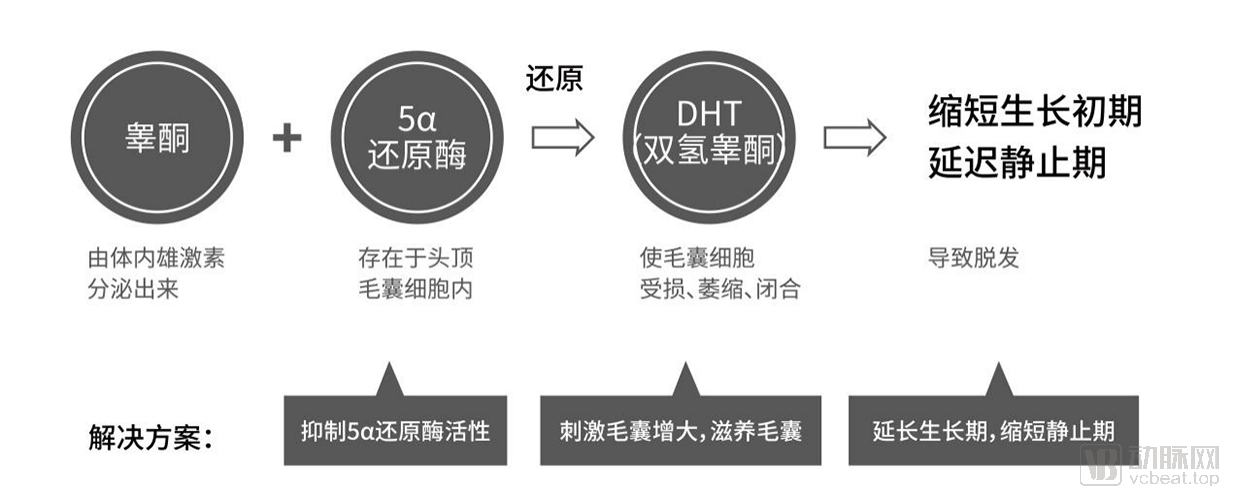
Principles of Solutions for Seborrheic Alopecia
In Menxlab’s comprehensive hair loss prevention solution, product supply is merely a small step. The company adopts a three-pronged strategy of community building, video content, and live streaming on internet and social media platforms to establish direct communication and interaction with target consumers. Only by achieving zero-distance engagement with target users can the company truly understand their needs, address their pain points, bind consumers with superior products and services, build trust and deep connections, and thereby promote product adoption and repeat purchases. By filling the gap in the domestic male brand market and rapidly capturing consumer mindshare, Menxlab aims to establish itself as an innovative, medical-grade men’s health brand in China.
“We believe that companionship is more important; a group is more powerful and motivated than an individual.” A co-founder of Menxlab revealed that the company will subsequently launch online platforms, such as mini-programs, to establish long-term connections with users, provide targeted health guidance, and monitor men’s health in real time.
“Menxlab will further expand its men’s health product portfolio in the future, including dietary supplements and therapeutic food products, to help users boost resistance and immunity, improve sleep quality, and enhance male vitality and overall health, with the aim of building a one-stop service brand for men’s health,” revealed a co-founder of Menxlab.
Menxlab has branded itself as “Menxlab Manshi,” embodying the company’s aspirations for comprehensive health management: “Men” refers not only to males but also encompasses humanity and people; “X” symbolizes innovation and the exploration of the unknown, while also alluding to a time warp; “Lab” signifies laboratories and professionalism. Menxlab will collaborate with professional institutions and physicians both in China and abroad to provide higher-quality products and services for men’s health management and enhancement.

In February this year, the company announced the completion of a tens-of-millions-yuan angel financing round, led by Banyan Capital and jointly participated by institutions such as GF Xinde. A co-founder of Menxlab stated, “Going forward, the company will place greater emphasis on partnerships aligned with strategic financing directions, and we welcome healthcare investment institutions to reach out.”
Menxlab’s New Product to Launch Pre-Sales Soon