

Pharma E-commerce Sales Surpass Double 11 by Over Two-Fold During Pandemic, Industry Players Intensify Competition
AKangHealth
Prescription Drug Operation Service Provider

AliHealth
Medical and Health Services Network Service Provider
“‘Double 11’ was quite a frenzy, right? But in the pharmaceutical e-commerce industry, total sales this February were more than double those of last November.”
Amid the pandemic, industries across the board came to a standstill, yet Yaofei Network, founded by Xiao Lingfei, found scarcely any opportunity to rest throughout the entire Spring Festival holiday due to the surging demand for its sales, e-commerce, and online promotion services for pharmaceutical e-commerce enterprises.
“Online pharmaceutical e-commerce has long remained lukewarm. Compared to the multi-fold growth seen in retail products, online sales in the pharmaceutical industry have appeared somewhat sluggish; nevertheless, the market has maintained a compound annual growth rate (CAGR) of over 5%,” said Xiao Lingfei. “Due to the pandemic, traffic acquisition has suddenly ceased to be an issue.”
Meanwhile, impacted by the COVID-19 pandemic, many private and public hospitals without fever clinics were forced to suspend operations. However, demand for medications for chronic diseases persisted, the frequency of acute medication use increased, and panic-driven stockpiling further intensified. Consequently, residents’ purchasing methods and channels had to shift from offline to online. The virus that hindered economic development unexpectedly broke the long-standing stagnation in the pharmaceutical e-commerce sector.
The factors influencing sales for pharmaceutical e-commerce enterprises also shifted during the pandemic. At this juncture, those who can secure more channels to ensure drug supply and establish stable logistics and distribution networks are better positioned to provide superior services to C-end patients. However, significant challenges remain in advancing these efforts amid the pandemic.
Mr. Liu’s family in Wuhan has been particularly unfortunate during the epidemic: his 75-year-old mother recently passed away from novel coronavirus pneumonia, his 74-year-old father is still receiving hospital treatment, and four other family members are undergoing home isolation and treatment for lung infections.
The drawback of home isolation is the inability to replenish medications in a timely manner. After a few days, the household supply of oseltamivir was nearly exhausted, and hospitals, due to insufficient drug inventories, had also run out of stock.
What made the pandemic unique was that even with a prescription from a doctor, Mr. Liu found it difficult to source medications locally, making the internet a vital channel for purchasing drugs. Thanks to the convenience of online platforms, however, his search was far from arduous; he quickly discovered that 111.com.cn was still supplying oseltamivir.
On the fifth day of the Lunar New Year, after learning about Mr. Liu’s condition, an online physician promptly prescribed a four-person supply of medication. Thanks to the green distribution channel, Mr. Liu quickly received the life-saving drugs...
The story ends here, but not everyone is as fortunate as Mr. Liu in receiving comprehensive support, including medication supply and expedited delivery. In fact, due to the surge in online shopping demand, shortages of pharmaceuticals, face masks, infrared thermometers, and other medical devices occurred for a certain period.
These issues may stem from insufficient production capacity, resource strain caused by panic buying, or distribution challenges resulting from traffic restrictions and cargo backlogs. Due to the sudden onset of the pandemic, compounded by the Spring Festival holiday, companies found it difficult to stockpile inventory in advance.
Many enterprises have already entered the fray. Through sound management, upstream and downstream players in the pharmaceutical e-commerce sector are joining forces to ensure that more residents like Mr. Liu can obtain the medications they need as quickly as possible.
From this epidemic, we can significantly feel the benefits brought by the two-invoice system to the entire pharmaceutical e-commerce supply chain. In the past, numerous circulation links and complex suppliers meant that drugs from distributors to platforms and hospitals were highly fragmented. From the perspective of the entire chain, every link from drug production to sales accumulates premiums and logistics costs, which will bring a considerable expense to the entire industry.
The "Two-Invoice System" eliminated certain intermediate links, while the pandemic further weeded out distributors with insufficient scale and capabilities. As a result, the entire distribution process has become significantly streamlined, with pharmaceutical products concentrated among large-scale distributors such as Jointown Pharmaceutical Group and China Resources Pharmaceutical. This consolidation has substantially reduced related costs and facilitated smoother circulation.
In this context, the common and most significant challenge faced by e-commerce enterprises across different business models is ensuring drug supply. As some channels are unable to maintain inventory inflows as usual, e-commerce platforms with robust supply chains have gained a first-mover advantage.
Taking AliHealth as an example, since February 6, AliHealth has shifted its focus to the pharmaceutical e-commerce sector. It successively launched the “Buy Medicines Without Leaving Home” service on Taobao and Alipay. By adopting an internet-based medical consultation model that combines online consultations and prescription issuance with home delivery of medications, the service enables patients with chronic diseases to purchase their required medicines safely and conveniently from home. Within less than three days of its launch, the cumulative number of unique visitors to the service page approached 3 million.
The surge in traffic has brought AliHealth a massive volume of orders, but also posed the challenge of insufficient drug supplies. After experiencing short-term supply difficulties for certain medications, AliHealth partnered with nearly 50 domestic and international pharmaceutical manufacturers, including Sanofi, HEC Pharm, GlaxoSmithKline, AstraZeneca, CSPC Pharmaceutical Group, Pfizer Upjohn, Novartis, Bayer, Merck & Co., and Bristol-Myers Squibb. On February 13, they launched the “Chronic Disease Welfare Program” on Tmall’s “Buy Medicines Without Leaving Home” platform to ensure the online availability of chronic disease medications during the epidemic and provide online chronic disease management services.
Currently, the range of medications supplied by AliHealth covers mainstream chronic disease areas such as cardiovascular and cerebrovascular diseases, respiratory conditions, hepatobiliary disorders, gout, and diabetes. Meanwhile, commonly used medicines in categories including tonics and sedatives, gynecology, rheumatology and orthopedics, otolaryngology and ophthalmology, and dermatology are also available online, meeting the needs of the vast majority of patients with common and chronic diseases for online follow-up consultations and medication purchases. In addition, thanks to the diverse live-streaming events and promotional campaigns launched by AliHealth on its platform, the number of chronic disease patients seeking medications on Tmall increased by 200% in a single day on February 28.
AliHealth’s “extraordinary performance” during the pandemic was no accident; clues were already evident in its 2019 financial report. In fiscal year 2019, AliHealth’s total revenue amounted to RMB 5.096 billion, with revenue from its self-operated pharmaceutical business accounting for 82.9% and revenue from its pharmaceutical e-commerce platform business accounting for 13.5%, together representing 96.4% of the total.
The substantial revenue contribution from pharmaceutical e-commerce is not solely attributable to the performance of the e-commerce team; AliHealth also leverages three segments—internet healthcare, smart healthcare, and consumer healthcare—to supplement traffic for its pharmaceutical e-commerce platform. All three segments drive user traffic to the e-commerce business, with internet healthcare maintaining deep operational synergy with the e-commerce platform.
Amid the pandemic, the advantages of “Internet healthcare + pharmaceutical e-commerce” have become increasingly pronounced. In non-pandemic periods, connecting online consultations with online medication purchases requires additional incentives for patients, whereas during the pandemic, this integration has occurred naturally. Meanwhile, if AliHealth can sustain consumers’ habits of combining online consultations with medication purchases, it will be able to maintain this growth momentum even after the pandemic ends.
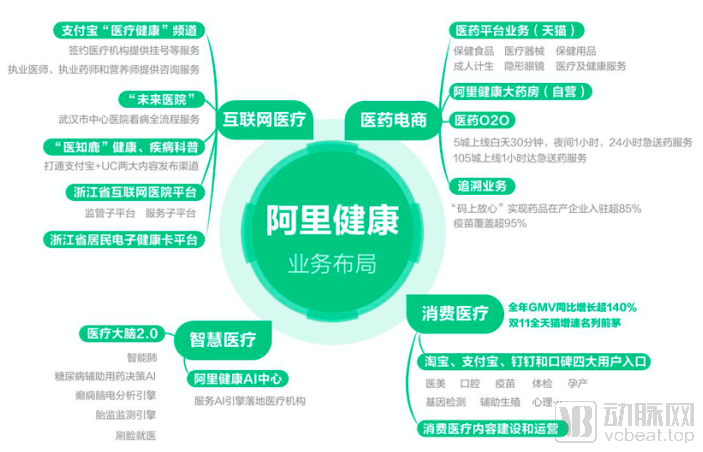
AliHealth's Business Layout
Another well-established, publicly listed internet healthcare company, 111.com (Yi Yao Wang), also performed exceptionally well during the pandemic, providing ample pharmaceutical supplies to numerous patients.
This assurance is closely tied to the efforts made by the 111.com team in channel development during the pandemic. Zhu Pengcheng, Chief Operating Officer of 111.com, told VCBeat: “After the outbreak of the epidemic, domestic production of anti-epidemic supplies was insufficient, leading to severe shortages. Our procurement team of over 100 members raced against time, mobilizing all available resources to source products overseas, thereby ensuring the platform’s supply of masks, medications, and other essential materials.”
The search for overseas mask supplies was far from smooth. Our team traveled extensively through Malaysia, Indonesia, Turkey, and even Brazil in South America. Securing a supply source did not guarantee actual delivery; our procurement team encountered two instances where millions in payments had already been made, yet the factories were unable to ship the goods. In Turkey, our order had already been loaded onto trucks, only to be intercepted at the last moment by international scalpers who offered twice our price. Nevertheless, to fully meet the demands of the general public in China, our procurement team remained undeterred by repeated setbacks and continued their vigorous efforts to secure supplies.
Coupled with its direct-procurement strategic partnerships with 188 renowned pharmaceutical companies both domestically and internationally, 1YaoWang ensured the B2B and B2C supply of face masks, COVID-19 medications, and drugs for chronic diseases during the pandemic, thus giving rise to Mr. Li’s story.
In terms of traffic during the pandemic, the number of registered users on the 1YaoWang app increased by more than 500%; new users with chronic diseases grew by over 300%; and with the assistance of AI-powered consultations, each doctor handled up to 300 consultations per day.
According to the recently released annual report, 111.com.cn’s revenue reached RMB 3.95 billion in 2019. Meanwhile, the pandemic has not slowed down 111.com.cn’s expansion; the company expects to maintain a high growth rate of 113.5% to 125.7% in the first quarter of 2020. Over the next three years, the company aims to connect more than 400,000 pharmacies, clinics, and hospitals, serve 100 million patients, and partner with 1,000 pharmaceutical manufacturers.
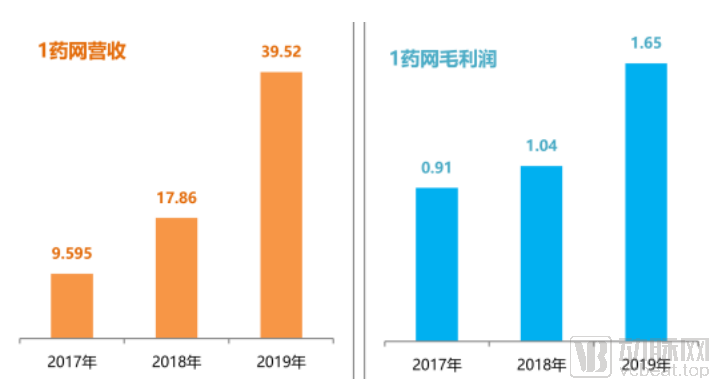
1Yao.com's Annual Revenue Over the Years
AKangHealth is a typical startup in the DTP (Direct-to-Patient) pharmaceutical e-commerce sector. Leveraging its innovative business model, the company has expanded from B2B pharmaceutical distribution to a disease-centric approach, building an integrated supply chain system that combines DTP with CDC (Chronic Disease Care), B2B with B2C, and online with offline channels. This has enabled AKangHealth to form a closed-loop ecosystem encompassing “healthcare + disease-specific management + pharmaceuticals + insurance.”
According to preliminary statistics, AKangHealth’s business volume achieved 100% growth. In February, the number of new B-side accounts exceeded 10,000, reaching two to three times the usual level.
During the pandemic, AKangHealth adhered to its primary principle of “patient needs first,” prioritizing medication accessibility for patients and eliminating commercial hoarding in the distribution process.
To ensure the supply of medications, AKangHealth urgently resumed operations on January 31 and initiated a series of targeted procurement efforts. These included antiviral prophylactics such as oseltamivir phosphate capsules (Kewei), Lianhua Qingwen capsules, Banlangen granules, antiviral oral solution, and Qingkailing oral solution, as well as immunomodulatory agents to support recovery, such as human serum albumin, intravenous immunoglobulin (IVIG), and interferon. Through these efforts, nearly RMB 80 million worth of specialized pharmaceuticals were promptly received and stocked.
“We anticipate that the supply chain constraints for chronic disease medications will persist for a considerable period this year. Therefore, we will focus on identifying drugs for conditions that may face future shortages but do not have exceptionally high overall demand,” Wang Lijue, Chairman of AKangHealth, told VCBeat. “Consequently, we will strengthen our portfolio in products for chronic and rare diseases, with plans to curate 3,000 to 5,000 core SKU categories. Furthermore, the internet has brought many previously niche, long-tail products into consumers’ view, and we will allocate more capital to these related products.”
“The pandemic has also made us realize the importance of information flow. We need to build closer relationships with suppliers to obtain more timely information on drug supply. As the overseas epidemic situation worsens, we will closely monitor international markets and strengthen communication with our overseas distribution partners to prevent drug shortages in the domestic market.”
Overall, whether for publicly traded companies or listed corporations, securing distribution channels was undoubtedly the top priority during the pandemic. Pharmaceutical e-commerce platforms exhibit a certain degree of user stickiness; when consumer traffic declines, the most effective way to retain users is by providing them with the medications they need. Since building robust distribution networks requires long-term corporate accumulation, e-commerce platforms with extensive channel resources established a solid competitive barrier during the pandemic.
However, such barriers are not permanent. As more residents come to recognize and accept the online pharmaceutical purchasing model, and drug supplies gradually stabilize, B2C consumers will increasingly prioritize price comparisons. At that point, competition among e-commerce platforms will shift back to marketing efforts.
During the pandemic, securing distribution channels was merely the first step. Due to the strain on medical resources during this exceptional period, coupled with traffic lockdowns between cities, consumers were unable to enjoy services such as “next-day delivery” and “24-hour home medication delivery” as they normally would. Logistics tracking often showed that many products remained stationary at certain warehouses for extended periods—ranging from a few days to as long as ten days.
During the pandemic, the delivery operations of most pharmaceutical e-commerce platforms were handled by SF Express, JD Logistics, and China Post. During special periods of the outbreak, delivery times varied across different regions. Taking SF Express as an example, logistics turnaround time was 2–3 days slower than usual, while delays with other logistics providers were even more severe.
Therefore, e-commerce platforms must identify a “reliable” logistics partner to ensure consumers’ shopping experience—many e-commerce companies even regard this as their core competitive advantage. After all, having secured hard-won traffic, e-commerce businesses should strive to provide better after-sales service to consumers.
However, the stringent safety requirements for pharmaceutical logistics and distribution have, to some extent, hindered the progress of logistics operations. Broadly speaking, pharmaceuticals can be categorized into ambient-temperature drugs and cold-chain drugs. Among these, cold-chain drugs impose higher demands on the transportation process. Logistics companies must procure specialized delivery vehicles and employ information technology to monitor and manage the internal environment throughout the entire journey. Furthermore, during transitions between logistics stages, cargo handling associated with the change of transport equipment can easily create breaks in the cold chain, leading to cargo damage and drug inactivation.
To meet the stringent requirements of pharmaceutical cold-chain transportation, SF Express established a dedicated Pharmaceutical Logistics Division in March 2014. One year later, SF Pharmaceutical Supply Chain Co., Ltd. was officially founded. Wholly owned by SF Holding Co., Ltd., this subsidiary marked SF Express’s strategic move to treat pharmaceutical logistics as an independent business segment.
In ensuring safety, SF Pharmaceutical first establishes strict standardized operating procedures across the entire “collection, transit, transfer, and delivery” process, tailored to the specific characteristics of different pharmaceutical products. Second, SF Pharmaceutical designs specialized packaging for medicines, featuring tamper-evident, drop-resistant, damage-proof, moisture-proof, anti-theft, and reusable solutions. Third, for cold-chain pharmaceuticals, SF Pharmaceutical implements end-to-end monitoring of every stage—including selection and validation of packaging materials, pre-cooling of refrigerants, delivery standards, and full-process visualized and traceable temperature tracking—to ensure precise temperature control during transportation.
Cold-chain transportation of pharmaceuticals is not as easy as it may seem. In reality, due to the scarcity and fragmentation of cold-chain resources in China, very few enterprises meet the standards for pharmaceutical cold-chain distribution. Only a handful of companies with nationwide logistics networks, such as SF Express, are capable of undertaking such operations. During the pandemic, SF Express further increased its investment in direct-to-consumer home delivery services, enabling the secure and verified delivery of prescription medications—such as insulin purchased by patients from physical hospitals or internet hospitals—directly to their doorsteps.
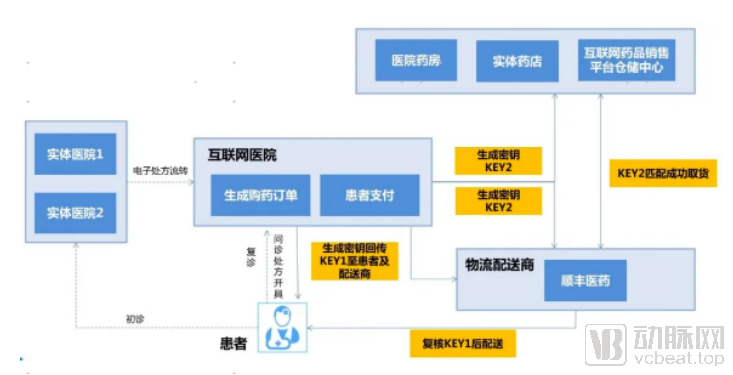
SF Pharma's Home Delivery Model for Refrigerated Pharmaceuticals to End Consumers
Since January 20, SF Medicine has coordinated resources to ensure the normal operation of pharmaceutical and medical device logistics services through its emergency dispatch system. During the Spring Festival and the outbreak of the epidemic, priority was given to meeting the logistics needs for various medical supplies and prevention and control materials. In Wuhan, the city most severely affected by the epidemic, SF Medicine continued to provide its “SF Medical Express” and dedicated medical vehicle services (both ambient temperature and cold chain), thereby ensuring the transportation of pharmaceuticals and medical devices into and out of Wuhan. All services in regions outside Hubei Province have remained operational as usual.
Furthermore, impacted by the pandemic, pharmaceutical manufacturers and distributors have seen a surge in demand for emergency shipments. In response, SF Pharma has specially launched a “contract-free emergency shipment” green channel, enabling orders placed on the same day to be shipped out as early as that very day, thereby alleviating medication shortages and interruptions for local patients.
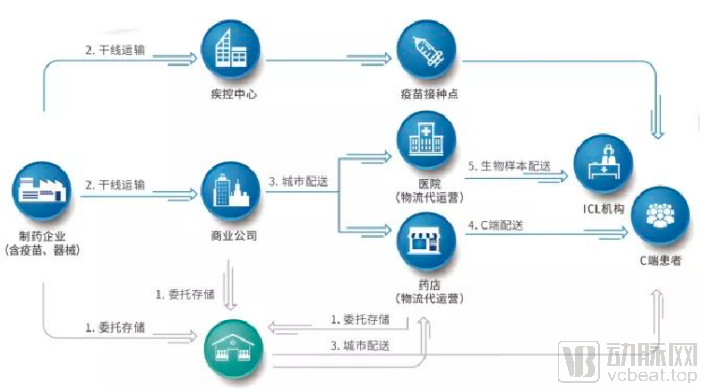
SF Pharma Business Model
However, even SF Pharma has faced obstacles amid resource strain, resulting in delayed deliveries. Furthermore, when residential communities are placed under lockdown, it is common to see large groups of people gathering in the same area to await the arrival of logistics parcels, food deliveries, and other supplies. Such scenarios pose certain safety risks, necessitating collaboration between courier companies and community managers to develop effective solutions.
Overall, in the fierce competition for consumer markets among established pharmaceutical e-commerce platforms, focusing on channel development and delivery services is essentially sufficient to capture consumers. Furthermore, with the coverage of payments for chronic disease medications under the "Guiding Opinions on Promoting 'Internet+' Medical Insurance Services During the Prevention and Control of COVID-19," pharmaceutical e-commerce has made significant strides by leveraging this policy support.
However, in the post-pandemic era, consumers will further strengthen their scrutiny of online pharmaceutical purchases, and e-commerce platforms must accordingly roll out a new round of strategic deployments aligned with evolving consumer habits. Where will the next wave of dividends for pharmaceutical e-commerce lie? Is it in the integration of pharmaceuticals with insurance, or in value-added services under the umbrella of internet healthcare? In any case, the performance of the pharmaceutical e-commerce sector this year is worth anticipating.