

Shuangshu Tech Files IPO Prospectus: Intelligent Infectious Disease Surveillance Solution Reduces Over 95% of Reporting Delays and Omissions
As early as the 1950s, China established an infectious disease reporting system, under which report cards were submitted to the Ministry of Health via postal mail. Subsequently, China developed a surveillance system for infectious diseases and public health emergencies, leveraging information technology to monitor infectious diseases. In recent years, with big data and artificial intelligence becoming focal points of attention, numerous enterprises have begun applying these technologies to infectious disease surveillance systems, among which Shuangshu Technology is one.
Shuangshu Technology was established in 2016,The company possesses multiple core technologies and years of practical experience in medical data governance, semantic analysis, disease modeling, and integrated architecture.Dedicated to developing software products in the field of medical risk prevention and control through big data and artificial intelligence technologies, such as infectious disease surveillance systems and hospital infection monitoring systems, to help healthcare institutions enhance risk prevention awareness, improve monitoring efficiency, provide decision support, and promote continuous improvement in healthcare quality.
The sudden outbreak of the epidemic in 2020 has further strengthened everyone's attention to infectious disease monitoring. After the outbreak, many hospitals purchased infectious disease monitoring systems from Shuangshu Technology, and the company quickly completed the installation during the epidemic. In addition, on January 20, 2020, the National Health Commission classified novel coronavirus pneumonia as a Class B infectious disease under the "Law of the People's Republic of China on the Prevention and Treatment of Infectious Diseases." Shuangshu Technology immediately updated the system to help doctors report the epidemic quickly.
Low Efficiency of Infectious Disease Reporting Cards Leads to Increased Rates of Late and Missed Reports
The SARS outbreak in 2003 raised awareness of the importance of infectious disease surveillance systems. In the second half of 2003, the government began establishing a national disease prevention and control system. A key component of this system was the creation of a new surveillance system for infectious diseases and public health emergencies, designed to promptly understand the occurrence, development, and evolution patterns of diseases, and to meet the needs for early monitoring and warning of sudden outbreaks and public health emergencies.
In addition to the surveillance system for infectious diseases and public health emergencies, China has established multiple disease-specific reporting and surveillance systems, such as the measles surveillance system and the tuberculosis surveillance and reporting management system. To date, China has become one of the few countries in the world capable of conducting comprehensive surveillance of infectious diseases.
However, in the face of the sudden outbreak of the epidemic in 2020, many people raised questions: Why did this system fail to provide early warning during this epidemic?
Li Shiyong, Founder and General Manager of Shuangshu Technology, believes thatThe national automated early warning and response mechanism relies on data from infectious disease report cards submitted through a hierarchical reporting system; however, China’s current infectious disease reporting mechanism still suffers from numerous pain points.
The national requirements for the completeness and accuracy of infectious disease reporting data are extremely stringent. Physicians are required to fill in details such as the patient’s name, national ID number, full residential address, and phone number. However, patients typically do not provide their detailed address during registration, necessitating on-site inquiries by physicians. This process significantly increases the time physicians spend completing infectious disease report cards.A survey conducted by Shuangshu Technology revealed that the traditional method of filling out forms requires 3 to 5 minutes per card.
In accordance with regulations, in addition to physicians’ mandatory reporting of infectious diseases, hospital supervisors are also required to regularly screen case information to prevent delayed or missed reports. Li Shiyong noted, “For large hospitals, daily outpatient visits alone can reach thousands or even tens of thousands, posing a significant challenge for supervisory staff.”
During the reporting process for infectious disease report cards, physicians must first submit reports for internal hospital review. Following this, the reports are submitted to district/county and municipal Centers for Disease Control and Prevention (CDCs) for review, and finally transmitted via provincial and national health data exchange platforms to the National Infectious Disease Direct Reporting System Center. This multi-tiered review and hierarchical aggregation process compromises the timeliness of infectious disease reporting. Furthermore, if any data omissions are identified during the review process, physicians are required to provide supplementary information.
In addition, Li Shiyong also pointed out that the low probability of large-scale infectious disease outbreaks has led to a lack of sensitivity among some doctors and hospital administrators toward infectious diseases, which has, to some extent, resulted in an increased rate of delayed and underreported cases.
Physician reporting efficiency increased 10-fold, and CDC reporting efficiency increased 60-fold.
Shuangshu Technology’s intelligent monitoring solution for infectious diseases collects clinical data daily from hospital HIS, LIS, EMR, and PACS systems to rapidly screen for potential infectious disease risks. Additionally, the system performs semantic analysis on diagnoses, disease progression, and medical imaging, and conducts cognitive analysis of infectious diseases and other conditions based on an expert knowledge base model. The resulting early-warning data are pushed to the respective physicians to enable timely and effective intervention.
When physicians complete infectious disease report forms, Shuangshu Technology automatically populates patient information, eliminating the need to re-enter data already available in the system and significantly improving reporting efficiency.
Upon completion of the form submission, reviewers will audit and verify the reported data before forwarding it to the CDC, thereby ensuring the completeness and accuracy of the infectious disease report cards.
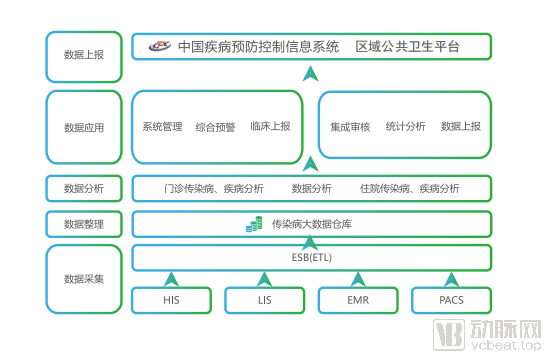
Notably, the final step in surveillance for both infectious and non-communicable diseases is reporting data to the CDC. The safest and most efficient method is one-click direct reporting, a capability that Shuangshu Technology has already implemented.
According to reports, Shuangshu Technology’s intelligent infectious disease surveillance solution has been implemented in more than 50 hospitals across China, including several among the top 100 hospitals nationwide.Including Xiangya Hospital of Central South University, Children's Hospital of Chongqing Medical University, Zhongnan Hospital of Wuhan University, Union Hospital Affiliated to Fujian Medical University, and Renmin Hospital of Wuhan University, the company’s clients are distributed across 10 provinces and municipalities, including Hunan, Shenzhen, Guangzhou, Hubei, and Jiangxi.
Xiangya Hospital of Central South University was the first hospital to deploy Shuangshu Technology’s intelligent monitoring solution for infectious diseases. Launched at Xiangya Hospital in 2016, the solution was comprehensively applied across 178 inpatient departments and 56 outpatient clinics, effectively eliminating incidents of delayed or missed reporting. In June 2017, with assistance from Shuangshu Technology, Xiangya Hospital achieved dedicated-network interconnectivity with the Provincial Regional Platform and the National Infectious Disease Reporting System. This enabled one-click reporting of infectious disease cases directly to the national system from within the hospital’s internal network.
Li Shiyong stated, “Statistics show that after hospitals implemented our intelligent monitoring solution for infectious diseases, over 95% of late and missed reports were eliminated, physicians’ reporting efficiency increased tenfold, and the CDC’s reporting efficiency improved by 60 times.”
Furthermore, the lack of comparative data on patients with similar symptoms across hospitals is another factor contributing to delays in reporting infectious diseases. In the early stages of an outbreak, achieving horizontal data synchronization among multiple hospitals could significantly boost physicians’ confidence in proactively reporting cases. Shuangshu Technology has developedIntegrated Solution for Regional Infectious Disease Surveillance, enabling regional interconnectivity, eliminating overall regional delays and omissions in reporting, improving the efficiency of regional resource utilization, reducing construction costs, and achieving the goal of early identification of infectious disease outbreak risks.
The Epidemic Has Brought Benefits to the Field of Infectious Disease Surveillance, and the Industry Is Experiencing a Boom Period
Li Shiyong stated that the recent epidemic has led the country to place greater emphasis on infectious disease surveillance systems, significantly advancing their development.“It is foreseeable that this field will enter a period of explosive growth in the future, attracting more companies to enter and develop more innovative solutions.”
Li Shiyong stated that the company’s primary competitors are HIS (Hospital Information System) vendors, which have already deployed their systems in hospitals and possess a substantial customer base. Other competitors include manufacturers of hospital infection monitoring systems and medical peripheral system providers, who have recognized the significant market opportunities in infectious disease surveillance and are entering this sector.
Compared with competitors, Shuangshu Technology's intelligent monitoring solution for infectious diseases offers a higher level of intelligence.“Over the past eight years, the company’s technical team has continuously refined its semantic analysis, disease modeling technologies, and knowledge base. Currently, it achieves over 95% in both the comprehensiveness of the knowledge base and the precision of intelligent cognition, with its level of intelligence ranking among the top in the industry.”
Li Shiyong predicts that future infectious disease surveillance will be “people-centric,” establishing electronic disease records to enable the monitoring and reporting of all diseases from birth to death, thereby maximizing the value of the disease control and prevention system. Moving forward, Shuangshu Technology will closely follow industry development trends, continuously improve its existing solutions, and develop new products.