

ThinMed Tech Secures Tens of Millions in Angel Funding from Yilian to Accelerate Deployment of Clinical Chronic Disease Management Platform
VCBeat has learned that Senmei Medical, a technology company specializing in clinical disease management solutions for chronic conditions, has completed a tens-of-millions-yuan angel financing round, exclusively led by Medlinker, an internet healthcare unicorn. The funds from this round will be primarily used for in-depth platform development, as well as the recruitment of local service teams and medical professionals.
Senmei Medical, established in September 2018 and headquartered in Chongqing Liangjiang New Area, adopts a model of co-building clinical departments. By leveraging ETL, NLP, and AI technologies to restructure in-hospital and real-world data, it enables clinicians to achieve closed-loop, full-cycle disease management for patients with chronic conditions.
In December 2018, Senmei Medical’s independently developed clinical condition management platform was first implemented at a top-tier tertiary hospital affiliated with the Third Military Medical University. According to Mr. Zhang Jing, founder of Senmei Medical, the company deployed modules such as AI-based screening algorithms for key risk indicators, specialty-specific Clinical Data Repositories (CDR), Clinical Decision Support Systems (CDSS), out-of-hospital management, and quality control at this initial pilot hospital. This integration organically linked clinical practice with real-world data, leveraging digital tools to transition chronic disease management from consumer-grade applications into rigorous medical workflows, while simultaneously addressing blind spots in patients’ inter-visit health data. With the subsequent launch of modules including biopsy pathology management, biobank management, and open research systems, the construction of an Enterprise Master Patient Index (EMPI) was completed. This system will be more deeply integrated into clinical care and scientific research, serving a broader range of specialized disciplines dealing with complex diseases.
Furthermore, the vertical expansion based on specialized medical consortia and the horizontal layout leveraging the advantageous specialties of top-tier regional medical institutions have enabled Senmei Medical to rapidly replicate its previously accumulated successful experiences. This has facilitated the continuous formation of an extensive hospital user network, with an average of two Grade A tertiary hospitals onboarded each week. Mr. Zhang Jing told VCBeat that Senmei Medical completed its nationwide deployment within just six months in 2019, successively launching services at dozens of leading Grade A tertiary hospitals across China, including the Chinese PLA General Hospital, West China Hospital of Sichuan University, Tangdu Hospital of the Fourth Military Medical University, the First Affiliated Hospital of Dalian Medical University, Zhongda Hospital Southeast University, the First Affiliated Hospital of Guangxi Medical University, and Henan Provincial People's Hospital. Implementations are also currently underway at leading hospitals in Shandong, Hunan, Jiangxi, Anhui, Fujian, Guizhou, Yunnan, and other regions.
Mr. Chen Kuan, Head of Strategic Investment at Medlinker, pointed out, “Senmei Medical’s independently developed, clinically validated chronic disease management system has been implemented in multiple top-tier hospitals and has fostered strong patient-physician engagement, representing a breakthrough in digital chronic disease management. Furthermore, leveraging Senmei Medical’s exceptional capability to replicate specialized care models, and combining it with Medlinker’s well-established chronic disease management service system across nine major specialties, the two parties can jointly create a multi-disciplinary commercial closed loop for chronic disease management.”
Medlinker is China’s leading chronic disease management platform, rooted in internet healthcare and focused on high-quality resources. The platform boasts over 800,000 real-name verified physicians and millions of patients. In recent years, Medlinker has made significant explorations in areas such as internet hospitals and specialized chronic disease management. Medlinker’s strategic equity investment in Senmei Medical will integrate the advantageous resources of both parties to jointly establish a gold standard for chronic disease management, accelerating the application of successful models to a broader range of clinical scenarios.
Mr. Zhang Jing stated, “Healthcare is an industry with a strong value proposition and professional depth, as well as a vast industrial chain. Senmei’s ability to rapidly iterate its products demonstrates the team’s exceptional learning capabilities. The recognition we have received from numerous leading Principal Investigators (PIs) in the field validates the clinical value of our project. We are deeply honored by this acknowledgment and hope to leverage investors’ resources to continue advancing in the serious healthcare sector, delving deeper into clinical practice and scientific research.”
A set of data published by The Lancet shows that among the 54.7 million deaths worldwide in 2016, 72.3% were caused by chronic diseases, representing a 16.1% increase compared to ten years earlier. In China, the “China Health and Family Planning Statistical Yearbook 2017” indicates that cardiovascular and cerebrovascular diseases, cancer, and chronic respiratory diseases were the leading causes of death among both urban and rural residents in 2016. Furthermore, the “Progress in China’s Disease Prevention and Control Work (2015)” reports that chronic diseases accounted for 86.6% of all deaths in China.
Undoubtedly, chronic diseases have become the leading threat to human health. As the population structure ages and unhealthy lifestyle habits—such as smoking, alcohol consumption, and staying up late—become entrenched, the characteristics of chronic diseases in China, namely “a large number of patients, prolonged disease courses, high medical costs, and substantial demand for services,” are becoming increasingly prominent.
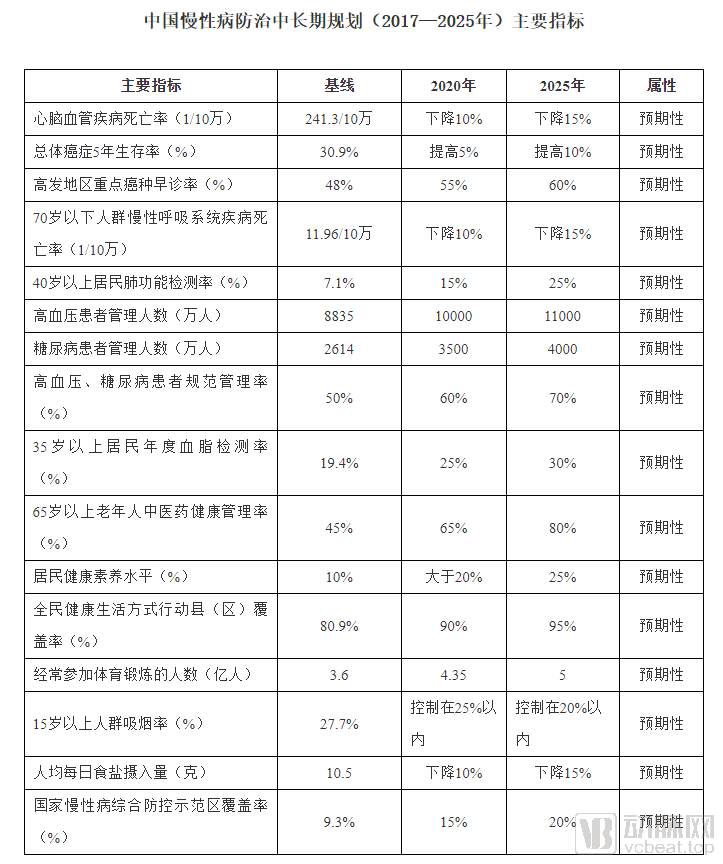
In January 2017, the General Office of the State Council issued the Medium- and Long-Term Plan for the Prevention and Control of Chronic Diseases in China (2017–2025), which requires that by 2020, the environment for chronic disease prevention and control be significantly improved, and the premature mortality rate due to chronic diseases be reduced. It aims to reduce the premature mortality rate from cardiovascular and cerebrovascular diseases, cancer, chronic respiratory diseases, and diabetes among people aged 30–70 by 10% compared with 2015.
The primary objectives of chronic disease management include patient education, usage guidance, physician education, user engagement, and long-term follow-up. Currently, the key pain points in chronic disease management mainly fall into three categories:
First, physicians lack sufficient motivation. For a long time, physicians and hospitals have developed a path dependence focused on treating acute conditions, a work model that is ill-suited to the needs of chronic disease management. For instance, patients typically pay for services rendered and medications prescribed, whereas chronic disease management requires physicians to perform substantial tasks beyond consultations and prescriptions—workload that is difficult to quantify and which displaces time available for seeing new patients. In this regard, physicians lack the incentive to engage in chronic disease management.
Second, insufficient patient adherence. China has currently entered a period of high burden from chronic diseases, which are characterized by long durations; while medications can alleviate symptoms to some extent, the more critical factor is that patients need to adjust lifestyle habits that are incompatible with chronic disease management requirements. This includes adhering to prescribed treatments, frequently monitoring key health indicators, and undergoing follow-up examinations. Such tasks demand a high level of patient adherence, making strict compliance difficult for patients who lack supervision outside the hospital setting.
Third, the issue of payment. Survey data from overseas media in 2016 showed that only 28% of users were willing to pay for chronic disease management, and 67% of users had a willingness to pay less than 500 yuan per year. Furthermore, due to factors such as the difficulty in evaluating the effectiveness of chronic disease management, the inability to characterize it based on acute disease treatment, the unclear direct economic link with medical insurance cost control, and the lack of standardization in the chronic disease management market, it is difficult to directly include it in the reimbursement scope against the backdrop of continued pressure on medical insurance funds.
Thus, it is evident that relying solely on in-hospital optimization or out-of-hospital standardization is insufficient to fundamentally enhance chronic disease management. This explains why many digital health tools are attempting to break through by focusing on specific diseases and establishing direct connections between patients and physicians.
In fact, attempts to improve diagnosis and treatment processes through information technology are relatively well accepted by patients. When certain medical needs are not effectively met, patients proactively seek newer, more efficient solutions. However, extending these efforts into hospital settings requires a high degree of alignment with clinical protocols and requirements.
Senmei Medical’s Clinical Condition Management Platform deploys a clinical system within hospitals, complemented by a patient-facing mobile app for out-of-hospital use, forming a closed-loop product. The clinical system offers functionalities such as early screening for chronic diseases, clinical pathway management, home-based patient management, patient education, and quality control of condition management, serving as a practical tool for clinicians to manage patients with chronic conditions.
Specifically, Senmei Medical’s clinical system has launched diverse modules, including early disease screening, clinical decision support, out-of-hospital management, quality control and pathology business management, and biobank management. These capabilities comprehensively address key pain points in clinical departments, such as operational management, diagnostic and treatment efficiency, medical quality management, and research efficiency.
In terms of model replication, Senmei Medical is building regional operational standards and a scientific research data center based on its clinical collaboration business. This has given rise to a new medical service model in which hospitals at all levels within specialized medical alliances engage in cross-regional collaboration to conduct routine follow-up examinations and periodic condition assessments for patients. This approach promotes supply-side reform in healthcare, while simultaneously enhancing patient care experiences and balancing the interests among hospitals.
Mr. Zhang Jing told VCBeat that, while collaborating with clinical teams to carry out chronic disease management, Senmei Medical is actively introducing additional resources to better serve both clinicians and patients. These initiatives include providing digital clinical research services, exploring new rules for insurance coverage for patients with pre-existing chronic conditions, and engaging in in vitro diagnostics (IVD) and third-party laboratory testing. “The healthcare sector boasts extensive industrial chain resources. On the basis of respecting science and ethics, we aim to leverage these resources to serve clinical practice and patients, thereby making a modest contribution to public health,” said Mr. Zhang Jing.