

JunLian Healthcare New Drug Bulletin Issue No.11, 2020: Key Approvals and Clinical Advances in Oncology, CNS, Ophthalmology, and Vaccines
Mar 30, 2020 18:44
CST Updated
18:44

This week, there were 8 new drug data entries, including 5 for oncology, 1 for vaccines, 1 for ophthalmology, and 1 for CNS.
❖BMS Announces FDA Approval of Zeposia (ozanimod) for Once-Daily Oral 0.92 mg Dosing in the Treatment of Relapsing Multiple Sclerosis (RMS) in AdultsOzanimod is a product with a notable history. It was originally developed by Receptos and acquired by Celgene for $7.2 billion in 2015. In 2018, the FDA rejected Celgene’s application due to gaps in certain sections of the New Drug Application (NDA), sparking significant controversy. Subsequent research revealed that a metabolite of ozanimod identified during clinical trials had an exceptionally long half-life—10 to 13 days in humans, far exceeding the 19-hour half-life of ozanimod itself—raising concerns about potential accumulation risks. This issue triggered internal blame-shifting within Celgene at the time. The active metabolite incident ultimately delayed ozanimod’s market launch by two years. However, the RMS market has since become increasingly crowded. For ozanimod to regain momentum, it may need to expand into other autoimmune indications.
❖Merck KGaA, Germany, Announces Japanese Approval of ItsTepotinib for the Treatment of Advanced NSCLC Patients with MET Exon 14 Skipping MutationsTepotinib is the first oral MET inhibitor approved globally for the treatment of advanced non-small cell lung cancer (NSCLC) patients harboring MET gene mutations. c-Met is a receptor tyrosine kinase similar to EGFR; upon binding to its growth factor ligand, hepatocyte growth factor (HGF), in the extracellular domain, it induces dimerization and transmits proliferative signals. The loss of specific protein domains in c-Met can lead to constitutive activation of the receptor, resulting in uncontrolled cell growth. Currently, there are no highly specific targeted therapies widely available for this alteration beyond emerging agents. In the current landscape, tepotinib primarily competes with Novartis’ capmatinib, which has received FDA Priority Review designation and is poised to be the first to launch in the United States. However, tepotinib appears to offer better selectivity, as evidenced by lower rates of grade 4 or higher adverse events and fewer patient discontinuations due to toxicity compared to capmatinib. At present, no domestic biotechnology companies in China have made significant in-depth investments in this therapeutic area.
AbbVie and Genentech announced that the combination of Venclexta, jointly developed by the two companies, with the hypomethylating agent azacitidine met its dual primary endpoints in the Phase 3 VIALE-A (M15-656) clinical trial in patients with acute myeloid leukemia (AML).
Venclexta is a targeted drug that specifically binds to the BCL-2 protein and inhibits its function.
The VIALE-A trial is a randomized, double-blind, placebo-controlled Phase 3 clinical study designed to evaluate the safety and efficacy of Venclexta in combination with azacitidine in 443 patients with acute myeloid leukemia (AML).
The VIALE-A trial was a randomized, double-blind, placebo-controlled Phase 3 clinical study designed to evaluate the safety and efficacy of Venclexta in combination with azacitidine in 443 patients with acute myeloid leukemia (AML).
Novavax Announces That Its Recombinant Quadrivalent Seasonal Influenza Vaccine, NanoFlu, Met All Primary Endpoints in a Pivotal Phase 3 Clinical Trial for the Prevention of Influenza Infection in Adults Aged 65 Years and Older
NanoFlu is a recombinant hemagglutinin (HA) protein nanoparticle influenza vaccine produced by Novavax using its Sf9 insect cell baculovirus expression system. It contains the company’s proprietary saponin-based Matrix-M adjuvant.
This Phase 3 clinical trial enrolled a total of 2,652 healthy elderly individuals, who underwent a one-year follow-up after receiving either NanoFlu or the marketed influenza vaccine Fluzone Quadrivalent, with immunogenicity analyses performed on serum samples collected on Day 28.
The trial met all primary endpoints. Compared with the active control group, NanoFlu demonstrated non-inferiority in terms of immunogenicity and safety.
Merck KGaA Announces Japanese Approval of Tepotinib for Patients with Advanced Non-Small Cell Lung Cancer (NSCLC) Harboring MET Exon 14 Skipping Mutations. Tepotinib is the first oral MET inhibitor approved globally for the treatment of patients with advanced NSCLC harboring MET gene mutations.
Tepmetko has demonstrated antitumor activity in patients with non-small cell lung cancer (NSCLC) exhibiting MET overexpression or amplification. In addition to its use in clinical trials for NSCLC, tepotinib is also being evaluated in Phase 2 clinical trials for the treatment of patients with hepatocellular carcinoma.
In the Phase 2 VISION clinical trial of Tepmetko, 99 patients with metastatic non-small cell lung cancer (NSCLC) harboring MET exon 14 skipping mutations, confirmed by tissue biopsy or liquid biopsy, were enrolled.
Trial data indicate that Tepmetko may improve treatment options for these patients. The overall response rate (ORR) assessed by the Independent Review Committee (IRC) was 42.4%, and the median duration of response (DOR) was 12.4 months.
Driver Mutations in NSCLC
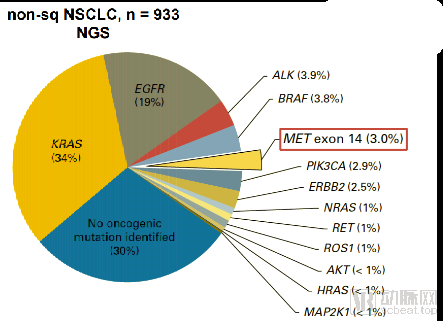
Data Source: Merck
Daiichi Sankyo and AstraZeneca announced that in a Phase 1 clinical trial of ADC-DS8201 for the treatment of patients with previously treated HER2-overexpressing cancers, the drug achieved tumor shrinkage in 55.6% of patients with non-small cell lung cancer (NSCLC).
Enhertu leverages Daiichi Sankyo’s proprietary antibody-drug conjugate (ADC) technology, linking the humanized HER2 antibody trastuzumab to a novel topoisomerase I inhibitor via a tetrapeptide linker, thereby targeting cancer cells and delivering the drug intracellularly.
A total of 60 treated cancer patients with HER2 overexpression or mutations participated in this Phase I clinical study, including 18 patients with non-small cell lung cancer (NSCLC), 20 patients with colorectal cancer (CRC), and several patients with other tumor types.
NSCLC patients achieved the highest objective response rate (ORR), with tumor shrinkage observed in 55.6% of patients and a median duration of response of 10.7 months. The efficacy was more pronounced in NSCLC patients harboring HER2 mutations, with Enhertu treatment inducing responses in 72.7% of this subgroup.
Ono Pharmaceutical Announces Approval of BTK Inhibitor Velexbru (tirabrutinib hydrochloride) in Japan for the Treatment of Patients with Relapsed or Refractory Primary Central Nervous System Lymphoma (PCNSL)
Velexbru is a highly selective oral BTK inhibitor developed by Ono Pharmaceutical for the treatment of B-cell malignancies and autoimmune diseases in Japan.
These results are based on a multicenter, open-label, Phase 1/2 clinical study.
According to the assessment by the Independent Review Committee, among 17 patients treated with once-daily 480 mg Velexbru taken on an empty stomach, the overall response rate (ORR) reached 52.9%.
VBL Therapeutics Announces Positive Interim Analysis Results from the Pivotal Phase 3 OVAL Trial of Its Gene Therapy VB-111 in Patients with Platinum-Resistant Ovarian Cancer
VB-111 is a first-in-class gene therapy developed for the treatment of various solid tumors. It employs a dual mechanism to target solid tumors. Via an adenoviral vector, it expresses a fusion protein composed of a TNF receptor and Fas in the proliferating vascular endothelial cells within tumor tissue.
The OVAL study is a double-blind, controlled, pivotal Phase 3 trial. This trial compared the efficacy of VB-111 in combination with paclitaxel versus placebo plus paclitaxel in treating patients with platinum-resistant ovarian cancer.
Trial data showed that among the first 60 evaluable patients, the overall response rate for those with alleviated CA-125 protein levels was 53%. Among patients who developed fever after treatment, the response rate reached 69%; post-treatment fever is a common reaction to VB-111 therapy.
BMS Announces FDA Approval of Zeposia (ozanimod) for Marketing: Once-Daily Oral 0.92 mg Dose for the Treatment of Relapsing Forms of Multiple Sclerosis (RMS) in Adults, Including Clinically Isolated Syndrome, Relapsing-Remitting Multiple Sclerosis (RRMS), and Active Secondary Progressive Multiple Sclerosis (SPMS)
Zeposia is currently the only sphingosine-1-phosphate receptor (S1PR) modulator that does not require genetic testing prior to prescription or health monitoring per label instructions after the initial dose.
This FDA approval is primarily based on data from the SUNBEAM study (n=1,346), the largest head-to-head pivotal Phase III trial conducted to date in patients with relapsing multiple sclerosis (MS), and Part B of the RADIANCE study (n=1,320), involving a total of more than 2,600 adult patients.
Both studies demonstrated that once-daily oral Zeposia was superior to once-weekly intramuscular Avonex (interferon beta-1a) in terms of annualized relapse rate (ARR), as well as the number and volume of brain lesions.
Mechanism of Action of S1PR Drugs
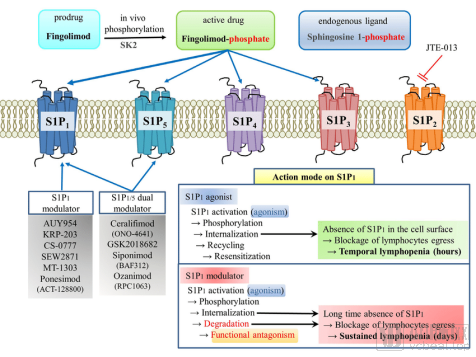
Data Source:celgene
Bayer Yakuhin and Santen Pharmaceutical recently announced the joint approval of a new indication for Eylea (aflibercept) in Japan for the treatment of neovascular glaucoma (NVG).
Aflibercept is a fusion protein formed by recombining the extracellular binding domains of human vascular endothelial growth factor (VEGF) receptors 1 and 2 with the Fc fragment of human immunoglobulin, representing a novel anti-VEGF agent.
Based on data from two Phase III studies: the randomized, double-blind, controlled VEGA study and the open-label, single-arm VENERA study. These two studies investigated the efficacy, safety, and tolerability of intravitreal Eylea injections in Japanese patients with neovascular glaucoma (NVG).
Both studies confirmed the efficacy of Eylea, achieving the primary endpoint of a significant reduction in intraocular pressure relative to baseline at Week 1 of treatment, as well as the secondary endpoint of a significant improvement in the neovascularization of the iris (NVI) score relative to baseline at Week 1.
❖Bayer (Bayer and India’s Curadev have announced a research collaboration and licensing agreement to develop novel stimulator of interferon genes (STING) antagonists for the treatment of patients with pulmonary diseases, cardiovascular diseases, and other inflammatory conditions. Agonists that activate the STING signaling pathway are a major focus in cancer immunology R&D; however, STING agonists currently under investigation have not yet demonstrated significant efficacy in clinical trials.
❖InnoCare Pharma (InnoCare Pharma) was officially listed on the Hong Kong Stock Exchange, with the bell-ringing ceremony held on the same day. InnoCare Pharma listed under Chapter 18A of the Main Board Listing Rules of the Hong Kong Stock Exchange, becoming the first biopharmaceutical company to list on the Hong Kong stock market since 2020. The company currently has nine candidate drugs in its pipeline, among whichLThe leading compound is orelabrutinib (BTK).
❖Nanxin Pharmaceutical Officially Listed on the STAR Market, with Plans to Raise FundsRMB 1.223 billion. Nanxin Pharmaceutical chose to list on the STAR Market under its first set of listing criteria. In 2018 and 2019, the company’s total operating revenue amounted to RMB 700 million and RMB 1.014 billion, respectively. During the same period, net profits were RMB 48 million and RMB 88 million, respectively, with a cumulative net profit of RMB 136 million. At the time of its IPO, the company’s price-to-earnings (P/E) ratio was 55.48x, with an estimated valuation of RMB 4.892 billion.
❖Sanofi Pasteur, the global vaccines division of Sanofi, and Translate Bio (Nasdaq: TBIO), a clinical-stage mRNA therapeutics company, will collaborate to develop novel mRNA vaccines for COVID-19. In 2018, Translate Bio and Sanofi Pasteur entered into an exclusive collaboration and license agreement to develop mRNA vaccines against up to five infectious disease pathogens.