

Can We Build a CT Suite Outside Hospitals? GE Healthcare's 'Noah Plan' Provides the Answer
Those who have undergone whole-body CT scans are likely to have a lasting impression of the radiology department: prominent radiation warning signs, massive CT scanners, and enclosed rooms... Located within the hospital building, this department stands in stark contrast to all others. Yet recently, an “imaging department” seemingly appeared out of nowhere at a temporary fever clinic set up beside a parking lot at Foshan Hospital of Traditional Chinese Medicine in Guangzhou.
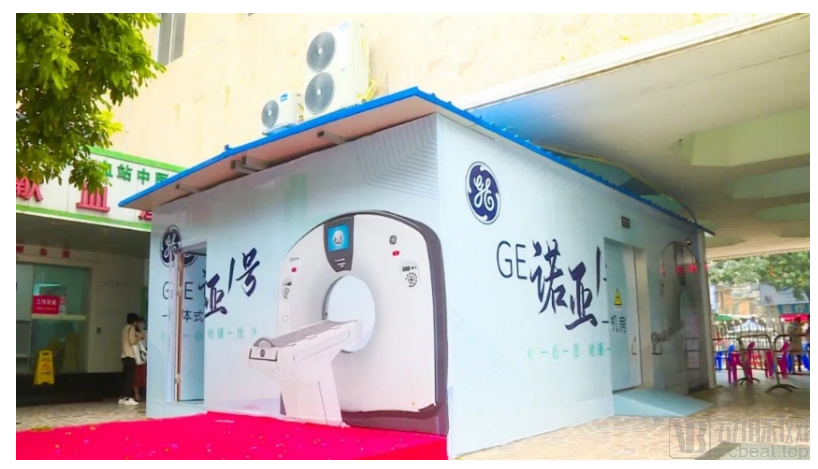
Spanning 48 square meters and comprising an independent scanning room and control room, this “Imaging Department” is a masterpiece of GE Healthcare, officially known as the integrated CT imaging examination suite solution “Noah One.” “Flexibility and standardization are the primary factors that impressed us,” stated Xu Zhiqiang, Member of the Party Committee and Vice President of Foshan Hospital of Traditional Chinese Medicine. As a hospital specializing in trauma care, Foshan Hospital of Traditional Chinese Medicine is frequently involved in responding to sudden public health emergencies. In scenarios involving infectious diseases, equipment capable of physically separating the hospital campus from the imaging department becomes particularly critical.
“It took only four days from arrival to complete installation, after which it was immediately put into use,” Director Chen of the Medical Affairs Department at Foshan Hospital of Traditional Chinese Medicine told VCBeat. “To ensure the safety of our healthcare workers during diagnosis and treatment, our general fever clinic limits CT scans to 50 patients per day. ‘Noah 1’ has, to some extent, improved the efficiency of our fever clinic, allowing more residents to undergo CT examinations each day.”
Certainly, the introduction of “Noah 1” was not merely to address the surge in patient volume during the COVID-19 pandemic. From a longer-term perspective, it represents a significant step in GE Healthcare’s “Project Noah” to assist China in building a preventive public health defense system.
“Project Noah,” named after the biblical story of Noah’s Ark, symbolizes hope. The vision of this initiative is to enhance hospitals’ preventive capabilities and ensure thorough preparedness, enabling effective and immediate responses to sudden emergencies in the future.
Such proactive planning is essential. In the later stages of the pandemic, the government gained a profound awareness of the significant shock and long-term impact that infectious diseases could have on our national economy. This underscores the necessity for increased investment in healthcare economics to prevent the recurrence of events like the COVID-19 outbreak. A key component of this strategy is promoting the establishment of fever clinics in major hospitals, thereby triaging infectious diseases at the initial stage of the diagnostic pathway.
Fever clinics, due to their temporary nature and the specialized types of patients they admit, are typically established outside the main hospital building. This also means that they struggle to provide the same level of adequate equipment and services as in-hospital departments.
Imaging examinations are a critical component of fever clinics and form the core of GE Healthcare’s Noah Project. This turnkey, flexibly scalable CT imaging solution divides the entire radiology department into two core components: the examination room container and the CT equipment. When hospitals have needs, these two parts can simply be assembled to provide comprehensive imaging capabilities within the fever clinic. Huang Yi, General Manager of the CT Product Department at GE Healthcare China, told VCBeat that this temporarily constructed CT room will possess all the capabilities of a standard radiology department, and with the support of AI systems, patients can receive their imaging results on the spot.
In addition to the “Noah 1” system equipped with the DeepSight AI CT platform, acquired by Foshan Hospital of Traditional Chinese Medicine, GE HealthCare has also developed the “Noah 2,” which integrates CT and X-ray examination equipment. Both solutions feature GE laboratory-grade independent scanning and control rooms, as well as a dual-channel design that separates medical staff from patients, complying with all national radiological examination standards and environmental assessments. Regarding specific CT parameter selection, GE HealthCare can provide hospitals with customized configuration options.
During the pandemic, many makeshift hospitals alleviated imaging demands by deploying mobile CT units. However, “Noah 1” offers a more comprehensive solution, distinguished by its ample examination space and compliant protective capabilities. While mobile CT units provide sufficient flexibility to shuttle between multiple locations for screenings in the early stages of an outbreak, examination sites typically become fixed during the middle and later phases. In contrast, “Noah 1” delivers efficient imaging capacity at these centralized, fixed screening points, where the limited examination space and protective features of mobile CT units struggle to meet the surge in testing demand.
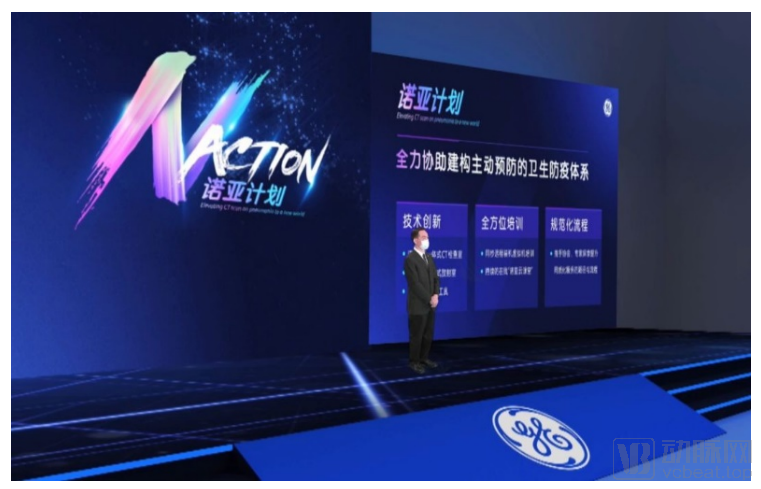
“Noah 1” and “Noah 2” represent the first step of the “Noah Project,” enhancing hospitals’ epidemic prevention capabilities through “hard power.” However, in Huang Yi’s view, their core significance lies more in establishing standardized diagnosis and treatment pathways, thereby strengthening the “soft power” of epidemic prevention from a management perspective.
“During the pandemic, to facilitate urgent diagnosis and treatment and manage the massive volume of imaging tasks, clinical workflows were appropriately streamlined, and vendors rapidly provided technical solutions. However, for facilities such as makeshift hospitals, in addition to installing specialized CT equipment, considerations must also be given to protective measures, disinfection, and even negative pressure requirements. To date, there are no industry standards governing these parameters. This is what we are currently addressing,” stated Huang Yi.
“In the future, we will collaborate with top-tier industry associations such as the Chinese Medical Association, the Chinese Society of Medical Imaging Technology, and the Chinese Medical Doctor Association to explore technical standardization. Based on these discussions, we aim to develop standardized guidelines for imaging diagnosis and clinical pathways. Therefore, the Noah Project is designed to support the national diagnosis and treatment of infectious diseases, with the ultimate goal of establishing standards for technology, diagnostic pathways, and medical imaging. For example, after the pandemic ends, when a hospital receives a patient with fever or suspected pneumonia, what should be the first-line examination? Should it be temperature measurement, laboratory blood tests, chest X-ray, or bypassing the chest X-ray to proceed directly to CT scanning? The sequence of these procedural steps warrants thorough discussion.”
The establishment of a proactive public health prevention and control system cannot be achieved without the support of reserve talent, and talent development is precisely the next objective of the “Noah Project.”
Today, GE Healthcare has designed a series of expert-led courses tailored to the specific needs of different physicians, comprehensively upgrading training in image diagnosis and equipment operation. By combining remote learning with on-site guidance, these initiatives aim to enhance the diagnostic and operational proficiency of clinicians and technologists, thereby strengthening their professional “soft skills.”
Leveraging GE Healthcare’s “e-Learn, e-Apply” platform, Noah Cloud Classroom will invite leading experts in the field of CT imaging over the next year to interpret case studies on COVID-19 prevention and control as well as imaging diagnosis of viral respiratory diseases. Targeting grassroots radiologists, it will host monthly lectures on respiratory system and pulmonary CT imaging techniques and cultivate talent in pulmonary imaging scanning through the “Top CT Technologist” competition. It is expected to benefit 5,000 to 8,000 frontline physicians within the next three years.
To address the challenge of conducting on-site training in certain regions, GE Healthcare has designed a comprehensive remote training solution. By leveraging a unique combination of training methods—including its proprietary CT virtual simulator, the e-Ask 2.0 platform, and the CT Application Academy—GE Healthcare provides real-time guidance and support throughout the process, ensuring that technologists proficiently master operational skills. Post-pandemic training will be further upgraded by closely integrating on-site and remote instruction. The curriculum will expand to cover a broader range of topics, such as parameter settings for scanning specific anatomical regions and diseases, intelligent analysis, and the use of auxiliary tools, thereby further refining operational workflows.
Overall, GE Healthcare’s “Noah Project” strategy addresses the practical needs arising from the pandemic, focusing on enhancing future hospitals’ epidemic prevention capabilities. By formulating strategies across three dimensions—equipment, talent, and management—the project is poised to strengthen the healthcare system’s capacity for diagnosing and treating infectious diseases, provided its implementation remains sustained.
On the other hand, acquiring corresponding CT scanners and shielded rooms solely for an uncertain future may impose a financial burden on many hospitals. In light of this, will GE HealthCare develop business models such as leasing to provide hospitals with temporary services? Innovation is particularly crucial in the current landscape.