

Internet Healthcare to Expand Across All Secondary and Above Hospitals; Internet Hospital Licenses Can Be Obtained in 48 Days, Payment Systems Require Further Enhancement
In "We analyzed 88 internet hospital policies from the past five years; this year has seen the most intensive rollout of new policies, signaling that the industry is about to enter a stage of in-depth development.In the article “》”, VCBeat has compiled relevant policies from 2015 to the present, proposed a “2-4 Model” for policy analysis, and analyzed the market size and corporate foundational readiness demonstrated by internet hospitals during the opportunity and intervention phases.
As the sector entered its expansion phase, provinces and municipalities intensively formulated relevant policies, and the National Healthcare Security Administration also issued reimbursement policies for internet-based healthcare, resulting in a more complete industry closed loop. At this stage, what are the characteristics of development goals for internet hospitals across different provinces? How do the application processes for establishing internet hospitals vary by province? What is the progress of breakthroughs in medical insurance reimbursement across different regions? What might be the future policy trends? What challenges does the industry still face?
We will present these contents in this article.
The full version of the "Internet Hospital Policy Research Report" can be obtained by scanning the mini-program QR code below.

Following the issuance of the “Opinions on Promoting the Development of ‘Internet + Healthcare’” by the General Office of the State Council in 2018, provinces across China successively released policies supporting the development of internet hospitals and related measures. As of March 30, 2020, all 31 provinces (autonomous regions and municipalities directly under the Central Government) had issued a total of 75 relevant policy documents.
Among these policies, the Implementation Opinions, Action Plans, and Action Plan for Convenient and Beneficial Services mainly proposeDevelopment Goals, the Administrative Measures for Internet Hospitals are primarily formulatedApplication Guidelines and Regulatory Measures,Medical Insurance PaymentThe policy focuses on improving internet medical service items, pricing, and payment standards.
The expansion phase has witnessed the highest level of corporate participation since the emergence of the internet healthcare industry. In the following sections, we will analyze each of the aforementioned stages, which will also involveInternet Hospital Application Case。
Development Goal: Internet-based medical services will be fully rolled out in hospitals at Level II and above.
Internet hospital development in each province is tailored to local conditions, with varying objectives; let us examine this from the macro perspective down to the details:
Some regions focus on establishing service systems; for instance, Tianjin and Henan have prioritized the development of policy or service frameworks within a specified timeframe. Zhejiang Province, with its abundant medical resources and advanced digital technologies, has well-developed infrastructure for internet hospitals. In 2019, it was designated by the National Health Commission as a demonstration province for “Internet + Healthcare.”
Some regions prioritize coverage, with most deploying services according to hospital tiers. The goal was to comprehensively roll out “Internet + Healthcare” services in secondary and tertiary hospitals by 2020. Provinces such as Anhui and Shaanxi have focused their targets on tertiary hospitals, while Hainan and Shandong have extended implementation down to secondary hospitals.
Some regions emphasize specific construction quantities, setting concrete numerical targets for the development of internet hospitals. For instance, Sichuan Province mandated the establishment of more than 30 internet hospitals by the end of 2020. Provinces such as Hebei and Hubei also took regional distribution into account, requiring cities and prefectures to simultaneously develop internet hospitals or provide internet-based medical services, in addition to the large tertiary Grade A hospitals located in provincial capitals.
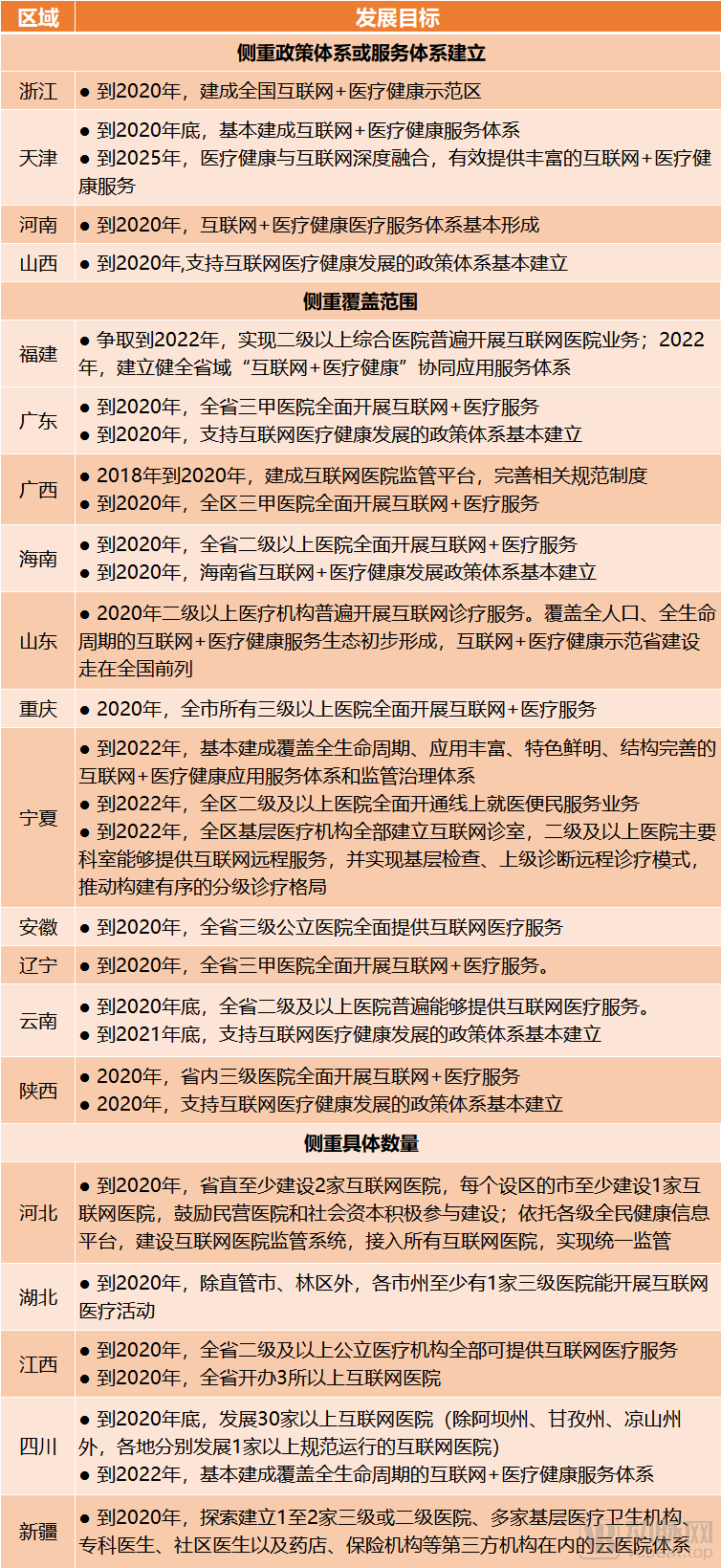
Development Goals for Internet Hospitals in Various Provinces and Cities, Source: Artery Orange Database, VCBeat Research Institute
During the COVID-19 pandemic in 2020, driven by both user demand and policy incentives, physical medical institutions and internet healthcare companies rapidly launched online fever clinics, internet-based consultation services, and internet hospitals. While the pandemic imposed physical distancing between individuals, internet hospitals effectively bridged this gap, with their advantages of high efficiency and low risk becoming more pronounced than ever before.
During this period, internet hospitals became the “second front” in the fight against the epidemic. On February 4 and February 7, the National Health Commission issued successive notices requiring the vigorous expansion of online diagnosis and treatment services, and mandating that provincial-level health administrative departments uniformly establish province-wide internet medical service platforms and platforms for the prevention and control of COVID-19.
Driven by the concentrated construction efforts during this period, internet hospitals will become a standard feature of physical hospitals in the future. The development outcomes of internet hospitals across various provinces and municipalities in 2020 are likely to exceed their original targets on a large scale.
Application Guidelines: Varying Requirements Across Provinces and Cities
With clear objectives in place, multiple provinces and municipalities have established regulatory frameworks for internet hospitals, covering aspects such as eligibility criteria, application procedures, and required documentation. Building upon the three key documents issued by the National Health Commission, each jurisdiction has formulated its own more detailed implementation rules.
Regarding access requirements, Shanghai has relatively stringent criteria.Regarding the applicant entity for an internet hospital, Shanghai stipulates that entities unable to independently bear civil liability, as well as relevant responsible parties listed in the national and municipal records of serious dishonest conduct, are prohibited from applying to establish an internet hospital.
Shanghai also emphasizes that internet hospitals must obtain the necessary administrative licenses for communications management, market regulation, cybersecurity, and drug administration in accordance with the law before commencing online diagnosis and treatment activities.
Shanghai boasts abundant high-quality medical resources, and the development of internet hospitals can maximize the value of these resources. To ensure the limited and rational utilization of these resources, Shanghai has implemented stricter access requirements for internet hospitals compared to other regions. To safeguard the operational capabilities of internet hospitals, entities with dishonesty records and practitioners with adverse conduct histories are excluded from serving as applicants or persons in charge.
Furthermore, Chongqing is currently piloting the licensing of internet hospitals at secondary-level and above medical institutions, with plans to gradually expand this initiative to other physical healthcare facilities once conditions are more favorable. Given their stronger capabilities in clinical care standards and capital mobilization, these institutions provide greater assurance of quality in both the construction and operation of internet hospitals during this initial trial phase.
In terms of the application process, it is generally divided into two major categories.First, physical medical institutions apply to register an internet hospital as their secondary name, which includes two scenarios: applications by existing physical medical institutions that have already obtained practice licenses, and applications by newly established physical medical institutions. Second, third-party entities independently establish internet hospitals in reliance on physical medical institutions.
Based on the internet hospital management regulations of various provinces and municipalities, the general procedures are as follows:
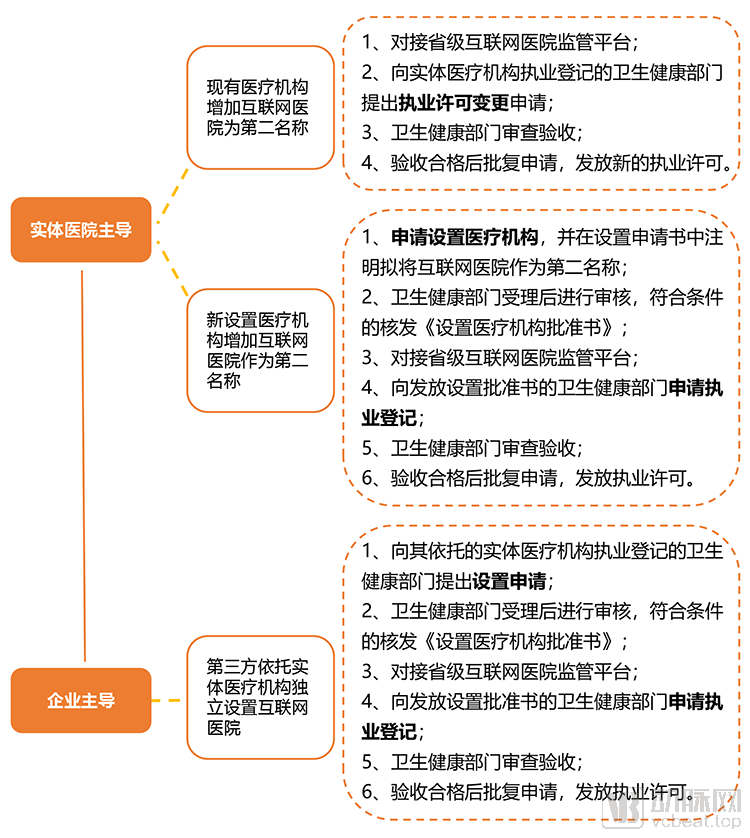
Application Processes for Different Types of Internet Hospitals. Source: Official Websites of Local Health Commissions; Chart by VCBeat Research Institute
For medical institutions that have already obtained a practice license, the process for establishing an internet hospital is the simplest, requiring only one main step: practice registration. This is essentially an application for a change in the practice license. For newly established physical medical institutions and third-party entities independently applying based on physical medical institutions, two main steps are required: application for establishment and application for practice registration. The main steps refer to the bolded parts in the diagram above.
It should be clarified that the application process for certain physical medical institutions involves the “integration of two certificates into one.” In June 2018, the National Health Commission issued the Notice on Further Reforming and Improving the Approval Process for Medical Institutions and Physicians, which merged the approval for establishment and the practice registration for secondary-level and lower-tier medical institutions into a single procedure. Specifically, when applying to establish such medical institutions, the health administrative departments no longer issue the Approval Certificate for Establishing Medical Institutions; instead, they only issue the Medical Institution Practice License during the practice registration stage.
In response to such scenarios, provinces and municipalities including Shanxi and Zhejiang have stipulated that if newly established medical institutions at the secondary level or below intend to adopt “Internet Hospital” as their secondary name, they may directly submit an application during the practice registration phase. In other words, the application process for such Internet hospitals requires only one primary step.
However, regardless of the specific process, it is essential to interface data with the provincial internet medical service supervision platform and undergo review and acceptance by the health authorities.
Application Materials: Shanghai, Jilin, and Other Regions Have Detailed Requirements. Based on the policies of various provinces and municipalities, the list of application materials is as follows:
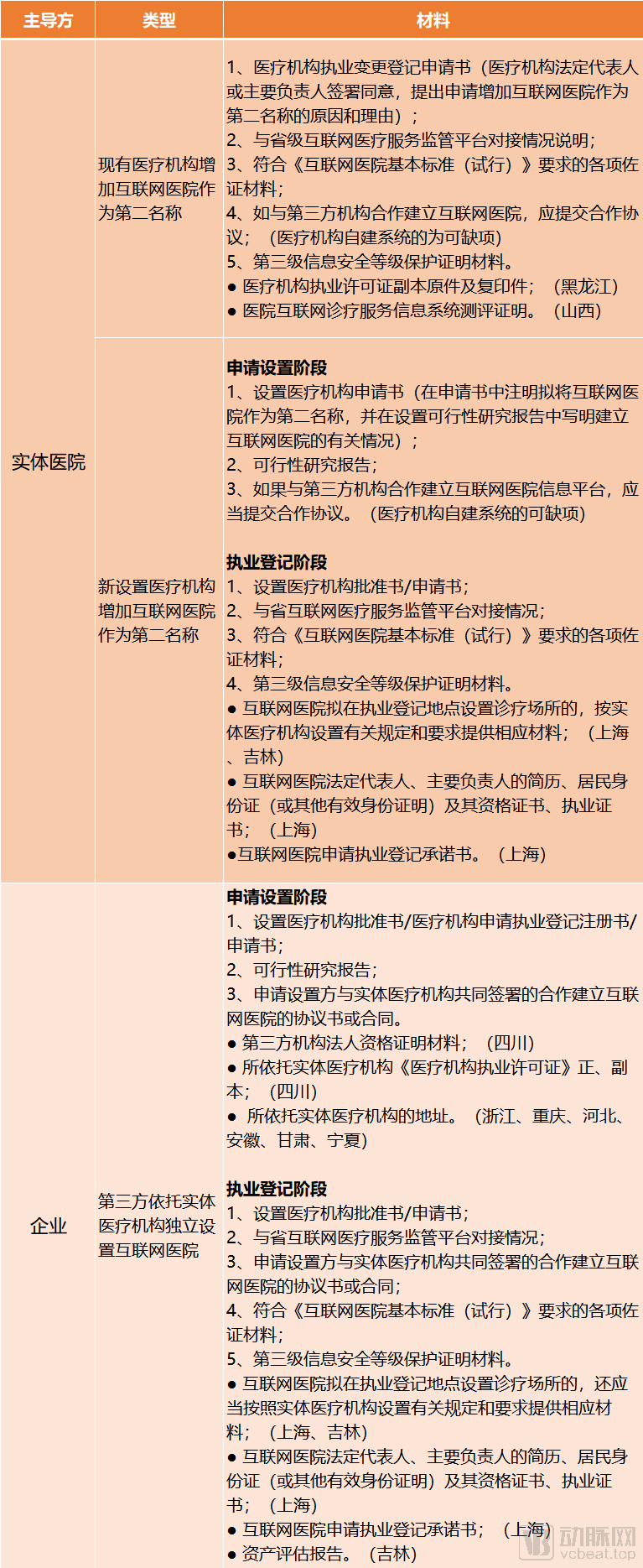
Materials for Applying to Establish Internet Hospitals in Various Provinces and Cities. Source: Official Websites of Local Health Commissions. Graphic by VCBeat Eggshell Research Institute.
The checklist includes both the mandatory items stipulated in the policies of the National Health Commission, namely supporting documents related to the projects specified in the Basic Standards for Internet Hospitals, as well as localized items formulated by various provinces and municipalities according to their actual conditions; for instance, Shanghai, Sichuan, Jilin, and other regions have more detailed requirements for such materials.
Shanghai regulations stipulate that if an internet hospital intends to establish clinical facilities at its registered practice location, it must submit corresponding materials in accordance with the relevant provisions and requirements for establishing physical medical institutions. Additionally, it is required to provide the resumes, resident identity cards (or other valid identity documents), qualification certificates, and practice certificates of the legal representative and the principal person in charge of the internet hospital, as well as a letter of commitment for the application of practice registration. This letter serves as a commitment to the authenticity of the application materials and to obtaining the relevant administrative licenses prior to commencing practice activities.
In Jilin, third-party entities establishing independent internet hospitals based on physical medical institutions are also required to submit asset appraisal reports, reflecting stringent oversight of their operational capabilities.
The aforementioned policy provisions merely establish the basic framework for applying to set up an internet hospital. In practice, the application process is highly detailed and involves far more than the items listed above. Taking Chongqing as an example, the application for practice registration alone comprises more than 10 sub-steps:
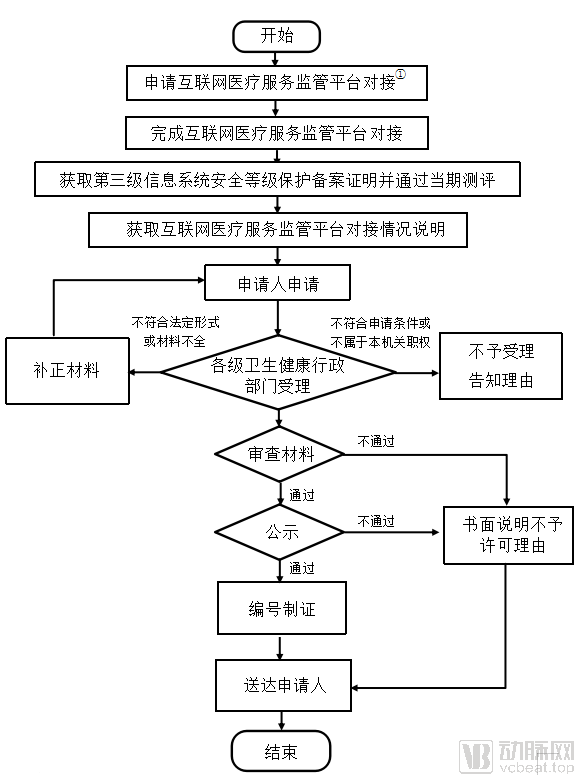
Approval Process Flowchart for Chongqing Internet Hospital, Source: Official Website of Chongqing Municipal Health Commission
The above is the approval process flowchart published by the Chongqing Municipal Health Commission. After completing the integration with the regulatory platform and obtaining the filing certificate for “Level 3 Classified Protection of Cybersecurity,” internet hospitals must submit relevant materials to apply for practice registration. During this process, issues such as incomplete documentation or failure to pass review may arise.
It is worth noting that Shanghai has specified a clear time limit for follow-up consultations at internet hospitals, requiring medical records from within the past two months. While other provinces have not stipulated such limits in their policy provisions, hospital implementation practices indicate that time restrictions are also enforced, albeit with varying standards across different regions.
Case Study: Hainan Achieves Fastest Internet Hospital Approval in Just 48 Days
How long does it take to establish an internet hospital, following the prescribed procedures and preparing the required materials?
Let's first look at the approval timeline for internet hospitals:
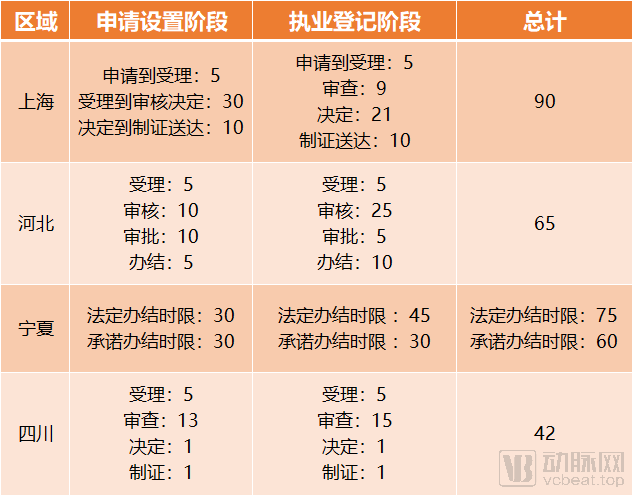
Time Limits for Approval of Internet Hospitals in Selected Provinces and Municipalities (All in Working Days), Source: Government Service Websites of Various Provinces and Municipalities
The approval timelines shown in the figure above encompass both the application for establishment and the practice registration phases, providing a reference for internet hospitals of various entity types. However, due to limitations in data collection channels, only information from select provinces and municipalities is presented.
It can be seen that the most time-consuming phase in the approval process is the review and decision-making stage, which primarily involves evaluating applications for the establishment of internet hospitals and deciding whether to approve their construction, as well as conducting on-site inspections and deciding whether to approve practice registration. These are the two most critical components.
Of course, the aforementioned timeline refers solely to the duration of administrative approval and does not include the time required for internet hospitals to establish their software and hardware infrastructure, staff personnel, and other aspects. However, certain construction tasks may be carried out concurrently with the administrative approval process, as circumstances permit.
How long does it take to establish an internet hospital, including the construction period? Some cases in Hainan can be referred to.
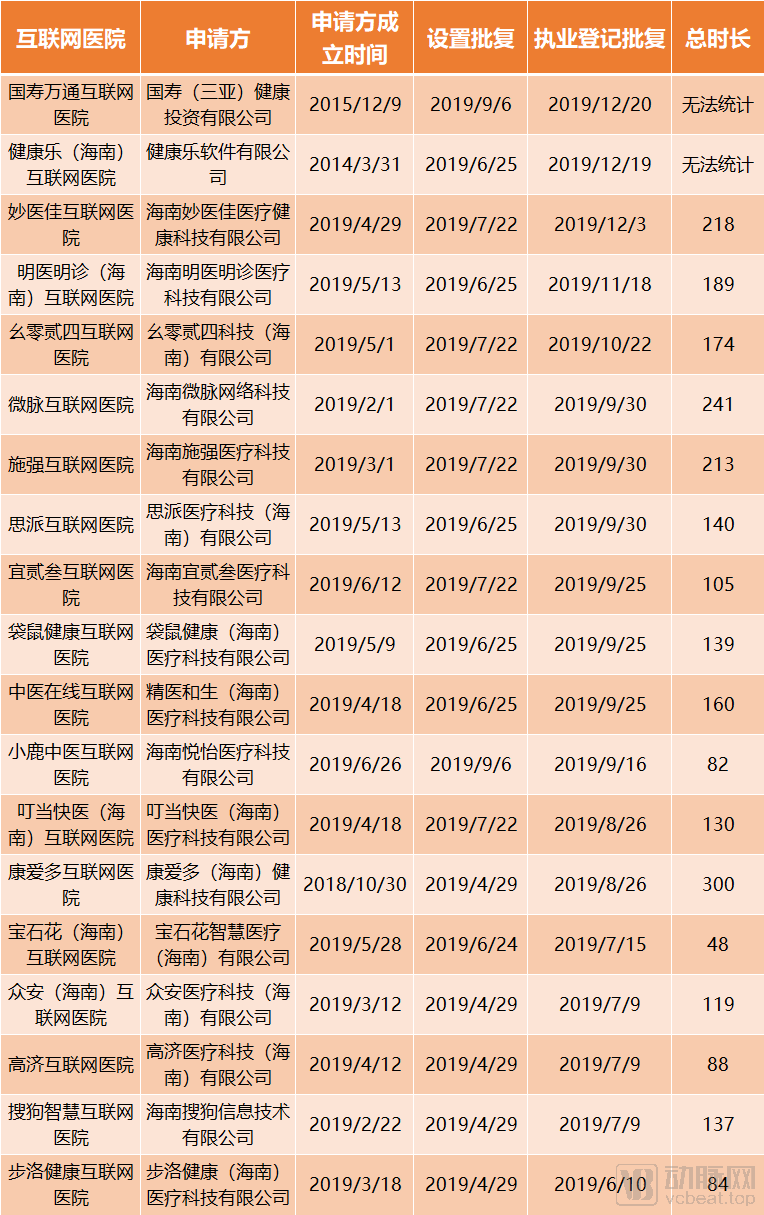
Application Milestones for Select Internet Hospitals in Hainan Province (Total Duration in Calendar Days)
Source: Official website of the Hainan Provincial Health Commission, Qichacha; Chart by VCBeat Research Institute
First, a company is required, whether newly established or already in operation. In the chart above, the applicants for the first two internet hospitals are companies already operating in Hainan, while most of the others are newly established entities.
The company, relying on its physical medical institutions, submits an application to the health administrative department for the establishment of an internet hospital. Upon acceptance, the health administrative department convenes a special meeting to review the application. If approved, it issues a corresponding approval document and requires the enterprise to complete the preparatory work for the internet hospital within six months in accordance with basic standards. After the preparation is completed, the internet hospital applies for practice registration. The health administrative department conducts an inspection according to relevant procedures, and upon successful inspection, issues an approval for practice registration.
The establishment of applicant enterprises for various internet hospitals can be regarded as the beginning of the application process, while the approval of practice registration signifies the acquisition of internet hospital qualifications. In the chart above, Guoshou Wantong Internet Hospital and Jiankangle (Hainan) Internet Hospital were applied for primarily by companies established in Hainan several years ago; since the exact start dates of their formal applications are unclear, their total application durations are not convenient to calculate.
The total application processing time for other internet hospitals ranges from approximately 48 to 300 days. During the preparatory phase, strict adherence to the requirements of the health authorities in preparing application materials, facilities, personnel qualifications, and rules and regulations will certainly shorten the overall application timeline; however, if any component fails to meet requirements and necessitates supplementary documentation, it will delay the application process.
However, it is important to note that the aforementioned differences in total duration serve only as a rough reference. Since enterprises vary in their subjective pace of implementation and the workload required for software and hardware infrastructure development differs, the variation in total time does not fully reflect disparities in capabilities for building internet hospitals.
Regulatory Measures: Timely Upload of Data Interfaced with the Regulatory Platform
Due to the unique nature of internet hospitals’ operational models, regulatory oversight can be conducted via online data transmission, specifically through provincial-level internet medical service regulatory platforms (hereinafter referred to as the “Regulatory Platform”). Each province must establish a provincial-level internet medical service regulatory platform before approving internet hospitals. Medical institutions or third-party entities applying to operate an internet hospital are required to integrate their systems with the Regulatory Platform.
How can health administrative departments at all levels achieve regulatory oversight through the supervision platform? What specific data must healthcare institutions integrate?
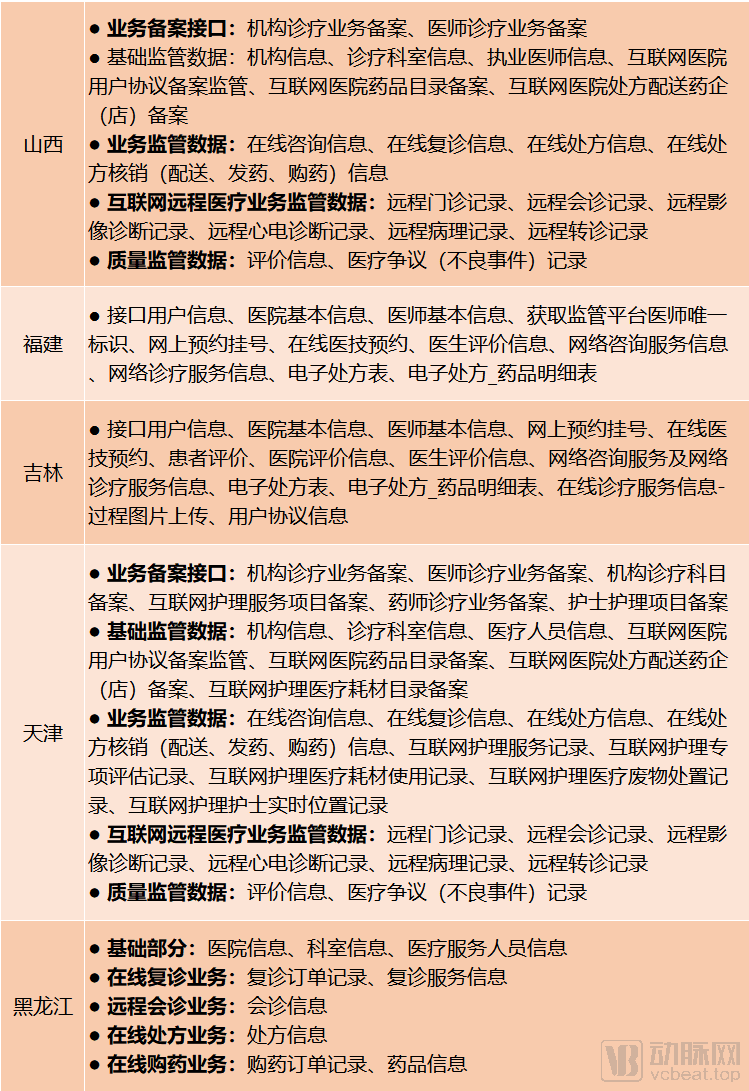
Data Types Required for Integration with Internet Medical Service Supervision Platforms in Selected Provinces and Cities
Source: Official websites of local health commissions; chart by VCBeat Eggshell Research Institute
Provinces and municipalities such as Shanxi, Fujian, Jilin, Tianjin, and Heilongjiang have issued detailed rules for data integration with regulatory platforms. Although there are regional variations, the requirements generally encompass basic hospital data (including institutional and personnel information) as well as operational data related to online consultations, electronic prescriptions, medication orders, and quality monitoring.
After the initial integration of these data with the platform, Internet hospitals are also required to upload updated business data on a scheduled basis. For example, Fujian and Jilin provinces require that the day’s business data be uploaded between 0:00 and 6:00 AM on the following day.
Subsequently, health administrative departments at all levels conduct real-time supervision of internet hospitals based on data collected by the platform.
If internet hospitals violate laws or regulations, they should be subject to corresponding penalties. Currently, the state has not yet issued specific measures for handling violations by internet hospitals. In policies across various provinces and municipalities, the prevailing wording is that such cases shall be “handled in accordance with relevant laws, regulations, and provisions.”
In other words, the provisions applicable to physical medical institutions shall be primarily followed, including the Law on Licensed Physicians, the Regulations on the Administration of Medical Institutions, the Regulations on the Handling of Medical Accidents, and the Regulations on Nurses. When a physical medical institution adopts an internet hospital as its secondary name, the physical medical institution shall serve as the entity bearing legal liability; all parties cooperating in the internet hospital shall assume corresponding legal liabilities in accordance with the cooperation agreement.
Regarding internet hospitals that are related to but managed by other departments, Shanghai has made the following clarification: If an internet hospital engages in practice activities without obtaining the required administrative licenses for communications management, market regulation, cybersecurity, and drug administration, the health administrative department shall refer the case to the relevant authorities for handling.
Health Insurance Payment: COVID-19 Pandemic Control Drives Breakthroughs in Bottlenecks
Payment processing is a critical component in the development of internet hospitals. In the current payment system of physical medical institutions, payments are primarily covered by medical insurance and out-of-pocket expenses. However, during the opportunity and market entry phases, internet hospitals have relied mainly on out-of-pocket payments, with medical insurance reimbursement only being explored on a small scale in select regions. The absence of medical insurance coverage has long been regarded as a bottleneck for industry growth.
On August 30, 2019, the National Healthcare Security Administration issued the “Guiding Opinions on Improving Pricing and Medical Insurance Reimbursement Policies for ‘Internet+’ Medical Services,” establishing a comprehensive framework for incorporating internet-based medical services into the medical insurance reimbursement system.
However, policies on medical insurance coverage for internet-based healthcare have not been rapidly rolled out nationwide; only certain provinces and municipalities have introduced relevant policies or specified projects and pricing.
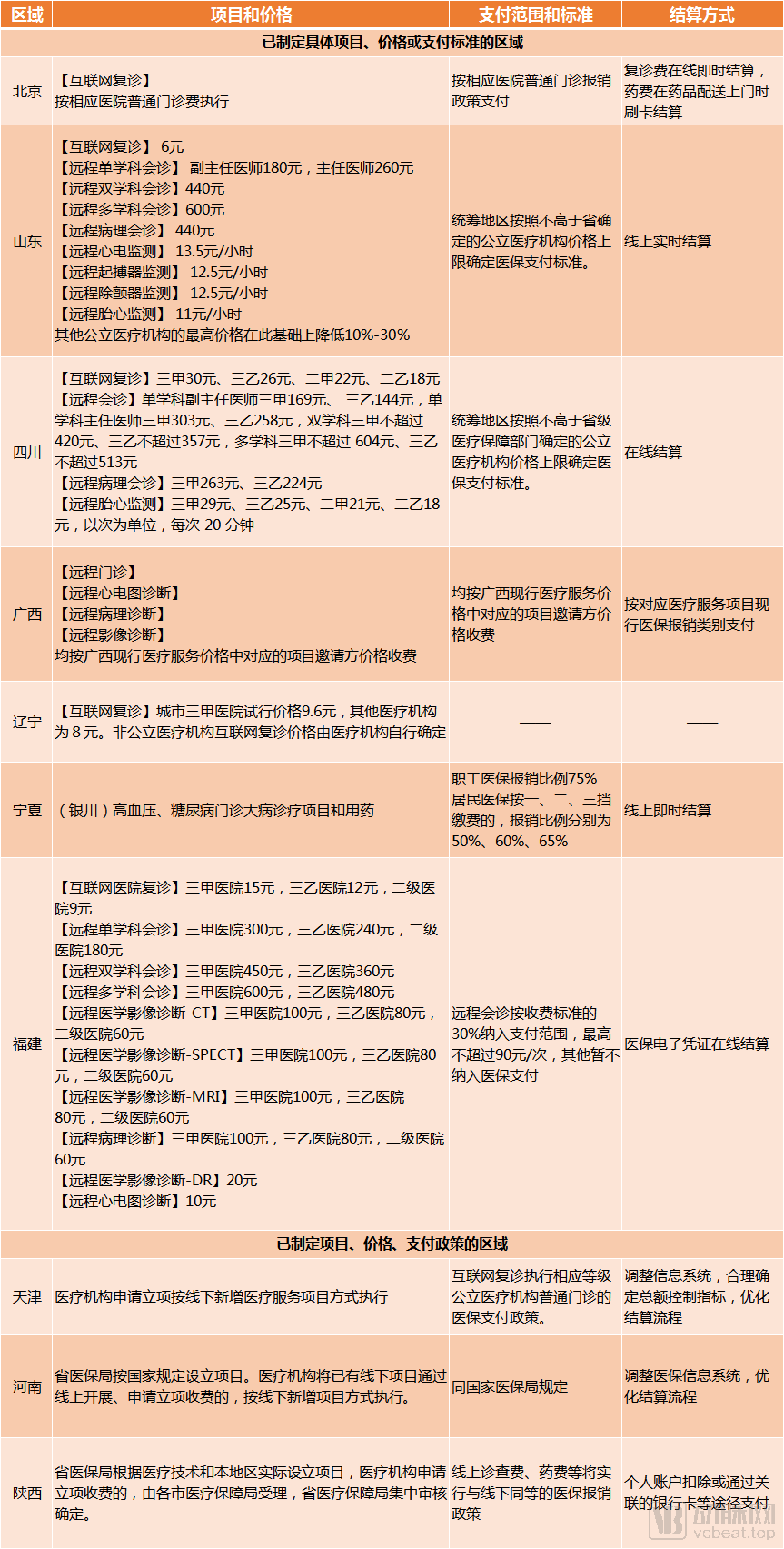
Figure 8: Detailed Rules on Medical Insurance Payment Policies by Province and City, Source: Official Websites of Local Medical Insurance Bureaus
Chart by VCBeat.
Among these services, online follow-up consultations are the most fundamental. In accordance with the requirements of the National Healthcare Security Administration, fees for services provided by medical personnel of different levels are uniformly charged at the rate for general outpatient consultation items. Consequently, internet hospitals across various regions do not tier their follow-up consultation fees based on physicians’ professional ranks.
In addition, provinces such as Shandong, Sichuan, and Fujian have also established pricing for services including remote consultations and remote diagnoses.
Only after the items and pricing for internet-based medical services are established can the scope and standards of reimbursement be determined. Based on current reimbursement policies across various provinces and municipalities, they generally fall into three categories:
First, Beijing, Tianjin, Shaanxi, and other regions implement identical reimbursement policies for both online and offline services;
Second, in provinces such as Shandong and Sichuan, the pooling areas (i.e., prefecture-level cities) independently determine the scope and standards of reimbursement by comprehensively considering factors such as their respective medical insurance funds and healthcare service levels.
It is difficult to establish a uniform reimbursement standard across the entire province for the first two scenarios, whereas specific provincial standards can be formulated for the third scenario. For example, in Fujian Province, remote consultations are covered by insurance at 30% of the prescribed fee schedule, while services such as online follow-up visits are currently excluded from medical insurance coverage.
In 2019, Fujian Province took the lead in China to explore provincial-level pooling of medical insurance funds by issuing the “Implementation Opinions on the Provincial Pooling and Adjustment of Basic Medical Insurance Funds for Urban Employees in Fujian Province,” thereby establishing a mechanism for the pooled adjustment of employee basic medical insurance funds. With the employee basic medical insurance funds managed as a unified provincial entity, Fujian was able to lay the foundation for formulating uniform reimbursement standards across the province.
As previously mentioned, the COVID-19 pandemic has significantly boosted the development of internet hospitals. Similarly, during the pandemic, medical insurance payment channels were rapidly integrated and streamlined.
On February 23, in Wuhan, the city hardest hit by the epidemic, the local Healthcare Security Administration issued 18 measures to support epidemic prevention and control as well as routine medical security, including the inclusion of “Internet+” medical services in health insurance reimbursement. Within three days of the announcement, three public hospitals and the Wuhan Special Zone of WeDoctor Internet General Hospital rapidly upgraded their information systems to integrate online health insurance payment.
On March 2, the National Healthcare Security Administration and the National Health Commission issued the “Guiding Opinions on Promoting ‘Internet+’ Medical Insurance Services During the Prevention and Control of the COVID-19 Pandemic,” incorporating eligible fees for “Internet+” medical services into the scope of medical insurance reimbursement.
Since the outbreak of the pandemic, multiple provinces and municipalities have formulated specific payment measures:
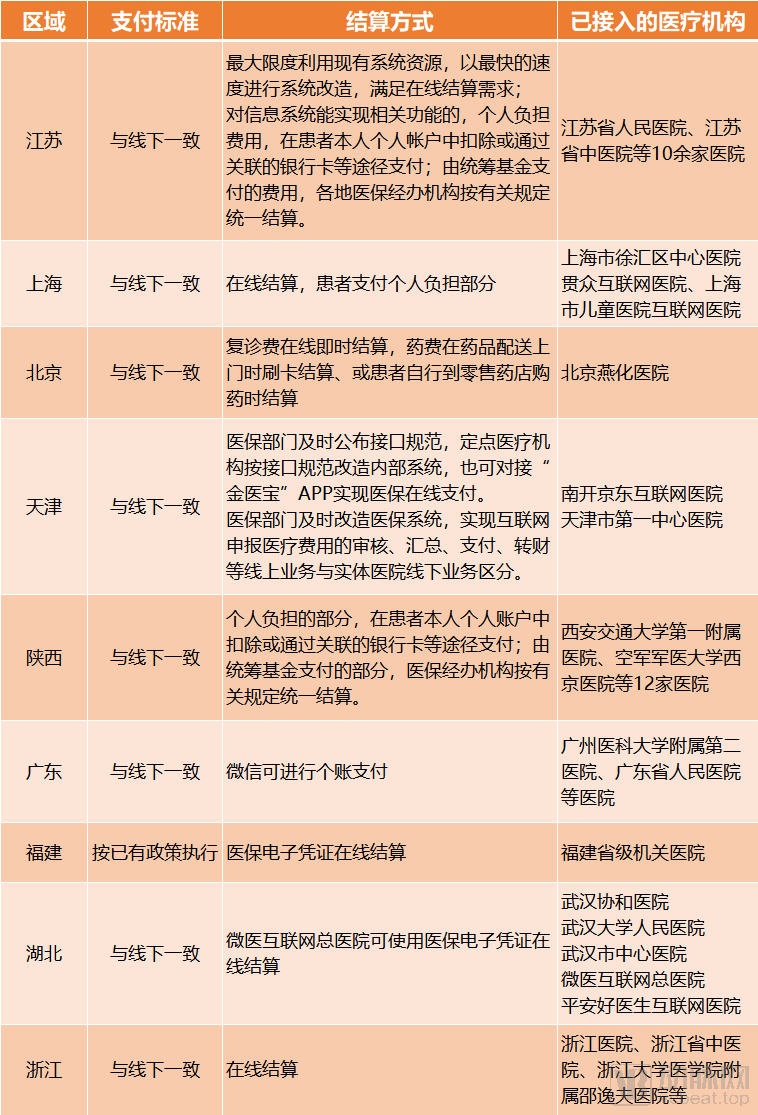
Selected Provinces and Cities That Integrated Internet Healthcare into Medical Insurance Payment During the COVID-19 Pandemic
Source: Official websites of local healthcare security administrations and public reports; chart by VCBeat.
Driven by the needs of epidemic prevention and control, medical insurance handling agencies, healthcare institutions, and information technology enterprises across various regions have accelerated the upgrading of their information systems. In the aforementioned cities, some hospitals have already implemented online settlement functions, laying the foundation for the future improvement of medical insurance payments. However, on a national scale, medical insurance payment for internet-based healthcare is still in its early stages, requiring continued policy rollout and sustained support from information technology services.
Comprehensive Rollout of Internet Hospital Management Policies and Breakthroughs in Payment
Currently, regions across China have implemented policies and measures to varying degrees in the three key areas of guidance, payment, and regulation for internet hospitals, with phased targets set for 2020. Meanwhile, during the COVID-19 pandemic, internet hospitals played a significant role in follow-up consultations for common and chronic diseases, and have established a closed-loop care process—including online consultations, e-prescribing, online medical insurance settlement, and medication delivery—in certain regions.
Next, the guidance policies will build on the existing framework from 2020, focusing on improving the standardized operation of internet hospitals and clarifying or unifying key standards across different regions.
In the payment phase, several provinces and municipalities still need to supplement their corresponding payment policies. Driven by pandemic prevention and control measures, this progress is expected to accelerate. For provinces and municipalities that have already implemented relevant measures, it is necessary to complete the integration of information systems at medical institutions. After the actual launch of medical insurance payments, daily monitoring and supervision should be strengthened. Issues identified should be investigated, and corresponding payment policies adjusted as needed, to ensure the security of medical insurance funds.
Meanwhile, since the establishment of the National Healthcare Security Administration, the healthcare security system has been undergoing accelerated reforms. Recently, the Central Committee of the Communist Party of China and the State Council issued the "Guiding Opinions on Deepening the Reform of the Healthcare Security System," which set forth corresponding targets for the years 2025 and 2030. Internet healthcare has also boarded this fast train. As the top-level design of the healthcare security system, the "Guiding Opinions" mentioned internet healthcare three times.
In terms of regulatory oversight, due to the current absence of specialized laws and regulations, internet hospitals, licensed physicians, pharmaceutical management, medical disputes, and medical malpractice cases are primarily governed by referencing the standards applied to offline medical institutions. As internet hospitals remain in an early stage of development with limited online diagnosis and treatment services, this regulatory principle is expected to persist in the short term. Furthermore, considering medical safety concerns, it is unlikely that restrictions on initial consultations will be relaxed in the near future.
However, in the long run, new technologies and models will continue to emerge, and the integration of the internet with healthcare will deepen. This will inevitably give rise to specific issues, as well as laws and regulations tailored to address them.
Drawing on the legislative trajectory of e-commerce, which emerged in 2003, the state initiated the drafting of the E-Commerce Law in 2013. The E-Commerce Law of the People’s Republic of China was formally promulgated in 2018 and came into effect on January 1, 2019. During this interim period, industry regulation was primarily conducted through administrative regulations.
Therefore, the improvement of the regulatory system is a long-term process that adapts to industry development, and the regulation of internet hospitals will also undergo this process.
Online Sales of Prescription Drugs Require Policy Improvements, While User Habits Remain a Challenge
With the implementation of health insurance payments and the establishment of a closed-loop system for online diagnosis and treatment, the integration between internet hospitals and pharmaceuticals has become increasingly tight. Internet hospitals are demonstrating growing capacity to aggregate patients, particularly those with chronic diseases, and may even evolve into specialized channels for drug distribution in the future.
In the context of the “healthcare + pharmaceuticals” model on the internet, internet hospitals can direct prescriptions to retail pharmacies or to their own or third-party pharmaceutical e-commerce platforms, thereby raising the issue of online sales of prescription drugs.
On December 1, 2019, the newly revised Drug Administration Law came into effect, lifting the ban on online sales of prescription drugs. During the same period, the Negative List for Market Access (2019 Edition), issued by the National Development and Reform Commission and the Ministry of Commerce, stipulated that “drug manufacturers and distributors shall not sell prescription drugs directly to the public via mail or internet transactions in violation of regulations.” This provision was marked with a ★ symbol, indicating that it was a management measure temporarily included in the list due to insufficient legal authority at the level of its establishing basis, and that legislative procedures should be improved as soon as possible.
Therefore, the online sale of prescription drugs is one of the policies that urgently needs to be improved.
Moreover, the low-frequency nature of healthcare demand has been a topic of industry discussion for many years, and the adoption rate of internet hospitals among patients remains low.
During the COVID-19 pandemic, user numbers and consultation volumes surged across major internet hospitals and online healthcare platforms. Local health commissions established official consultation platforms, while internet healthcare companies widely opened their consultation interfaces to third-party partners. Pandemic control efforts became a significant opportunity for internet hospitals to expand user adoption and cultivate habitual usage.
But in the post-pandemic era, with the cessation of successive policy incentives and pervasive corporate marketing, will users still turn to online consultations when they encounter health issues? Will they continue to keep the apps downloaded during the pandemic? These questions remain significant challenges ahead.