

Sunland Capital Completes New Fundraising Round with DPI Over 50% Across Nearly 30 Portfolio Companies in Five Years

Sunland Fund
Professional Healthcare Investment Fund
In 2019, the venture capital industry entered a winter period. It was initially expected that spring would arrive after 2020, but the sudden outbreak of the COVID-19 pandemic disrupted this cycle and prolonged uncertainty. Due to its counter-cyclical nature and risk-resistant characteristics, the healthcare sector presented a somewhat different situation.
Dr. Liu Daozhi, Founding and Managing Partner of Sunland Capital, told VCBeat that the healthcare sector was extremely hot between 2016 and 2017, with hundreds of billions in capital flowing in, driving up project valuations. From 2018 to 2019, due to fundraising difficulties, the overheating in the healthcare sector began to cool down. He believes that 2020 will mark the period when healthcare investment truly returns to rationality.
The ebb and flow of healthcare investment is also a process of natural selection. Ultimately, the funds that will weather the cycle and provide long-term support to the development of China’s healthcare industry will be specialized healthcare funds with unique investment strategies.
Just as the primary market’s rhythm was disrupted by the “black swan” event of the COVID-19 pandemic, with some investment firms facing fundraising difficulties, Sunland Capital, a professional fund specializing in early- and growth-stage investments in the healthcare industry, has recently successfully closed its latest fund. The new fund will continue its previous investment theme, focusing on early- and growth-stage opportunities in the healthcare sector, with strategic emphasis on medical devices, biotechnology, and novel drugs.
Over the past five years since its establishment, Sunland Capital has achieved remarkable results, with an IRR (annualized compound return) of over 30% and a DPI (ratio of exit proceeds to invested capital) exceeding 50% across its portfolio of nearly 30 healthcare and medical enterprises.
Having navigated the cycle, Sunland Capital will continue its journey. As a low-profile and pragmatic specialized fund, how will Sunland Capital map out its future investment landscape? VCBeat (WeChat ID: vcbeat) conducted an exclusive interview with Liu Daozhi, Founding and Managing Partner of Sunland Capital.
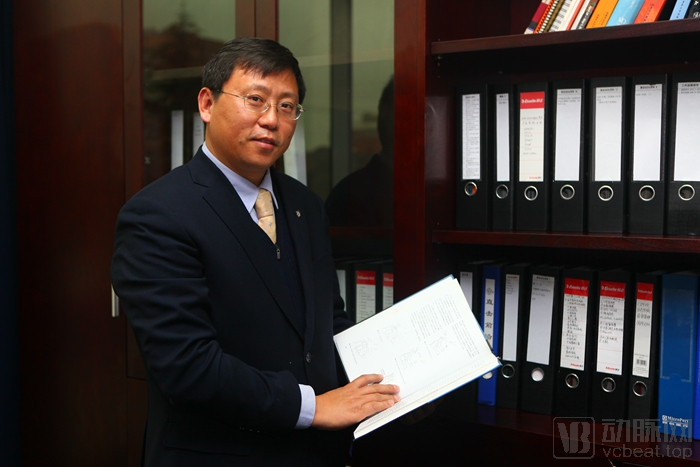
Liu Daozhi, Founding and Managing Partner of Sunland Capital
In the interview, Liu Daozhi, a veteran entrepreneur embarking on his second venture in the healthcare industry, candidly shared his insights and experience in healthcare investment. His articulate narration of personal experiences and perspectives reveals his acumen and seasoned maturity.
In 2013, Dr. Liu Daozhi had already achieved considerable success and prestige, having worked at MicroPort Scientific Corporation for 11 years. The idea of establishing a professional medical investment fund gradually took shape in his mind. At that time, China’s healthcare sector was perceived as progressing slowly, with limited market potential, few operational models, and an uncertain regulatory environment.
At that time, as an entrepreneur, he endured the arduous early stages of commuting by subway and renting apartments while building his business. His co-founded venture, MicroPort Scientific Corporation [00853], was listed on the Main Board of the Hong Kong Stock Exchange. At the pinnacle of his life, he decided to change course, shifting from corporate operations to investment.
This decision was made because Liu Daozhi recognized the long-term growth potential of the healthcare industry, where companies have substantial capital needs over time. However, at that time, he perceived a significant lack of professional investment funds within the healthcare investment landscape.
Liu Daozhi earned his Bachelor’s degree in Physics and his Ph.D. in Science from Nankai University in the early stages of his career. He subsequently conducted postdoctoral research at the University of Oxford and served as a researcher at the National Institute for Materials Science in Japan. His decade-long scientific career, combined with over ten years of entrepreneurial experience in the healthcare industry, has shaped his unique personality—characterized by integrity, pragmatism, resilience, meticulous thinking, and a bold spirit of innovation and exploration—granting him a more comprehensive and profound understanding of healthcare investment.
“The barriers to entry and the level of specialization required in healthcare investment are high, yet there was a lack of specialized funds in China at that time.” Back then, healthcare investments were primarily made by generalist funds. These funds faced two main challenges: their investment teams lacked professionals with expertise in technology, regulations, and operations, and the proportion of capital allocated to the healthcare sector was relatively small. Liu Daozhi keenly recognized that specialized healthcare funds would represent the future direction and trend of the industry.
He believes that the professionalism of healthcare investment extends beyond merely understanding medical technologies.
“Professional investors need to have a deep understanding and unique insights into the industry and technology. However, they must not be like blind men touching an elephant and only feeling its thigh; instead, investors should possess a holistic perspective and global vision, with comprehensive knowledge of all aspects of business operations. Lastly, they must understand investment principles and know when to advance or retreat. I happen to have accumulated extensive management and operational experience in areas such as R&D, marketing, supply chain, quality and clinical regulations, HR and finance, strategic planning, capital operations, and IPOs through my journey in scientific research and entrepreneurship. I can leverage my experience to empower more entrepreneurs.”
Transitioning from an entrepreneur to an investor, Liu Daozhi maintains a humble and approachable attitude toward entrepreneurs.
“I believe investors should play a supporting role in corporate development. Attempting to take the wheel is a sign of unclear self-positioning. However, as a supporting actor, one must still drive the ‘plot’ forward; particularly when a company encounters bottleneck issues, investors should leverage their resources to resolve problems promptly. Investors will neither tolerate nor accommodate actions by entrepreneurs that undermine the company’s long-term development.”
Dr. Nie Hongxin, co-founder of the former Kanghui Medical, participated in the initial phase of Shanlan Capital as an investor and investment partner at its inception. In 2016, Dr. Nie joined Shanlan Capital full-time as a Managing Partner.
The alignment in investment strategy and philosophy primarily stems from the similar experiences of the two partners at Sunland Capital. Like Dr. Liu Daozhi, Dr. Nie has a highly successful entrepreneurial background. As the founder of China’s leading orthopedic company a decade ago, he led his team to successfully list the company on the New York Stock Exchange in 2010, after which it was acquired by Medtronic, the world’s largest medical device manufacturer.
Shared experiences have endowed the two partners with aligned values, while their diverse professional backgrounds create complementary capabilities. Both partners at Sunland Capital boast over a decade of entrepreneurial experience in healthcare enterprises. The companies they co-founded have each achieved the number one position in their respective niche markets in China and successfully entered the capital markets. They possess comprehensive knowledge of the entire lifecycle of healthcare enterprise development, spanning initial establishment, R&D, type testing, clinical trials, regulatory registration, market promotion, scaled sales, IPOs, and M&A. Leveraging the strengths of a specialized healthcare fund—particularly its extensive experience in investing in early-stage and growth-stage healthcare projects as well as in corporate management and operations—they provide comprehensive empowerment to their portfolio companies in areas such as strategic planning, regulatory registration, business management, resource matchmaking, and talent recruitment.
The partners’ extensive background in the medical device industry has shaped Sunland Capital’s deep strategic focus on this sector.
Throughout its development, Sunland Capital has earned high recognition from LPs and GPs alike for its robust performance in returns and exits. Sunland Capital’s limited partners include many well-known domestic institutional investors and listed companies, such as CICC Qiyuan, China Development Bank Financial Corporation, Everbright Limited, Zijing Capital, Lepu Medical, and Buchang Pharmaceuticals. Its track record features investments in leading enterprises across specialized sectors, including Guoke Hengtai, Aupu Biotechnology, Shengshi Taike, Langhe Medical, Zhishan Medical, Ligatai, Deepwise Medical, Baichen Medical, Youde Medical, and Boao Saisi.
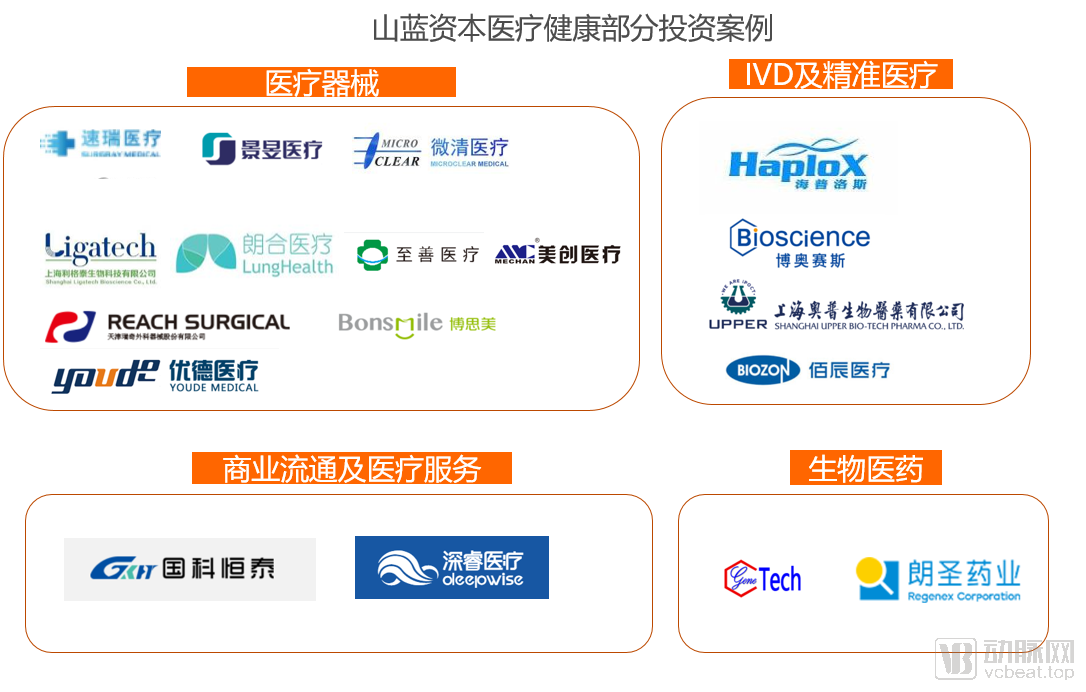
The portfolio of these star companies also reveals the general outline of Sunland Capital’s investment landscape: medical devices and in vitro diagnostic reagents and equipment are the core focus, while maintaining a strong emphasis on biotechnology, new drugs, and medical robots.
Regarding the “Dao” and “Shu” of healthcare investment, Shanghai Sunland Investment Management Co., Ltd. has its own approach: while it cannot guarantee that no opportunities will be missed, it can ensure that no poor investments are made.
Liu Daozhi revealed that, first and foremost, investors need to evaluate several core dimensions: whether the product addresses a pseudo-clinical need, its potential for explosive market growth, the comprehensive capabilities of the founding team, the height of competitive barriers, and the ability to navigate regulatory registration requirements.
“If a company fails to meet the standards in these core dimensions, it may hit a growth ceiling or ultimately become trapped in a price war.”
It is worth noting that he emphasized time as a critical dimension, and investors need to master the optimal timing for investment.
“In investment, both technology and people are important, but I want to emphasize that timing is crucial. Failing to enter at the optimal moment means investing in projects at exorbitant costs. However, seizing the right timing is not a matter of intuition; it requires extensive research, including interviews with key opinion leaders (KOLs) and clinical experts, as well as comprehensive assessments of companies’ overall capabilities.”
Liu Daozhi stated that import substitution has been a major theme in the development of the medical device sector in China. Over the next decade, global innovation and import substitution in medical devices will proceed in parallel.
“With the continuous advancement of medical insurance cost-containment policies, the implementation of volume-based procurement (VBP) for high-value consumables has significantly impacted corporate sales, leading to a redistribution of profits between manufacturers and distributors. For R&D-driven manufacturers, it is essential to launch products with pricing power, maintain a robust pipeline reserve, and prioritize the development of differentiated products.”
In addition to medical devices, Sunland Capital also closely monitors precision medicine and smart healthcare. Technologies such as precision medicine, AI, and big data have continued to emerge in recent years. For these two sectors that frequently attract market hype, Sunland Capital adopts a more cautious approach.
“For investment targets in fields such as precision medicine and artificial intelligence, many projects lack mature business models for reference, and some do not even have established regulatory approval pathways. These projects are highly dependent on policy support. For such initiatives, we focus primarily on two key aspects: first, their commercialization capabilities, and second, the effectiveness of their implementation scenarios.”
In terms of medical investment strategies, in addition to the sector-scanning and sniper-style approaches, Sunland Capital is also experimenting with a differentiated, proactive incubation investment model.
In 2017, Sunland Capital incubated and invested in a high-tech medical company specializing in ingestible, biodegradable intragastric balloons for weight loss, designed to treat obesity and related conditions. As this technology was not yet available in China, Sunland Capital spearheaded the establishment of the first domestic company in this field, assembled an R&D team, engaged renowned physicians as consultants, and founded Zhishan Medical. Zhishan Medical has been highly sought after in the capital market and subsequently secured investments from several prominent institutions, including SoftBank China, Legend Capital, Danlu Capital, and China Everbright Limited.
Currently, this model of proactive incubation-style investment poses certain challenges for domestic investment firms in China. However, in the more mature investment markets of Europe and the United States, an increasing number of venture capital firms specializing in early-stage investments are leveraging cutting-edge innovative technologies to participate in the creation of new companies. These investment institutions can rapidly transform research-oriented projects into commercialized enterprises by assembling complete operational teams. Industry insiders refer to this approach as “proactive incubation investment.”
In the Chinese context, active incubation investment poses greater challenges for investment firms. These firms need to transform from snipers into special forces units, capable of operating effectively in a wider range of scenarios.
In an era where investment success hinges on deal sourcing, active investing primarily tests whether investors possess robust, comprehensive, and accessible professional networks. In this regard, Sunland Capital, with its deep industrial DNA, enjoys a distinct advantage. Dr. Liu Daozhi serves as Vice Chairman, Executive Director, or Director of four national medical industry associations, and is the founding initiator and consecutive eight-term Chairman of the China Healthcare Industry Investment & M&A CEO Summit. Dr. Nie Hongxin previously served for six years as Chairman of the Surgical Implants Professional Committee of the China Medical Devices Industry Association and currently holds the title of Honorary Chairman; he is also a founding member and Executive Director of the Chinese Society for Biomaterials.
In addition to resources, Dr. Liu Daozhi believes that three other aspects also pose significant challenges for managing active incubation investments.
First, in terms of technical assessment, investors are required to have an in-depth understanding of emerging industries and niche segments both domestically and internationally. Meanwhile, investors must possess the capabilities and perseverance of entrepreneurs, enabling them to integrate resources and build a strong, complementary core team. Furthermore, investors need robust post-investment management capabilities, exerting influence and exercising overall control over portfolio companies to help them resolve bottleneck issues. Finally, investors should play a significant role in the company’s subsequent financing rounds.
Having accompanied the healthcare industry for decades, Liu Daozhi has always been optimistic about the future of China’s medical sector, a vision that aligns with the founding ethos of Sunland Capital. The firm’s English name, SUNLAND, symbolizes a golden land bathed in sunlight, representing a creator of wealth. Regarding the prospects and blueprint for the future healthcare industry, Liu Daozhi believes that Chinese companies have long been absent from the global top 20 healthcare enterprises. Mindray, the leading domestic medical device company, is still ten times smaller than Medtronic, the world’s largest medical device manufacturer. In the next decade, this gap will surely be closed, and more Chinese companies will appear among the global top 20.
“Meanwhile, I firmly believe that in the next decade, Sunland Capital will become an internationally leading professional healthcare investment fund.”