

Biosense Life Sciences Completes Nearly RMB 200 Million Series B+ Financing; China's First Direct FFR Measurement System Set for Global Launch

InSight Lifetech
Cardiovascular Interventional and Implantable Device Manufacturer
VCBeat has learned that recently,Shenzhen Insight Lifetech Co., Ltd. (hereinafter referred to as “InSight Lifetech”) announced the completion of its Series B+ financing round, raising nearly RMB 200 million.This funding round was led by SDIC Chuanghe, with participation from Sinoway Capital, Yifeng Capital, and Hetang Venture Capital. The lead investor from the previous round, Sequoia Capital China, along with existing shareholder Sherpa Partners, also continued to participate in this round.
As a national high-tech enterprise, InSight Lifetech is committed to building a high-end active cardiovascular interventional medical device technology platform. Following the completion of this financing round, the company will continue to strengthen its R&D capabilities, upgrade its technological innovation platform, and prepare for the commercial launch of its first product.
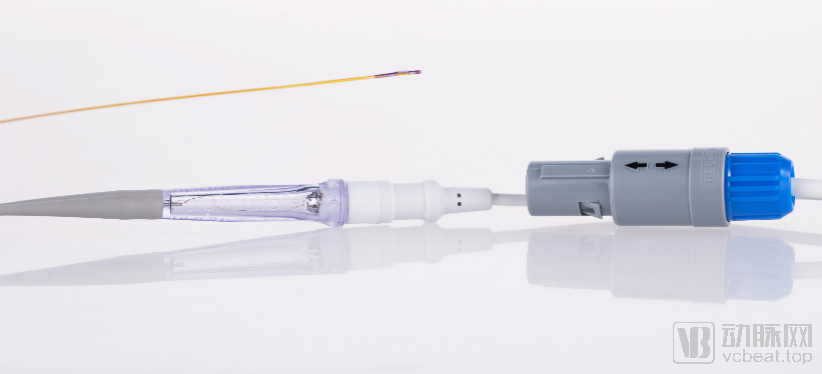
The world’s first rapid-exchange FFR pressure microcatheter based on MEMS sensors,
Technological Advantages: Internationally Leading
Coronary Atherosclerotic Heart Disease (commonly referred to as "coronary heart disease") is one of the leading causes of mortality worldwide. Physicians widely utilize Fractional Flow Reserve (FFR) and Intravascular Ultrasound (IVUS) to guide Percutaneous Coronary Intervention (PCI), enabling precise diagnosis and treatment in coronary interventions. This has become an industry standard in PCI therapy. Through FFR measurement, physicians can evaluate stenotic lesions from a functional perspective, accurately identifying functionally significant stenoses that cause myocardial ischemia, thereby providing critical decision-making information for selecting the optimal treatment strategy for patients.
FFR measurement has received a Class IA recommendation, the highest level of endorsement, in both the “2014 ESC/EACTS Guidelines on Myocardial Revascularization” and the “Chinese Guidelines for Percutaneous Coronary Intervention (2016).” These guidelines recommend the use of FFR to guide coronary intervention in multiple clinical scenarios, including stable coronary artery disease and multivessel disease.
Although emerging technologies based on medical image modeling to calculate functional indices hold considerable potential clinical value, current guidelines explicitly recommend only directly measured FFR technology, which is supported by robust clinical evidence. Directly measured FFR technology is classified as a Class III active interventional medical device; it involves a complex technological chain and demands extremely high standards in precision manufacturing and quality control. InSight Lifetech has not only broken the long-standing absence of Chinese products in this field but also achieved multiple technological innovations with independent intellectual property rights, holding promise for promoting broader clinical adoption and popularization of FFR.
InSight Lifetech’s FFR measurement system consists of two components: the TruePhysio® pressure microcatheter and the VivoCardio® fractional flow reserve measurement device.
TruePhysio® Pressure Microcatheter is the world’s first rapid-exchange FFR pressure microcatheter based on MEMS sensors., featuring internationally leading performance characteristics and advantages such as stable and accurate readings, an ultra-slim shaft, significantly low drift rate, and a rapid-exchange design.
TruePhysio® Pressure Microcatheter is designed with a focus on the needs of physicians and patients, enhancing product usability. It is compatible with standard working guidewires used by physicians, enabling rapid access to the distal end of the lesion. This design broadens the application scenarios for FFR measurement, allowing for repeated pullback assessments and measurements in various complex lesions. It ensures accurate and stable measurements with a significantly low drift rate, thereby shortening procedure time and improving physicians' procedural efficiency.
TruePhysio® pressure microcatheter is also currentlyThe World's Smallest Pressure Microcatheter, which is primarily attributable to InSight Lifetech’s breakthrough in its proprietary patent packaging technology that integrates MEMS sensors onto ultra-fine microcatheters.
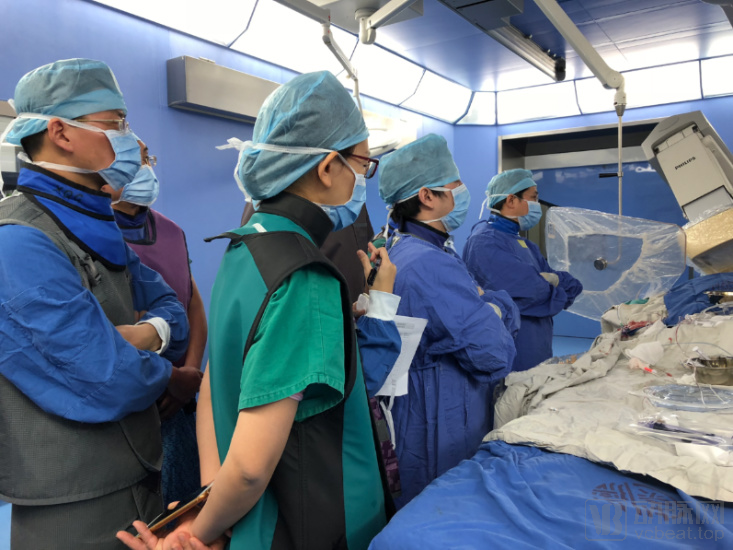
Currently, InSight Lifetech has completed a multicenter, prospective clinical trial for its FFR measurement system.This clinical trial was led by Academician Ge Junbo from Zhongshan Hospital, Fudan University. The relevant clinical study results have confirmed the accuracy and safety of the product’s measurements. The research findings will also be published as significant academic work in renowned international cardiovascular journals and presented in the major clinical release sessions at prominent cardiovascular conferences both domestically and internationally.
Leveraging its leading technology and outstanding achievements in clinical research, InSight Lifetech’s FFR measurement system has obtained the EU Class III medical device CE certificate and entered the “Innovative Medical Device” channel for NMPA registration in China, with approval expected within 2020.Currently, the company has proactively positioned itself in both domestic and international markets. Upon obtaining product certifications, it will launch sales of its products in China and abroad.
Through the active interventional medical device technology platform built during the development of the FFR measurement system, InSight Lifetech alsoIndependently developed a high-definition, high-speed intravascular ultrasound diagnostic system, which received support from the Ministry of Science and Technology’s National Key R&D Program under the key special project “R&D of Digital Diagnostic and Therapeutic Equipment.”This product features internationally leading definitions and performance advantages, enabling it to better serve diverse clinical scenarios. The company will continue to focus on the high-end cardiovascular interventional medical device sector, building a platform enterprise for advanced Chinese technologies through independent innovation.
InSight Lifetech was established in December 2015,The company’s founder, Song Liang, holds a Ph.D. in Biomedical Engineering from Washington University in St. Louis (WUSTL). He is a recipient of the National Science Fund for Excellent Young Scholars and the Shenzhen Youth Science and Technology Award, and was among the first cohort of “Top Young Talents in Scientific and Technological Innovation” in Guangdong Province.He/She has presided over more than 10 scientific research projects, including the development of major national scientific instruments and international cooperation projects under the Ministry of Science and Technology.
Dr. Song Liang has been engaged in the research and development of medical imaging and active interventional device technologies, as well as related translational medical research, for over 15 years. He led his team to pioneer the international development of an intravascular photoacoustic imaging system with optical resolution; invented reflection-mode photoacoustic/two-photon multimodal microscopy technology; and developed a handheld real-time photoacoustic imaging system for non-invasive imaging of tumor lymphatic metastasis. He possesses extensive experience in the R&D of innovative medical technologies and their clinical translation.
The co-founders of InSight Lifetech include returned overseas scientists with outstanding research achievements in the field of active interventional/implantable devices, senior product managers from well-known domestic interventional medical device companies, and business elites who have successfully launched ventures in the industry and accumulated extensive upstream and downstream resources.
Since its establishment, the company has brought together over 100 outstanding industry professionals from both domestic and international markets through a self-developing learning organization and an open, inclusive culture.Among them, over 30% hold a master’s degree or higher, and R&D personnel account for nearly 50%.The R&D team is predominantly composed of professionals from industry-leading enterprises, bringing extensive experience in product development, precision manufacturing, product registration, and clinical trials. The project leaders for core product development possess many years of project management experience at top-tier medical device companies.
In addition to its robust R&D team, InSight Lifetech’s quality system and production teams have been progressively established and refined since the company’s inception. The company now operates in a standardized and highly efficient manner under a high-standard quality management system and rigorous production processes. Guided by its mission to improve life and health through innovation and quality, InSight Lifetech is committed to developing medically valuable products for the domestic and international cardiovascular intervention fields through continuous innovation, thereby safeguarding patients’ heart health.
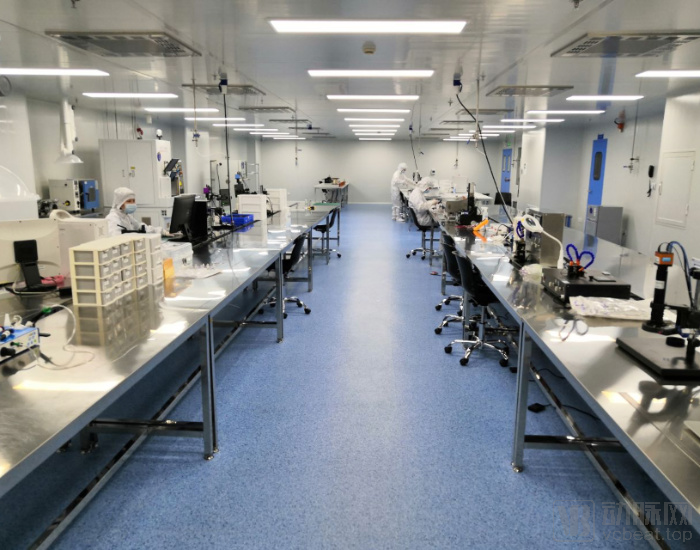
InSight Lifetech was recognized as a National High-Tech Enterprise in October 2018 and obtained the ISO 13485 quality management system certification in August 2019. The company operates under a quality management system aligned with the highest international standards to ensure product quality.To date, the company has filed a total of 90 patents and operates three independent production facilities for core products, including two Class 10,000 GMP cleanrooms.
of this round of financingSDIC Chuanghe, the lead investor, is a private equity fund management company established in accordance with the requirements for specialized management and market-oriented operational reforms of State Development & Investment Corp., Ltd. It currently manages assets exceeding RMB 35 billion.Focusing on equity investment, venture capital, and fund management in strategic emerging industries.
Regarding this investment, SDIC Chuanghe believes thatFrom an industry trend perspective, cardiovascular disease is one of the leading causes of mortality. The development of innovative functional diagnostic technologies with independent intellectual property rights is expected to steer coronary intervention therapy in China toward a path that is “more precise,” “safer,” and “more cost-effective.” There is ample global clinical evidence supporting FFR- and IVUS-guided PCI for achieving precision treatment, with significant patient benefits demonstrated. The international trend toward precision coronary intervention is irreversible. With the market launch of domestically produced functional diagnostic products, the penetration rate of diagnosis and treatment in this field among Chinese patients will be substantially increased, thereby improving prognostic outcomes.
Focusing on the company itself, SDIC Chuanghe recognizes that InSight Lifetech possesses genuine core competitiveness and core value in its field. Furthermore, SDIC Chuanghe believes that InSight Lifetech’s team demonstrates sustained capabilities in innovative R&D and self-evolution, while the founding team’s unique strategic vision and innovative talent management philosophy will enable the enterprise to seize future opportunities and meet challenges. SDIC Chuanghe will also fully support InSight Lifetech by leveraging its own resources, with both parties working together to build an outstanding platform-based medical device company.
Coronary atherosclerotic heart disease (referred to as coronary heart disease, CHD) is one of the leading causes of death worldwide. According to the "Report on Cardiovascular Diseases in China 2018," both the prevalence and mortality rates of cardiovascular diseases in China remain on an upward trend, with the number of CHD patients reaching 11 million in 2018. Percutaneous coronary intervention (PCI) is one of the most common treatments for CHD; in 2018, China performed 910,000 PCI procedures, representing a year-on-year increase of 21.5% compared to 2017.Given that the average number of stents implanted per percutaneous coronary intervention (PCI) procedure was 1.47 in 2017, the total annual number of stents is estimated to be approximately 1.33 million. Against the backdrop of a large demographic base, the precise diagnosis and treatment enabled by PCI procedures are of significant importance for improving the efficiency of the healthcare system. Fractional Flow Reserve (FFR) is the gold standard for the precise diagnosis of functionally significant myocardial ischemia caused by coronary artery stenosis.
Fractional Flow Reserve (FFR) is defined as the ratio of the maximum blood flow achievable in a myocardial region supplied by a coronary artery to the theoretical maximum blood flow that would be obtained in the same region under normal physiological conditions. FFR enables the assessment, from a physiological or functional perspective, of whether coronary stenosis truly causes myocardial ischemia, thereby guiding decisions on stent implantation. Multiple large-scale randomized controlled trials published in the prestigious New England Journal of Medicine have demonstrated that FFR-guided percutaneous coronary intervention (PCI) reduces mortality and acute cardiovascular event rates by more than 30%, while significantly lowering healthcare costs. Correspondingly, recent clinical guidelines updated in the European Union, Japan, and China have assigned the highest level of recommendation (Class IA) for the use of FFR in diagnosing myocardial ischemia. Similarly, US clinical guidelines have long endorsed FFR with a high recommendation level since 2011. Thus, the widespread clinical adoption of FFR is an inevitable trend.