

JunLian Healthcare New Drug Bulletin Issue 12, 2020: Highlights and Pipeline Updates
Apr 06, 2020 18:00
CST Updated
18:00

This week, there were eight new drug data entries, including two in oncology, two in hematology, and one each in cardiovascular, metabolic, ENT, and transplantation.
❖The U.S. FDA has approved Sevenfact, developed by the French company LFB Biotechnology, for the treatment and control of bleeding episodes in adult patients with hemophilia. Recombinant activated coagulation factor VII (FVIIa) represents a highly challenging therapeutic area; Sevenfact is only the second new drug approved in nearly two decades, following NovoSeven (NovoSeven RT), which was approved by Novo Nordisk in 1999. Sevenfact is derived from the milk of transgenic rabbits. Although its Biologics License Application (BLA) was submitted in January 2017, it took three years to gain approval, further underscoring the significant difficulties associated with FVIIa development. Companies such as Baxter, CSL, OPKO, CMC, Janux Therapeutics (formerly known as ConjuChem or potentially referring to other entities depending on context, but likely Janux or similar biotech firms involved in FVIIa), and Zeltis Biosciences have all engaged in FVIIa research but abandoned their efforts at various stages due to the complexities of protein structure and post-translational modifications. However, if direct approaches prove unfeasible, alternative strategies can also be effective. Roche’s Hemlibra, a bispecific antibody that simultaneously targets coagulation factors IXa and X, serves as a substitute for coagulation factor VIII by mediating the formation of factor Xa from factor X. Consequently, it demonstrates significantly superior efficacy compared to NovoSeven, offering new insights into the treatment of hematologic disorders.
❖In the first quarter of 2020, the FDA approved a total of 11 new drugs for marketing. The following three are particularly representative: (1) Blueprint Medicines’ Ayvakit, indicated for the treatment of adult patients with gastrointestinal stromal tumors (GIST) harboring exon 18 mutations in the platelet-derived growth factor receptor alpha (PDGFRA) gene; (2) Esperion’s Nexletol, used as an adjunct to statin therapy in adult patients with heterozygous familial hypercholesterolemia (HeFH), or in patients with atherosclerotic cardiovascular disease (ASCVD) who require further lowering of LDL-C; and (3) Sanofi’s CD38 monoclonal antibody Sarclisa, indicated in combination with pomalidomide and dexamethasone for the treatment of adult patients with relapsed and refractory multiple myeloma (MM) who have received at least two prior lines of therapy, including lenalidomide and a proteasome inhibitor.
AstraZeneca Announces FDA Approval of Imfinzi (durvalumab), a PD-L1 Inhibitor, in Combination with Etoposide Plus Carboplatin or Cisplatin for the First-Line Treatment of Adult Patients with Extensive-Stage Small Cell Lung Cancer (ES-SCLC)
Imfinzi is a humanized anti-PD-L1 monoclonal antibody that relieves immune suppression and enhances the body’s immune system to fight cancer by preventing PD-L1 from binding to the PD-1 and CD80 receptors.
In the open-label, randomized, global Phase 3 CASPIAN trial, patients with extensive-stage small cell lung cancer (SCLC) received either Imfinzi-based combination therapy or standard chemotherapy combinations.
In the Imfinzi combination therapy group, the risk of death was reduced by 27% (HR=0.73; 95% CI 0.59-0.91; p=0.0047), with a median OS of 13.0 months compared to 10.3 months in the chemotherapy control group. The results also showed an increase in the confirmed objective response rate in the Imfinzi combination therapy group (68%) compared to the control group (58%).
Regeneron Announces Detailed Results from Phase 3 Clinical Trial of Evinacumab for the Treatment of Patients with Homozygous Familial Hypercholesterolemia (HoFH)
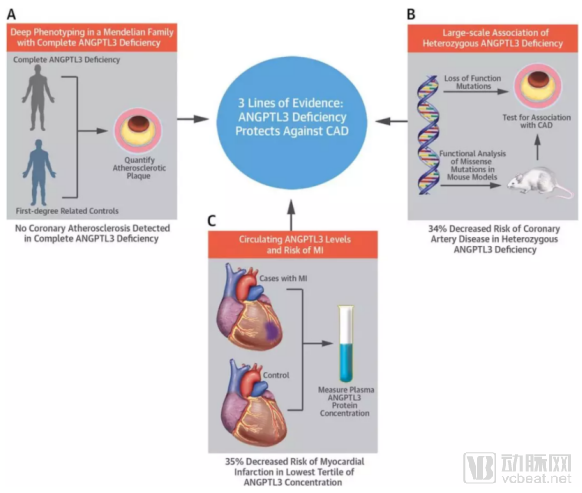
Evinacumab is a monoclonal antibody targeting ANGPTL3. ANGPTL3 is an inhibitor of lipoprotein lipase and endothelial lipase, playing a crucial role in lipoprotein metabolism.
In the Phase 3 ELIPSE clinical trial, patients with homozygous familial hypercholesterolemia (HoFH) received evinacumab or placebo in addition to other lipid-lowering therapies. Among these patients, 95% were using statins and 79% were using PCSK9 inhibitors.
After 24 weeks of treatment, the evinacumab group demonstrated a 49% reduction in LDL-C compared with the control group (p<0.0001). LDL-C levels decreased to below 100 mg/dL in 47% of patients in the evinacumab group, versus 23% in the control group.
Mechanism of Action of Evinacumab
Data Source: Regeneron
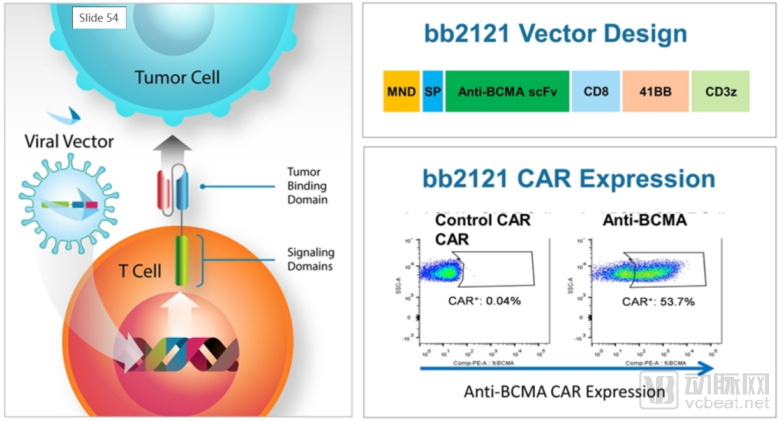
BMS and bluebird bio jointly announced the submission of a Biologics License Application (BLA) for bb2121, a CAR-T therapy for the treatment of patients with relapsed/refractory multiple myeloma (R/R MM). This is the first BCMA-targeted CAR-T therapy to have its marketing application submitted.
B-cell maturation antigen (BCMA) is a protein widely expressed on the cancer cells of multiple myeloma, making it an important potential target for this aggressive blood cancer. Ide-cel can recognize and bind to BCMA on the surface of multiple myeloma cells.
In the pivotal, single-arm, open-label Phase 2 KarMMa clinical trial, patients with relapsed/refractory multiple myeloma (R/R MM) had previously received at least one immunomodulatory drug (IMiD), one proteasome inhibitor (PI), and one anti-CD38 antibody, and were refractory to these therapies. Among them, 94% of patients were refractory to anti-CD38 antibody therapy, and 84% exhibited triple-class refractoriness.
Among the 128 patients evaluable for efficacy, the objective response rate (ORR) was 73.4%, and the complete response rate (CR) was 31.3%. With a median follow-up time of 11.3 months, the progression-free survival (PFS) in these patients was 8.6 months.
Daiichi Sankyo and AstraZeneca Announce That ADC DS-8201 Reduced Tumor Size in 55.6% of Patients with Previously Treated HER2-Overexpressing Non-Small Cell Lung Cancer (NSCLC) in a Phase 1 Clinical Trial
Enhertu leverages Daiichi Sankyo’s proprietary antibody-drug conjugate (ADC) technology, linking the humanized HER2 antibody trastuzumab to a novel topoisomerase I inhibitor via a tetrapeptide linker to target cancer cells and deliver the drug intracellularly.
A total of 60 treated cancer patients with HER2 overexpression or mutations participated in this Phase I clinical study, including 18 patients with non-small cell lung cancer (NSCLC), 20 patients with colorectal cancer (CRC), and several patients with other tumor types.
NSCLC patients achieved the highest objective response rate, with tumor shrinkage observed in 55.6% of patients and a median duration of response of 10.7 months. The efficacy was more pronounced in NSCLC patients harboring HER2 mutations, with Enhertu treatment inducing responses in 72.7% of this subgroup.
Mechanism of Action of BB2121
Data source: bluebird
U.S. FDA Approves Sevenfact, Developed by French Company LFB Biotechnology, for the Treatment and Control of Bleeding Episodes in Adults and Adolescents Aged 12 Years and Older with Hemophilia A or B
The active ingredient of Sevenfact is a recombinant analog of human coagulation factor VII, which is expressed in the mammary glands of genetically engineered rabbits and secreted into their milk. During the purification and processing of the milk, factor VII is converted into activated factor VIIa.
This study evaluated 27 patients with hemophilia A or B who had factor inhibitors.
Trial results showed that the success rate of Sevenfact treatment for mild or moderate bleeding events was approximately 86% with both low-dose (75 μg/kg) and high-dose (225 μg/kg) regimens.
Bristol Myers Squibb (BMS) and Acceleron Pharma Announce FDA Approval of Reblozyl (luspatercept-aamt), a Red Blood Cell Maturation Agent Co-Developed by Both Companies, for the Treatment of Anemia in Patients with Very Low- to Intermediate-Risk Myelodysplastic Syndromes
Reblozyl acts as a ligand trap for TGF-β, preventing the activation of the Smad2/3 signaling pathway and thereby promoting the differentiation and maturation of late-stage erythroid cells.
MEDALIST is a randomized, double-blind, placebo-controlled, multicenter Phase 3 clinical study.
In the trial, the proportion of patients treated with Reblozyl who achieved red blood cell (RBC) transfusion independence for at least 8 weeks during the first 24 weeks was significantly increased compared with those receiving placebo, meeting the study’s primary endpoint.
GlaxoSmithKline (GSK) announced that its anti-IL-5 monoclonal antibody Nucala (mepolizumab) met the primary and key secondary endpoints in the pivotal Phase 3 SYNAPSE clinical trial for patients with chronic rhinosinusitis with nasal polyps (CRSwNP).
Nucala, by inhibiting the IL-5 signaling pathway, is expected to reduce eosinophil growth and alleviate various conditions caused by eosinophilia.
A 52-week, randomized, double-blind, Phase 3 clinical study.
Compared with the control group receiving standard therapy alone, combination treatment with Nucala and standard therapy resulted in statistically significant improvements in nasal polyp size at both Week 49 and Week 52. Furthermore, the study reduced the need for initial surgery by 57% among patients during the 52-week treatment period, which was the key secondary endpoint of the trial.
Mesoblast Announces U.S. FDA Acceptance of Biologics License Application (BLA) for Allogeneic Cell Therapy Ryoncil (remestemcel-L) for the Treatment of Pediatric Patients with Steroid-Refractory Acute Graft-versus-Host Disease (SR-aGVHD)
Ryoncil modulates T cell-mediated inflammatory responses by inhibiting T cell proliferation and downregulating the production of pro-inflammatory cytokines and interferons.
The Phase III clinical trial results, compared with previous studies.
The overall response rate (ORR) at Day 28 following Ryoncil treatment was 69%, representing a statistically significant increase compared with the historical control rate of 45%. Among patients who received at least one infusion and were followed for 100 days, the mortality rate was 22%. In contrast, the Day 100 mortality rate reached 70% in patients who failed to respond to initial steroid therapy.
❖Gilead Sciences (Kite, a Gilead Sciences company, and TeneoBio jointly announced that they have entered into a license and collaboration agreement. They will leverage TeneoBio’s proprietary human heavy-chain antibody (UniAb) platform to develop next-generation dual-targeted CAR-T therapies for the treatment of patients with multiple myeloma (MM).
❖Cancer Immunotherapy CompanyFate Therapeutics Announces Global Collaboration with Janssen to Develop Novel CAR-NK and CAR-T Therapies Leveraging Its iPSC Platform and Janssen’s Proprietary Antigen-Binding Domains. Fate will receive a $50 million upfront payment, a $50 million equity investment, and funding for the research and development of candidate drugs. Additionally, Fate will be eligible for potential milestone payments totaling up to $3 billion.
❖Merck & Co. AnnouncesThe Phase III KEYNOTE-177 study of Keytruda monotherapy as first-line treatment for patients with unresectable or metastatic colorectal cancer characterized by high microsatellite instability (MSI-H) or mismatch repair deficiency (dMMR) met one of the composite primary endpoints, demonstrating a significant improvement in progression-free survival (PFS) compared with the control group.
❖Lundbeck has published twoFailure Results of Phase IIa Clinical Trials. One was foliglurax, a metabotropic glutamate receptor 4 (mGluR4) modulator intended for the treatment of motor symptoms in patients with Parkinson’s disease; the other was Lu AG06466 (ABX-1431), a selective serine hydrolase monoacylglycerol lipase (MGLL) inhibitor intended for the treatment of Tourette syndrome.