

Tianming Innovation Unveils AI-Powered Occupational Health Solutions Targeting the Multi-Billion-Dollar Pneumoconiosis Market
“Life hinges on a single breath; if your lungs are severely compromised, that breath becomes trapped, making existence more agonizing than death.”
——“The Human World: Pneumoconiosis”
Pneumoconiosis is a disease characterized primarily by extensive interstitial pulmonary fibrosis caused by the long-term inhalation of occupational dust, and it represents the most severe occupational hazard to human health. During work, prolonged and substantial inhalation of dust leads to a series of complex biochemical reactions in the lungs, ultimately resulting in pulmonary fibrosis and the development of pneumoconiosis.
"The 'breathing' that ordinary people take for granted is a luxury for patients with pneumoconiosis."
In China, pneumoconiosis is the most typical occupational disease.Data released by the National Health Commission of China shows that, by the end of 2018, a cumulative total of more than 970,000 cases of occupational diseases had been reported in China. Among these, approximately 90% were cases of occupational pneumoconiosis (more than 870,000 cases).Primarily distributed in the mining industry, with a trend toward a younger demographic.
“Among the hundreds of thousands of pneumoconiosis patients, 90% are migrant workers. ‘Tianming Innovation’s entry into the field of pneumoconiosis is driven by our hope to leverage advanced AI technology to assist this vulnerable group and transform their lives,’ said Xu Ming, founder of Beijing Tianming Innovation Data Technology Co., Ltd. (hereinafter referred to as ‘Tianming Innovation’).”The AI-based pneumoconiosis screening system, refined by Tianming Innovation over more than three years, not only supports large-scale screening but also increases physicians’ image interpretation speed by two orders of magnitude,Its accuracy in image interpretation exceeds 90%, with a sensitivity rate surpassing 99%. It achieves or even surpasses the diagnostic proficiency of occupational disease specialists with over 10 years of experience, making it highly suitable for early screening of pneumoconiosis.

(Xu Ming, Founder of Beijing Tianming Innovation Data Technology Co., Ltd.)
How Large Is the Pneumoconiosis Market? According to data from social organizations such as Da Ai Qing Chen (Love Clearing Dust), there are currently millions of pneumoconiosis patients in China, with average annual treatment costs exceeding RMB 10,000–20,000 per patient, resulting in an estimated market size of tens of billions of yuan. Meanwhile, approximately 100 million workers across various industries are exposed to dust hazards. National regulations mandate at least one annual health examination for these workers (costing RMB 200–300 per person), creating a market potential of RMB 20–30 billion targeting this at-risk population. Furthermore, enterprises engaged in dust-generating operations—such as coal mining, non-coal mining, metallurgy, cement production, ceramics, stone processing, and construction materials—are subject to mandatory work-related injury insurance. In some regions, compulsory pneumoconiosis-specific insurance is also being introduced. The combined investment scale in these insurance programs amounts to tens of billions of yuan.
“It can be said that the potential market for occupational diseases such as pneumoconiosis is far larger than what is currently visible, with its actual scale reaching over RMB 100 billion,” pointed out Xu Ming.
Pneumoconiosis: Perhaps an inconspicuous scar on the fast-moving wheel of socioeconomic development. Yet for patients, this scar is deeply etched in their hearts, causing relentless day-and-night suffering.
“Difficult to cure, high treatment costs, and challenges in protecting rights... are common pain points faced by patients.””Introduction by Xu Ming.
Contracting pneumoconiosis without treatment not only subjects patients to the torment of the disease but can also lead to respiratory failure in severe cases; seeking treatment requires bearing substantial medical costs, with lung transplantation offering a chance for a new lease on life if successful, or risking death if it fails.The cost of lung transplantation in China is around 600,000 to 700,000 yuan. Currently, there are 35 hospitals in China qualified for lung transplantation, but no more than 15 hospitals truly have the capability to independently perform lung transplant surgeries.
As previously mentioned, 90% of pneumoconiosis patients are migrant workers. For most of them, lung transplantation is a medical expense so exorbitant that it would bankrupt their families or even remain entirely unaffordable.
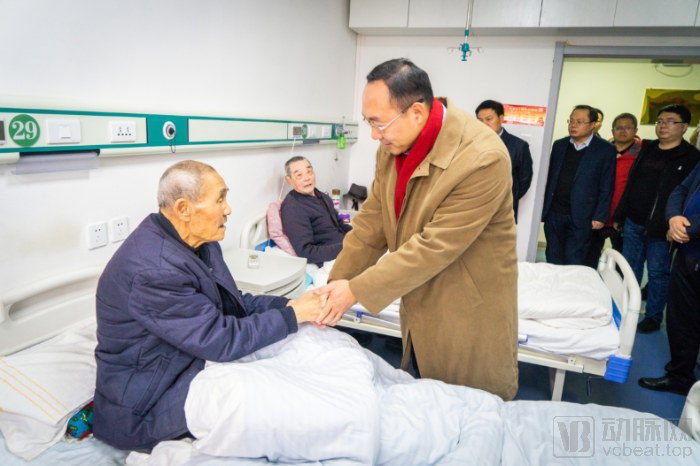
(The Tianming Innovation Team conducted research and visited pneumoconiosis patients at the Shaanxi Tongchuan Occupational Disease Prevention and Control Hospital)
“In the Human World,” Liao Yanlong, a devoted son, traveled all the way from Henan Province to the renowned Lung Transplant Center at Wuxi People’s Hospital in China to save his father, who had been suffering from pneumoconiosis for 20 years. He spent his entire life savings to secure a lung transplant for his father. Although the surgery was initially successful, his father sadly passed away due to an infection in the new lung. Giving up everything does not necessarily guarantee hope for survival; this is merely a small cross-section of the plight faced by patients with pneumoconiosis.
Difficulties in safeguarding rights and the lack of reasonable compensation constitute another major plight for most pneumoconiosis patients. In a once-shocking case within China, patient Zhang Haichao ultimately received the compensation he deserved after resorting to the near-tragic measure of “open-chest lung biopsy” to assert his rights and prove the true nature of his condition. Xu Ming noted that currently, only a handful of hospitals in China are authorized to conduct occupational disease assessments, while the majority of patients are scattered across remote areas., while there is a shortage of experienced occupational disease physicians in primary-level occupational disease medical institutions, and neither the quality nor the speed of data screening in occupational health examinations can be guaranteed.
In recent years, the Chinese government has significantly increased its attention to occupational diseases, particularly pneumoconiosis, and has introduced a series of policies to ensure that pneumoconiosis is preventable and treatable. In 2003, the Ministry of Health issued the “Notice on Further Strengthening the Management of Occupational Disease Diagnosis and Appraisal”; in 2013, four departments including the National Health and Family Planning Commission issued the “Notice on Printing and Distributing the Classification and Catalogue of Occupational Diseases”; in 2016, the “Notice on Printing and Distributing the Opinions on Strengthening the Prevention and Control of Pneumoconiosis among Migrant Workers” was released; and in 2017, the General Office of the National Health and Family Planning Commission issued the “Notice on Establishing the Expert Committee on Diagnosis and Treatment of Pneumoconiosis under the National Health and Family Planning Commission”……
Since 2019, General Secretary Xi Jinping and Premier Li Keqiang have issued multiple instructions personally calling for the resolution of pneumoconiosis issues. In accordance with the important directives from the CPC Central Committee and the State Council, as well as the requirements outlined in the National Occupational Disease Prevention and Control Plan (2016–2020), efforts are being made to address key and challenging issues in current pneumoconiosis prevention and control work, resolutely curb the high incidence of pneumoconiosis, and safeguard workers’ occupational health rights and interests. Particular emphasis is placed on strengthening pneumoconiosis prevention and control, as well as the treatment and assistance for pneumoconiosis patients, to effectively protect workers’ occupational health rights and interests., the National Health Commission and nine other departments jointly formulated the “Action Plan for the Battle Against Pneumoconiosis Prevention and Control,” marking a new phase in China’s pneumoconiosis prevention and control efforts.
Large population, prominent pain points, policy guidance, and few market players create an urgent need for a product that can truly address these challenges.“Tianming Innovation is a problem-solving company. The prevalence of pain points also signifies concurrent opportunities. With the pneumoconiosis market exceeding RMB 100 billion, we aspire to be pioneers in this field,” said Xu Ming of Tianming Innovation.
In 2015, Tianming Innovation was established in Zhongguancun, Beijing, and is recognized as a National High-Tech Enterprise. Its founder, Xu Ming, is an alumnus of the Tsinghua University EMBA program and possesses extensive experience with large multinational technology corporations and internet companies, boasting a comprehensive background in technology, management, marketing, and product development.COO Wang Jinxu previously served as CTO and Executive President of CSPC Pharmaceutical Group. Algorithm Partner Liu Chaofei was formerly the Technology Partner at YiPai Tech, an intelligent healthcare company, where he led teams to complete multiple AI healthcare projects and secured a health prediction project with a major insurance company; he brings over eight years of experience in deep learning algorithms. The core team comprises not only senior medical imaging product experts, AI experts from top global research institutions, and algorithm specialists, but also a specialized team of physicians.
To alleviate and ultimately resolve the respiratory suffering of millions of patients with occupational diseases, Tianming Innovation has conducted in-depth research in the field of pneumoconiosis since its inception. By integrating healthcare, data, and AI, it has successfully launched an AI-based pneumoconiosis screening system.
How Can AI Empower Clinical Practice to Truly Benefit Users? Xu Ming Pointed Out,In his view, screening for pneumoconiosis should not be limited to simple film reading and AI-based image analysis; instead, it requires a medical perspective and a systematic approach to problem-solving.When developing its AI-based pneumoconiosis screening system, Tianming Innovation first established precise medical definitions in collaboration with specialists in respiratory medicine and thoracic imaging. Next, it analyzed the bottlenecks associated with pneumoconiosis in clinical practice and health examinations, delving deeply into the industry background of the disease. Finally, it collaborated with medical experts to establish screening standards. “We have a top-tier team of experts helping to formulate these standards; more than 20 experts participated in the initial image annotation alone,” introduced Xu Ming.
The expert panel includes renowned Professor Zhang Bo (Chief Scientist, Academician of the Chinese Academy of Sciences, Dean of the Institute for Artificial Intelligence at Tsinghua University), Professor Li Dehong (Chief Occupational Disease Scientist, National Chief Expert on Occupational Diseases), Professor Zeng Qingyu (General Medical Advisor, Nationally Renowned Radiology Expert), Dr. Cheng Jie (Data Scientist), Professor Wang Hongwu (Medical Advisor), and Professor Li Baoping (Medical Advisor), among others.
Xu Ming introduced,Beijing Tianming Innovation Data Technology Co., Ltd.'s AI-based pneumoconiosis screening system features a deep learning model architecture, TMNet, specifically designed for high-resolution chest radiographs. This pioneering network structure delivers exceptional performance in detecting pneumoconiosis and interstitial pulmonary fibrosis, marking a first in the field. Additionally, its report auto-generation technology, powered by natural language processing (NLP) and knowledge graphs, enables automated creation of imaging reports, thereby enhancing physicians' workflow efficiency.
“Starting from our initial collaboration with the former China Coal General Hospital in 2017, inspired by Professor Zeng Qingyu, who then served as Party Secretary and President, to the second-generation product that passed expert appraisal in 2018, by 2019 it had already become a relatively mature product in terms of accuracy (consistency), applicability, and reliability.”We have partnered with more than 20 renowned hospitals across China and collected over 200,000 imaging cases. Technologically, we have implemented intelligent assistance for screening pneumoconiosis patients, achieving a screening consistency rate of over 90%. Our solution offers multiple advantages, including high efficiency, high accuracy, low cost, and support for online multi-dimensional image manipulation.“Xu Ming said.”
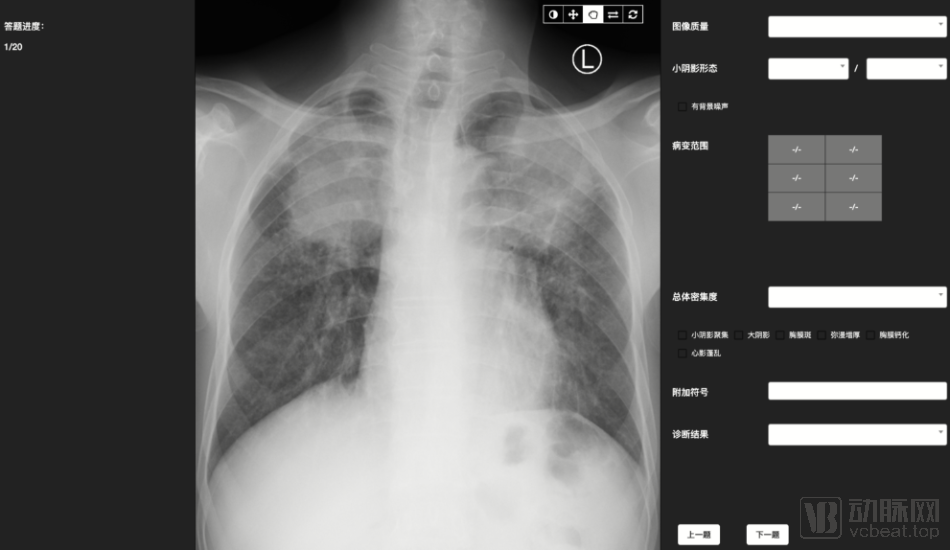
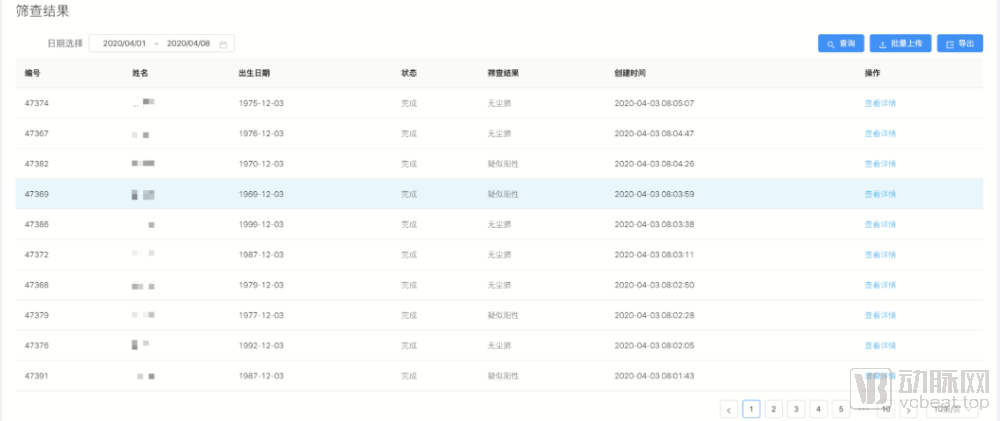
(The image shows the Tianming Innovation AI Pneumoconiosis Screening System)
To “do well” when entering a new field, the prerequisite is to first “define standards and clarify rules.” Xu Ming introduced that, based on the country’s existing diagnostic criteria and expert consensus, continuously iterated data from dozens of hospitals, annotation rules continually refined under expert guidance, and long-term algorithmic practices from both internal efforts and external collaborations,Tianming Innovation has successfully established AI-based screening standards for pneumoconiosis, leading the industry at the forefront with initiatives such as the “Expert Consensus on Data Annotation Standards and Quality Control for DR Chest Radiographs in Pneumoconiosis.”
Furthermore,Building on its pneumoconiosis screening system, Tianming Innovation has also developed a self-assessment system for pneumoconiosis radiograph interpretation capabilities and a monitoring and early-warning system for pneumoconiosis incidence risk.Among them, the self-assessment system for pneumoconiosis radiograph interpretation, referencing national diagnostic criteria for pneumoconiosis, national examination and evaluation methods for pneumoconiosis, and typical test radiographs of pneumoconiosis, can accurately assess physicians’ competence in interpreting pneumoconiosis radiographs. The pneumoconiosis incidence risk monitoring and early-warning system can provide real-time statistics on pneumoconiosis incidence across China and predict trends in pneumoconiosis incidence.
In 2019, Tianming Innovation successfully won the bid for the National Pneumoconiosis Screening and Monitoring Project.In April of the same year, under the organization of the Emergency General Hospital, authoritative experts in the field of occupational diseases in China conducted systematic delivery testing on the relevant systems of Tianming Innovation.By comparing with the on-site expert labeling conclusions for 50 pneumoconiosis cases, which integrated data from multiple occupational disease medical institutions including the Emergency General Hospital, the consistency rate was 96%, and the sensitivity exceeded 99%. This initially meets the project’s requirements and helps accelerate the implementation of urgently needed national pneumoconiosis screening efforts.
Relevant experts stated that the system fills the gap in the application of artificial intelligence in the field of occupational diseases., if implemented and rapidly scaled up as soon as possible, will effectively support national poverty alleviation policies, facilitate early prevention and detection among dust-exposed workers such as migrant laborers, and reduce poverty and relapse into poverty caused by pneumoconiosis, thereby holding significant practical importance.The medical, technological, and social values it brings will have a profound impact, even reshaping the industry ecosystem of occupational health.
Xu Ming told VCBeat that Tianming Innovation’s AI-based pneumoconiosis screening system is currently being used in more than ten hospitals across China, and the company has established collaborations with multiple occupational disease medical service providers to deliver services centered on occupational health examinations and intelligent pneumoconiosis screening.
Recently, the COVID-19 epidemic has been raging. In response to the fight against the pandemic,Tianming Innovation Team has developed an intelligent consultation and triage system for fever clinics (infectious disease emergency departments)., integrating the professional expertise and experience of specialists from Beijing Ditan Hospital, Peking University First Hospital, China-Japan Friendship Hospital, Shanghai Pulmonary Hospital, the Respiratory Research Institute of Zhongshan Hospital in Shanghai, the First Hospital of Shanxi Medical University, Heilongjiang Provincial Second Hospital, and other institutions, it has demonstrated favorable outcomes in practical applications across multiple hospitals.
Meanwhile, to assist patients with pneumoconiosis and workers exposed to dust in implementing effective self-protection measures, we have collaborated with more than ten occupational disease prevention and control institutions across China, as well as general hospitals with strong respiratory specialties. This joint initiative was conducted under the guidance of over twenty industry-leading experts, headed by Professor Li Dehong and Professor Li Tao, the former and current chief experts on occupational diseases at the Chinese Center for Disease Control and Prevention (China CDC).“Guidelines for the Prevention of Novel Coronavirus Among Patients with Pneumoconiosis and Dust-Exposed Workers”, to help these vulnerable groups take proper epidemic prevention measures; meanwhileEnterprise Epidemic Management System Developed in Collaboration with Multiple Large Coal Mining Enterprises,Provide epidemic prevention services for enterprises.
In fact, Beijing Tianming Innovation Data Technology Co., Ltd. has already achieved phased results in the key area of occupational health concerning pneumoconiosis. Regarding the next phase of strategic layout, Xu Ming stated,Beijing Tianming Innovation Data Technology Co., Ltd. will launch its first round of financing next month, stepping up efforts in the field of occupational health.Building a closed-loop industrial chain covering occupational disease diagnosis/treatment, workers’ compensation/commercial insurance, corporate health management, and occupational health examinations/monitoring.Service.
“We aim to ‘do valuable work’ and address the bottleneck issues plaguing the entire occupational health system. This goes beyond merely resolving clinical problems; it encompasses the entire chain, from front-end to back-end, helping to solve problems at every stage,” said Xu Ming.
“Helping government regulators address issues related to baseline assessments and monitoring; helping occupational health examination institutions tackle cost and capacity challenges; helping occupational disease medical institutions improve efficiency; helping enterprises resolve…… Only by addressing these issues can we fundamentally improve the occupational health ecosystem, align with national policies, truly serve enterprises, and safeguard workers’ occupational health and their families’ well-being,” he pointed out.
Currently, Tianming Innovation is collaborating with insurance companies, occupational disease medical institutions, occupational health-related enterprises, and government agencies to provide a series of intelligent solutions. Recently, his article “Tomorrow’s Sword Cuts Through the Workers’ Pain” will be published in an upcoming 2020 issue of China Medical Insurance Magazine.
“Collaboration with insurance companies, for example, covering pre-insurance early screening examinations and assessment examinations during the claims process,” said Xu Ming. He expressed confidence in building an industrial closed loop connecting corporate employees, the check-up provider, hospitals, enterprises, and insurers.