

InSightec Secures $150 Million Series F Funding to Advance Non-Invasive Treatments for Tremor and Neurological Disorders

Insightec
Non-invasive Ultrasound Technology Device Developer
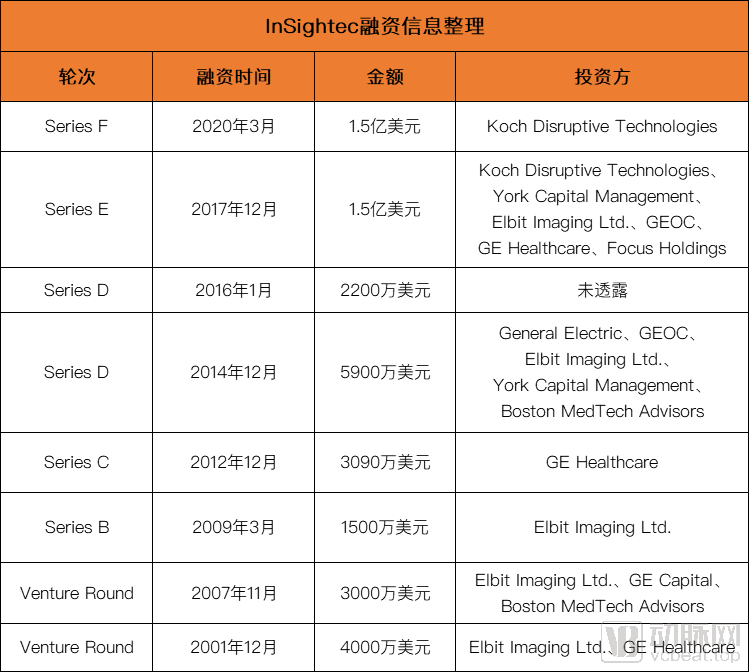
In March 2020, Insightec, an Israeli developer of non-invasive ultrasound technology devices, announced that it had secured $150 million in Series F financing. Koch Disruptive Technologies (KDT), a subsidiary of Koch Industries, led this round of financing. Currently, the company’s post-financingValued at $1.3 billion。
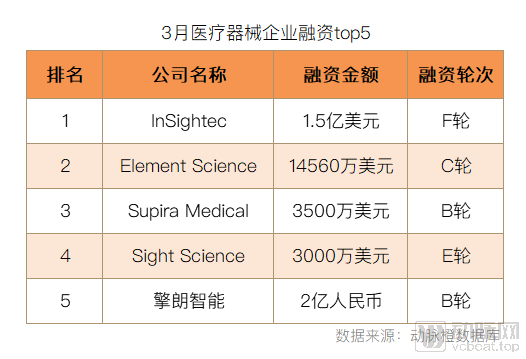
Insightec is a well-established company with a rich history of fundraising. According to statistics, this round of financing inRanked First in Global Medical Device Financing This March。
Founded in 1999, Insightec is headquartered in Tirat Carmel, Haifa District, Israel, with its U.S. headquarters located in Miami, Florida.
The company isPioneer and Global Leader in MRgFUS Technology. MRgFUS technology, or magnetic resonance-guided high-intensity focused ultrasound technology, was pioneered by the team at Insightec.
To improve patients’ quality of life, the Insightec team continues to push the boundaries of focused ultrasound technology. Today, the company employs more than 300 people across its offices in Miami, Dallas, Haifa, Tokyo, and Shanghai.
According to Insightec, the company’s Exablate Neuro is the first FDA-approved MR-guided focused ultrasound device capable of treating drug-resistant essential tremor, Parkinson’s disease with tremor symptoms, neuropathic pain, tumors, and other conditions.
Dr. Maurice Ferré, Chairman and CEO of Insightec, stated that an increasing number of medical institutions are adopting their focused ultrasound technology.
“Insightec’s focused ultrasound technology is transforming surgical practices that have been passed down through generations,” added Chase Koch, President of KDT. “KDT is committed to empowering innovative companies to realize their potential to improve the lives of millions.”
In 2018, Insightec was ranked number one among Israeli industry innovators by Fast Company. Its flagship product, Exablate Neuro, received the Edison Award, the highest honor in the field of medical innovation. Exablate Neuro also won the “Best Technological Health Award” from Abc Salud.
Previously, Insightec has also received numerous awards. In 2016, the company was named by Forbes magazine as one of the 10 innovative companies to watch in 2016. As early as 2007, Insightec won the Red Herring Europe Top 100 Award. Exablate Neuro won the 2017 Galien Award for Best Medical Technology Product, was included in the list of twelve disruptive technologies at the 2015 World Medical Innovation Forum, and was also named one of the 50 best inventions of the year by Time magazine in 2011.
Insightec was founded by medical imaging expert Kobi Vortman, who previously served as the company’s Chief Executive Officer and Chief Technology Officer and currently sits on its Board of Directors. Under his leadership, Insightec developed magnetic resonance-guided focused ultrasound (MRgFUS) technology, which has been marketed worldwide and obtained CE marking in Europe.
Kobi Vortman holds a Ph.D. in Optoelectronics and a B.S. in Electrical Engineering from the Technion – Israel Institute of Technology. He also earned dual B.A. degrees in Physics and Mathematics from the Hebrew University of Jerusalem, Israel’s premier academic institution.
Prior to founding Insightec, Dr. Kobi Vortman served as President of Elbit Medical Imaging, where he was responsible for developing proprietary MRgFUS technology. This technology was jointly developed by Elbit Medical Imaging and GE Healthcare (formerly GE Medical Systems), which has remained Insightec’s largest shareholder. The technology was transferred to Insightec upon the company’s establishment.
In the past, Dr. Kobi Vortman also served as President and Chief Executive Officer of Diasonics Vingmed Ultrasound, and as General Manager of ElscintTEC.
With continuous funding from Elbit Medical Imaging and GE Healthcare, Insightec embarked on the long journey of device research and development and commercialization.
As early as 2004, the company’s product was approved in the United States for the treatment of uterine fibroids, and subsequently received approval for additional therapeutic indications. Investors poured hundreds of millions of dollars into supporting the company. However, despite regulatory approvals and substantial investment, its medical device has not been covered by health insurance programs and has failed to achieve large-scale sales.
To turn the tide, in January 2016, following the completion of its Series D financing, Kobi Vortman handed over his CEO duties to seasoned healthcare executive Dr. Maurice R. Ferré. After stepping down as CEO, Kobi Vortman became a member of Insightec’s Board of Directors.
Maurice Ferré holds a Master’s degree and a Doctor of Public Health (DrPH) degree from Boston University. He has over 20 years of experience in the medical device industry. Dr. Ferré was the founder and CEO of the surgical robotics company Mako Surgical, later serving as its Chairman of the Board until the company was acquired by Stryker Corp. in 2014.
Maurice Ferré brought substantial investment to the company. Today, Insightec is covered by health insurance systems in multiple countries and regions worldwide.

CEO of InsightecChairman MaUrice Ferré (left),Co-founder and Vice Chairman of the Board Kobi Vortman (center),Chief Operating Officer and General Manager Eyal Zadicario (right)
Essential Tremor (ET, also known as idiopathic tremor) is the most common movement disorder. Although medications are available for this condition, they are largely ineffective in many severe cases. When patients with essential tremor fail to achieve tremor relief through pharmacological treatment, surgical intervention may be considered.
MRgFUS technology offers a new treatment option for certain patients who are unresponsive to medication."Fast, non-invasive, precise, safe, skin-friendly, low-risk, allowing patients to leave immediately after treatment, with stable long-term outcomes—this technology is hailed as revolutionary."
In addition, tremor is the most debilitating symptom of Parkinson’s disease (PD) in terms of its impact on patients’ daily activities. For PD patients with medication-refractory tremor, Insightec’s MRgFUS device also offers therapeutic benefits.
Statistical data indicate that essential tremor affects 41 million people worldwide. China has approximately 2.7 million patients with Parkinson’s disease, accounting for nearly half of the global figure. The cost of treating these conditions is substantial; the MRgFUS device developed by Insightec has alleviated both the suffering and the financial burden for these patients.
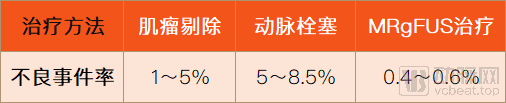
In its early stages, Insightec’s MRgFUS technology was employed to treat gynecological tumors such as uterine fibroids. Clinical practice has demonstrated that MRgFUS therapy is not only effective for conditions like uterine fibroids but also exhibits superior performance in certain cases. Statistical data indicate that the incidence of adverse events associated with MRgFUS therapy is approximately 0.4–0.6%, significantly lower than that of other treatment modalities.
MRgFUS technology combines two widely recognized medical technologies: magnetic resonance imaging (MRI) and focused ultrasound (FUS). As early as 1942, researchers employed focused ultrasound for therapeutic purposes; however, early applications yielded suboptimal outcomes due to the lack of effective targeting and temperature monitoring methods. The MRgFUS treatment system was developed after integrating magnetic resonance technology to address the limitations of focused ultrasound.
Researchers from the University of L'Aquila in Italy conducted a study, which was presented in December 2019 at the annual meeting of the Radiological Society of North America (RSNA) held in Chicago, Illinois, USA. The study involved 39 patients with a mean age of 64.5 years, including 18 cases of essential tremor and 21 cases of Parkinson’s disease. These patients had experienced disabling tremors for an average of more than 10 years and were refractory to pharmacological treatment.
This study utilized Insightec’s ExAblate Neuro system to assess tremor severity and quality of life in patients before, immediately after, and throughout the follow-up period following MRgFUS thalamotomy.
The results demonstrated a substantial and rapid reduction in tremor severity in 95% of patients, which was maintained during subsequent follow-up assessments. Quality of life was significantly improved in both the essential tremor (ET) and Parkinson’s disease (PD) groups.
“As a minimally invasive approach, focused ultrasound is superior to deep brain stimulation, including by reducing the risk of complications from bleeding and infection,” said Federico Bruno, Ph.D., a radiologist in the Department of Biotechnology and Applied Clinical Sciences at the University of L’Aquila. “Another advantage is that this treatment produces immediate effects, unlike deep brain stimulation, which requires an adaptation period for electrical stimulation. Furthermore, treatment with MRgFUS can shorten hospital stays, and even more frail patients can tolerate it well.”
“At present, the global adoption of MRgFUS thalamotomy remains limited. To date, few patients are aware of this treatment option.” Dr. Federico Bruno stated that the market prospects for this therapy are very promising, “The clinical application of this technology in neurological disorders is an entirely novel subject.”
Insightec also published a study in Neurology, which was partially funded by Insightec. The study showed that among 76 patients with essential tremor treated with Exablate Neuro, 58% experienced at least a 50% improvement in hand tremor within three years. Long-term follow-up of these patients demonstrated sustained reduction in hand tremor and improved quality of life.
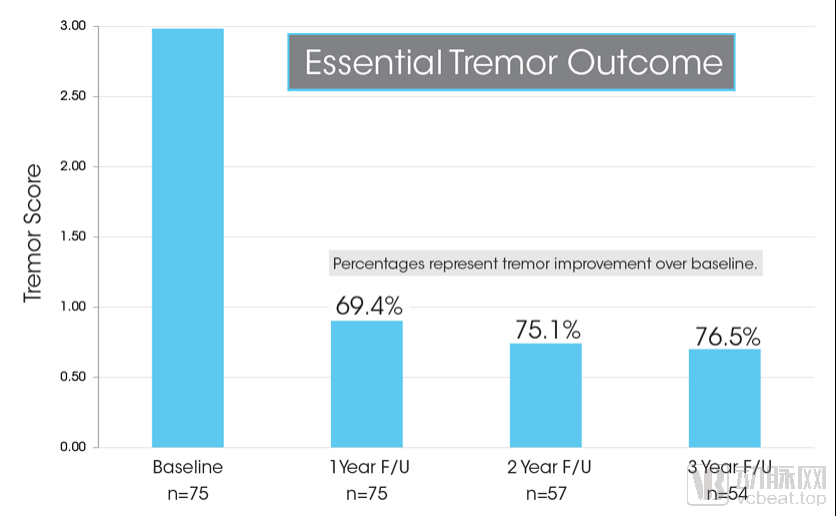
Tremor Improvement Rate
Dr. Maurice R. Ferré stated, “This is an important milestone in expanding focused ultrasound therapy to address a growing number of neurological indications.”
In 2016, the Exablate Neuro magnetic resonance-guided focused ultrasound device developed by Insightec received FDA approval for the treatment of patients with medication-refractory essential tremor and tremor-dominant Parkinson’s disease.
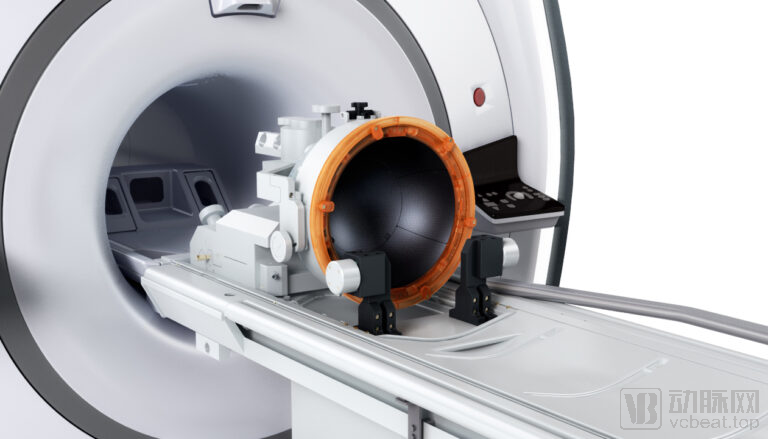
Insightec's Flagship Product: Exablate Neuro
The Exablate system has translated magnetic resonance imaging-guided focused ultrasound (MRgFUS) technology into a clinical application. It focuses high-intensity sound waves to precisely destroy or ablate tissue, reducing hand tremors by ablating the thalamus. The principle is similar to using a magnifying glass to focus light and burn a hole in paper. The entire procedure is incision-free, requires no hospitalization, offers high safety, and carries a low risk of infection and complications. Patients can recover quickly and return to their normal lives as soon as possible after discharge.
In fact, Insightec’s non-invasive treatment system is already at the global forefront. It has the capability to improve patient outcomes, reduce morbidity and psychological trauma, and lower costs. Currently,Exablate Neuro has treated more than 3,000 patients.。
Insightec initially focused on applying MRgFUS technology to other types of procedures, such as uterine fibroids. The company’s ExAblate®The ExAblate 2000 system was the first to utilize MRgFUS technology and received approval from the U.S. Food and Drug Administration (FDA) in 2004 for the treatment of uterine fibroids.
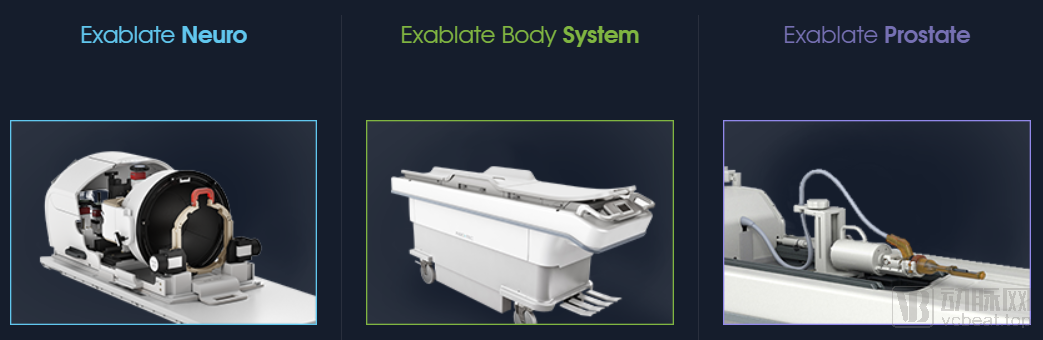
InSightec's Products
Exablate Neuro has been widely adopted and is currently approved for use in more than 65 treatment centers across North America, Latin America, Europe, Asia, Australia, and the Middle East.
Insightec’s MRgFUS technology can also be applied to many other conditions, including benign pediatric brain tumors, drug-resistant epilepsy, and other neurological disorders. Additionally, MRgFUS devices can serve as a blood-brain barrier disruption tool for patients with glioblastoma.
Currently, there are no FDA-approved drugs for the treatment of Alzheimer’s disease. However, it is hoped that if candidate drugs can more readily penetrate the blood-brain barrier, this would demonstrate their efficacy.
Insightec is also conducting research in this area. The company has tested the efficacy of Exablate Neuro in patients with Alzheimer’s disease and amyotrophic lateral sclerosis (ALS).
At the December 2019 Radiological Society of North America (RSNA) annual meeting, researchers presented preliminary results from a Phase II clinical trial evaluating the safety and efficacy of the device when applied to the hippocampus and entorhinal cortex. The hippocampus and entorhinal cortex are key regions for memory formation and play a significant role in the pathogenesis of Alzheimer’s disease.
The study plans to enroll 10 patients, but these early results are based solely on three female patients with early-stage Alzheimer’s disease and amyloid plaques (senile plaques). The participants underwent three consecutive treatment sessions at two-week intervals. After each session, magnetic resonance imaging (MRI) showed that the blood-brain barrier was opened and then resealed within 24 hours.
The results indicate that this technology can help candidate drugs penetrate the blood-brain barrier, thereby enhancing their efficacy.
Ali Rezai, M.D., Executive Chair of the Rockefeller Neuroscience Institute at West Virginia University, who led the study, stated, “Penetrating the blood-brain barrier may help clear beta-amyloid and holds promise for the development of innovative therapies. This is clearly crucial in the fight against Alzheimer’s disease and other neurodegenerative disorders.”
Maurice Ferré stated that they are excited about the progress in Alzheimer’s disease research and will continue to recruit patients for the open-label, multicenter trial. Interim clinical data are currently undergoing peer review.
The global number of Alzheimer’s disease patients continues to rise, leading to increasing social and economic pressures. The figure below presents the latest data from the official website of Alzheimer’s Disease China (ADC), the Chinese chapter of the International Alzheimer’s Association.

Research on the application of MRgFUS technology in Alzheimer’s disease is scheduled to conclude in December 2020. The results are highly anticipated.
Insightec is committed to expanding its business into the global market. Additionally, it has established subsidiaries in many regions worldwide. By selling its developed equipment globally and authorizing distributors for resale, Insightec has generated substantial profits.
On August 15, 2016, imaging giant Siemens Healthineers partnered with Insightec to address compatibility issues between older magnetic resonance imaging (MRI) systems and current neurosurgical ultrasound therapeutic technologies, thereby providing more patients with access to novel treatment options. For Insightec, this collaboration also serves to enhance its market share.
In June 2019, Japan’s Ministry of Health, Labour and Welfare (MHLW) included Insightec’s devices in the national health insurance coverage. Previously, Insightec’s Exablate Neuro system had already received MHLW approval in December 2016 for the treatment of medication-refractory essential tremor.
In addition to previously obtained approvals in the United States, Europe, and Israel, Exablate Neuro also holds licenses from the Korea Food and Drug Administration (KFDA) and Health Canada for the treatment of essential tremor.
Insightec has also long set its sights on China. In 2013, through clinical trials conducted in China at Peking Union Medical College Hospital and the First Affiliated Hospital of China Medical University, its devices received approval from the NMPA and entered the Chinese market.
In China, Insightec’s MRgFUS treatment technology and equipment are also highly popular. In the second year after receiving NMPA approval, Insightec secured funding from Chinese investors.
In 2014, Shanghai General Hospital welcomed the first MRgFUS treatment device in China. Over the following year, the number of treatments exceeded 100 cases, with an analgesic efficacy rate of up to 85% for metastatic bone tumors and a satisfaction rate of nearly 100% for uterine fibroid ablation.
The evolution from open surgery to minimally invasive procedures, and further to non-invasive techniques, represents both the trend in medical development and the demand of patients. Dr. Maurice Ferré once stated that such non-invasive surgeries would replace traditional surgical methods. Overall, this approach can largely avoid the risks of infection and severe hemorrhage, enabling patients to recover in the shortest possible time and thereby minimizing hospitalization rates.
Compared with other countries, China started early in the field of focused ultrasound technology and has become one of the few “dark horses” reaching international advanced levels in the large medical equipment sector. Major domestic companies in this field include Chongqing Haifu Medical, Shanghai Aishen Technology, Shenzhen Huikang Medical, Changjiangyuan Technology, and Shanghai Jiao Tong University Xindi Industrial Co., Ltd. Among them, Chongqing Haifu Medical is a representative enterprise of China’s focused ultrasound technology.
In the 1980s, a team from Chongqing Medical University in China independently developed a high-intensity focused ultrasound (HIFU) tumor treatment system. Subsequently, Chongqing Haifu Medical Technology Co., Ltd. (hereinafter referred to as “Chongqing Haifu Medical”) was established to promote the commercialization of this technology. The system has since received numerous accolades, including the Second Prize of the National Technical Invention Award of China and the Second Prize of the National Science and Technology Progress Award of China.
According to Xing Ruoxi, Professor at Chongqing Medical University and Head of International Academic Affairs at Chongqing Haifu Medical, the JC series “High-Intensity Focused Ultrasound Tumor Treatment System (Haifu Knife)” has currently obtained EU CE certification and approval in 33 countries and regions, with more than 200 clinical application centers for the treatment of benign and malignant tumors established in 26 countries and regions.
The "Haifu Knife" technology in China is a high-intensity focused ultrasound (HIFU) medical technique guided by ultrasound imaging. Compared with MRgFUS technology, its operation relies more heavily on the physician’s individual experience. However, since it does not require continuous magnetic resonance scanning and only needs post-procedure contrast-enhanced MRI for assessment, the treatment time with this system is shorter. Furthermore, as it is independently developed in China, the cost is also lower.