

Han Jisheng Academy-led TEAS Therapy for Assisted Reproduction and Pain Management Files IPO Prospectus
Han Jisheng is an academician of the Chinese Academy of Sciences and a renowned physiologist in China. He has received numerous domestic and international awards, including the Wu Jieping Medical Prize, the highest medical award in China, and the inaugural Lifetime Achievement Award from the Society for Acupuncture Research in the United States. As a pioneer in the field of pain medicine in China, he served as the Chief Scientist for the Ministry of Science and Technology’s National Key Basic Research Program (973 Program), an Adjunct Professor in the Department of Psychiatry at Harvard University, and a Scientific Advisor to the World Health Organization (WHO). While Academician Han’s honors and titles are too numerous to list, there is one well-deserved distinction that belongs exclusively to him: “The Acupuncture Academician.”
From Skepticism to Belief: Academician Han Jisheng Devoted Half a Century to Studying the Mechanisms of Acupuncture Analgesia, Elucidated Its Principles Through Modern Medical Theory, and Transformed Traditional Manual Acupuncture into Digital Neuromodulation Therapy Devices, Achieving Remarkable Accomplishments and Filling Numerous Gaps in Modern Medicine.
Academician Han Jisheng was originally trained exclusively in Western medicine. However, upon accepting a national mandate, he established a research team at Beijing Medical College (the predecessor of Peking University Health Science Center) to investigate the mechanisms of acupuncture anesthesia, thereby embarking on his scientific research career. As his research deepened, Academician Han transitioned from initial skepticism regarding Traditional Chinese Medicine (TCM) acupuncture to validating its efficacy through clinical trials. He ultimately elucidated the scientific principles underlying acupuncture-induced analgesia and other therapeutic effects. After five decades of dedicated endeavor, he has emerged as a global leader in the field of TCM acupuncture.

Academician of the Chinese Academy of Sciences, Han Jisheng
It is particularly noteworthy that Academician Han Jisheng dedicated half his life to achieving a scientific breakthrough in the principles of acupuncture, elucidating the mechanisms of acupuncture analgesia and establishing the neurochemical theory of acupuncture therapy. Meanwhile, he has consistently emphasized the commercial translation of scientific research outcomes, enabling this technology to better benefit patients. In collaboration with Professor Liu Yiming from Beihang University, he successfully developed the Low-Frequency Transcutaneous Electrical Acupoint Stimulator, abbreviated as the "Han's Instrument." This device represents the culmination of his years of basic and clinical research. It simulates the neural and chemical signals generated by acupuncture to regulate the body's neuroendocrine system, achieving therapeutic effects comparable to needle acupuncture without invasive needling, thereby serving the purposes of disease treatment, prevention, and health promotion.
Prior to this, Academician Han Jisheng’s “Han’s Instrument Project” had already undergone pilot scientific studies in North America, Europe, and countries along the Belt and Road Initiative. The device was well received by both physicians and patients, garnering strong market response, which significantly accelerated the commercialization of the “Han’s Instrument Project.”
To this end, VCBeat conducted an exclusive interview with Dr. Han Songping, co-founder of the “Han Project” team, unveiling the neuromodulation therapy known as “transcutaneous acupoint electrical stimulation.”
Traditional Chinese Medicine (TCM) theories are sometimes difficult to accept within the framework of modern medical theory, yet they often demonstrate superior efficacy in treating complex and refractory conditions where Western medicine has limited options. To elucidate the mechanisms underlying acupuncture therapy, improve therapeutic outcomes, lower the technical barrier for practitioners, accelerate the widespread adoption of acupuncture diagnosis and treatment, and enhance standardization and reproducibility, Academician Han Jisheng has led 93 doctoral students, 19 postdoctoral fellows, and hundreds of collaborators in continuous clinical and basic research on acupuncture for over four decades, ultimately deciphering the biological code behind its therapeutic effects.
Building upon traditional acupuncture, Academician Han Jisheng’s team developed a patented therapy known as “Transcutaneous Acupoint Electrical Stimulation” (TAES) and designed and manufactured the Han’s Instrument series based on this technology. Extensive scientific clinical trial data accumulated over many years have demonstrated that this device can achieve therapeutic effects equivalent to or superior to those of traditional Chinese acupuncture, without the need for needle insertion.
The Han’s Instrument is a low-frequency electrical stimulator for neural acupoints, developed based on the principles of acupuncture. It holds significant market potential, as it can be used not only for all conditions treatable by traditional Chinese medicine (TCM) acupuncture but also for many disease areas where acupuncture has not yet been widely applied.
As an initial market entry strategy, the team plans to focus on assisted reproductive technology and ovarian care, developing next-generation products for launch to both the general public and hospitals.
In China, with the trend of delayed childbearing and the influence of factors such as environmental conditions and stress, the number of individuals suffering from infertility has exceeded 50 million, accounting for 15% of the population of reproductive age. Moreover, the prevalence rate is rising steadily as the age at marriage and childbirth continues to increase. In vitro fertilization (IVF) is currently the most widely used technique in assisted reproduction and boasts the highest success rate. Dr. Han Songping stated, “The effective adjunctive use of the Han’s Device can further increase the success rate of assisted reproductive technology by 15 percentage points.”
It is worth noting that in the field of assisted reproduction, Han’s team received RMB 19.1 million in funding from a key project of the Ministry of Science and Technology in 2013. Clinical trials were conducted at nine Grade A tertiary hospitals, including the Reproductive & Genetic Hospital of CITIC-Xiangya, the Reproductive Center of the Sixth Affiliated Hospital of Sun Yat-sen University, and the Reproductive Center of the Second Affiliated Hospital of Shandong University of Traditional Chinese Medicine, to validate the efficacy and safety of the Han device. According to clinical data published by the team in 2016, the Han device can significantly improve the success rate of in vitro fertilization (IVF) and reduce the overall miscarriage rate and total malformation rate in clinical pregnancies.
Dr. Han Songping told VCBeat that, following the establishment of the Beijing company for the Han’s project, upgrades to the appearance and performance of existing products will be carried out. While replacing the original products currently used in hospitals, the project will reposition and revamp its iterative products, complete registration for new products, expand product lines tailored to each specific indication, and achieve industrialized production.
In addition to launching its first dedicated device for assisted reproduction, the team will sequentially introduce specialized devices for pain rehabilitation and for anxiety and insomnia. The pain rehabilitation device is primarily indicated for acute postoperative pain, surgical analgesia in cases where anesthetics are contraindicated, chronic pain, and pain following various sports injuries. The device for anxiety and insomnia is mainly suitable for depression, anxiety disorders, insomnia comorbid with depression and anxiety, senile insomnia, and anxiety-related insomnia. All initially launched specialized devices are supported by relevant clinical trial data and hold related invention patents.
As a co-founder of the Han’s Project, Dr. Songping Han also boasts an impressive background. Dr. Han earned his degree in Pharmacology from the School of Medicine at Saint Louis University in the United States, and subsequently conducted postdoctoral research at the Washington University School of Medicine. He served as an Assistant Professor in the Department of Physiology and Pharmacology at Saint Louis University and at the University of Missouri School of Medicine. Later, he joined Bristol-Myers Squibb as Chief Scientist, served as President of HANS International in the United States, and became a member of the review committee at the U.S. National Institutes of Health (NIH).
After returning to China, Dr. Han Songping engaged in the industrialization of technologies related to the Han’s Instrument. In response to the large number of patient deaths and addictions caused by the excessive use of potent opioid analgesics in the United States, and at a critical juncture when President Trump declared the U.S. opioid crisis a national emergency, Dr. Han was specially invited by the U.S. government in February 2019 to deliver a keynote address at the National Library of Medicine of the National Institutes of Health (NIH). He presented research and clinical applications of transcutaneous acupoint stimulation for pain management, which received unanimous endorsement from the attending experts. Commissioned by the National Administration of Traditional Chinese Medicine, Dr. Han led representatives from the United States, Japan, South Korea, and other countries in formulating ISO international standards for traditional Chinese medicine medical devices, such as electroacupuncture instruments. This initiative is expected to significantly enhance the global popularity of traditional Chinese medicine and promote the worldwide adoption of the Han’s Instrument and related devices.
Dr. Han Songping remarked on the decision to commercialize Academician Han Jisheng’s half-century of research findings: “This actually fulfills a long-standing regret of Professor Han Jisheng as a scientist—that many outstanding scientific achievements often remain confined to the laboratory, failing to benefit the general public.”
Academician Han Jisheng has advanced traditional Chinese acupuncture by developing digital and safe neuromodulation techniques, thereby enhancing therapeutic efficacy and expanding its scope of application. This approach eliminates the need for invasive skin penetration, offering greater convenience to patients. Drawing on years of basic research and clinical trials, and guided by the principles of standardization and precision medicine, treatment parameters for various indications have been optimized. This has significantly improved therapeutic outcomes and reduced uncertainty in efficacy caused by human factors. While filling numerous gaps in the medical field, this work has also received high-level national recognition. We strongly hope that the Han’s Instrument series can be industrialized and commercialized, generating greater social and economic benefits, thereby improving public health and benefiting humanity.
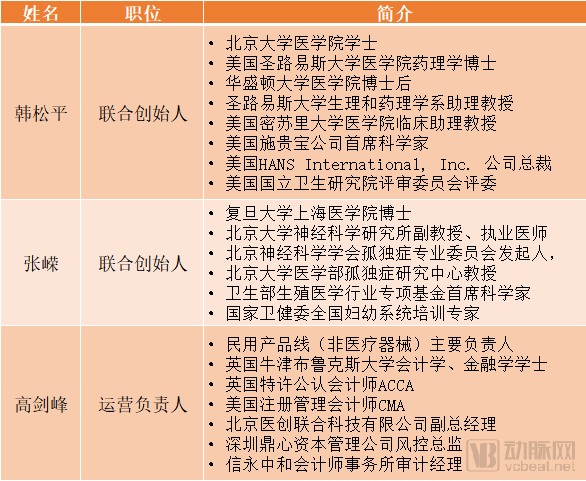
Introduction to Core Members of the Han Team
Another co-founder of the Han team is Dr. Zhang Rong from Shanghai Medical College, Fudan University. Dr. Zhang is a renowned expert in autism in China, the founder of the Autism Professional Committee of the Beijing Neuroscience Society, an Associate Professor and licensed physician at the Institute of Neuroscience, Peking University, and a Professor at the Autism Research Center, Health Science Center, Peking University. Meanwhile, theoretical research findings from Dr. Zhang’s research group have been cited multiple times by the Autism Research Centre at the University of Cambridge, UK, at the annual European Autism Conference.
According to Dr. Han Songping, the Han team plans to establish a medical technology company integrating R&D and sales around June 2020, with the aim of deeply translating Academician Han Jisheng’s scientific research achievements into practical applications. The team will leverage neuromodulation theory to develop additional indications for the Han’s Instrument, addressing more challenging medical issues that currently remain unresolved in the medical community.
In terms of business model, the team will promote its products through three channels segmented by market type: the medical market, the consumer market, and the international market. For the medical market, we will adopt a strategy of decentralizing assisted reproductive technology (ART). Leveraging the Han’s Device’s proven efficacy in improving IVF success rates, female ovarian function, and male sperm quality, we aim to comprehensively enhance fertility success rates as our core market objective for global promotion.
The consumer market primarily targets the broader health industry, with a strategic focus on chronic disease management and wellness therapy. Technological innovations are integrated into established electronic products with similar market positioning, delivering solutions to mid-to-high-end consumers with purchasing power. There is a strong emphasis on product efficacy, visible results, and user experience, while clearly delineating boundaries from hospital channels to avoid cross-sector competition.
In terms of the international market, while completing the registration certificate for Class II medical devices in China in 2020, the team will apply for CE certification in Europe, FDA approval in the United States, and domestic medical device certifications in Southeast Asian countries. The company will carry out international brand promotion and product localization in alignment with the grand strategy of Traditional Chinese Medicine (TCM) diplomacy. Meanwhile, it will comprehensively evaluate relevant factors such as disease incidence rates in target regions, local economic levels, and the degree of TCM acceptance to identify the most valuable target markets and facilitate corresponding connections with existing overseas resources. It is expected that an overseas team will be established in 2021 to enter the international market.
Currently, the Han team has launched its angel round of financing, aiming to raise RMB 10 million. The funds will be primarily used for the production of home-use and medical-grade Han devices, as well as consumables, to meet personnel and operational cost requirements.