

Hangzhou Medicine Port and Zhejiang University's First Affiliated Hospital Forge a Leading Medical Industry Cluster with Institutional-Grade Clinical and Innovation Ecosystem
Research by VCBeat shows that China's medical industry clusters exhibit typical regional distribution characteristics, which can be broadly divided into the eastern coastal industrial belt, the central industrial belt, and the western industrial belt.
The eastern industrial belt is the core cluster of China’s medical industry, encompassing the Bohai Rim, the Yangtze River Delta, and the Guangdong-Hong Kong-Macao Greater Bay Area, stretching from south to north. The central industrial belt includes key cities such as Wuhan and Zhengzhou, having established advantages in biotechnology clusters, intelligent manufacturing, and new materials industrial clusters. The western industrial belt serves as an expansion zone for China’s medical industry, demonstrating significant development potential in digital technology clusters, intelligent manufacturing, and new materials industrial clusters.
VCBeat believes that traditional medical industrial parks are evolving into regional industrial clusters. Notably,The industrial cluster of leading medical institutions can provide numerous advantages to enterprises. Among them, Hangzhou Medicine Port, which maintains a deep strategic partnership with the First Affiliated Hospital of Zhejiang University School of Medicine (FAHZU), has rapidly become the preferred destination for many companies to establish their presence.
On April 10, 2020, VCBeat’s VB Roundtable invited the Party Secretary of The First Affiliated Hospital, Zhejiang University School of MedicineLiang YanboDirector of the Office of the Innovation and Translation Center, The First Affiliated Hospital, Zhejiang University School of MedicineLou YufengDeputy Director, Hangzhou Medical Port Town Development Service CenterLu JianjunDeputy Director of the Dachuang Town Development Service Center and Director of the Talent Innovation Service CenterCao Chongfeng, Founder and Chairman of Zhuojian TechnologyWei Jianfeng. Taking Hangzhou in the eastern industrial belt as an example, the guests shared their insights on how cities can build industrial clusters and how innovative enterprises can grow into leading companies by leveraging industrial parks and China’s top medical institutions, according to a researcher from VCBeat.Yang ShaoboModerating this roundtable discussion. VCBeat has compiled the insightful perspectives shared by the panelists.
Technology Transfer, Platform Development, Talent, and Policy Are Key to Empowering Enterprises in Industrial Clusters
In April 2019, the Qiantang New Area was officially approved. The Qiantang New Area is committed to building a world-class intelligent manufacturing industry cluster and a demonstration zone for the integrated development of industry and urban areas in the Yangtze River Delta region. Among them, Hangzhou Medicine Port, located in the Qiantang New Area, is a new highland for biopharmaceuticals in Hangzhou, leading the development of Hangzhou's biopharmaceutical industry.
Hangzhou Medical Port is committed to building a globally influential hub for the research and development of high-end biopharmaceutical products, featuring the most comprehensive resources, the most complete value chain, and the fastest growth rate. With a strategic focus on biotech drugs, biomedical engineering, high-end medical devices, and medical big data, it strives to create a biopharmaceutical industrial cluster valued at RMB 50 billion. As the core of Hangzhou’s biopharmaceutical industry, Hangzhou Medical Port accounts for more than 50% of the city’s total industrial output value in this sector.
Mechanisms for translating innovative achievements, development of innovation platforms, talent attraction policies, and service systems are the primary means by which industrial clusters empower enterprises. Lu Jianjun, Deputy Director of the Development Service Center of Hangzhou Medicine Port Town, and Cao Chongfeng, Deputy Director of the Development Service Center of Dachuang Town and Director of the Talent Innovation Service Center, used Hangzhou Medicine Port as a case study to illustrate how industrial clusters create a favorable development environment for enterprises in terms of talent, policy, achievement translation, and platform development.
Establish innovation platforms to facilitate project implementation.Hangzhou Medical Port has established a 2-million-square-meter standardized industrial development platform integrating R&D, small-scale trials, pilot-scale trials, and industrialization.
Explore New Mechanisms for Innovation Translation.Hangzhou Medicine Port has established in-depth collaborations with multiple hospitals, including the First Affiliated Hospital of Zhejiang University School of Medicine, in areas such as technological innovation, translation of research achievements, and clinical pharmacology. Lu Jianjun stated, “Moving forward, Hangzhou Medicine Port will engage in comprehensive cooperation with major hospitals and medical consortia in Hangzhou.”
Increase efforts to attract high-level talent.Hangzhou Medicine Port has established science and technology talent liaison offices in regions with advanced biopharmaceutical industries and dense research institutions, such as the United States, Germany, and Japan, to attract overseas talents to return to China for entrepreneurship. Meanwhile, Hangzhou is home to a large number of universities, gathering leading talents as well as R&D-oriented and application-oriented professionals.
Pilot Implementation of Major Policies.In response to policies such as the consistency evaluation of generic drugs and the Marketing Authorization Holder (MAH) system, Hangzhou Medical Port will implement pilot programs to stimulate the vitality of market entities.
Promote regional overall cooperation in a coordinated manner.In line with the requirements of Yangtze River Delta integration, Hangzhou Medicine Port initiated the establishment of the G60 Science and Technology Innovation Corridor Biopharmaceutical Industry Alliance to accelerate the sharing and coordinated development of regional biopharmaceutical industry resources, thereby promoting the synchronized development of the biopharmaceutical industry across the Yangtze River Delta.
Thanks to the favorable business environment provided by Hangzhou Medicine Port, nearly 1,000 companies, including Johnson & Johnson, Pfizer, Merck & Co., Bayer, and Zhuojian Technology, had established operations in Hangzhou Medicine Port by the end of 2019.
When asked why the company decided to establish its presence in Hangzhou Medical Port, Wei Jianfeng, founder of Zhuojian Technology, stated, “Zhuojian Technology is dedicated to providing ‘healthcare + internet’ products and services to medical institutions. We are currently delivering integrated online-to-offline healthcare services—covering pre-consultation, during-consultation, and post-consultation phases—to more than 1,000 hospitals across China. We aimed to expand into additional business scenarios. As it happened, we learned that Hangzhou Medical Port hosts a cluster of companies specializing in medical devices and new drug R&D, which could help us broaden our business applications. This led to our decision to settle here.”
According to reports, since settling in Hangzhou Medicine Port, Zhuojian Technology has received over RMB 20 million in financial support from the Hangzhou municipal government, along with a series of preferential policies, including rental subsidies, tax rebates, government-guaranteed loans, and talent introduction subsidies.
Equipment Sharing, Clinical Center Construction, and Research Collaboration: The First Affiliated Hospital of Zhejiang University School of Medicine Empowers the Development of Enterprises in the Pharmaceutical Port from Multiple Dimensions
Hospitals are a crucial component in driving the development of medical industry clusters.
For many years, The First Affiliated Hospital, Zhejiang University School of Medicine (FAHZU) has enjoyed a prestigious reputation both domestically and internationally for its robust comprehensive strength, superior medical quality, and distinctive disciplinary specialties. In November 2019, the “2018 China Hospital Rankings” released by the Institute of Hospital Management, Fudan University, ranked FAHZU 14th nationwide. The hospital has maintained the top position in Zhejiang Province for ten consecutive years, with six specialty disciplines ranking among the top 10 in China.The First Affiliated Hospital, Zhejiang University School of Medicine has been vigorously promoting translational medicine research, undertaking multidisciplinary integrated innovation initiatives, and striving to establish major platforms and large-scale projects, while maintaining a deep collaborative partnership with Hangzhou Medical Port.
Lou Yufeng, Director of the Office of the Innovation and Translation Center at The First Affiliated Hospital, Zhejiang University School of Medicine, stated that the collaboration between the hospital and Hangzhou Medical Port mainly focuses onEstablishment of Clinical Trial Centers, Medical Device Sharing, and Scientific Research Collaborationand other aspects.
In 2018, the First Affiliated Hospital of Zhejiang University School of Medicine and Qiantang New AreaHangzhou Medical Port Clinical Trial Center ProjectSigning of the cooperation agreement. Upon completion of the clinical trial center, both parties will be able to expand their collaboration in building specialized biomedical teams and translating clinical achievements. In December 2019, The First Affiliated Hospital, Zhejiang University School of Medicine established and implemented the management ofInnovation and Translation Center, The First Affiliated Hospital, Zhejiang University School of MedicineIt has also been established in the Medicine Port Town. Centered on foundational and translational medical research into new technologies, methods, and applications in fields such as cell therapy, gene editing, innovative drug R&D, clinical diagnostics, and innovative medical devices, this Innovation and Translation Center can provide more development opportunities for related enterprises in the surrounding area.
The First Affiliated Hospital, Zhejiang University School of Medicine currently possesses large-scale experimental instruments with a total value exceeding RMB 100 million.Including liquid chromatography-tandem mass spectrometry (LC-MS/MS) systems, high-resolution tandem mass spectrometers, rapid microbial identification systems, small animal in vivo 3D imaging systems, and fully automated HIV-1 nucleic acid quantification detection systems, which can be shared with enterprises within the Hangzhou Medical Port.
In addition, The First Affiliated Hospital of Zhejiang University School of Medicine can engage in scientific research collaborations with enterprises.Clinical research collaborations have been established with multiple innovative enterprises, including BeiGene and Innovent Biologics.
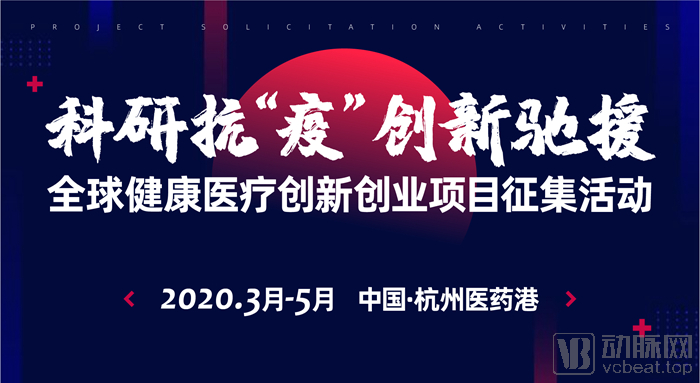
It is worth noting that the collaboration between The First Affiliated Hospital, Zhejiang University School of Medicine (FAHZU) and Hangzhou Medicine Port continues to deepen. Recently, jointly hosted by the Administrative Committee of Qiantang New Area, the Talent Office of the Hangzhou Municipal Committee of the Communist Party of China, the Hangzhou Investment Promotion Bureau, and FAHZU, and co-organized by Hangzhou Medicine Port Town, Hangzhou Dachuang Town, the Innovation and Transformation Center of FAHZU, and VCBeat,Call for Global Health and Medical Innovation and Entrepreneurship ProjectsOfficially Launched.
This event extends a broad invitation to innovative projects from medical institutions, medical research organizations, and university laboratories at all levels, both domestic and international, as well as innovative projects at various stages in the health and medical sector. The organizers will select winners for awards such as the Shortlist Award, the Crested Ibis Award, and the White Rhino Award from the submitted entries, and provide innovation empowerment across multiple dimensions, including policy, technology, ecosystem, capital, and branding.
Award-winning projects may receive: comprehensive policy support and guarantees from Hangzhou and the Qiantang New Area; technical empowerment for innovative projects through 11 innovation service platforms jointly established by Hangzhou Medical Port and prestigious universities worldwide; full-chain ecosystem empowerment for innovative projects via public service platforms such as the Innovation Transformation Center of the First Affiliated Hospital, Zhejiang University School of Medicine (FAHZU), the Clinical Trial Center of FAHZU at Hangzhou Medical Port, the Public Service Platform for Biopharmaceutical R&D at Hangzhou Medical Port, and the Zhejiang Institute for Medical Device Testing; financial support for enterprises through a RMB 5 billion industrial fund-of-funds, in collaboration with top-tier pharmaceutical funds both domestically and internationally; and access to a rich resource matrix, including media communication services provided by over 100 leading global media outlets.
Registration Method:
To register for the event, please visit the official event website:https://vcbeat.top/Forum/GIPHI