

BenchSci Files for IPO: AI-Powered Antibody and Reagent Selection Platform Saving $3M Annually in Lab Costs

BenchSci
AI-Assisted Reagent Selection Instrument Developer
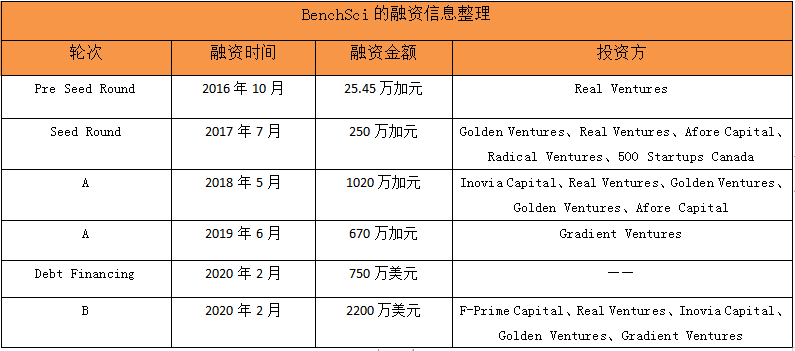
Recently,Biopharmaceutical company BenchSci Announces Completion of $22 Million Series B Financing RoundBenchSci, a biopharmaceutical company, has announced the completion of its $22 million Series B financing round, led by F-Prime Capital, with participation from Inovia Capital, Real Ventures, Golden Ventures, and Gradient Ventures. Alongside this capital injection, BenchSci has launched its new AI-powered reagent selection product and expanded its contract with Novartis, targeting a market estimated to be worth over $10.2 billion annually.。
CEO Belenzon stated that the funding will be used to accelerate the development of AI-driven new drugs. Compared to the typical 12 weeks required for antibody selection, BenchSci’s AI-powered antibody selection technology can complete the process in just 30 seconds. By reducing the likelihood of selecting inappropriate antibodies, it can save up to $3 million annually in consumable costs.
BenchSci, founded in 2015 and headquartered in Toronto, Ontario, Canada, is a startup specializing in literature search within the biopharmaceutical sector, providing researchers with an antibody search engine platform. It aims to address the limitations of automated computational data analysis by leveraging AI to analyze vast amounts of experimental data, thereby helping researchers identify antibodies suitable for use under any unique experimental conditions.
BenchSci indexes all antibody details by scanning vast amounts of scientific literature and employing machine learning-based intelligent computer programs. This approach effectively standardizes experimental protocols and enhances researchers’ efficiency. To accelerate new scientific discoveries, BenchSci provides its platform free of charge to all researchers at academic institutions such as UHN.
BenchSci has optimized reagent procurement and achieved experimental success at 15 of the top 20 global pharmaceutical companies and over 3,600 academic centers. Backed by F-Prime and Google’s AI-focused Gradient Ventures, BenchSci leverages machine learning to extract insights from procurement data, thereby evaluating drug development progress.
Customers can receive reports on failure rates, productivity, and redundancy, with data sourced from various departments, therapeutic areas, and geographic locations. They can then leverage BenchSci’s AI-powered reagent selection platform to address inefficiencies, enabling scientists to select optimal reagents and appropriate design criteria for their experiments.
The Founding Team of BenchSci

Liran Belenzon (CEO)(Left standing),
Elvis Wianda (CDO)(Right standing),
Tom Leung (CSO)(Left),
David Chen (CTO)(Right)
.
The founding team of BenchSci consists of four members. The original inspiration for BenchSci stemmed from the frustration experienced by Chief Scientific Officer Tom Leung while conducting epigenetics research at T.Like. Like many other researchers in the life sciences, Leung suffered experimental failures due to his inability to detect antibody target proteins.
“It’s disheartening. After weeks of collecting cultured cell samples, the experiment still failed—not because I made an error in the protocol, but because the antibody did not effectively detect the protein I was looking for,” said Leung.
“This result leads me to believe that scientists must have a better way to assess the quality of antibody products before purchasing antibodies for experiments.”
To achieve this goal, Leung sent a LinkedIn message to David Chen, a Ph.D. in neuroscience with a primary research focus on machine learning. Leung also connected with Elvis Wianda, a Ph.D. candidate in the Department of Medical Biophysics, through the University of T’s Life Sciences Career Development Society. The three subsequently launched a project exploring the use of machine learning to analyze scientific papers, achieving a level of precision unattainable by existing antibody search engines and review websites.
In 2016, Liran Belenzon urged the startup to apply to the Creative Destruction Lab (CDL). At the time, he was an MBA candidate at the Rotman School of Management and was recruiting startups for the lab. Belenzon participated in Rotman’s CDL program, which provides business students with hands-on experience in building early-stage technology companies. This gave him the opportunity to work directly with BenchSci. Eventually, he joined BenchSci as its Chief Executive Officer.
With Belenzon’s arrival, the three scientists behind BenchSci—Tom Leung, David Chen, and Elvis Wianda—can now steer the company with seasoned entrepreneurial acumen.
AI-Assisted Antibody and Reagent Selection
BenchSci launched the beta version of its search engine in July 2017. Since its launch, it has cumulatively analyzed more than 4 million commercial antibodies. Its latest test results show that when searching for the same commercial antibodies, BenchSci’s search speed is 24 times faster than traditional manual screening, and the cost of selecting antibodies is reduced by 75%.
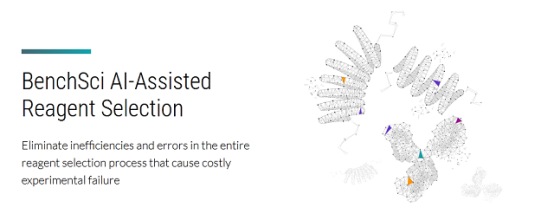
Advantages of BenchSci’s Reagent Selection:
1. Improved efficiency in the antibody selection process and reduced the probability of errors;
2. Capable of rapidly selecting reagents within 30 seconds;
3. Reduce hard costs for consumables by up to $6 million annually;
4. Shorten scientists' research time.
Among 20 pharmaceutical companies and 3,600 academic institutions, over 31,000 scientists across 15 companies use BenchSci’s AI platform to select antibodies and plan experiments, saving up to $2 million annually in hard costs alone.
BenchSci’s image recognition technology uses AI to extract antibody-related information from published experimental papers, going beyond merely identifying supplier names, product names, or SKUs. The system applies bioinformatics to link antibodies to specific use cases, while providing access to catalog data for 7.7 million products from 231 suppliers, enabling customers to understand usage trends for these antibodies.
Researchers and pharmaceutical companies often encounter numerous challenges during the research process, such as antibody selection, reagent waste, and complex information retrieval. These issues delay research progress, and addressing them is a primary consideration for BenchSci. By covering everything from antibody suppliers to antibody selection, BenchSci has aggregated nearly all literature related to reagents, significantly reducing researchers’ search time and facilitating faster discovery of new drugs.

A recent article reported that there are more than 5,000 antibodies targeting the human epidermal growth factor receptor (EGFR) protein alone. Casandra Mangroo, Head of Science at BenchSci, stated, “Scientists know that each antibody behaves differently under varying experimental conditions.” “Even if suppliers conduct some form of testing, they cannot possibly evaluate the suitability of every antibody in every possible experimental context.”
BenchSci users can access the world’s largest antibody database, which includes supplier catalog data for over 6.8 million products from 19 vendors, as well as comprehensive usage trends for antibodies across applications, species, and cell lines.
Meanwhile, BenchSci’s search interface is intuitive and user-friendly, enabling users to perform operations quickly and locate desired results accurately and in a timely manner. For example, users can search by protein target and select experiment-specific antibodies within minutes.
BenchSci features comprehensive open- and closed-access data derived from real-world experimental findings in 10 million scientific publications, including paywalled papers and independent validations by other organizations. Additionally, BenchSci has established partnerships with leading scientific publishers such as Springer Nature and Wiley.
The Future of BenchSci
As early as 2018, BenchSci entered into a commercial partnership with Proteintech, a manufacturer of antibodies and human proteins that sells directly to scientists to maintain the highest levels of quality control, thereby earning recognition for consistency. They announced the establishment of a new partnership aimed at accelerating scientific progress by overcoming the critical challenge of antibody selection faced by biomedical researchers.
BenchSci uses machine learning to identify open and closed data, centralizes access to Proteintech’s published data, and allows researchers to search by key experimental variables. This combination further accelerates researchers’ efficiency.
Currently, many antibody manufacturers are lining up to support BenchSci’s efforts by sharing their catalogs and associated experimentally validated data for integration into the company’s database. Rimm notes that although these reagent manufacturers are hesitant about adopting universal validation standards, many still recognize the need for better quality control of antibodies. “The system is self-regulating; it enables a competitive market to rate products,” says Rimm. “Many vendors compete with one another, allowing them to showcase a greater number of validated antibodies.”
Helping researchers make antibody selections can reduce time wasted, but antibody selection is only one aspect of the problem. Researchers also rely on many other reagents, including molecular probes, protein-specific inhibitors and activators, and primers for sequencing and PCR amplification. Leung hopes to eventually expand BenchSci’s AI platform into a broader product offering.
AI Empowering Medical Research Has Become a Trend
Liran Belenzon, Co-founder and CEO of BenchSci, stated, “Without AI technology, many problems would be cumbersome to address or even impossible to resolve effectively. This necessitates the development and application of a suite of advanced technologies, primarily algorithms in the fields of data science, bioinformatics, and machine learning. These technologies enable biomedical experts to identify reliable antibodies more rapidly while minimizing resource waste.”
AI technology is a product of the internet in the new era and a symbol of our times. The continuous application of AI technology across various industries brings convenience to people's lives. BenchSci integrates AI technology with biomedical research, facilitating customers' collection of relevant literature and materials.
Where there is demand, there is a market. It is no coincidence that BenchSci has completed seven rounds of financing in just five years. As times progress, we must keep pace with the era and continuously update our knowledge to foster our own growth.