

Chengdu HitGen Surges 129% on STAR Market Debut, Leveraging 40-Billion-Molecule DEL Library to Achieve Over ¥100M Annual Profit

HitGen
New Drug Developer
On April 16, HitGen Inc. (short name: HitGen; stock code: 688222.SH), a leading CRO in the field of drug discovery, officially listed on the STAR Market of the Shanghai Stock Exchange, with China International Capital Corporation Limited serving as the lead underwriter. The company issued a total of 40.68 million shares at an offering price of RMB 20.52 per share.
At 9:30 a.m. this morning, HitGen opened for trading.Price: 40 yuan,The increase was 94.93%. By the afternoon close, HitGen’s stock price stood at RMB 47.08, up 129.43%.
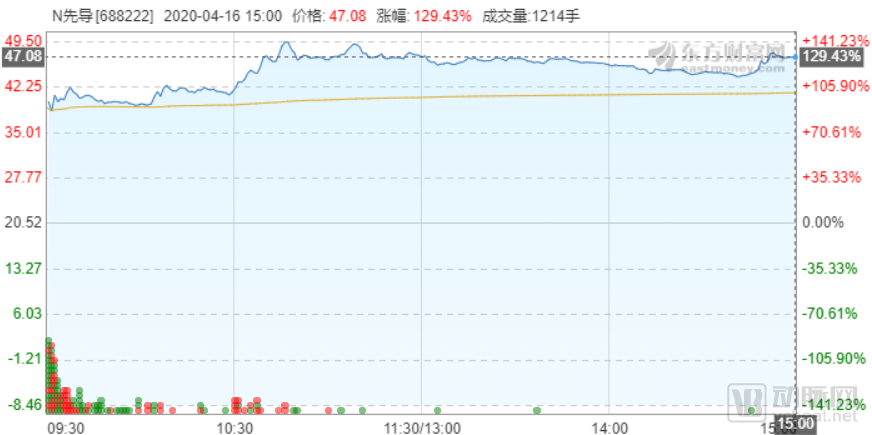
Image source: East Money
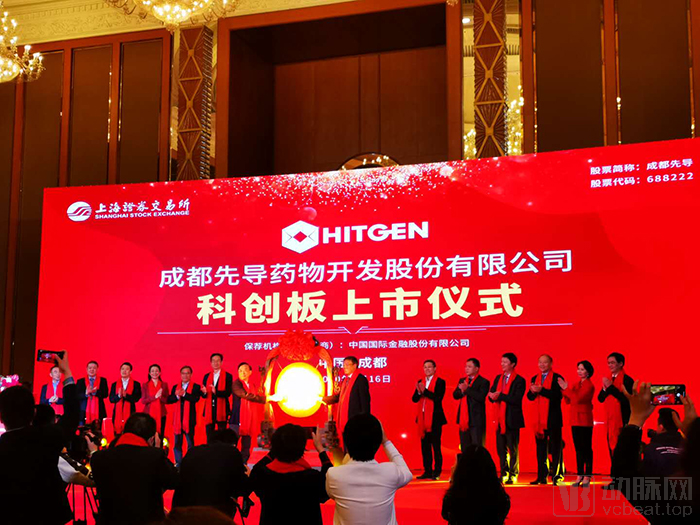
It is reported that the investment projects funded by the proceeds from this stock issuance are all centered around the company’s core business and its future development strategy. The raised funds will be primarily allocated to two areas: the construction of a new molecular design, construction, and application platform, and the establishment of a new drug R&D center.
HitGen Inc. was established on February 22, 2012. In 2019, the company relocated to its new headquarters in the Chengdu Tianfu International Bio-Town. Co-founded by Dr. Li Jin along with multiple domestic and international experts in the fields of biology, chemistry, and related disciplines, HitGen has been dedicated to the research and innovation of DNA-Encoded Compound Library (DEL) technology since its inception. The company specializes in the early-stage research and development of novel small-molecule drugs, focusing on the discovery of hit and lead compounds.
HitGen’s DEL technology has enabled the construction of a DNA-encoded small-molecule compound library comprising over 400 billion molecular structures, establishing HitGen as the most mature and large-scale enterprise in China for the industrialization of DEL technology. This library is also recognized as the largest and most diverse small-molecule compound library globally.
Currently, HitGen Inc. possesses a DNA-encoded library (DEL) known as the "Hit Library," which comprises over 900 sub-libraries, and provides research services for the early drug discovery stage to major domestic and international pharmaceutical and biotechnology companies such as Janssen Biotech, Merck & Co., Pfizer, Bayer, and Takeda Pharmaceutical.
Notably, among the globally disclosed DNA-encoded library (DEL) technology collaboration projects from 2015 to 2019, HitGen Inc. accounted for more than one-third of all collaborative transactions. In 2018, the company captured 60% of publicly announced DEL technology collaboration projects, making it the R&D service provider with the highest number of collaborative partnerships in the DEL field. According to its 2019 financial report, HitGen Inc.’s revenue reached RMB 264 million, with an average annual growth rate exceeding 160%.
VCBeat (WeChat ID: vcbeat) reviews HitGen’s development history by examining its prospectus, exploring how the company stood out in the drug discovery CRO sector step by step, and analyzes the competitive landscape of the domestic and international drug discovery CRO markets.
Chengdu HitGen was formerly known as Chengdu HitGen Drug Discovery Co., Ltd. (hereinafter referred to as “HitGen Limited”), a company founded under the leadership of Dr. Li Jin. It was not until March 2019 that Chengdu HitGen Drug Discovery Co., Ltd. was wholly converted from a limited liability company into a joint-stock company.
According to publicly available financing information, HitGen has completed three rounds of financing:
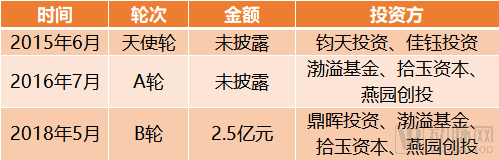
HitGen’s Historical Financing Rounds (Data Source: VCBeat Knowledge Base)
According to HitGen Inc.’s prospectus, on June 12, 2016, the board of directors of HitGen Limited passed a resolution approving an increase in the registered capital of HitGen Limited, with Boyi Xintian, Danqing Investment, Tenglan Biotechnology, and Zhongling Yanyuan subscribing to the newly increased registered capital by contributing RMB 30 million, RMB 20 million, RMB 10 million, and RMB 5 million, respectively.
Subsequently, on May 25, 2018, HitGen Limited continued its capital increase and share expansion. CDH New Trends, Changxing Growth (both being investment entities of CDH Investments), and Juci Limited jointly subscribed to the newly increased registered capital of HitGen Limited, with CDH New Trends contributing RMB 87 million, Changxing Growth contributing RMB 63 million, and Juci Limited contributing RMB 100 million.
CDH Investments began focusing on cutting-edge technologies capable of enhancing pharmaceutical R&D efficiency as early as 2016, forecasting that DNA-Encoded Library (DEL) technology would gradually become a critical tool for novel drug discovery. Following due diligence on HitGen in 2017, CDH formally invested in the company in early 2018. In that same year, HitGen generated RMB 150 million in revenue and achieved a net profit of approximately RMB 45 million for the first time, with both revenue and profit doubling in 2019. Leveraging its deep industry insights, CDH seized the industry’s inflection point at the most opportune moment, achieving an optimal balance between risk and return.
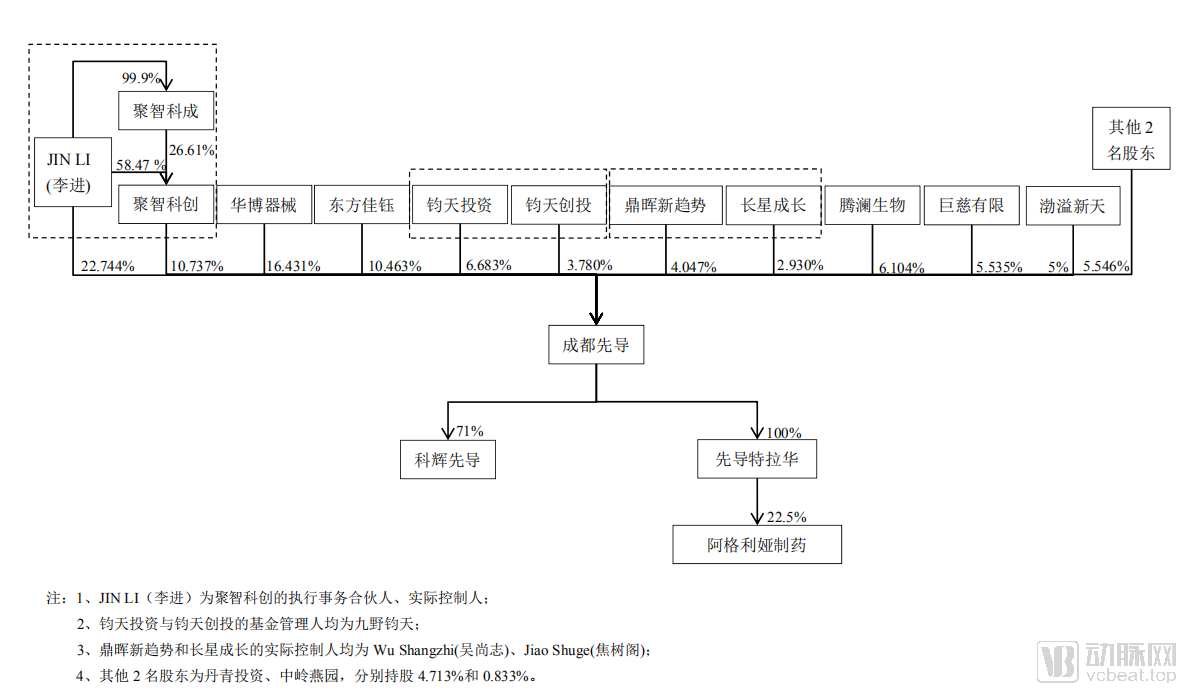
HitGen’s Shareholding Structure (Source: HitGen’s Prospectus)
In the equity structure of HitGen Inc. prior to its initial public offering, Dr. Li Jin directly held shares and indirectly controlled voting rights through the employee stock ownership platform, Juzhi Kechuang, thereby controlling a total of 33.481% of the company’s voting rights. Following this issuance, Dr. Li Jin’s proportion of controlled voting rights decreased to 30.132%, while he retained his position as the actual controller.
Dr. Li Jin (British national) was born in 1963. He graduated from Aston University in the United Kingdom in July 1988 with a Ph.D. in Macromolecular Science, and was later awarded an honorary Doctor of Science degree by the same university. From 1988 to 1990, Dr. Li conducted postdoctoral research at the University of Manchester in the United Kingdom.
After completing his academic studies, Dr. Li Jin successively served as Director of Computational Chemistry at the U.S. pharmaceutical company Protherics and as Director of Computational Science at AstraZeneca. In October 2013, Dr. Li was elected a Fellow of the Royal Society of Chemistry. Currently, in addition to serving as Chairman and General Manager of HitGen Inc., Dr. Li is also the Chairman of Kehui HitGen.
Kehui Lead is a controlling subsidiary of HitGen Inc., which holds a 71% equity stake in Kehui Lead, with the remaining equity held by Tibet Longmaide. Kehui Lead primarily leverages HitGen’s DNA-Encoded Library (DEL) technology platform for drug screening and is engaged in the research and development of innovative drugs.
Kehui Leading was established on April 20, 2017. Its original purpose was to develop new drugs targeting certain challenging targets that Pfizer had previously explored. It is difficult to obtain active compound molecules for such targets using traditional drug screening methods. Therefore, Pfizer collaborated with Kehui Leading, a subsidiary established by HitGen Inc., to conduct exploratory research and development using DNA-Encoded Library (DEL) technology.
Kehui Pioneer and HitGen Inc. maintain independent new drug development operations, each with its own dedicated R&D project teams that independently evaluate and select drug targets. Ownership of R&D rights for any given target is determined by whichever party initiates the project earlier. Both parties promptly synchronize internal information regarding their respective target selections.
In addition to Kehui Pilot, another subsidiary controlled by HitGen Inc. is Pilot Delaware, which was established on July 11, 2016. HitGen Inc. holds 100% equity in this entity, primarily to expand its parent company’s business in the United States. Furthermore, HitGen Inc. holds a 22.5% equity stake in Agilia Pharmaceuticals.
Drug discovery and R&D services have high professional barriers, making talent in related fields the key to a company’s level of R&D service provision. HitGen focuses on early-stage small-molecule new drug development and boasts a strong R&D team, ranking among the largest R&D service providers in the DNA-encoded library (DEL) niche. To date, the company has 333 R&D personnel, 96% of whom hold at least a bachelor’s degree, including 56 PhDs and 132 master’s degree holders. Its core technical staff and key members come from the R&D teams of renowned pharmaceutical companies, bringing decades of experience in innovative drug development and collaborative services.
DEL technology is a novel approach that has emerged in the field of drug discovery in recent years. It was first proposed in 1992 by Sydney Brenner, a Nobel laureate in Physiology or Medicine, and Richard Lerner, then Director of the Scripps Research Institute, who subsequently filed for an invention patent (which expired in 2012).
Drug discovery is the early stage of new drug development. After the biological targets responsible for disease are identified, the primary objective of new drug development is to efficiently discover novel molecules capable of modulating the function of these biological targets. DNA-encoded library (DEL) technology enables the construction of vast small-molecule compound libraries for screening potential therapeutic targets, thereby yielding effective lead compounds.
Globally, there are more than 10 companies engaged in R&D services within the DEL technology industry. Among them, approximately three have achieved scaled service revenues. HitGen boasts advanced technological capabilities, ranks relatively high within the industry, and is considered a first-tier enterprise.
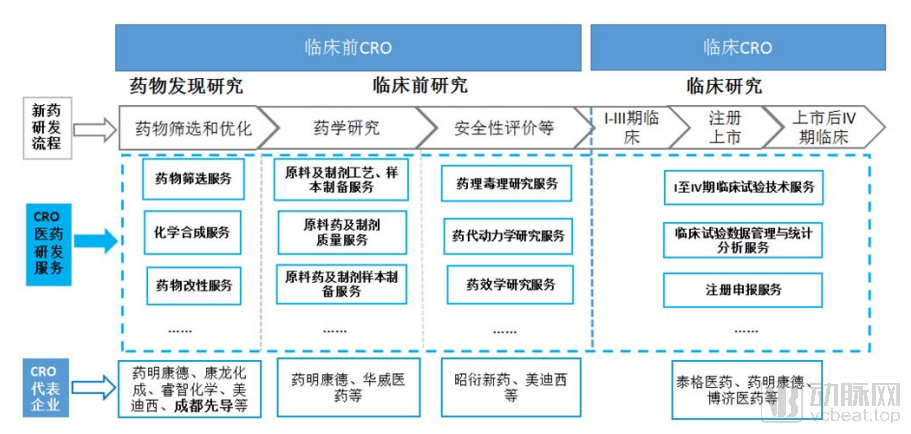
HitGen’s Position in the Industrial Chain of Its Core Business (Source: HitGen Prospectus)
HitGen leverages its proprietary DNA-encoded library (DEL), known as the HitGen Library, to provide clients with DEL screening against specified biological targets, as well as customized DEL design and synthesis services. Specific offerings include DEL screening services, custom DEL library services, chemical synthesis services, and new drug development project transfers.
DEL Screening Services
Leveraging its vast library of small-molecule compounds, HitGen Inc. provides DNA-encoded library (DEL) screening services against specified biological targets for global pharmaceutical companies, thereby generating service revenue. Subsequently, clients have the option to acquire, for a fee, the intellectual property rights to drug structures demonstrated to possess functional activity in the screening results. Furthermore, the company has the potential to receive milestone payments at various stages of the client’s subsequent drug development process.
DEL Library Customization Services
HitGen Inc. provides customized DNA-encoded library (DEL) design and synthesis services, as well as technology transfer of proprietary DEL compound structural information and screening methodologies, to global innovative pharmaceutical R&D and manufacturing enterprises (primarily large multinational pharmaceutical companies). The execution cycle for DEL design and synthesis services is approximately 2 to 4 years.
Chemical Synthesis Services
HitGen Inc. offers synthesis and modification services for specified compounds or nucleic acids, derived from its DEL screening and custom DEL library development services.
New Drug R&D Project Transfer Services
HitGen possesses a proprietary small-molecule compound library. In the absence of conflicts of interest with client screening projects, the Company may select high-potential, high-value targets for independent novel drug discovery and subsequent clinical development, and license these assets to partners at various stages of drug development, thereby generating revenue from the out-licensing of novel drug programs, including upfront payments, milestone payments, and royalty sharing. During the reporting period, the Company did not recognize any revenue from the out-licensing of novel drug development programs.
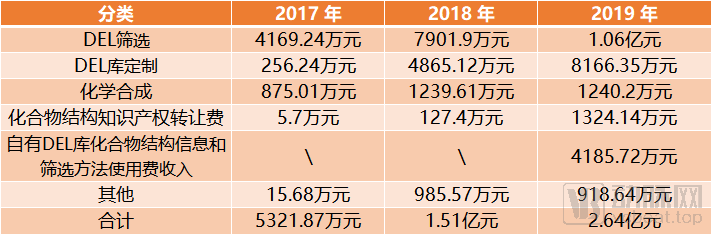
HitGen’s DEL Segment Revenue Breakdown (Source: HitGen IPO Prospectus)
In terms of core technologies, HitGen primarily categorizes its DEL technology into three major areas: design, synthesis, characterization, and purification technologies for DNA-encoded compound libraries; biological target activity validation and DNA-encoded compound library screening technologies; and an independent innovative drug R&D platform based on DEL technology.
In simple terms, the “Design, Synthesis, and Characterization/Purification Technologies for DNA-Encoded Compound Libraries” are employed by the company to build its DEL library, which currently comprises a DNA-encoded small-molecule compound library with over 400 billion distinct molecular structures. HitGen Inc. can directly provide customized DEL library services based on customer requirements. The “Bio-target Activity Validation and DNA-Encoded Compound Library Screening Technologies” primarily support the company’s external DEL screening services and internal drug screening for new drug development projects.
From 2017 to 2019, HitGen Inc. generated substantial revenue from the commercial application of the aforementioned two technologies, which became its primary source of income (as shown in the table below). In 2016, HitGen began to rapidly expand the scale of its DNA-Encoded Library (DEL), successively undertaking a large number of contracts for DEL screening and library customization. Consequently, revenue from these two sources grew rapidly, with combined income exceeding RMB 185 million in 2019, accounting for more than 70% of total revenue.
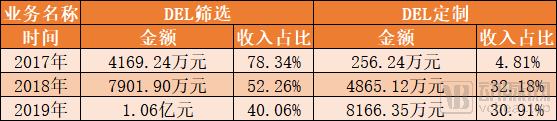
Revenue Breakdown of HitGen’s DEL Screening and Customized DEL Services from 2017 to 2019
In addition to providing DEL screening and customized DEL services, HitGen also conducts independent innovative drug research and development based on DEL technology. Each small molecule in the DEL library is tagged with a unique DNA sequence as its identifier. After co-incubating the DEL library compounds with the biological target, unbound or weakly bound molecules are washed away. The remaining molecules that bind strongly to the target can be released back into solution by denaturing or degrading the protein. The nucleic acid sequences in the solution are then subjected to PCR amplification, high-throughput sequencing, and data analysis to identify the structures of affinity-binding small molecules. These hit compounds are subsequently synthesized individually using traditional organic chemistry methods, and their activity and physiological functions are finally validated through biochemical and biophysical assays.
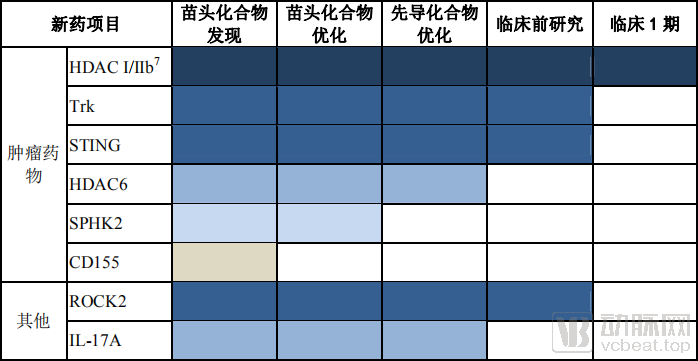
HitGen’s Independently Developed Drug Pipeline Based on DEL Technology (Source: HitGen Prospectus)
However, HitGen Inc. has not yet generated revenue from the transfer of new drug development projects. Among its independently developed innovative drug pipeline, the HDAC inhibitor I/IIb project is the most advanced and has entered Phase I clinical trials. The target indication for this pipeline is multiple myeloma; it induces apoptosis of cancer cells by inhibiting HDAC enzyme activity. To date, no serious adverse events have been observed in the Phase I clinical trials conducted by the company.
The three pipelines that have advanced to preclinical research are “TRK,” “STING,” and “ROCK2,” targeting TRK/ROS1 fusion-positive tumors, cancer immunotherapy, and glaucoma, respectively. This demonstrates that HitGen has established a presence not only in oncology but also in glaucoma and psoriasis (via its IL-17A pipeline).
It is worth noting that HitGen Inc. maintained high R&D investment in 2017, 2018, and 2019, with expenditures of RMB 46.214 million, RMB 61.8644 million, and RMB 91.4617 million, accounting for 86.84%, 40.92%, and 34.62% of its total operating revenue, respectively.
As HitGen continues to deepen its expertise in DNA-Encoded Library (DEL) technology, it has established itself as a global leader in drug discovery with extensive DEL-based small-molecule compound libraries. The company has secured 24 invention patents in China and internationally and is actively preparing multiple R&D reserve projects focused on optimizing DEL-related technologies and overcoming key technical challenges in the field.
Currently, China has a multitude of laws, regulations, and policies related to drug research and development (R&D) and registration, which can be broadly categorized into two main areas: one focuses on enhancing the quality and efficacy of generic drugs, while the other encourages independent drug R&D and genuine innovation. HitGen Inc.’s core business lies in providing R&D services for drug discovery, primarily centered on the identification of hit/lead compounds using DNA-Encoded Library (DEL) technology. Its services are mainly targeted at innovative and R&D-driven pharmaceutical companies. Therefore, national regulations and policies that encourage drug R&D and innovation are conducive to the expansion and growth of the company’s business.
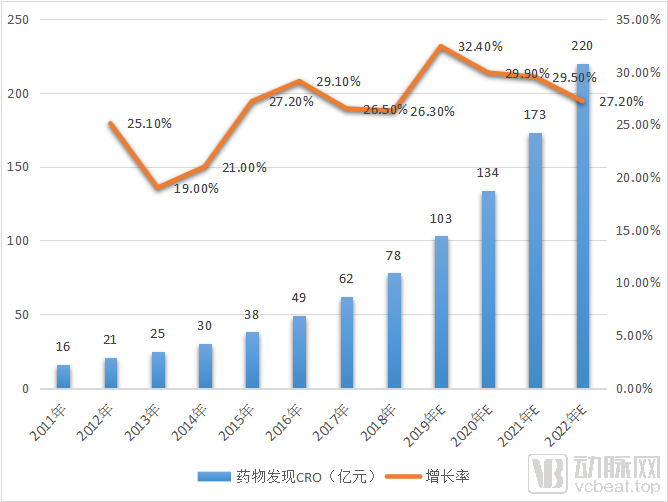
HitGen operates as a preclinical CRO within the industry chain. As China’s pharmaceutical sector has been predominantly focused on generic drugs, companies have demonstrated limited awareness of outsourcing R&D, resulting in a relatively small overall market size for drug discovery CRO services in China. However, in recent years, with the gradual maturation of the new drug R&D environment and continuous increases in R&D investment, the market size of drug discovery CROs in China has shown rapid growth. In 2018, the market size reached RMB 7.8 billion, with a compound annual growth rate (CAGR) of 24.8% from 2011 to 2018.
Market Size and Forecast of China's Drug Discovery CRO Industry, 2011–2022
(Data source: Guangzhou Biaodian Comprehensive Database; compiled by VCBeat)
Currently, there are approximately 100 drug discovery CRO companies in China. The overall landscape is characterized by leading enterprises driving the market, while small and medium-sized enterprises (SMEs) pursue innovative and specialized development. Large-scale drug discovery CROs establish source-level collaborations with pharmaceutical companies during the drug discovery phase to provide integrated drug discovery services. In contrast, SME CROs build core competitiveness through specialized technology platforms or services, achieving breakthroughs in various niche segments. The market size for drug discovery in China is projected to reach RMB 22 billion by 2022, with a compound annual growth rate (CAGR) of approximately 30% from 2018 to 2022.
From the perspective of international commercial partnerships and industry recognition, there are four companies with relatively mature applications in the DNA-encoded library (DEL) technology field: GSK, X-Chem, HitGen, and Nuevolution. Among them, GSK is the most mature and largest enterprise in terms of DEL technology application; however, its technology is for internal use only and is not offered as an external service.

Comparison of Key Business Metrics Between HitGen and Global DEL Technology Companies
Among R&D service companies specializing in externally offered DNA-encoded library (DEL) technologies, HitGen Inc. holds a competitive advantage. Of the publicly disclosed DEL technology collaboration projects from 2015 to 2019, more than one-third were conducted by HitGen Inc., with its share reaching 60% of all publicly announced DEL collaborative projects in 2018 alone. Based on statistics from publicly disclosed collaborations, HitGen Inc. is the enterprise that has secured the highest number of collaborative projects among R&D service providers in the DEL technology field.
According to X-Chem’s official disclosures, by 2018 its DNA-Encoded Library (DEL) technology platform had generated more than 150 lead compound series. HitGen Inc. and Nuevolution have also advanced multiple novel drug projects into preclinical and even clinical development stages. DEL technology has gained increasing recognition among pharmaceutical companies, particularly leading global enterprises; 18 of the top 20 pharmaceutical companies are currently employing this technology, and 11 of them have established collaborative partnerships with HitGen Inc.
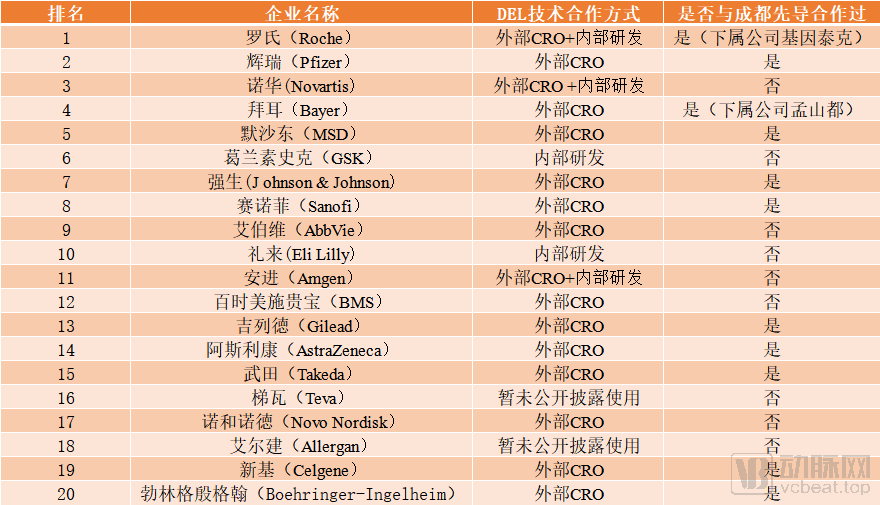
Application of DEL Technology by the Top 20 Global Pharmaceutical Companies as of End-2019
In addition to DEL technology, drug discovery and screening techniques also include high-throughput screening, structure-based rational design, and structural modification based on known active compounds.
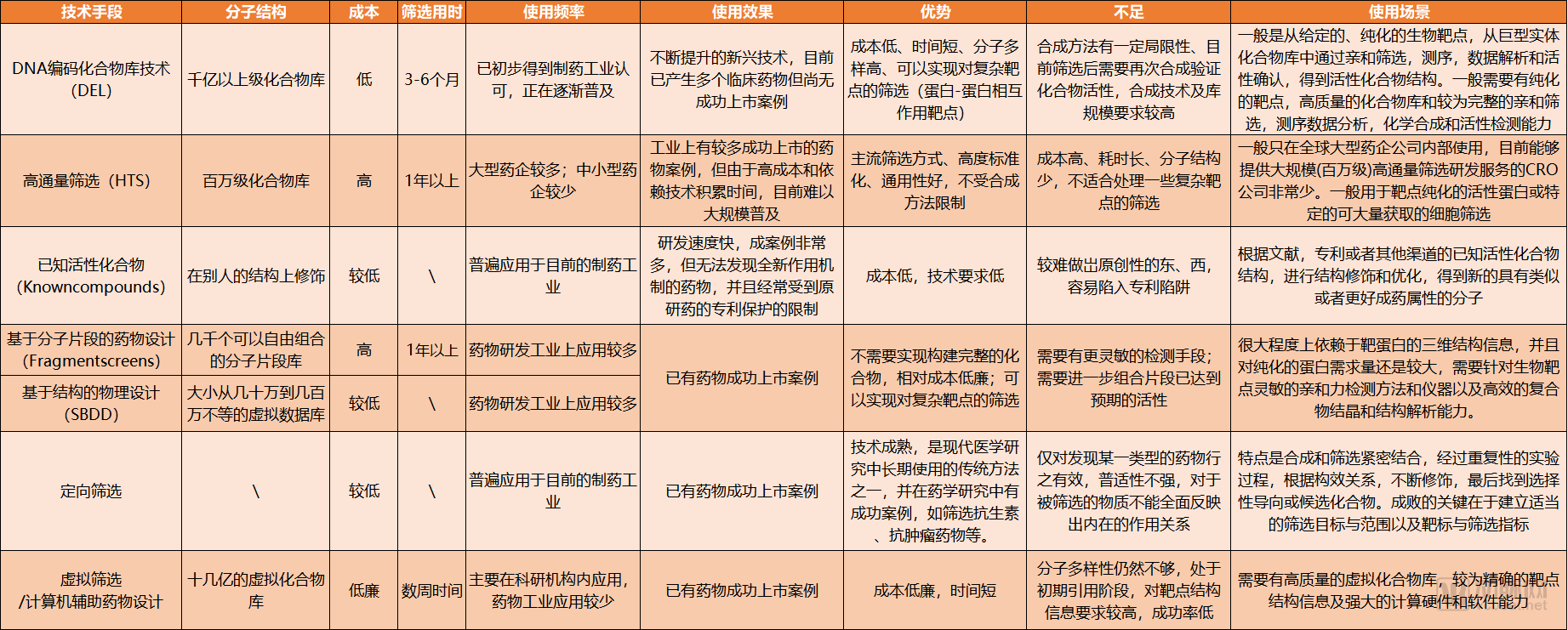
A Comparison of Technologies for Drug Discovery and Drug Screening (Compiled by VCBeat)
As shown in the table above, DNA-encoded library (DEL) technology, as an emerging technology, maintains a complementary relationship with various other drug discovery technologies, while also exhibiting partial overlap in application scenarios. With the advancement and refinement of DEL technology, it will gradually replace certain application scenarios of other technologies to some extent. Furthermore, in areas where current applications overlap, each technology offers the pharmaceutical industry more diverse options for drug screening strategies, leveraging its unique characteristics and advantages.
Like other drug discovery approaches, DNA-encoded library (DEL) technology is primarily aimed at identifying hit compounds and optimizing them into lead compounds based on screening data. Therefore, the commercial value of drug screening technologies is mainly reflected in the discovery of active compounds, i.e., hit compounds. To date, more than 20 targets have yielded hit compounds through DEL technology screening on HitGen’s proprietary novel drug discovery platform.
HitGen’s DEL screening business with major clients primarily structures payment around the provision of screening services, with the discovery and transfer of active compounds serving as additional revenue conditions. Subsequent entry of such compounds into clinical trials triggers milestone payments. This demonstrates that the core commercial value of drug screening technologies lies in the discovery of active compounds.
HitGen has remained dedicated to the field of DNA-Encoded Library (DEL) technology, building a DNA-encoded compound library with independent intellectual property rights. Based on this foundation, the company has expanded its global drug discovery CRO services, striving to become a “seed bank” for innovative Chinese drugs and a “new engine” for novel drug development.
Regarding the future, HitGen stated in its prospectus that it will continue to strengthen its capabilities in technology development and independent innovation, with ongoing optimization and upgrading of its core DNA-Encoded Library (DEL) technology. The company expects to expand the scale of its DEL library and diversify molecular varieties within the next three to five years. Advancing new drug projects into clinical stages is also a key strategic priority for the company, which aims to become a leader in the niche sector of drug discovery and novel drug creation based on DEL technology.