Global First-in-Class Hepatitis B Functional Cure Drug Bepirovirsen Advances Toward Approval, Offering Hope for China’s 75 Million Patients

GSK
Pharmaceutical R&D Manufacturer
Author of this article: z_popeye
Is there a new drug for hepatitis B again, and is it the world's first?
Recently, GSK's new hepatitis B drug Bepirovirsen has made headlines: the pivotal Phase 3 clinical trial has met its primary endpoint, demonstrating clinically meaningful "functional cure" effects.
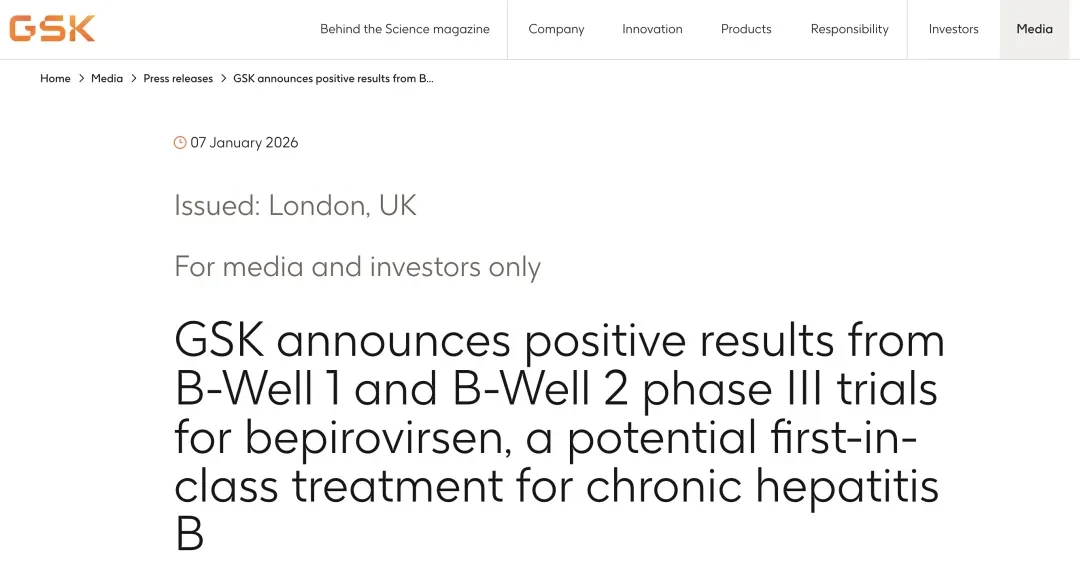
Screenshot of GSK Official Website
GSK Plans to Submit Marketing Application in the First Quarter of 2026.If approved, Bepirovirsen will become the world's first antisense oligonucleotide (ASO) drug capable of achieving a functional cure for hepatitis B.
And for patients with hepatitis B, what does its emergence mean, and what changes will it bring?
250 Million Patients Worldwide: Medication Exists but No Cure
The latest data from the WHO shows that about 250 million people worldwide are infected with chronic hepatitis B virus (HBV), with 1.2 million new HBV infections each year. In 2022 alone, hepatitis B caused approximately 1.1 million deaths.[1]
Among them, there are approximately 75 million people in China infected with chronic hepatitis B virus, accounting for about one-third of the global total.
The biggest challenge in the clinical treatment of hepatitis B has always been "detection."(Click to view previous content from DXY:Often Discovered at Advanced Stages: Nearly 70 Million Chinese Unaware They Have Cancer)
Dr. Wen Yue (pseudonym), Deputy Chief Physician of the Infectious Diseases Department at a leading Class A tertiary hospital, shared a case. A 40-year-old male visited the hospital due to bloating by chance, but was unexpectedly diagnosed with advanced liver cirrhosis and liver cancer, accompanied by lung metastasis.
It was only at this point that the patient learned they had been infected with the hepatitis B virus. "The effects of surgery, intervention, and medication have not been ideal, and the family is also considering whether to give up treatment." At top-tier hospitals, such situations are not uncommon but still heartbreaking. "If it had been detected ten years earlier, it wouldn't have progressed to this extent."

Even patients who manage to enter the consultation room have to face a second challenge — treatment.
Hepatitis B remains an incurable disease to this day, largely due to the characteristics of the hepatitis B virus.
After hepatitis B virus infects liver cells, it leaves behind a long-lasting covalently closed circular DNA (cccDNA) in the cell nucleus. cccDNA is like a permanently running Trojan virus folder, with a very stable structure that is difficult for the host immune system to recognize and cannot be eliminated by existing drugs. Once treatment is paused, cccDNA can reactivate viral replication.
Currently, the two main types of drugs used clinically for hepatitis B treatment are nucleos(t)ide analogs (NAs) and interferons.
NAs represented by entecavir, tenofovir, tenofovir alafenamide, and adefovir dipivoxil are essentially "false substrates" of the hepatitis B virus reverse transcriptase. NAs are mistakenly recognized by the viral reverse transcriptase as genuine nucleotides, thereby preventing the synthesis of viral DNA and causing a rapid decline in viral DNA levels in the blood.
"NAs are currently the most widely used class of drugs, with very obvious advantages: simple medication, minimal side effects, high patient compliance, and relatively low cost," said Han Huanqin, Director of the Infectious Diseases Center at Guangdong Medical University Affiliated Hospital.

However,NAs can only function during the replication phase and cannot directly affect cccDNA within the cell nucleus, which also means that once the medication is stopped, replication immediately resumes.
"The discontinuation criteria for NAs are very strict, basically requiring the surface antigen to turn negative. But in reality, more than 99% of patients find it very difficult to achieve this," said Han Huanqin.
For this reason, the 2022 edition of the "China Guidelines for the Prevention and Treatment of Chronic Hepatitis B" clearly states that most patients require long-term NAs treatment, with a high rate of virological relapse after discontinuation.
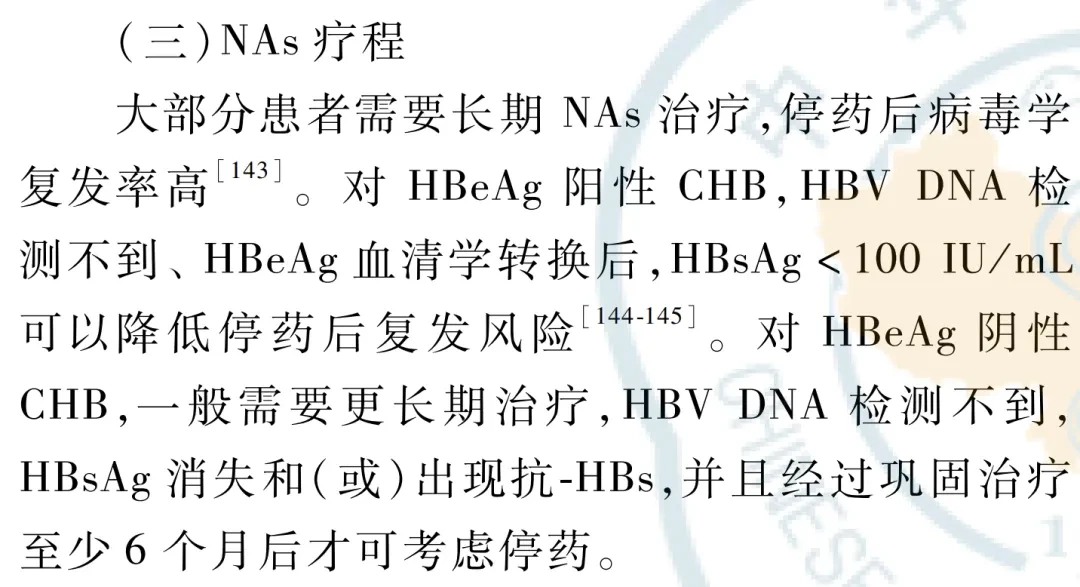
"Screenshot of China's Chronic Hepatitis B Prevention and Treatment Guidelines"
Unlike NAs, interferons do not solely target the virus but instead provide broad-spectrum immunomodulation.
Interferon can induce hepatocytes to express a series of interferon-stimulated genes (ISGs), inhibiting viral transcription and protein synthesis while enhancing the body's innate and adaptive immune responses, and improving the widespread immune tolerance and T-cell functional exhaustion observed in patients with chronic hepatitis B.
In principle, interferon is expected to achieve long-term virological control.
"In a subset of advantageous populations, such as patients with lower baseline surface antigen levels, there is an opportunity to achieve surface antigen seroclearance, which is clinical cure."Han Huanqin said, "If patients do not have cirrhosis and liver cancer, they can stop taking the medication once clinical cure is achieved."
However, Han Huanqin also pointed out that due to the relatively high cost of interferon, the overall treatment cost for 48 weeks is approximately 20,000 to 30,000 yuan, and the side effects are relatively more pronounced. Therefore, there are certain limitations to its widespread clinical application.
Hepatitis B: Why Is a Functional Cure Needed?
Incurable means that the majority of hepatitis B patients need to take medications for a long term or even lifelong. The Asia-Pacific Association for the Study of the Liver emphasized in a related paper:
Patient adherence, willingness for long-term treatment, economic costs, and adverse outcomes during prolonged treatment are interrelated. Multiple clinical studies indicate that as treatment duration increases, patient adherence significantly decreases.Patients with low willingness for long-term treatment or low ability to afford the economic cost of medication may discontinue treatment on their own or become lost to follow-up during the long-term treatment period.[3]

Screenshot of the Paper
So, is there a clearer and more achievable goal for the treatment of hepatitis B? Around 2013, the keyword "functional cure" began to enter the field of hepatitis B treatment.
"The Guideline for the Prevention and Treatment of Chronic Hepatitis B in China" defines functional cure of hepatitis B as:
After stopping treatment, hepatitis B surface antigen (HBsAg) remains continuously negative, with or without hepatitis B surface antibody (anti-HBs). HBV DNA is below the lowest detection limit, liver biochemical indicators are normal, and cccDNA may still exist in the nucleus of hepatocytes.
The "Guidelines" also clearly state that functional cure should be pursued for some chronic hepatitis B patients who meet the criteria.

"Screenshot of China's Chronic Hepatitis B Prevention and Treatment Guidelines"
"I am controlling my condition well with medication, so why do I still need to pursue clinical remission?"
In response to this question that many patients may have, Professor Gao Zhiliang from the Third Affiliated Hospital of Sun Yat-sen University once answered with the following set of data:
The incidence rates of liver cancer in chronic hepatitis B patients and cirrhosis patients without antiviral treatment are 14.9% and 53.1%, respectively.
The incidence rates of liver cancer in chronic hepatitis B patients and cirrhosis patients undergoing antiviral therapy are 10.7% and 31.9%, respectively;
The incidence of liver cancer in chronic hepatitis B patients who achieve clinical cure is only 0.6-1.88%.
This set of data comes from China's Chronic Hepatitis B Clinical Cure Project — the Zhufeng Project — which aims to help more patients achieve clinical cure, rather than just viral suppression.
Based on existing drugs, the core treatment strategy of Project Everest is:On the basis of NAs inhibiting viral replication, the addition or sequential use of PEG-IFNα (pegylated interferon α-2b) for 48 weeks represents the most promising functional cure regimen currently explored in clinical practice.
As of May 2025, the latest 7-year data released by the Everest Project shows that, as of that time, a total of 43,349 patients had been screened, with 33,466 effectively enrolled.The number of functional cure (HBsAg clearance) cases has reached 10,240, surpassing the initial target of 8,848.
In the per-protocol (PP) population, the HBsAg clearance rate was approximately 33.8% after 48 weeks of PEG-IFNα treatment; among patients who discontinued treatment for more than 24 weeks, the HBsAg clearance rate remained at approximately 35.6%.
However, it is important to note that the Everest Project has set multiple strict criteria, limiting the scope of eligible patients, and the treatment regimen cannot yet be directly applied to all patients with chronic hepatitis B.
Have been receiving NAs antiviral therapy for ≥1 year
HBV DNA<100 IU/mL (i.e., the virus is well suppressed)
HBeAg Negative
HBsAg≤1500 IU/mL (Patients with lower surface antigen are more likely to respond)
If the Mount Everest Project represents the pinnacle of existing treatment methods, then, beyond current treatments, are there any new drugs?
How to Understand the Latest Results of the New Drug Announcement?
In recent years, the development of drugs with different mechanisms in the field of hepatitis B treatment has been ongoing. Among them, Bepirovirsen is the most advanced drug.
Bepirovirsen is an antisense oligonucleotide (ASO) that can recognize and bind to the RNA molecules of the hepatitis B virus, and then cleave and degrade these viral RNA molecules, thereby simultaneously reducing the replication template of the virus and the expression of viral proteins (especially the hepatitis B surface antigen HBsAg).
The B-Clear Phase IIb trial in 2022 showed that, in patients treated with Bepirovirsen,9%(Receiving NAs treatment at baseline)And 10%(Not receiving NAs at baseline)HBsAg Below the Limit of Detection. More Significant Efficacy in Patients with Lower Baseline HBsAg Levels: 16%(Receiving NAs treatment at baseline)And 25%(Not receiving NAs at baseline)Achieve the primary endpoint。
"The principal investigator stated: 'This positive data holds the potential to bring functional cure to millions of patients with chronic hepatitis B worldwide, particularly those with lower baseline HBsAg levels.'"
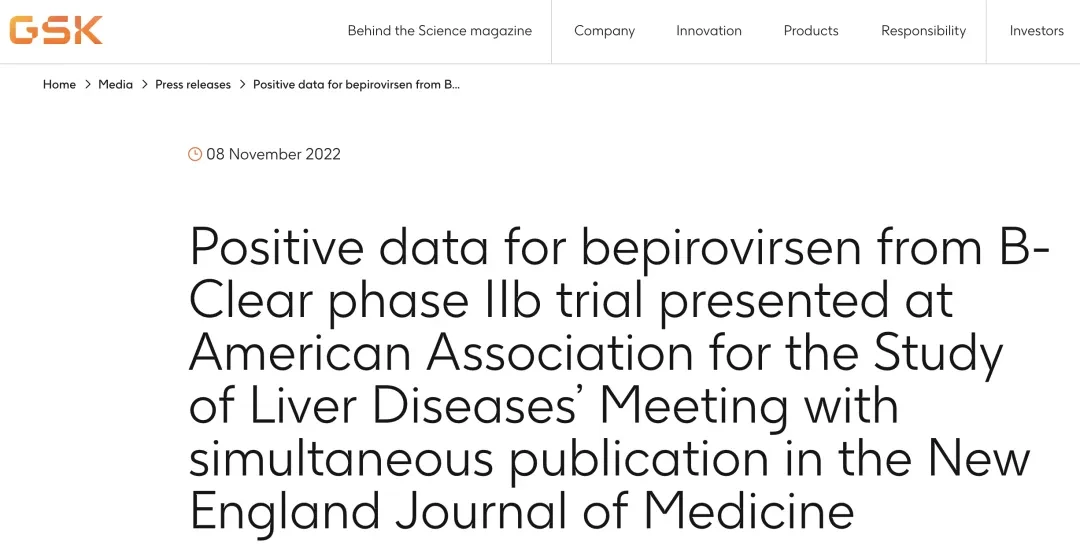
Screenshot of GSK Official Website
In January this year, GSK announced positive results from the Phase III clinical trials B-Well 1 and B-Well 2 of Bepirovirsen.Both trials met the primary endpoint, and Bepirovirsen demonstrated a statistically significant and clinically meaningful functional cure rate. The effect was particularly pronounced in patients with HBsAg ≤1000 IU/ml.
Following the announcement, this drug quickly garnered widespread attention, with some even suggesting: "Hepatitis B patients may be on the verge of a functional cure era."
However, this assessment may be somewhat overly optimistic.
Wen Yue believes that,Bepirovirsen is likely to be positioned not as a replacement for existing treatments, but as an expansion into new combination or sequential treatment regimens: "NAs and interferon will remain foundational drugs."
Han Huanqin also holds an objective and calm attitude towards Bepirovirsen; "This antisense oligonucleotide drug has always attracted significant attention within the industry,"But it must be emphasized that it may not have reached the 'miraculous' level mentioned in many reports."
Wen Yue also mentioned that the recurrence after discontinuation of medication is equally noteworthy.
Research data show that, during the 24-week follow-up after discontinuation of the drug, the recurrence rate with Bepirovirsen alone was 63-75%, while the recurrence rate dropped to 0-58% when followed by sequential interferon."The long-term effect on viral suppression and the longer-term impact on the incidence of liver cancer and cirrhosis still require more follow-up data to confirm."
Bepirovirsen is not the only candidate drug under development; globally, many different drugs targeting functional cures for hepatitis B are currently in development.
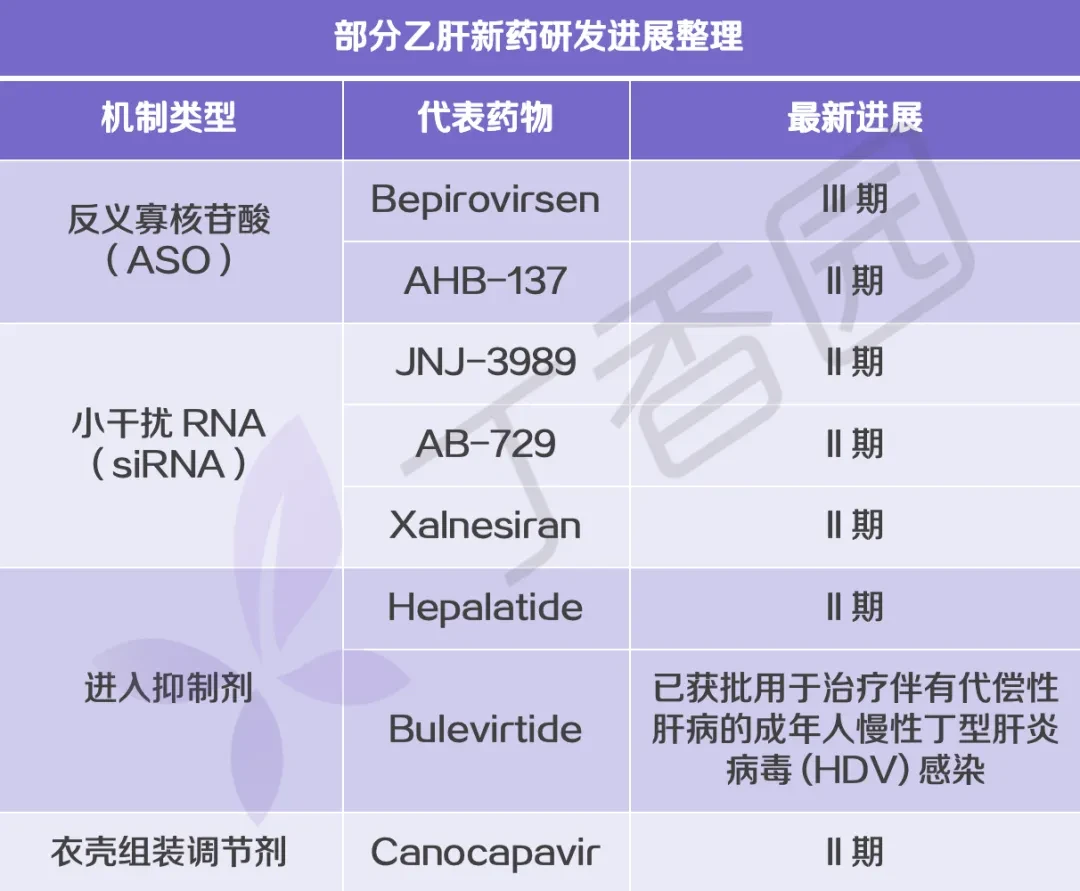
DXY整理制图
Currently, GSK stated that the complete Phase III trial results of Bepirovirsen will be announced and published at upcoming academic conferences, with plans to submit regulatory applications for market approval to global authorities starting in the first quarter of 2026.
Acknowledgments: This article was reviewed byDirector of the Infectious Diseases Center, Affiliated Hospital of Guangdong Medical University, Han HuanqinProfessional Review
Planner: z_popeye | Producer: islay