

AI and Big Data in the Global Fight Against COVID-19: Initiatives by Google, Facebook, and IBM
2020 was destined to be an extraordinary year. The outbreak of the novel coronavirus plunged countries around the world into crisis. Yet, what makes humanity great is our willingness to rise to the challenge in the face of adversity—a process that often gives rise to the most remarkable innovations and technological advancements.
As the pandemic raged on, healthcare institutions became overwhelmed, with artificial intelligence (AI) playing a pivotal role in the response. In China, companies such as Infervision, Yitu Healthcare, Diannei Technology, and Megvii have deployed AI-powered solutions, including computer-aided diagnosis for medical imaging, intelligent robots, and AI-based facial recognition to detect mask wearing. As the epidemic situation in China gradually eased, outbreaks surged overseas. This article by VCBeat (WeChat ID: vcbeat) will review how major corporations and startups abroad are leveraging AI, big data, and other technologies to actively combat COVID-19.
Google and Facebook are actively collecting and leveraging datasets, such as those related to user location, to assist public health officials and research institutions in predicting and tracking the spread of viruses. The technology involves aggregating location data generated by users through various mobile applications and then extracting this data onto different maps for measurement and analysis.
Google regularly releases mobility reports for different communities, which extract location data from real-time information to examine how communities have changed as residents across U.S. states stay at home. For example, in New York, the report indicated that various retail and recreational activities decreased by 62%, time spent at workplaces dropped by 46%, and time spent at home increased by 16%.
Although aggregating location data is nothing new—for example, Google has previously used it to determine when different restaurants begin to get busy—using such data to track epidemics is unprecedented. Many believe this could raise concerns about the trade-off between public health and personal privacy.
One approach Google employs to process data using artificial intelligence is the automatic extraction of location service data once users enable such services on their mobile devices. However, Google automatically adds data noise to anonymize the aggregated data, ensuring that no personally identifiable information can be recognized if the data falls into the hands of third parties. This practice helps safeguard the privacy and security of citizens’ data to a certain extent.
Meanwhile, Facebook has also launched another set of intelligent tools. By aggregating location data from different users and mapping movement patterns, it visualizes frequently traveled routes to intelligently predict potential future outbreak hotspots. Additionally, it regularly releases information on trends in the geographic spread of the epidemic to assess whether people are truly staying at home and to monitor their social activities. This helps identify connections between the hardest-hit areas and other regions, thereby facilitating coordinated support efforts nationwide.
In addition, Facebook will prompt users to participate in a voluntary health status survey conducted by the Delphi Research Center at Carnegie Mellon University, to help researchers identify potential COVID-19 hotspots at an early stage.

Facebook’s maps aggregate user location data to chart areas of frequent travel, enabling disease transmission modeling based on map information to further determine the spread patterns of COVID-19.
IBM
Currently, there is no vaccine or specific antiviral drug available for this novel coronavirus. In 2003, scientists attempted to develop a vaccine to prevent SARS, but the epidemic ended before the vaccine could enter clinical trials.
In the effort to develop drugs and vaccines for COVID-19, the U.S. Department of Energy aims to leverage a supercomputer to help identify compounds that could combat the virus. Tech giant IBM and the Department of Energy’s Oak Ridge National Laboratory previously announced that they had used IBM’s Summit supercomputer to screen more than 8,000 compounds, identifying 77 small-molecule drug candidates.
These drugs could potentially serve as therapies for COVID-19. Researchers used Summit to conduct multi-day simulations to identify compounds that might interfere with the process by which the viral spike (S) protein infects cells. The findings of this study were published in ChemRxiv.
This study represents an effort to use computer-based artificial intelligence technologies to screen for potential compounds against various diseases. The results do not imply that a treatment for the novel coronavirus has been identified. However, the computational findings will provide a framework for researchers to further investigate these compounds.
Cyclica
Cyclica is a global biotechnology company headquartered in Toronto that reshapes the drug discovery process and shortens the preclinical pharmaceutical development cycle by leveraging artificial intelligence, computational biophysics, and biomolecular data. Furthermore, through polypharmacology and multi-target drug profiling, it assists pharmaceutical companies in evaluating drug safety and efficacy while collaborating with laboratories and pharmaceutical firms worldwide to co-develop new drugs.
Through introductions from one of its early-stage investors, Zhongguancun Dahe Capital, and the CCAA, Cyclica has established a collaboration with the Institute of Materia Medica at the Chinese Academy of Medical Sciences. Leveraging Cyclica’s proprietary proteome screening engine, MatchMaker, the partnership has identified multiple potential therapeutics for COVID-19 among drugs already approved by the FDA as clinically safe.
Cyclica has shared the relevant results with the Institute of Materia Medica, Chinese Academy of Medical Sciences, for testing. The two parties will engage in long-term collaboration to design multi-target antiviral compounds, thereby reducing drug resistance and other adverse effects.
Parallel Profile
Parallel Profile collaborates with companies such as Cloud Pharmaceuticals, Mercury Data Science, Vanderbilt, and Nashville BioSciences to identify drugs that enhance immunity in COVID-19 patients through literature mining and electronic medical record (EMR) databases. Their research aims to discover medications that help strengthen the immune system, increase mitochondrial ATP production, reduce inflammation in the lower lungs, slow viral replication pathways, and improve pulmonary gas exchange. By leveraging artificial intelligence technologies, Parallel Profile continuously updates its data based on EMR and genomic data from infected patients.
CEO Cather stated that Parallel Profile can provide rapid pharmacogenomic analysis to ensure that each patient responds to their optimal medication regimen. He also noted that results could be available within a month.
ElectrifAi
Catholic Health Services of Long Island, based in New York (hereinafter referred to as “Long Island Catholic Health Services”), aims to deploy untested artificial intelligence products developed by ElectrifAi to alleviate the burden on emergency departments in managing patients. Through ElectrifAi’s AI tools, emergency physicians across all six hospitals under Long Island Catholic Health Services hope to determine whether to admit patients presenting with COVID-19-related symptoms but not yet formally diagnosed, based on quantitative assessments provided by the AI. As these patients may either experience rapid clinical deterioration or recover quickly and be safely discharged, the AI tool can assist physicians in making such determinations.
Prior to July 2019, ElectrifAi was known as Opera Solutions and provided analytics services as a consulting firm. It maintained offices in India and China. Since last July, the company has been renamed ElectrifAi, with the aim of becoming an AI product company. In addition to healthcare, the company collaborates with eight other industries/entities, including government, travel, and financial services.
Certainly, some experts remain cautious about this application, as theoretical concepts should not be hastily translated into clinical practice, even in emergency situations.
Dr. Craig Sherman, Director of the Neuroradiology Service Line at Catholic Health Services, stated that this capability is primarily needed because waiting for test results alone can take several days. Therefore, when patients present to the emergency department, physicians must rapidly decide whether to admit them or discharge them home, accompanied by appropriate medical instructions, to prevent worsening of their symptoms.
Therefore, Dr. Craig Sherman hopes that, with the aid of ElectrifAi’s AI imaging technology and clinical parameters, physicians will be able to make more informed medical decisions more rapidly.
Globally, there are over two million confirmed cases of COVID-19. Although long-term data are not yet available, artificial intelligence algorithms trained on thousands of imaging datasets have already demonstrated considerable robustness. More importantly, Edward Scott, CEO of ElectrifAi, stated in a telephone interview that the underlying algorithm of their AI model—convolutional neural networks—does not require thousands of imaging datasets; rather, it needs only 150 to 200 X-ray images. This efficiency is attributable to their exceptional capabilities in image feature segmentation, feature extraction, and feature vector analysis.
All diagnostic tests are subject to false negatives and false positives. Therefore, the measure adopted by Catholic Health Services of Long Island is to keep patients in the hospital for observation when feasible, thereby nipping related symptoms in the bud and preventing them from worsening at home or transmitting the infection to others.
Syllable
Syllable, a chatbot and voicebot company based in California, USA, believes it is currently at a juncture where challenges and opportunities coexist. NewYork-Presbyterian, Houston Health Department, and Northwell have already approached Syllable to inquire whether it could develop chatbots and phone bots to handle public inquiries regarding COVID-19 that have emerged since March. In a recent interview, Adam Silverman, Chief Medical Officer of Syllable, stated that the U.S. healthcare system is becoming increasingly overwhelmed as the number of infections gradually rises.
Recently, Syllable developed a tool that can be easily deployed on various health system websites, and the company decided to offer this service free of charge to these clients as well as other health systems. However, after making the tool publicly available, Syllable found that its capabilities were far from sufficient.
On March 19, if you accessed the healthcare system powered by the Syllable chatbot, you would find that the tool primarily provides links to the U.S. CDC. If a user answered “Yes” to the question, “Do you have a fever, cough, and shortness of breath?” the chatbot would only send a series of customized responses.
In contrast, the coronavirus assessment chatbot developed by Providence St. Joseph Health through secondary development based on Syllable’s tools collected more valid information. The chatbot can provide differentiated responses and data collection based on whether users have traveled abroad, thereby addressing their potential concerns in a targeted manner. Below are examples of some questions:
I live in California.
I have not been tested for COVID-19,
I have not visited any countries in Asia or Europe.
I have never had contact with anyone who has visited these countries.
I have been in contact with COVID-19 patients,
No public official informed me that I might have been exposed to the novel coronavirus.
I have COVID-19-related symptoms
In early April, Syllable adjusted the relevant query parameters and launched a new version of the tool. Currently, the chatbot continues to collect information on whether the user is over 60 years old, has underlying chronic conditions, or has recently experienced dyspnea. Upon obtaining this information, the system provides more detailed and explicit responses. For instance, NewYork-Presbyterian Hospital promptly responds to inquiries from relevant users and follows up with subsequent tracking and treatment. The following are examples of customized responses tailored to different patient groups:
● Excessively Anxious Population: Basic web-based chatbots can improve the mental state of this group by helping them understand key issues, thereby calming users down. A more advanced chatbot can integrate navigation features to direct patients to customized endpoints, such as emergency response centers, dedicated call centers for high-risk or symptomatic individuals, or remote healthcare institutions.
● Symptomatic patients: Low-risk patients must be authorized to manage their needs at home. These individuals require support for routine monitoring and inquiries to ensure the system can detect rapid changes in their condition. Virtual health checks are suitable for younger populations with limited health literacy, as well as those in settings with scarce medical resources.
● At-risk patients: For this population, ongoing health check-ups should be pushed on a scheduled basis (typically daily, and sometimes several times a day). Patients should be provided with education, preventive tips, and targeted prevention programs via chatbots, voice bots, SMS services, mobile devices, smart speakers, analog phones, and other channels.
Providence
Providence, a nonprofit Catholic charity, has partnered with Microsoft to create a chatbot that enables users to learn more about the disease, check their symptoms, and determine whether a physician’s evaluation is needed. This sophisticated tool also allows individuals to schedule online telehealth visits with clinicians.
Dr. Amy Compton-Phillips, Chief Clinical Officer at Providence St. Joseph Health, stated at a webinar held a few weeks ago that 5,000 people participated in the testing on the first day the chatbot was launched.
As the number of diagnosed COVID-19 cases increases, chatbots and other technologies can support a higher volume of consultations. To maintain maximum agility, consider deploying chatbots, smart speaker applications, or other solutions that offer flexibility and scalability. Of course, it is essential to ensure that these solutions comply with healthcare privacy and security requirements. Only in this way can we truly alleviate the burden on currently exhausted healthcare workers; conversational AI technology will help expand the capacity of healthcare systems to respond to this pandemic.

Rx.Health
“Many systems triage initial visits via telehealth rather than in-person doctor appointments,” said Ashish Atreja, co-founder of Rx.Health and Chief Innovation Officer at Mt. Sinai Medical Group. He noted that the pandemic could become a pivotal moment for digital health, as telehealth adoption continues to rise.
Rx.Health integrates triage software, remote monitoring platforms, and other digital health solutions to enable the seamless flow of patient information across these systems. Its COVID-19 toolkit includes electronic guides that can be sent to patients, digital triage information linked to appointment reminders, a telemedicine platform, and tools for digitally monitoring quarantined patients, all of which help identify individuals at high risk or potentially exposed to the virus. It also includes laboratory test checklists and sample physical examination reports to help frontline healthcare workers prepare.
Atreja believes that Rx.Health integrates a digital triage system with appointment reminder functionalities, enabling health systems to determine whether patients are at risk of viral exposure while also helping to ensure that some “overly worried individuals” choose to stay at home.
Other startups have also partnered with Rx.Health to launch additional medical toolkits, including Redox, another startup that enables the sharing of patient records between EHRs and health systems; Suki, which serves as a voice assistant for physicians to address patient inquiries on telehealth platforms; and Curai Health, an intelligent platform that helps clinicians gather relevant information from patients and their diagnostic charts to facilitate diagnosis.
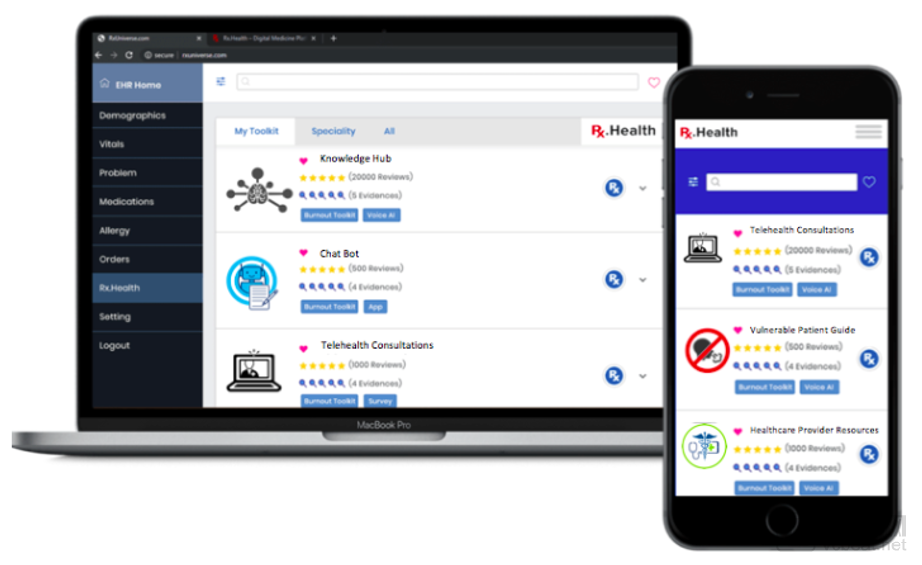
Rx.Health’s Related Smart Toolkit
The above examples illustrate how AI technologies have been leveraged abroad during the pandemic. It is evident that the pandemic has accelerated the integration of AI into healthcare and daily medical practices. AI enhances medical efficiency, substitutes for human labor in certain scenarios, and reduces the risk of infection. Even after the pandemic ends, we have reason to believe that high-quality AI technologies will be retained. However, some companies are concerned about whether their developed products will continue to find practical applications in a post-pandemic era.