

Heavy-Operation Strategies for Internet Healthcare in Oncology: A 2C Growth Playbook
After the productization of services, the consumer-facing (C-end) segment of internet healthcare underwent a wave of aggressive subsidies. Companies presented seemingly impressive metrics—such as Daily Active Users (DAU) and registered user counts—to investors, embarking on a cash-burning fundraising journey. However, this approach resulted in dismal performance for the two most critical metrics in the Minimum Viable Product (MVP) model: retention and conversion. This demonstrates that the internet healthcare sector is prone to impetuousness. The asset-light operational model succeeded in onboarding users, but many engaged only opportunistically, leaving after taking advantage of initial incentives. Consequently, the persistent issues of low user awareness of and adherence to product services have remained unaddressed. The lack of strong user engagement has directly weakened users’ willingness to pay for services, limiting monetization in internet healthcare primarily to business-to-business (B-end) payments or the delivery of essential goods.
I have personally faced such a dilemma. The department I once managed served hundreds of millions of users in the broader health sector and millions of cancer patients, yet our asset-light operational model struggled to make headway in user conversion. It was only after we meticulously reviewed every operational touchpoint that we realized the only viable path to improving user retention and trust, and ultimately achieving strong conversion rates, was to adopt an asset-heavy, intensive operational approach. In this article, I aim to share my insights, hoping to offer some inspiration to internet healthcare companies engaged in consumer-facing (C-end) businesses.
Users of internet healthcare companies mainly fall into three categories: oncology, chronic disease, and general wellness. Due to differences in their understanding of diseases and varying demands for services, operational models cannot be applied uniformly. This article focuses on B2C operations targeting oncology patients, analyzing how intensive operational strategies in internet healthcare contribute to user acquisition, retention, engagement, and conversion.
Patient Acquisition for Oncology Patients: For Different Acquisition Channels, Factors Such as Feasibility, Cost, Patient Adherence, Sustainability, and Product Entry Points Need to Be Considered.
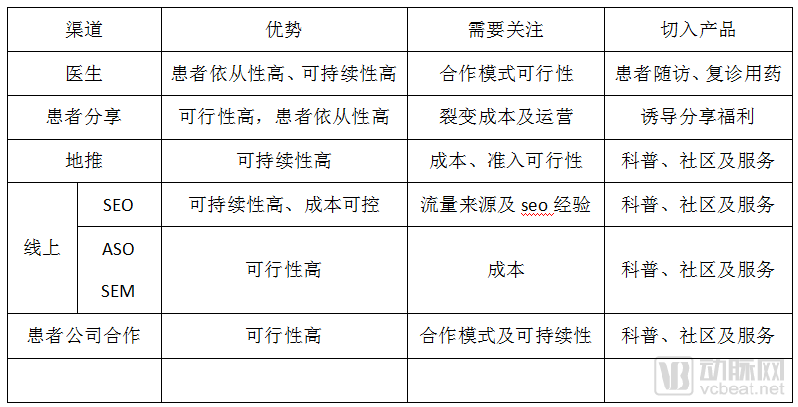
Where feasible, the optimal model involves collaboration between physicians and patients. Oncologists possess a natural advantage in channeling traffic into private-domain ecosystems within hospital settings, offering precise and stable patient acquisition. Furthermore, patients’ strong adherence to their physicians and high level of trust in fellow patients significantly benefit operational efficiency and conversion rates. Consequently, an increasing number of digital health companies are partnering with physicians and pharmaceutical enterprises in areas such as patient follow-up and online follow-up consultations via internet hospitals. Companies that maintain close collaborations with physicians are well-positioned for success. For companies engaged in follow-up partnerships with pharmaceutical firms, it is essential to consider how to ensure the scalability of patient-facing services while maintaining regulatory compliance. Once a platform has established a substantial patient base and delivers valuable services, patient referral programs will significantly enhance user acquisition efficiency, while the network effect of patient aggregation will generate organic traffic.
Excellent retention operations form the foundation for driving user engagement. For oncology patients, two core factors influence retention: delivering a high-quality, sustainable service experience and implementing a private-domain traffic accumulation model with high reach rates.
High-quality and sustainable service experiences can foster patient trust and encourage ongoing engagement with our platform. In the field of online oncology care, effective services should expand patients’ access to medical resources and improve the efficiency of diagnosis and treatment. For instance, online follow-up consultations with attending physicians outside the hospital setting, nutritional support and psychological interventions for cancer patients, and sharing of disease progression among patients with similar cases—these services typically span the entire course of a patient’s cancer journey, thereby enhancing their overall healthcare experience.
We previously organized an online live session with experts for liver cancer patients, which attracted over 6,000 participants. In the service feedback, 80% of users expressed high satisfaction with the on-site case review format, requesting that its proportion be increased in future live sessions and expressing their desire to participate personally. Subsequently, we conducted a one-on-one free clinic focused on nutrition during chemotherapy for liver cancer patients. Patients demonstrated extremely high adherence to the recommendations provided by the expert team based on their individual conditions. This demonstrates that personalized service experiences are indispensable in the field of oncology patient care.
The key to retaining oncology patients lies in establishing long-term, close relationships with them through initial engagement. To achieve a high reach rate for this initial contact, it is essential to focus on user retention models. Different private-domain traffic retention models have their own characteristics; the selection of a model requires comprehensive consideration of user retention difficulty, reach rate, operational efficiency, and personalized operations. The table below compares the characteristics of common private-domain traffic retention methods:
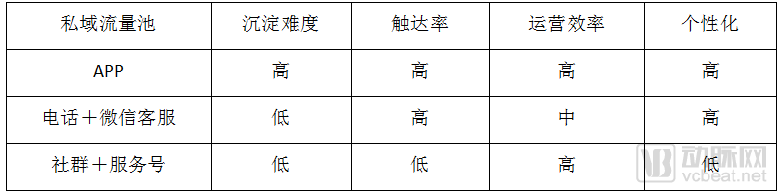
The strategy for consolidating internet healthcare traffic should be determined by the characteristics of specific diseases. Oncology patients are characterized by rapid disease progression, significant individual variability, and high per-user value. Therefore, they are better served through high-reach, highly responsive channels that facilitate personalized engagement, such as telephone and WeChat customer service or dedicated mobile apps.
User activation is the foundation for building sustained trust and a prerequisite for conversion. Oncology patients have two primary daily needs: core disease management, complemented by social interaction needs.
Disease course management is a time-sensitive, bidirectional, and refined operational process. Through close interaction with thousands of Key Opinion Consumers (KOCs) among one million online oncology patients, and after more than a year of operations, we have drawn the following conclusions from user feedback and behavioral analysis: timeliness is of paramount importance in the management of oncology patients. Given the rapid progression and changes in the disease course of cancer patients, their service needs are constantly evolving. This requires patient engagement strategies to mirror the approach of U.S. medical oncologists, employing various operational methods to maintain real-time, bidirectional communication with users, regularly updating disease course information, continuously refining patient-side tags, and providing nearly “customized” information and content. Therefore, the foundation for boosting engagement among oncology patients lies in accessing more recent disease course information—within one month or even one week—which serves as the prerequisite for refined operations.
Disease course information includes both in-hospital and out-of-hospital data. In-hospital data can be obtained through the hospital’s HIS system or uploaded by patients themselves after obtaining patient authorization. Out-of-hospital data describe the patient’s real-time status, including their experiences, symptoms, and physical and psychological conditions during post-discharge treatment. Such data need to be collected during patient management by guiding patients to upload information independently through the provision of medical services or via follow-up visits. These data are essential for providing services such as oncology nutrition support, psychological intervention, patient recruitment, and real-world data (RWD) applications.
Refined operations for oncology patients essentially involve matching patient-side tags with product and service-side tags. Currently, most platforms serving oncology patients operate on the “people seeking information” model characteristic of PC-era web portals, whereas a more valuable operational model is “information seeking people.”
During the patient activation phase, providing valuable services and employing effective operational strategies to stimulate patients’ altruistic motivation for sharing can foster word-of-mouth dissemination and attract a large number of new patients.
Service conversion for oncology patients is a user-centric process of precise service matching. Oncology patients exhibit heightened sensitivity to marketing efforts during the treatment phase; if promoted paid content or services do not align with their actual needs, it can easily provoke patient aversion and lead to churn. Service conversion must be driven by patient needs to effectively enhance treatment efficiency. Beyond establishing user trust and robust products, it is essential to address operational conversion gaps in the digital realm, including the user reach funnel, the service awareness and matching funnel, and the payment funnel.
"In the early days, my team managed 70,000 breast cancer patients. We used our official WeChat account to push out nearly all the patient recruitment projects for breast cancer available on the market. Ultimately, only two patients were successfully enrolled into clinical trial programs."
Upon reviewing the data, we observed that among the 70,000 patients, more than 7,000 clicked the link to view the breast cancer patient recruitment project. Of these, over 600 accessed the questionnaire to provide basic personal information, 255 completed and submitted their responses, 30 met the initial screening criteria and were referred to hospitals for secondary screening, and 2 were successfully enrolled following telephone interviews.
Within this conversion funnel, the stage from 70,000 to 7,000 represents the user outreach funnel, where conversion can be improved by enhancing patient engagement and selecting more appropriate outreach methods. The stage from 7,000 to 255 constitutes the service awareness funnel, where conversion rates can be boosted by strengthening patient trust and providing precise introductions to product value. The stage from 255 to 2 is the service matching funnel; if real-time patient data is available, relevant projects can be accurately matched during the patient outreach phase, significantly increasing the success rate of service matching and avoiding disturbance to users unsuitable for patient recruitment projects. Continuous updates of patient information will also enable ongoing matching of suitable projects for patients as their disease progresses.
For paid medical service items, the product offerings can be segmented into experiential products and full-service packages. Before users develop the habit of receiving medical services online, experiential products help enhance patients’ service experience and facilitate their understanding of the value proposition.
The conversion of services for oncology patients is the cumulative outcome of a series of operational initiatives. With the aim of enhancing patient experience and building trust, these operations require practitioners to continuously strengthen internal capabilities and improve operational efficiency. Furthermore, cross-functional collaboration among content, product, and data operations teams can enhance the overall efficiency of the entire oncology patient engagement system.
Internet-based healthcare has a low penetration rate among cancer patients. Building patient awareness requires explanations from doctors, patients, and service personnel; therefore, trust is built on a human-centric foundation, which establishes an operations-driven model for cancer patient services.
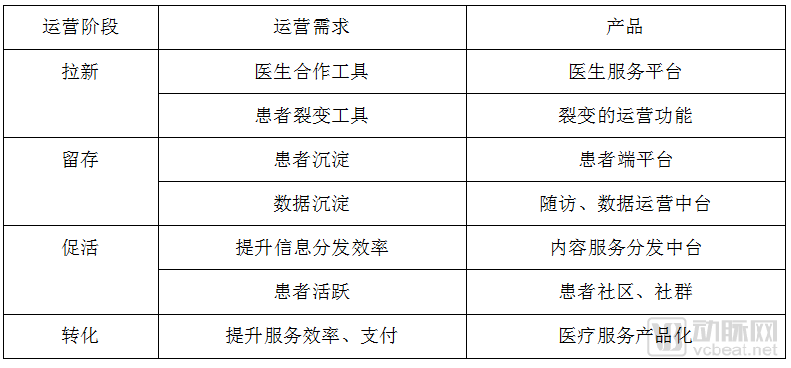
The product is positioned to empower operations and enhance efficiency. Beyond the patient-provider platform, a fully functional operational middle office will significantly improve the efficiency of patient management, serving as the cornerstone for standardized and scalable operational services. The following are some output formats of internet healthcare products:
The above represents my shared experiences in managing online medical services for oncology patients. To conclude, I will quote Professor Li Shanyou: “Everything I have said is wrong.”