

Why We Believe Medical VR Will Make a Comeback in 2020
For a long period after 2019, the development of VR in the healthcare sector appeared to stagnate—limited applications and less-than-perfect user experiences led many to question the practicality of this technology.
The winds of revival began to blow in 2020. This February, Johnson & Johnson unveiled a VR headset developed in collaboration with Osso VR, specifically designed for training surgeons. The initial plan was to launch the first batch of 150–200 Oculus Quest VR headsets for sale in the United States in April. Sandra Humbles, Vice President of Global Education Solutions at Johnson & Johnson, stated that the company has been experimenting with VR technology in physician education for three years and can effectively train surgeons through VR.
Moreover, VR once again became ubiquitous at CES 2020. Mainstream automakers, developers, and streaming companies showcased their respective VR and AR solutions, while vendors such as HTC were notably absent. B2B applications of VR have gone mainstream.
VR B2B applications in the healthcare sector are also deeply attracted to this technology. In other words, there is a strong expectation that VR can be utilized in medical settings to address patients’ psychological needs and physicians’ educational requirements—for instance, by creating “virtual reality” scenarios for the elderly or individuals with mental health conditions, or by providing newly graduated doctors with comprehensive, immersive surgical demonstrations.
As capital quietly flows in, can VR, having fallen from its peak, truly become the bellwether for our journey into the cyber world?
Curiosity is an innate human trait that never fades. Since VR can construct an entirely new virtual world for users to explore, many in the medical and healthcare industry initially thought of placing such virtual worlds in the hands of older adults who find it difficult to explore the real world, thereby enriching their spiritually impoverished lives.
Rendever is a virtual reality platform dedicated to addressing loneliness and depression among the elderly. By leveraging VR technology, it enables seniors to travel the world from the comfort of their “homes” and “feel 18 again.”
To explain the original intention behind founding the company, founder Dennis Lally discussed in an interview the common challenges faced by this generation of elderly people: confined to small spaces all day long, striving to stay connected with the world, yet gradually becoming more isolated from it. These places could be nursing homes, psychiatric hospitals, or Alzheimer’s care centers—none of which truly bring happiness to their residents.
“They looked as if they had been abandoned, waiting alone for death.”
Therefore, Rendever aims to bring about change by offering seniors novel virtual experiences. Just as we once immersed ourselves in the virtual worlds of games during childhood, finding satisfaction for our curiosity and desire for reward, older adults can do the same if appropriate content and incentive mechanisms are designed.
Acting swiftly, the company positioned itself much like Apple in its early days: developing its own VR headsets and corresponding software, integrating hardware with software, and selling the combined solution directly to elderly residents in senior care centers. Among the initial software offerings, they provided seniors with a virtual model of the real world, enabling them to travel the globe without leaving their rooms.
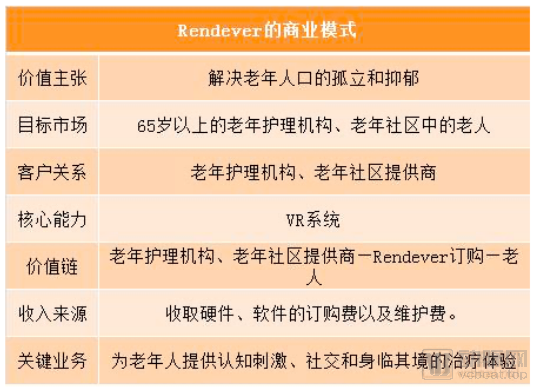
From a business model perspective, Rendever operates in both B2B and B2C markets. Although subscription-based payment models are popular in the United States, Rendever’s business model is somewhat simplistic and heavily dependent on customers’ acceptance of VR technology. If elderly users resist bulky VR headsets or experience discomfort such as dizziness from 3D effects, this will naturally impact software subscriptions and subsequent maintenance revenue.
Moreover, every game has its own lifecycle, which is typically not very long. Without a steady stream of high-quality content updates, older adults may also grow weary. Companies like Rendever may need to collaborate with other like-minded startups to ensure a rich and diverse content library; otherwise, when tech giants such as Samsung and Microsoft enter the fray, their most valuable asset may well be the content they have curated.
Therefore, from the overall perspective of the VR industry in 2020, whether in gaming or healthcare (which share commonalities), practitioners have been gradually shifting their focus toward content development to create more engaging experiences and maintain user novelty regarding the devices. This expansion of content has unlocked greater potential for VR, such as in the treatment of depression and chronic pain conditions.
This also suggests that the idea of startups building an ecosystem may not be feasible; once the industry matures, latecomers’ roles may lean more toward creating possibilities in content.
Although the virtual world is captivating, for VR to achieve steady growth in reality, it is essential to engage physicians as collaborative partners.
Operating rooms represent an ideal application scenario. In general, VR applications in this setting can be categorized into three main types: (1) assisted teaching; (2) surgical assistance; and (3) information platforms.
# Assisted Medical Education
There is a wide variety of VR-assisted teaching applications, covering diverse medical services. Taking the aforementioned long-term care industry as an example, several researchers at the University of New England have targeted the training of long-term care workers by enabling them to experience aging through VR. This includes simulating the inability to raise one’s hands above the head, the sensation of losing a finger, or the experience of recovering from a heart attack.
In other words, these researchers aim to cultivate “empathy” among elderly care healthcare professionals, enabling them to empathize with care recipients through role reversal.
Of course, more companies are still focusing on VR surgical training, presenting past written and video-based surgical teachings in a three-dimensional, spatially immersive VR format. This allows learners to simulate surgical procedures in a virtual environment, reducing the cost of surgical practice and enhancing the learning experience.
UK-based company FundamentalVR previously developed a basic surgical simulation platform that integrates virtual reality (VR) with haptic feedback. Earlier, the company had created a training device combining the HoloLens headset with a stylus connected to a standard robotic arm. The physically movable stylus appears as a syringe in the VR environment and can be used to fill or empty fluid via buttons. When the virtual needle contacts virtual skin, muscle, or bone, the varying resistance offered by different tissues is transmitted through the stylus to the user, providing a realistic hands-on injection experience.
Many hospitals in China are also exploring the application of related technologies; for instance, the Zhang Qiang Doctor Group has previously utilized such technologies in its clinics for surgical training.
In an interview, Dr. Zhang Qiang told VCBeat: “VR technology also faces many developmental constraints, such as data transmission issues. VR requires substantial data throughput, placing significant demands on bandwidth. Before the widespread adoption of 5G, real-time cross-location transmission is difficult to achieve and incurs high costs. Furthermore, VR technology itself still has certain flaws, requiring researchers to further improve image quality and motion feedback mechanisms in the virtual world.”
# Assisted Surgery
Dr. Zhang Qiang’s Medical Group has previously experimented with VR technology, such as having patients watch a pre-selected movie via VR before undergoing varicose vein surgery to immerse them in the storyline. “We found that when patients shifted their attention to the movie, their blood pressure gradually decreased,” stated Dr. Zhang Qiang. “As a result, we used anesthetic diluted threefold, successfully reducing the average concentration of lidocaine to 0.2%, and completed the surgeries successfully.”
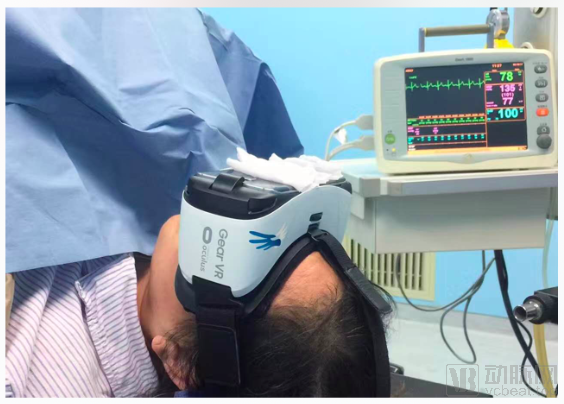
Using VR to Distract Patients During Varicose Vein Surgery
Furthermore, in assisted surgeries, VR can be applied to tumor surgery through integration with 3D printing and artificial intelligence technologies. Taking Baiyang Technology’s previous BïSO imaging solution as an example, the combination of these cutting-edge technologies enables physicians to conduct preoperative planning for procedures such as neurosurgery and orthopedic surgery, provide intraoperative localization and navigation, and perform postoperative efficacy evaluation.
Taking osteoma resection surgery as an example, with the preoperative assistance system of BïSO’s CT-MR multimodal image fusion, doctors can choose to analyze images through VR before surgery to understand the extent of the tumor, determine the boundary between tumor tissue and normal tissue, and accurately assess the scope of surgical resection.
The Indian company ImmersiveTouch has also embarked on this endeavor. A surgeon at the All India Institute of Medical Sciences (AIIMS) in New Delhi utilized the ImmersiveTouch Mission Rehearsal virtual reality surgical platform to separate craniopagus twins—conjoined twins joined at the head. Leveraging VR-enabled haptic robotics, more than 40 surgeons from within and outside the hospital were able to immerse themselves in a 3D virtual operating room, visualize the connected tissues, discuss anatomical structures, and repeatedly simulate surgical approaches, thereby formulating the most effective surgical plan.
Informatization
In contrast, companies in the third category, which engage in the design of VR-enabled information technology products, are more widely distributed. Some focus on clinical decision support systems; others are dedicated to building VR cloud platforms; and some attempt to create a VR-specific “PACS” system. However, these applications are typically not the core business of these enterprises but rather branches of their broader health IT services, and thus will not be discussed in detail here.
Those who have used VR can deeply appreciate that today’s VR headsets, paired with high-quality games and immersive spatial audio, can indeed deliver a seamless stereoscopic 2D experience. However, vision and hearing are only part of how we perceive the world; the lack of haptic feedback in the VR experience inevitably breaks immersion.
The same applies to medical training in the operating room: if surgeons are provided with a virtual scalpel and visual feedback of the incision but lack haptic feedback, how can they determine whether they have actually reached the target tissue?
Consequently, many startups have shifted their focus to peripheral devices for VR headsets, such as haptic skins and “gravity gloves,” to create a sense of virtual touch for users. On one hand, consumers genuinely need such devices to enhance the VR experience; on the other, the traditional VR headset market has long been saturated, with major players like HTC and Samsung poised to dominate this wearable sector. In December 2019, HaptX, a U.S.-based company specializing in this field, secured $12 million in Series A financing.
Research in this area is advancing rapidly. In a November 2019 paper published in Nature, researchers reported a flexible haptic simulation device that can be applied to the skin surface and generates tactile sensations using millimeter-scale mechanical vibrations. This device is wirelessly controlled and powered, operates without batteries, and is lighter than previous designs.
If both haptic and visual feedback are provided in a simulated environment, using such a system for surgical training of physicians would no longer pose a problem. For elderly users or those with neurological disorders, such devices may offer a more realistic experience. However, precisely aligning the points of visual and haptic interaction remains a challenge that will require considerable time and funding to resolve. Once this hurdle is overcome, we may not be far from experiencing addiction-related “flashbacks.”
Given the immense potential of VR technology, why has it nonetheless faced difficulties and widespread skepticism in recent years? In the healthcare sector, determining who should bear the cost of upgrading medical services has long remained a challenging issue.
“Judging from current development trends, the constraints on VR technology in the medical field mainly stem from substantial R&D investments and a lack of market demand for medical products. Today’s AR technology is not yet mature enough to deliver significant efficiency gains for hospitals. Nevertheless, it is indeed a valuable technology that is likely to bring about major transformations in healthcare institutions once it matures,” Dr. Zhang Qiang told VCBeat.
So, what is the current state of development? And where is the direction heading? VCBeat has conducted research on the status of companies in the VR industry.
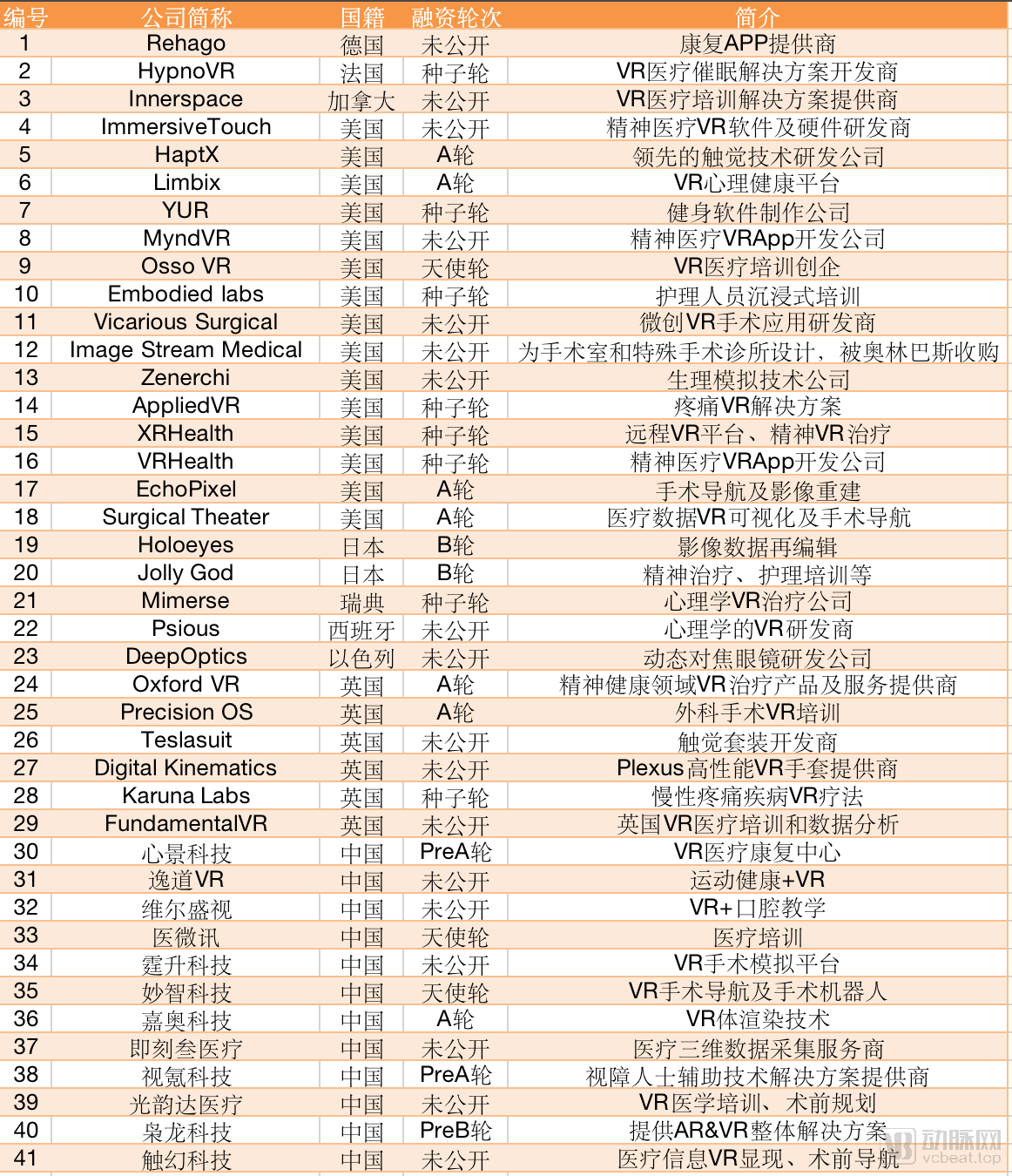
Data source: VCBeat Database
The VCBeat Dongguan Database has compiled a total of 41 active startups worldwide that are explicitly engaged in medical VR-related research. These companies generally fall into the three aforementioned categories, with some spanning multiple categories. Among them, 13 companies are focused on VR research in psychological and psychiatric fields (existing VR products in the elderly care sector are all designed from a psychological perspective), 29 companies are engaged in VR research for in-hospital applications, and 5 companies are involved in device-related research (some companies operate across multiple business segments). It is worth noting that among the companies conducting in-hospital VR research, 13 are involved in VR-based healthcare informatization.
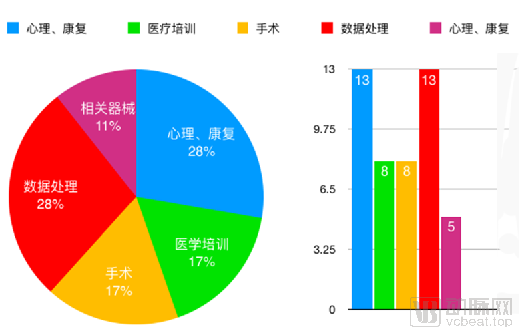
Industry Distribution
If we regard DAQRI’s first Android-based AR smart helmet, released in 2014, as the progenitor of AR headsets, this milestone serves as a dividing point from which we can broadly trace the origins of existing companies’ VR businesses. Statistics show that 33 companies were founded before December 31, 2014, while only 29 were established after this date. In other words, it is indeed challenging for startups engaged in medical VR-related research to survive; consequently, most companies have incorporated VR as part of their corporate strategy rather than going “all in” on VR.
Regarding the geographic distribution of these companies, a total of 16 are from North America (the United States and Canada), 10 from Europe, and 15 from Asia (China, Japan, and Israel).
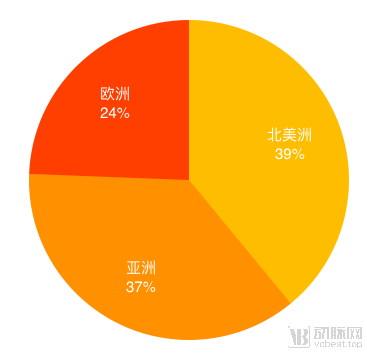
Enterprise Distribution
From the perspective of financing data, investment enthusiasm in the VR sector has not been high. A total of 21 of the aforementioned companies have undergone financing rounds, with 13 of these occurring after 2019, bringing the total capital inflow to nearly $200 million. Notably, six financing deals took place in 2020 alone, two of which were post-Series B rounds and accounted for the vast majority of the $200 million. In 2020, the VR industry was indeed experiencing a recovery.
The data indicate that most overseas-funded companies are at the angel or Series A stage, with funding amounts largely falling within the RMB 20 million to RMB 60 million range. Notably, no domestic medical VR enterprises have garnered interest from investment institutions during this period.
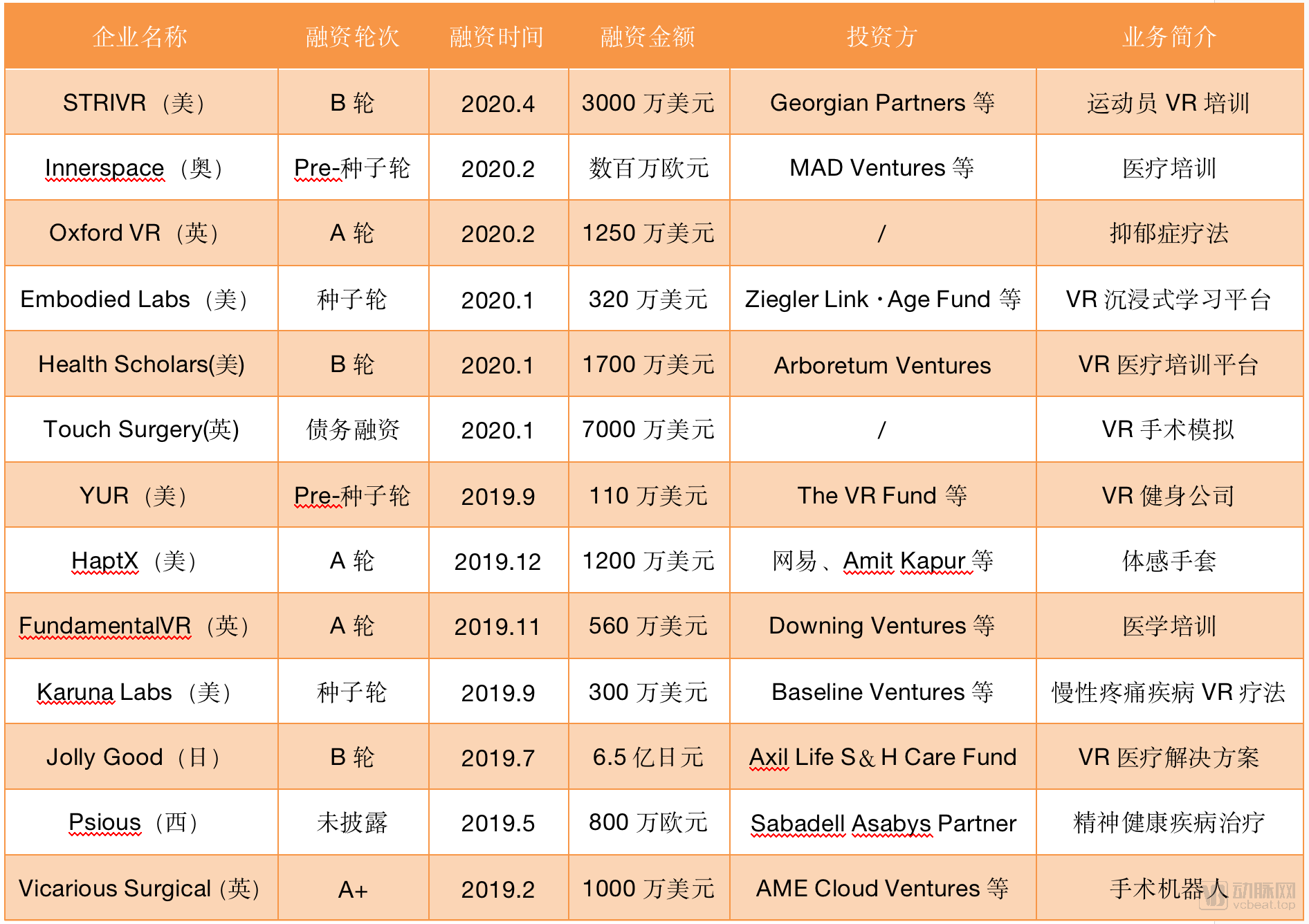
VR Industry Financing Data from January 2019 to Present (Data Source: Arterial Orange Database)
Furthermore, these investments have been largely concentrated in areas such as medical training and the treatment of mental disorders. The only hardware product is the haptic glove developed by HaptX. In the hardware sector, the near-monopoly held by the headset market makes it difficult for startups to enter; consequently, startups are more focused on content development based on or within the ecosystems of major brands’ VR headsets.
Fortunately, VR has a wide range of application scenarios, particularly in the field of mental health disorders, where numerous content opportunities await startups to fill. After all, once the ecosystem matures, enhancing content quality and establishing corresponding monetization models may be key to VR’s breakthrough from its current predicament.
Overall, judging from the exhibition landscape at the beginning of this year, the phase where the market would pay for novelty alone has passed for VR. Both consumers and investors are placing greater emphasis on the practicality of VR, particularly in the field of medical training, where a larger number of more mature companies have emerged this year.
However, even though the vast majority of people believe that virtual reality will become a ubiquitous technology in our lives in the future, how far away is that future? No one can answer this question.
Therefore, as Dr. Zhang Qiang noted, current VR R&D is extremely capital-intensive, which is a major factor constraining its development. So, where lies the turning point? Recall that nearly 50 years have passed since the inception of convolutional neural network algorithms, and it was ultimately the advancement in computing power that suddenly changed the world. Perhaps, much like the trajectory of AI development, we will inadvertently rescue VR.