

Kunya Medical Enters Its Next Decade, Aligning with Trends in Third-Party Medical Equipment Aftermarket Services
In April 2020, marking the tenth year of Kunya Medical’s development, General Manager Xu Renxiang accepted an exclusive interview with VCBeat, expressing his inner feelings in eight Chinese characters: ““A Decade of Journey, Staying True to Our Original Aspiration”Through his engaging narrative, the ten-year development journey and future plans of Kunya Medical were clearly presented to the audience as a grand yet well-structured blueprint. For the company, this decade signifies the initial success of its entrepreneurial efforts, demonstrating the viability of its business model and the immense potential of the sector in which it operates.
“Over the past decade, Kunya Medical has grown from scratch into a company of considerable scale. The company’s progress to its current stage is closely tied to the strength of its team and the immense growth potential of the industry. In recent years, the introduction of numerous favorable policies has promoted the healthy development of the third-party medical equipment management sector. Meanwhile, the dedication and hard work invested by the company’s team and shareholders have enabled Kunya Medical to maintain its competitive edge and achieve rapid growth,” said Xu Renxiang, founder of Kunya Medical.
Shanghai Kunya Medical Co., Ltd. is a provider of medical equipment service platforms. The company’s core business involves outsourcing comprehensive medical equipment services for hospitals. Today, Kunya Medical has emerged as a leader in the third-party after-sales maintenance and repair sector for medical equipment. Over more than a decade of development, Kunya Medical has built a team of over 500 professionals, including engineers, sales and marketing specialists, and operations staff.Currently, Kunya Medical manages hospital equipment assets worth nearly RMB 50 billion, provides comprehensive managed services for medical equipment to over 100 hospitals, has established 15 branch offices across China, and maintains partnerships with nearly 100 collaborators.
Xu Renxiang stated, “The success of the first decade cannot be considered true success; the real competition for enterprises lies in the next ten years.” Over the coming decade, Shanghai Kunya Medical Co., Ltd. will establish a robust industrial service platform. Leveraging its position as an industry platform, the company will integrate the upstream and downstream segments of the specialized industrial chain, bringing together hospitals, manufacturers, and third-party providers to consolidate spare parts distribution channels. By streamlining every critical link in the equipment maintenance and repair industry, Kunya Medical aims to create a sophisticated, closed-loop operational service model. This after-sales service framework will be powered by the Internet of Things (IoT) and big data.“The Era of Cloud After-Sales Service”, establish a stable and scientific iMES intelligent medical equipment management system to help healthcare institutions achieve “process-oriented, scientific, standardized, and refined” management.
Breaking the Industry Mold: Kunya Medical’s Equipment Management Model Empowers Hospital Asset Management
“Convenience, affordability, and warm service” constitute the competitive advantages of third-party companies, with “affordability” historically being the most attractive feature for users. However, it is important to note that “price competition” is a double-edged sword; without reasonable profit margins, high quality cannot be ensured. Furthermore, times are changing. As national requirements for the management of medical equipment usage become more stringent and after-sales service offerings expand, user expectations for service quality continue to rise. Companies that fail to deliver quality will ultimately lose everything in the future. Shanghai Kunya Medical Co., Ltd. has always adhered to keeping pace with the times by establishing"Quality Is More Important Than Low Price"awareness, providing high-quality services that meet national requirements and are recognized by a wide range of hospital users. This is the most critical and fundamental priority for Kunya Medical at present.
Innovation in medical devices is advancing at an unprecedented pace, with automation levels continuously rising. In China, modern medical equipment accounts for more than 50% of the total value of fixed assets in hospitals, most of which are high-end devices in technologically demanding fields such as medical imaging and in vitro diagnostics. Current hospital operations reveal that the in-house biomedical engineering capabilities of hospitals fail to keep pace with technological advancements in medical equipment. There is a lack of timely professional training, resulting in lagging knowledge updates. Furthermore, constrained by factors such as tools and spare parts, hospitals have limited independent maintenance capacity and are unable to support the upkeep of thousands of devices across their facilities.
Meanwhile, the upstream industry facing the equipment aftermarket is a highly specialized market.High technical barriers, closed spare parts channels, insufficient competition, “industry monopoly,” “opaque pricing,” “passive maintenance,” and “regulatory gaps” have long plagued the equipment management departments of medical institutions.However, with industry development and social progress, national policies not only impose requirements on hospitals and original equipment manufacturers (OEMs) but also encourage capable third-party service companies to accelerate their growth. Consequently, the after-sales service model has evolved from a single OEM-dominated model to a landscape where multiple models coexist.
In 2015, the China Food and Drug Administration (CFDA) issued Decree No. 18, titled "Measures for the Supervision and Administration of Quality in the Use of Medical Devices." This decree broke monopolies through top-level industrial design by explicitly recognizing the legal status of third-party after-sales service companies to undertake maintenance and servicing of hospital equipment. It removed multiple obstacles hindering the development of the third-party medical equipment after-sales repair industry, dismantled the monopoly held by original equipment manufacturers (OEMs), and fostered more robust market competition. For hospitals, selecting an appropriate maintenance model, while ensuring the safe operation of equipment, not only reduces costs but also enhances the overall operational efficiency of medical devices.
China’s after-sales maintenance service sector for medical equipment has existed for just over a decade, with Shanghai Kunya Medical Co., Ltd. regarded as one of the earliest pioneers in this field.With the introduction of multiple favorable policies, Kunya Medical has entered a fast track of development. In 2016, Kunya Medical was listed on the National Equities Exchange and Quotations (NEEQ), becoming the first company in the industry to do so. In 2017, the company completed its Series A financing round with investment from Honghui Capital, established 15 branch offices, and built five major spare parts warehouses, with the total value of spare parts exceeding RMB 200 million and covering 100,000 categories of routine spare parts. In 2018, the company completed its Series B financing round, serving over 600 hospitals, with the number of hospitals participating in managed service projects exceeding 100.
To date, Shanghai Kunya Medical Co., Ltd. has expanded its business scope from initially providing repair services for individual medical devices to offering full lifecycle management of medical equipment, with a commitment to delivering comprehensive outsourced maintenance and support services for hospital medical devices.The Yiweijia iMES Intelligent Medical Equipment Management System, developed by the company, provides management services including equipment procurement, inventory, depreciation, repair, maintenance, inspection, scrapping, metrology, and quality control, covering the entire lifecycle of medical equipment.Achieve efficient, reliable, and safe equipment operation, significantly reduce equipment management and maintenance costs, completely transform traditional manual management models, and empower healthcare institutions to effortlessly manage their medical equipment departments.
The Advantages of Medical Equipment Managed Services Were Highlighted During the Pandemic
2020 marked the first year of Kunya Medical’s entry into its next decade, holding particular significance for the company. Kunya Medical plans to vigorously promote its hospital overall trusteeship business, striving to achieve a 60% increase in business volume and a 100% increase in profits during this year.
This year is also a special one for China and the world at large. The sudden outbreak of the COVID-19 pandemic has had a tremendous impact on industries across the board.
In the early stages of the pandemic, Shanghai Kunya Medical Co., Ltd. rapidly prepared a batch of protective supplies and spare parts to ensure the safety of its engineers and maintain spare parts availability. Throughout the pandemic, engineers conducted regular inspections, maintenance, and disinfection of medical equipment with the assistance of the Weijia system, while monitoring equipment usage status in real time. In the event of equipment malfunction, hospitals couldScan the QR Code for One-Click Repair Request, while the Yiweijia system can intelligently diagnose the cause of faults and provide solutions,Engineers arrived at the site promptly to complete repairs quickly, earning consistent praise from customers. Medical institutions across the country became the front lines in the fight against the epidemic. The engineering teams of Shanghai Kunya Medical Co., Ltd. remained steadfast at their posts, demonstrating courage and responsibility. Leveraging their professional expertise and dedication, they ensured reliable equipment support for healthcare workers on the front lines. In these critical moments, Kunya employees chose to stand alongside the “angels in white,” safeguarding the medical equipment essential to the anti-epidemic efforts of healthcare professionals.
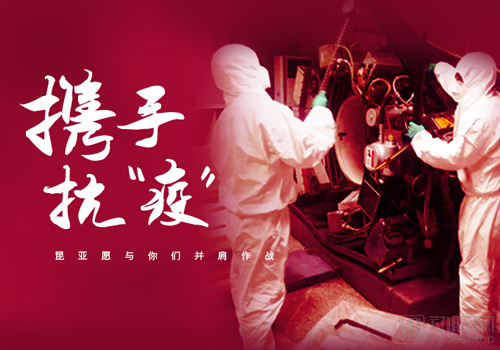
Xu Renxiang stated, “This epidemic has not only tested the comprehensive capabilities of healthcare professionals but also served as a rigorous review of China’s medical and health service system. In response to this sudden major public health emergency, the government has demonstrated an unprecedented level of attention. Having undergone the harsh trials of the epidemic, the government will strengthen its capacity to respond to major public health emergencies, increase investment in healthcare infrastructure, identify and address the numerous vulnerabilities and risks exposed by the outbreak, establish more scientific decision-making mechanisms, and formulate more comprehensive implementation policies, thereby creating more favorable conditions for the steady development of the healthcare industry. In this process, the normal operation of medical equipment is receiving increasing attention and emphasis from hospitals.”"Following the pandemic, hospitals have significantly increased their emphasis on and demand for after-sales maintenance of medical equipment, which constitutes a major benefit for Shanghai Kunya Medical Co., Ltd. The comprehensive managed service model for hospital medical equipment is expected to gain further recognition."
Driven by supportive policies and robust demand, the third-party after-sales service sector for medical devices is poised for vigorous growth. Meanwhile, the pandemic has raised the bar for hospital medical equipment maintenance standards. Shanghai Kunya Medical Co., Ltd. will strengthen its technological capabilities and standardize management practices, leveraging rapid response times and technical expertise to ensure stable equipment operations.
Specialization, Standardization, Datafication, and Intelligentization Are the Major Trends in Industry Development
Over the past decade, Shanghai Kunya Medical Co., Ltd. has witnessed the rapid development of the after-sales service industry for medical equipment. Previously, due to factors such as the lack of industry standards, original manufacturers’ monopolies on technology and spare parts, inconsistent service quality, and the absence of comprehensive service systems and standards, third-party enterprises struggled to gain widespread acceptance among hospitals. They remained marginalized and failed to achieve scale.Nowadays, third-party companies have become a significant force in the after-sales maintenance industry for medical equipment, presenting a trend of rapid expansion.Data shows that in 2018, the market size of China’s third-party after-sales maintenance industry for medical equipment was approximately RMB 70 billion, with significant room for future growth.
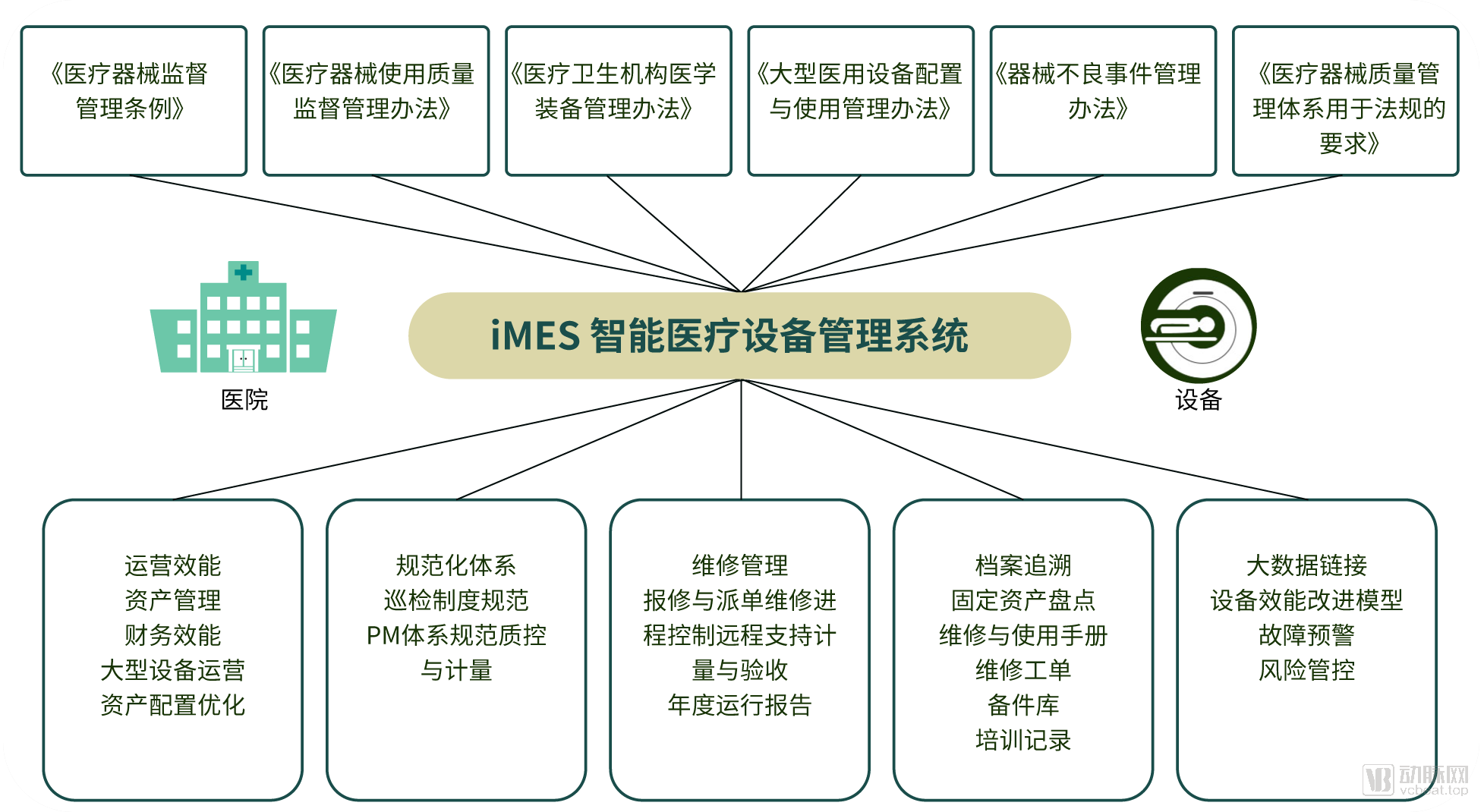
Yiweijia iMES Intelligent Medical Equipment Management System
Xu Renxiang believes that,Specialization, standardization, data-driven operations, and intelligentization will be the major trends in the development of third-party after-sales maintenance for medical equipment.Shanghai Kunya Medical Co., Ltd. has integrated technologies such as big data, the Internet of Things (IoT), cloud computing, and artificial intelligence into its Yiweijia iMES Intelligent Medical Equipment Management System. This system enables real-time monitoring of equipment usage, optimization of equipment allocation, early detection of potential hazards, and intelligent recommendation of maintenance solutions, thereby significantly reducing medical equipment management costs. Although the third-party after-sales maintenance industry for medical equipment is experiencing rapid growth, it still faces substantial challenges. Over the next decade, Shanghai Kunya Medical will remain rooted in the industry, dedicating itself to diligent development and contributing its corporate strength to the advancement of the healthcare sector.