

Huiyi Digestive Endoscopy Center Files IPO Prospectus: Building an Integrated Diagnosis-Treatment-Surgery Ecosystem for Gastrointestinal Diseases
In recent years, as policies have continuously given the green light to private healthcare provision, the broad avenue for private healthcare is entering a phase of rapid development.
“Dentistry and medical aesthetics have successfully established themselves as independent sectors and gained significant momentum. In the private healthcare sector, the next opportunity will lie with endoscopy,” commented Sun Jian, founder of Huiyi Digestive Endoscopy Center.
Huiyi Digestive Endoscopy Center, established in 2018, is a digestive endoscopy platform jointly created by a team of top-tier experts in the field of gastroenterology from Beijing’s Grade A tertiary hospitals. The platform has established an integrated, closed-loop medical service encompassing “outpatient consultation—examination—surgery—inpatient care,” providing patients with safe and professional screening, diagnosis, and treatment for early-stage cancers throughout the entire digestive tract.
According to the 2018 global cancer incidence statistics, China recorded 3.804 million new cancer cases and 2.296 million cancer deaths in 2014. Amid the continuous rise in cancer incidence and mortality rates, China currently ranks first worldwide in both the number of new cancer cases and cancer-related deaths.
Among cancer-related deaths in China, three of the six most prevalent malignant tumors are digestive system malignancies, including gastric cancer, colorectal cancer, and esophageal or cardia cancer.
According to statistics from the World Health Organization, the incidence of gastrointestinal diseases in the general population is as high as 80%. Data reveals that China has 120 million patients with gastrointestinal disorders, with 370,000 new cases of colorectal cancer and 258,000 new cases of esophageal cancer annually. Among China’s population of nearly 1.5 billion, only approximately 30 million digestive endoscopy procedures are performed each year.
In fact, because the early symptoms of most gastrointestinal cancers are subtle and easily overlooked by patients, the disease is often at an advanced stage by the time it is detected. Clinical experience indicates that early diagnosis and treatment of gastrointestinal cancers can significantly improve patient survival rates, which may reach as high as 90% within five years. This demonstrates that the cure and survival rates for gastrointestinal cancers are closely correlated with the timing of detection.
“Healthy China Action (2019–2030)” states that standardized cancer screening is an important approach for detecting cancer and precancerous lesions. Current technological methods can detect most common cancers; for example, gastrointestinal endoscopy can identify digestive tract cancers. Early-stage tumors can be cured in 95% of cases through endoscopic surgery.
Endoscopy plays a pivotal role in the early diagnosis and treatment of gastrointestinal cancers. With the continuous advancement and maturation of endoscopic techniques, it serves not only as a diagnostic tool but also as a therapeutic modality, enabling patients to achieve treatment goals without undergoing open abdominal surgery.
“Entering the endoscopy center market is driven by several factors. First, we recognize the critical role of endoscopy in early cancer screening. Second, we have observed a vast patient population with digestive diseases, with gastrointestinal endoscopy being the most severely backlogged service in hospitals. Additionally, there are significant pain points such as highly variable and disparate pricing in non-public institutions, and overly complex diagnostic and treatment processes in public hospitals that hinder detection rates,” said Sun Jian, founder of Huiyi Digestive Endoscopy Center.
Amid the favorable policies for private healthcare, Sun Jian began researching digestive diseases and medical management in 2017, and in 2018 founded the Huiyi Digestive Endoscopy Project, taking charge of its operations.
Sun Jian introduced that Huiyi Digestive Endoscopy Center is a specialized outpatient clinic for digestive diseases, integrating outpatient services, digestive endoscopy, health check-ups, and surgical center operations. Currently centered in Beijing, it has established and operates two chain facilities. Its services cover gastroscopy, colonoscopy, combined gastroscope and colonoscopy procedures, and minimally invasive surgeries.
“In simple terms, we operate under a ‘clinic + surgical center’ model,” said Sun Jian. The clinic is primarily responsible for preliminary screening, while the surgical center provides clinical treatment performed by experts from tertiary Grade A hospitals. In terms of surgical capabilities, it is the only institution capable of performing Level 4 endoscopic procedures, including endoscopic submucosal dissection (ESD) for early-stage cancers of the hypopharynx, esophagus, and gastrointestinal tract, endoscopic hemorrhoid surgery, and peroral endoscopic myotomy (POEM) for esophageal disorders, among others.
The team is primarily composed of renowned experts in the field of gastrointestinal diseases and young physicians.
Three renowned expert teams in the field of gastroenterology in China, with 30 years of experience in the diagnosis and treatment of digestive system diseases; Chief Physicians and Professors, each possessing over 10,000 endoscopic procedures, and enjoying high prestige in academic, clinical, and research fields.
“Our experts are primarily responsible for clinical medical services and technical support for the project; some experts oversee the training of young physicians and clinical operations; while others manage internal cost control and efficiency improvement, as well as endoscopy training and education for the clinical and nursing teams,” introduced Sun Jian.
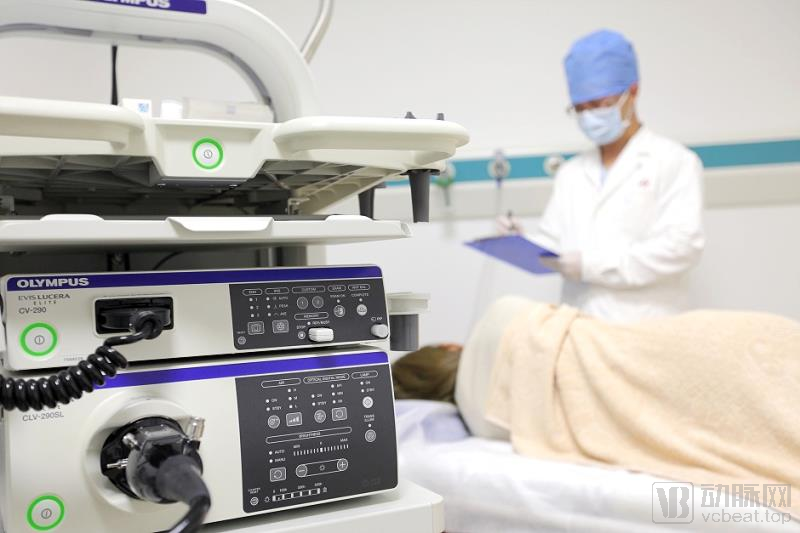
In addition to the assurance provided by expert oversight, Huiyi has also elevated its technology to a first-class level. Sun Jian stated that the clinic and surgical center are equipped with top-tier imported diagnostic and treatment devices, delivering high-quality medical services.
By leveraging expert oversight, integrating clinics with surgical centers, and introducing advanced technological equipment, the Huiyi Endoscopy Center served 600 patients in the second half of 2019.
Regarding the advantages of Huiyi Endoscopy Center, Sun Jian highlighted the following points. First, Huiyi is the only non-public healthcare institution offering a closed-loop service model, which spans from diagnostic endoscopy to endoscopic surgical procedures. Second, while endoscopic services in the market are typically priced at a premium, Huiyi maintains strict cost control, keeping its prices significantly below the market average. Finally, the center excels in service quality, providing thoughtful and patient-centered care, thereby establishing itself as a healthcare institution with warmth and empathy.
Sun Jian stated that the company is currently preparing for its angel round of financing, with a target of RMB 10 million. The funds will be used for market expansion, continuing to open new clinics, establishing a robust closed-loop system, and building Huiyi into a well-known brand in the endoscopy field.