

Tuolan Medical Successfully Completes First-in-Human Clinical Trial of Its Intracranial Pressure Monitoring System
On April 16, 2020, the first clinical trial of the intracranial pressure monitor and intracranial pressure sensor conducted by Chengdu Tuolan Medical Technology Co., Ltd. (hereinafter referred to as “Tuolan Medical”) was successfully completed at Tianjin Medical University General Hospital. This clinical trial was simultaneously carried out in the neurosurgery departments of four large Grade A tertiary hospitals in China, under the leadership of Professor Jiang Rongcai from the Department of Neurosurgery at Tianjin Medical University General Hospital.
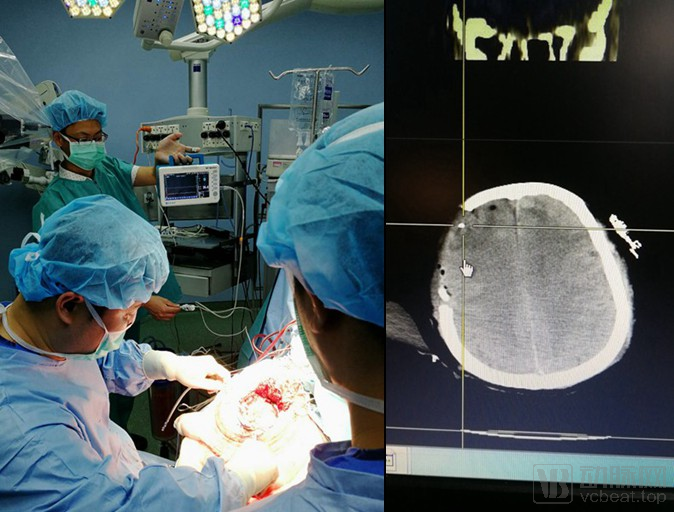
Intracranial hypertension frequently occurs in patients with severe traumatic brain injury, intracerebral hemorrhage, or brain tumors, either preoperatively or postoperatively. It can easily lead to reduced cerebral perfusion pressure (CPP), formation of brain herniation, ischemia of the brainstem and the entire brain, ultimately resulting in brain failure and death. Timely monitoring and management of changes in intracranial pressure (ICP) can prevent excessively low cerebral perfusion pressure and insufficient cerebral blood flow. In 2019, sales of minimally invasive ICP monitoring products in China amounted to approximately RMB 500 million, all from imported brands. The ICP monitoring market is projected to grow at an annual rate of over 20% in the next five years, reaching a market size of around RMB 1.5 billion by 2025.
Intracranial pressure (ICP) monitoring is strongly recommended by international and domestic guidelines for application in traumatic brain injury, intracerebral hemorrhage, and other critical neurological conditions (e.g., the 2011 Chinese Expert Consensus on Intracranial Pressure Monitoring in Traumatic Brain Injury, the 2016 Guidelines for the Management of Severe Traumatic Brain Injury, 4th Edition, from the United States, and the 2019 Chinese Guidelines for the Diagnosis and Treatment of Intracerebral Hemorrhage). Minimally invasive ICP monitoring has become the mainstream approach in neurosurgery worldwide in recent years, offering direct, accurate, and reliable measurements while effectively reducing tissue trauma, post-implantation infections, and cerebrospinal fluid leakage, thereby enabling prolonged continuous monitoring. Statistics indicate that approximately 400,000 surgeries for traumatic brain injury, intracerebral hemorrhage, and brain tumors are performed annually in China, among which about 200,000 cases require ICP monitoring.
Chengdu Tuolan Medical Technology Co., Ltd. has independently developed a miniature intracranial pressure sensor (probe diameter: 1 mm) whose performance metrics have reached an internationally advanced level. This sensor also integrates functions for intracranial pressure monitoring, waveform analysis, and brain temperature monitoring, achieving these additional capabilities without increasing the size of the sensor probe.
This clinical trial used an imported product as the control, with both the experimental and control groups tested on the same patients. Continuous monitoring was conducted for over 120 hours, with multiple sets of data collected every hour. The results showed that the pressure and temperature measurements of the two products were very close, and Tuolan Medical’s monitoring results fully reached the level of the imported product. Furthermore, Tuolan’s product demonstrated superior pressure waveform changes compared to the imported product during both intracranial hypotension and intracranial hypertension. Meanwhile, the data also confirmed the effectiveness of the product in brain temperature monitoring. The first clinical trial verified the reliability and clinical advantages of Tuolan Medical’s intracranial pressure monitoring device, marking a milestone leap for Chengdu Tuolan Medical Technology Co., Ltd. and injecting strong momentum into its further development in the field of miniature medical sensors. This multicenter clinical study, led and designed by Tianjin Medical University General Hospital, is expected to be completed within 2020.
Professor Jiang Rongcai of Tianjin Medical University General Hospital stated, “Intracranial pressure (ICP) monitoring holds significant clinical value in neurosurgery. Currently, all invasive ICP monitoring devices used in China are imported, characterized by limited functionality, susceptibility to damage, and exorbitant prices. Due to these factors, the adoption of ICP monitoring remains insufficient in many regions of China, with actual usage accounting for less than one-fifth of the clinical demand. We believe that the domestic production of this product will transform the current market landscape for invasive ICP monitoring in China. Furthermore, its technological breakthroughs enable physicians to directly monitor intracranial temperature and indirectly assess cerebral metabolism, providing robust data to optimize clinical treatment plans for critically ill neurosurgical patients. This advancement will make a positive contribution to improving treatment outcomes and enhancing the standard of clinical diagnosis and care in neurosurgery across China.”