

Akeso Inc. Surges 48% on HKEX Debut as Its Innovative Immunotherapy Breaks Through PD-1 Limitations
Akeso
Innovative Antibody Drug Developer
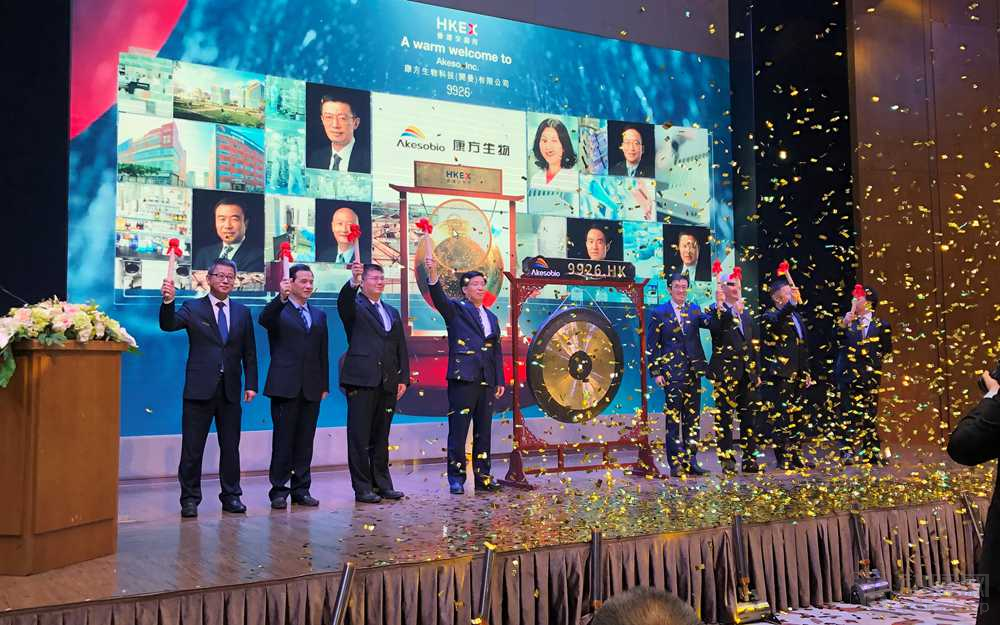
VCBeat learned that on April 24, 2020, Akeso was listed on the Hong Kong Stock Exchange. The IPO involved a total issuance of 159 million shares, priced at HK$16.18 per share, at the upper end of the indicative price range.
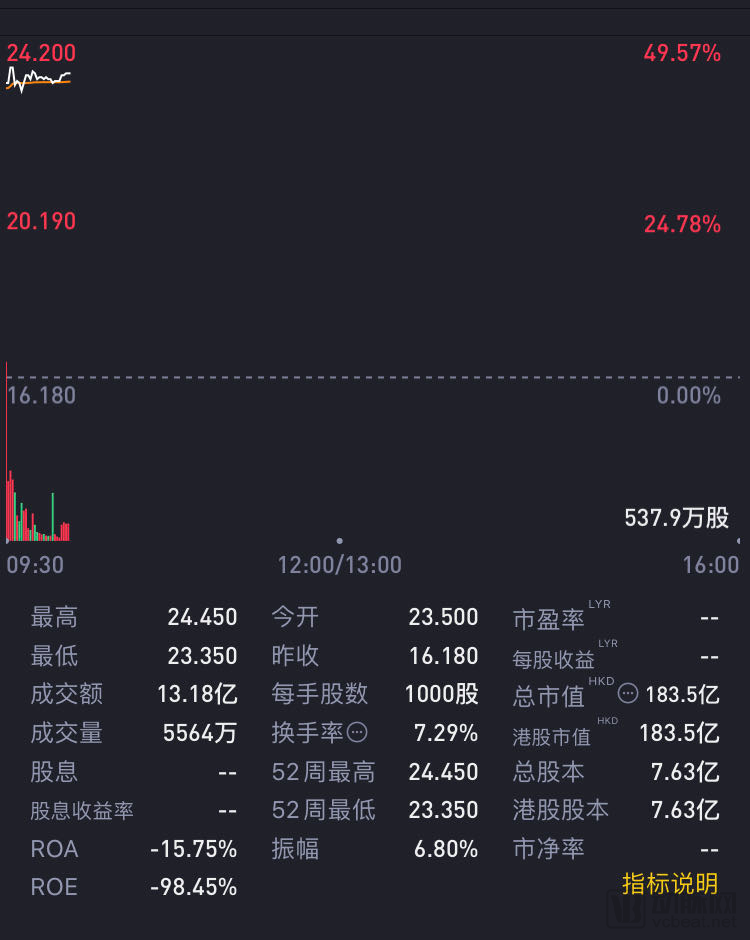
Image source: Laohu Finance
Akeso opened at HK$23.50 today, surging 45.2% at the open. By 10:00 a.m., its share price had climbed further to HK$24.05, representing a 48.64% increase. Previously, the Hong Kong public offering was oversubscribed by 638.2 times, with over HK$160 billion in frozen funds, positioning it to become the largest IPO by frozen funds in the Hong Kong stock market in 2020.
Akeso is a clinical-stage biopharmaceutical company founded in March 2012 by a team of returning overseas experts in immunology. It is dedicated to the independent discovery, development, and commercialization of first-in-class and best-in-class therapies. The company’s vision is to become a global leader in the development, manufacturing, and commercialization of affordable next-generation innovative therapeutic antibodies.
Dr. Xia Yu, founder of Akeso, has over 20 years of experience in academia and the biopharmaceutical industry. After earning his bachelor’s and master’s degrees in biochemistry from Sun Yat-sen University, he obtained his Ph.D. in molecular biology and microbiology from Newcastle University in the United Kingdom. He subsequently conducted research in biochemistry, immunology, and cancer immunotherapy at the University of Glasgow in the United Kingdom and the School of Medicine at the University of Louisville in the United States.
After his research career, Dr. Xia Yu joined the pharmaceutical industry, where he engaged in a series of activities including preclinical research, process development, process scale-up, technology transfer, and even GMP manufacturing of antibodies. He previously held positions at Bayer, PDL BioPharma (now AbbVie), and Celera Genomics. In 2008, Dr. Xia returned to China and joined Crown Bioscience as Senior Vice President, while also serving as General Manager of Crown Bioscience’s Taicang facility and as the Crown Bioscience Lead for the Pfizer-Crown Asia Cancer Research Center.
Most of Akeso’s executives have worked in the pharmaceutical industry for over a decade, accumulating extensive expertise in their respective fields. For instance, Dr. Li Baiyong, Chief Scientist; Dr. Wang Zhongmin, Senior Vice President; and Dr. Zhang Peng, Vice President, all previously worked with Xia Yu at Crown Bioscience in Taicang. As a result, the Akeso team has developed strong professional synergy, contributing to the company’s smooth and successful growth over the past eight years.
With the support of a high-quality team, Akeso, shortly after its establishment, secured angel investment from Shanghai CCB Capital in March 2012. In July 2015, the company completed its Series A financing round, raising RMB 130 million, with investors including Shenzhen Capital Group and Shanghai CCB Capital. These institutions have consistently accompanied Akeso’s growth, repeatedly increasing their investments in subsequent funding rounds. At the time of the Series A round, Akeso’s valuation was only approximately RMB 330 million. By the Series D round at the end of 2019, Akeso’s valuation had reached RMB 5.82 billion (USD 836 million), representing a 16-fold increase within just four years.
Prior to 2018, the Chuangrui investment team was already well acquainted with the Akeso team. As an investment firm focused on the advanced medical industry, Chuangrui Fund earned deep recognition and acceptance from the Akeso team by providing consulting services such as product positioning, priority selection, financing advisory, and industrial layout, ultimately becoming a shareholder of Akeso.
Akeso’s founding team possesses extensive experience and capabilities across the entire value chain of international innovative antibody drug development, including R&D, clinical trials, regulatory submissions, and industrialization. With complementary strengths, the team demonstrates robust global expansion capabilities and resources. The company boasts a rich product pipeline with independent intellectual property rights and a substantial reserve of well-validated targets, covering major therapeutic areas such as oncology, autoimmune diseases, cardiovascular disorders, and metabolic diseases. Most of its candidates are first-in-class globally (such as the world’s only bispecific antibody targeting both PD-1 and CTLA-4), internationally leading, or first-in-class in China, with a strong emphasis on differentiated indication selection and product portfolio strategy.
Zhang Minglong, Managing Partner at Chuangrui Investment, told VCBeat: “From the outset, Akeso has prioritized cash flow management, ensuring efficient and secure operations through diverse models such as strategic R&D collaborations, phased transfer of developmental milestones, and capitalization of technological achievements. This approach has allowed the company to maintain firm control over the substantial capital requirements and extended timelines inherent in new drug development. As a result, Akeso stands out globally as one of the few innovative pharmaceutical companies conducting dozens of new drug development programs and multiple clinical trials while remaining largely profitable. We believe that Akeso will undoubtedly become an international benchmark for successful innovative drug development, driven by its renowned ‘Akeso Speed.’ As a shareholder, Chuangrui Fund will continue to provide comprehensive long-term support and deepen collaboration, leveraging the power of capital to assist Akeso in developing more innovative therapies for patients worldwide.”
Leveraging its in-house R&D capabilities, Akeso has repeatedly entered into collaborations with major pharmaceutical companies. In 2015, Akeso licensed its self-developed oncology immunotherapy antibody drug, AK107, to the pharmaceutical giant Merck & Co.; in 2016, Akeso established a joint venture with Dongrui Pharmaceutical to co-develop AK102 and AK109; in 2018, it partnered with GE to establish the first biologics manufacturing facility in South China utilizing GE’s FlexFactory technology; and in 2019, it signed a joint venture agreement with Chia Tai Tianqing Pharmaceutical Group Co., Ltd., a subsidiary of Sino Biopharmaceutical, to jointly develop and commercialize AK105 (Penpulimab).
Akeso is highly confident in its R&D capabilities. The company believes that its fully integrated internal R&D capabilities are crucial to its success in China.
ACE Platform
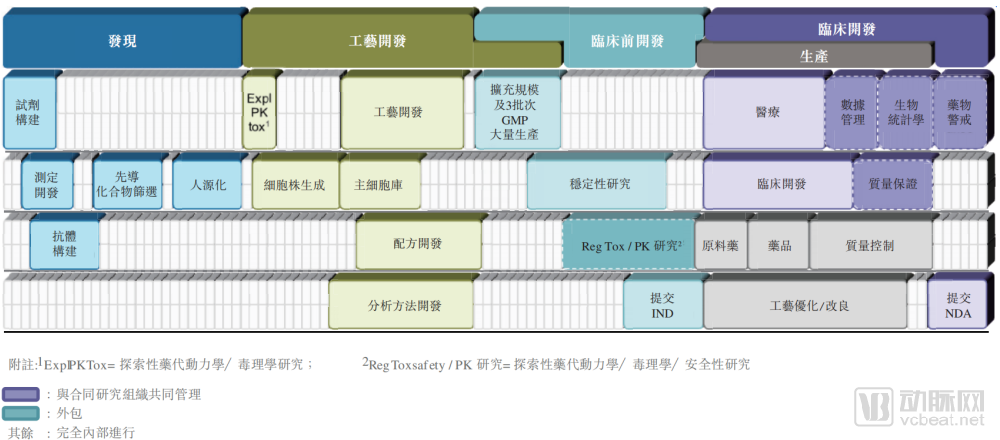
Since its inception, Akeso has developed a management system known as the Akeso Comprehensive Exploration (ACE) Platform. The ACE Platform encompasses comprehensive modern biologic drug discovery, research, and process development, enabling Akeso to operate with minimal reliance on external suppliers.
Guided by its strategic priorities, Akeso has implemented targeted optimizations for each function of the ACE platform, with a particular focus on establishing cross-functional integration at key milestones throughout the candidate drug lifecycle. The ACE platform ensures seamless collaboration among different functional teams at these critical stages, thereby accelerating development timelines, enhancing the likelihood of success, and reducing development costs.
In the R&D sector, Akeso’s core technologies lie in its TETRABODY platform, as well as its expertise in crystallography and structure-based antibody design and engineering.
The TETRABODY technology platform enables Akeso to overcome three recurring CMC challenges encountered in the development and manufacturing of bispecific antibodies: low expression levels due to the high molecular weight of bispecific antibodies, process development hurdles caused by structural heterogeneity, and poor drugability resulting from instability.
To address these common issues, TETRABODY technology optimizes the scaffold architecture and linker sequences to achieve higher stability and expression levels; its symmetric shape confers homogeneity and enhanced stability; and its tetravalent design improves potency and clinical efficacy.
After eight years of development, Akeso has established a drug R&D pipeline centered on oncology and immunology therapeutics. Its two lead candidates, AK104 and AK105, have entered pivotal clinical stages, with marketing applications for multiple indications scheduled to be filed progressively between 2020 and 2021. Four additional products have also entered clinical trials, while several preclinical candidates are currently under development.
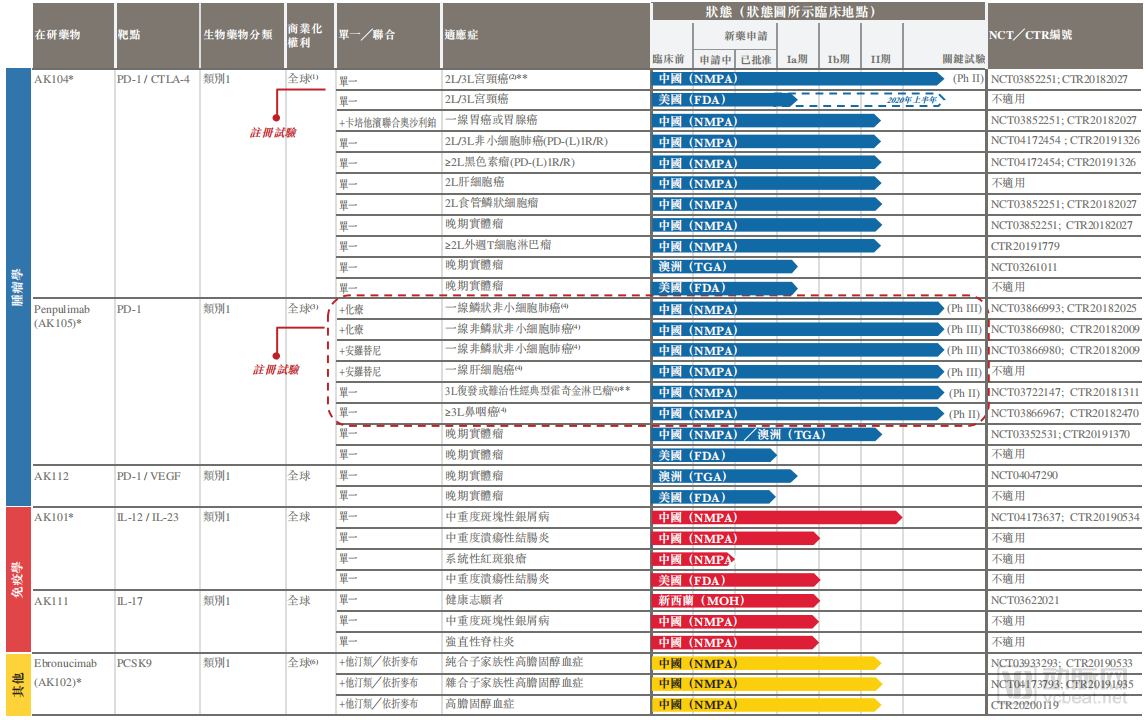
Akeso's Pipeline in Development
Akeso's flagship product, AK104, is a bispecific antibody targeting the PD-1/CTLA-4 dual checkpoints., the commercialization rights are held by Akeso Pharma, which is 95% owned by Akeso.
Current development efforts targeting CTLA-4 primarily focus on combination therapy with CTLA-4 monoclonal antibodies and PD-1 monoclonal antibodies. Bristol Myers Squibb (BMS) has initiated multiple clinical trials across various cancer types, including esophageal, bladder, gastric, and head and neck cancers, using its two proprietary products, Yervoy and Opdivo. Clinical trial results to date indicate that the combination therapy indeed enhances the efficacy of PD-1 monoclonal antibodies; however, it also leads to a significant increase in the incidence of adverse events in patients.
AK104, developed by Akeso, may represent a superior treatment option. AK104 simultaneously targets both PD-1 and CTLA-4, achieving therapeutic efficacy equivalent to that of combination therapy, a finding largely corroborated by current clinical trial results.
As of February 26, 2020, in the study cohorts of AK104 monotherapy for selected solid tumors, 7 subjects achieved partial response (PR), 16 subjects had stable disease, and the objective response rate (ORR) reached 21.2%. In another study evaluating AK104 in combination with mXELOX (oxaliplatin plus capecitabine regimen) for gastric cancer and esophageal adenocarcinoma, 10 out of 16 subjects achieved partial response (PR), yielding an ORR of 62.5%. These data demonstrate the therapeutic potential of AK104. Furthermore, monotherapy exhibited a significantly improved safety profile compared with combination therapy. Among 184 patients treated with AK104, the incidence of grade ≥3 treatment-related adverse events (TRAEs) was only 13%; even in the highest dose group (450 mg), this rate was merely 18%.
Akeso has currently initiated multiple Phase II clinical trials in China for various indications. In 2021, the company will continue to advance several clinical trials, including a Phase II trial evaluating second- and third-line treatment for cervical cancer conducted in the United States and Australia. Akeso expects to sequentially submit New Drug Applications (NDAs) in China, the United States, and Australia in the second half of 2021.
AK105 is a PD-1 monoclonal antibody drug independently developed by Akeso.Compared with currently marketed PD-1 monoclonal antibodies, AK105 has been engineered to remove unnecessary functional domains, enabling it to focus more specifically on PD-1 target engagement; therefore, it can be considered a potential best-in-class candidate.
In early clinical studies, AK105 demonstrated best-in-class potential. In a Phase I clinical trial for R/R cHL (relapsed/refractory classical Hodgkin lymphoma), 3 out of 5 evaluable patients achieved complete response (CR) and 2 achieved partial response (PR).
AK105 in combination with chemotherapy demonstrated superior efficacy in the treatment of non-small cell lung cancer. Among 43 evaluable subjects in the AK105 combination arm, 19 achieved partial response, yielding an objective response rate (ORR) of 44.2%, compared with an ORR of only 18.2% in the placebo combination arm.
The combination regimen of AK105 and anlotinib is currently under investigation in hepatocellular carcinoma (HCC) and non-small cell lung cancer (NSCLC). In the HCC study, 6 out of 28 evaluable subjects achieved partial response, yielding an objective response rate (ORR) of 21.4%.
Akeso has established a joint venture with Chia Tai Tianqing to accelerate the development of AK105. Chia Tai Tianqing will provide distribution channels to support the commercialization pathway for Akeso’s products. The New Drug Application (NDA) for the combination therapy of AK105 and anlotinib is expected to be submitted in 2022.
AK101 is a monoclonal antibody drug targeting IL-12/IL-23., which can simultaneously inhibit the interaction of IL-12 and IL-23 with their receptors. A drug targeting the same mechanism, Johnson & Johnson’s Stelara (ustekinumab), has already been approved for marketing to treat plaque psoriasis and Crohn’s disease. AK101 has currently completed Phase II clinical trials for moderate-to-severe plaque psoriasis, demonstrating favorable safety in the study; although adverse events were widespread, no serious adverse events occurred. The most common adverse event was upper respiratory tract infection, which may be related to influenza.
AK102 is a PCSK9 monoclonal antibody., which can be degraded and thereby reduce the liver’s capacity to clear low-density lipoprotein cholesterol (LDL-C). Currently, Amgen’s Repatha (evolocumab) has been approved for marketing in China for the treatment of hypercholesterolemia and atherosclerosis, as well as for reducing the risk of cardiovascular events. Phase I clinical trials of AK102 in healthy subjects demonstrated that AK102 was well tolerated and significantly reduced blood lipid levels in healthy subjects across all four dose groups.
AK111 is an anti-IL-17 monoclonal antibody., a similar product, Novartis’s Cosentyx (secukinumab), has already been approved for marketing. AK111 demonstrated a favorable safety profile in its Phase I clinical trial conducted in New Zealand, with all drug-related adverse events being mild and no serious adverse events reported. A Phase Ib clinical trial is expected to be initiated in China in 2020.
In addition to these pipelines already in clinical stages, Akeso’s multiple drug candidates—including AK112 (PD-1/VEGF), AK109 (VEGFR-2), AK114 (IL-1 beta), AK119 (CD73), and AK123 (PD-1/CD73)—are poised to initiate clinical trials or have already submitted Investigational New Drug (IND) applications.
Overall, Akeso’s current pipeline is driven by two core assets, AK104 and AK105, complemented by ongoing clinical development of products such as AK101, AK102, and AK111. The portfolio also includes a substantial number of candidates slated for imminent clinical trials or currently in preclinical stages. This tiered product distribution features a clear hierarchy between primary and secondary assets. Advancing multiple products in parallel further enables Akeso to mitigate the risks associated with drug development failures.
First-in-class novel drugs offer significant market potential but come with correspondingly high R&D risks. Follow-on innovative drugs benefit from greater market maturity and relatively easier regulatory approval, yet face intense competitive pressure. Therefore, Akeso has adopted a multi-pronged strategy in selecting new drug targets, simultaneously advancing its pipeline. This includes AK104, a potential global first-in-class therapy; AK105, which pursues differentiated competition in a relatively mature market; and several other candidates such as AK101, AK102, and AK111, which have the potential to become best-in-class therapies. This diversified investment approach helps Akeso mitigate risks while underscoring its exceptional R&D capabilities.
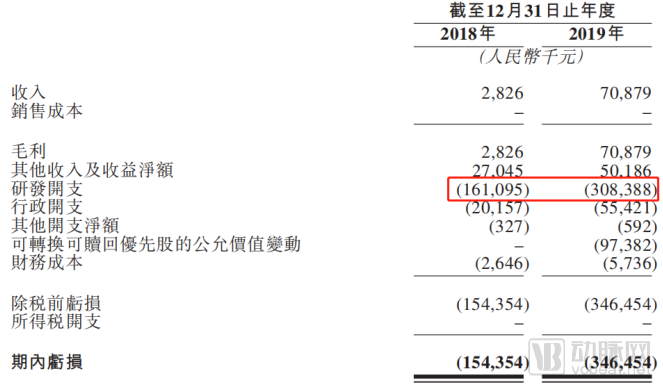
Selected Financial Data of Akeso
Due to the simultaneous advancement of multiple pipelines, Akeso’s R&D expenditures are relatively high even among innovative drug companies. In 2019, R&D spending exceeded RMB 300 million, nearly doubling from the previous year. The overall loss also increased correspondingly compared to the prior year.
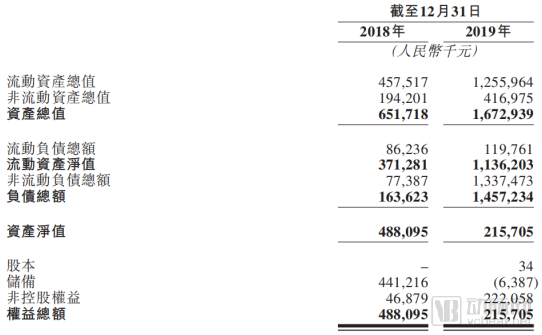
Akeso's Asset Profile
In terms of cash reserves, Akeso currently maintains total current assets of RMB 1.25 billion; however, its high total liabilities may pose certain future risks.
According to Akeso’s plan, multiple indications for its two flagship products will be submitted for marketing approval in succession from 2020 to 2021. As a result, Akeso may have its first product approved as early as 2021, with stable product sales revenue beginning in 2022. Therefore, Akeso’s future development prospects are quite promising.
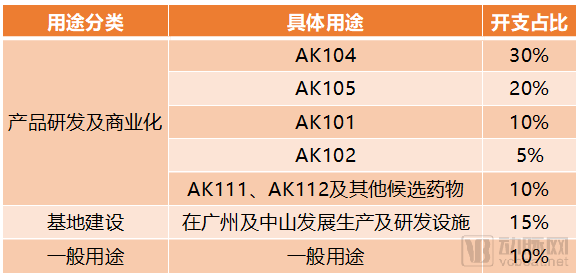
Use of Proceeds from IPO Financing
The funds raised from Akeso’s IPO will be primarily allocated (75%) to product development and commercialization expenses. Additionally, a portion of the proceeds will be used to develop production and R&D facilities in Guangzhou and Zhongshan. In January 2020, the topping-out ceremony for Akeso’s commercial production base in Guangzhou was completed, ensuring that the company can rapidly bring its products to market following regulatory approval.