

Redpoint, Honghui, and T&H Capital Back Emerging Biotechs in High-Difficulty Target PROTAC Therapeutics: Industry Report and IPO Filings
By Probe Capital
PROTAC (Proteolysis-Targeting Chimera) is a bifunctional small molecule in which a target protein ligand and an E3 ubiquitin ligase ligand are linked together via a linker to form a ternary complex. In vivo, PROTACs leverage the ubiquitin-proteasome pathway to achieve degradation of the target protein.
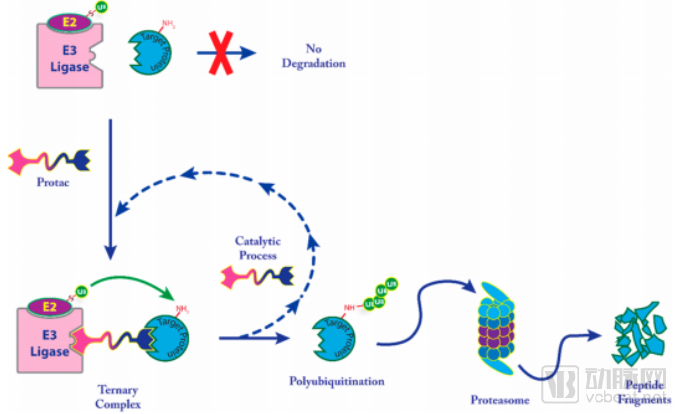
Principle of PROTAC Technology Source: JMC
The mechanism of action of PROTACs differs from that of traditional drugs. Most small-molecule inhibitors and antibody-based therapeutics exert their effects through occupancy-driven mechanisms, whereby they bind to the active sites of target proteins and compete with endogenous substrates, thereby inhibiting protein or enzymatic function. This approach imposes stringent requirements on factors such as drug-target affinity and drug half-life.
Small interfering RNA (siRNA) exerts its effects by regulating genes through gene silencing; however, RNA has a short half-life and is prone to degradation. Although GalNAc-conjugated RNA technology has successfully achieved liver targeting and improved RNA escape efficiency in recent years, the delivery of RNA therapeutics remains a significant challenge overall.
PROTACs differ from the aforementioned drugs in several key aspects. First, they do not necessarily need to bind to the active site of the target protein to exert their effects; moderate binding affinity to a non-active site is sufficient to induce degradation of the target protein. Studies have shown that PROTAC molecules can effectively degrade the target protein p38α even with a relatively weak binding affinity (Kd = 11 μM), achieving a DC50 of 210 nM and a Dmax of 91%. Second, throughout the process, PROTACs act as a “matchmaker,” bridging the E3 ligase and the target protein. Once the target protein and the E3 ligase are brought into proximity for ubiquitination, the PROTAC is released from the complex and free to facilitate the next round of interaction, thereby functioning catalytically. This catalytic nature allows PROTACs to be effective at low doses.
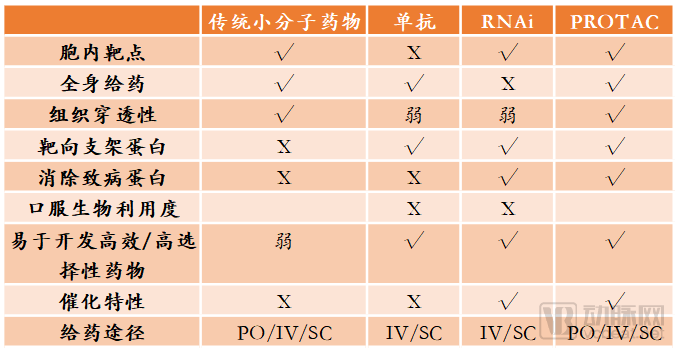
Pharmacology & Therapeutics
Research on PROTACs targets not only classic drug targets (such as estrogen and androgen receptors, protein kinases, etc.) but also transcription factors and scaffolding proteins. In the future, PROTACs hold promise for treating a variety of diseases, with cancer therapy being the most anticipated area; indeed, the majority of candidates currently under investigation target oncological indications. Furthermore, PROTAC technology is also being explored in the context of viral infections and immunology.
Currently, traditional small-molecule drugs and antibody-based therapeutics can target only about 15% of protein targets, leaving the remaining 85% as “undruggable” challenges for scientists who struggle to design effective agents. The primary obstacle in developing drugs against these “notorious” targets lies in their structural features: their active sites and surrounding surfaces are smooth and flat, lacking well-defined pockets that facilitate small-molecule binding. Moreover, many of these proteins are intracellular, making it difficult for large-molecule therapeutics to penetrate cells and exert their effects. The unique mechanism of action of PROTACs offers promise to break this impasse.
As mentioned above, the mechanism of action of PROTACs differs from that of traditional drugs, which rely on tight binding between small molecules and target proteins; instead, it primarily depends on ligand-induced proximity between E3 ligases and target proteins.
The ability of PROTACs to degrade target proteins also offers new strategies for addressing drug resistance. For instance, in overcoming ibrutinib resistance, 80% of patients with chronic lymphocytic leukemia develop the C481S mutation following ibrutinib treatment. In 2018, the research group led by Crews developed the PROTAC molecule MT-802, which effectively overcomes ibrutinib resistance conferred by the C481S mutation.
In 2019, Rao Yu and colleagues designed CRBN ligand-based BTK-targeting proteins that effectively degrade multiple clinically relevant mutant BTK proteins, thereby overcoming ibrutinib resistance caused by BTK mutations.
Furthermore, the protein-degrading properties of PROTACs confer upon them the ability to eliminate target proteins, meaning that they can affect not only the enzymatic functions of proteins but also their non-enzymatic functions.
Currently, several startups focused on PROTAC development have emerged abroad, all founded by experts in PROTAC molecules and E3 ligases.

Clinical-Stage PROTAC Candidates and Their Clinical Trial Progress
PROTAC startups have attracted investments from multiple capital sources. Internationally, Nextech Invest and Third Rock Ventures have invested in several PROTAC startups. Domestically, Sequoia Capital China, Minhe Capital, Honghui Capital, and Tonghe Yucheng Capital have also participated in funding rounds. Although domestic companies developing PROTAC technologies are still in the early stages of R&D, they have attracted investments from firms such as Kaitai Capital and Honghui Capital.
Arvinas
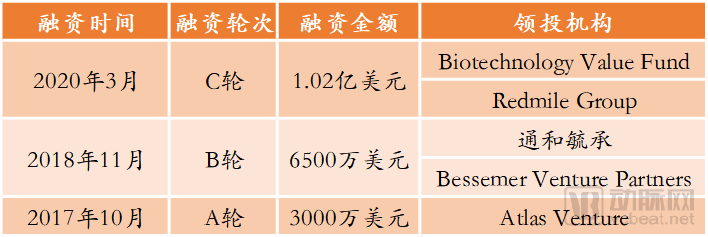
Arvinas was founded in 2013 by Professor Crews, the pioneer of PROTAC technology. The company currently operates on a small scale with a team of only 83 employees. In September 2018, it went public on the NASDAQ, achieving a market capitalization of RMB 1.552 billion.
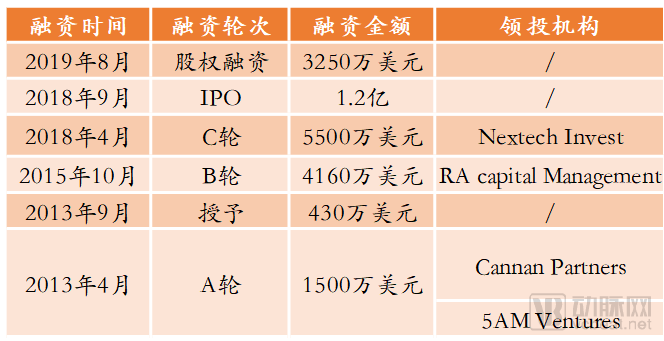
Arvinas Funding Status Data Source: Owler
The company is developing novel small-molecule drugs based on its PROTAC technology platform, which has already yielded orally bioavailable PROTAC molecules capable of crossing the blood-brain barrier. Its future objectives include targeting “undruggable” targets, expanding the range of E3 ligases utilized, and improving both success rates (currently 95%) and selectivity. The R&D pipeline consists of two major segments: oncology therapeutics and neurological disease therapeutics.
Among them, ARV-110 and ARV-471 are the most advanced candidates, having entered Phase I clinical trials. The Phase I safety and pharmacokinetic data have been released, demonstrating good tolerability in vivo. Due to the impact of the pandemic, the release of clinical efficacy data has been postponed.
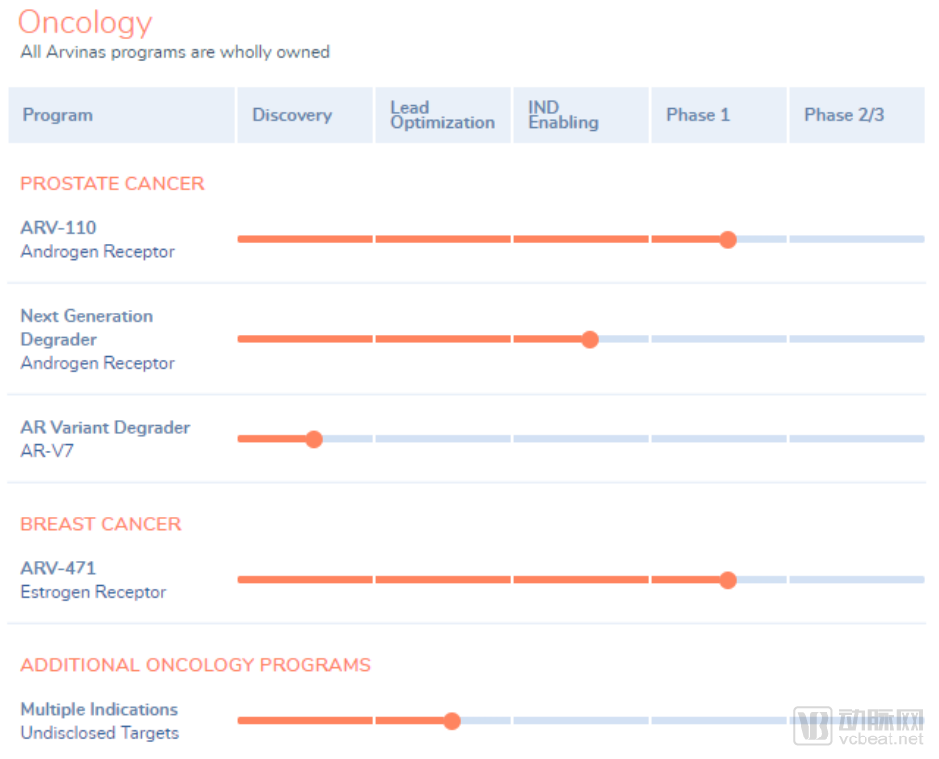
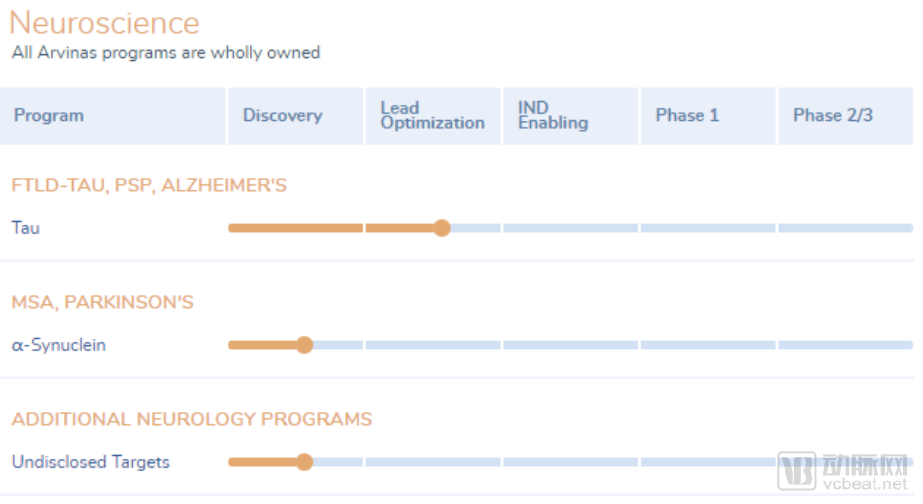
Arvinas’ R&D Pipeline Source: Company Website
The company has partnered with multiple institutions to advance PROTAC drug development, establishing a collaboration with Macroceutics, a DEL screening technology provider, in 2017, and with Certara, a drug development consulting firm, in 2020.
In addition, Arvinas has entered into collaborations with several internationally renowned pharmaceutical companies and the Chinese CRO company WuXi AppTec.
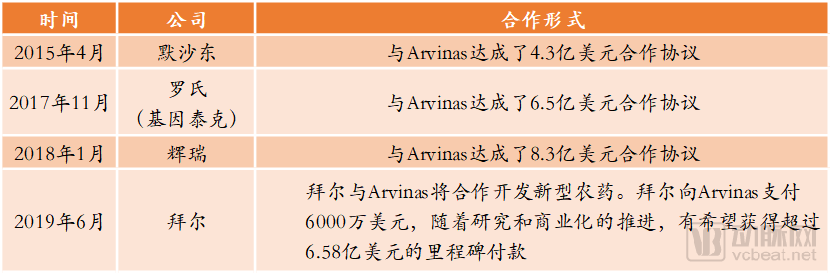
Arvinas’ Strategic PartnershipsData Source: Compiled from Public Information
Kymera Therapeutics
Kymera, founded in 2016, is a small-scale company based in Cambridge, Massachusetts, with a team of 36 members. Its CEO, Laurent Audoly, has over 20 years of experience in drug development and previously served as the head of R&D at Pierre Fabre.
Kymera is dedicated to advancing protein degradation therapeutics and has established its unique Pegasus platform, which leverages bioinformatics-driven target discovery, a proprietary E3 ligase library, advanced protein degradation assay capabilities, and high-resolution structural biology models.
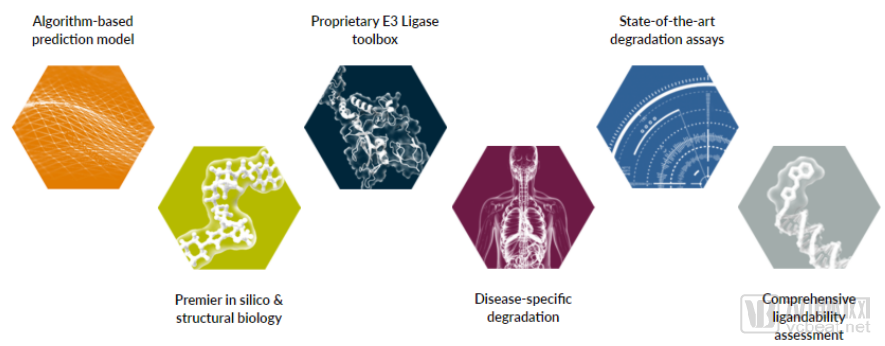
Kymera’s Pegasus Platform Source: Company Official Website
Kymera’s pipeline consists of two segments, inflammation and oncology, with a primary focus on the IRAK4 protein, which plays a critical role in innate immunity. Published preclinical data demonstrate that their designed PROTAC can effectively reduce IRAK4 levels in the skin and spleen, attenuate skin thickening, and lower circulating Th1 and Th17 cytokine levels to those achieved with topical steroid therapy, while exhibiting good tolerability upon oral administration.
Furthermore, they have developed PROTAC molecules targeting STAT3. Cellular assays demonstrated that KYM-003 can bridge the E3 ligase and the target protein to form a ternary complex, thereby achieving highly selective degradation of STAT3. Animal studies showed that total STAT3 levels decreased by 90% within 24 hours after a single dose of KYM-003. Repeated administration exhibited dose-dependent antitumor activity with good tolerability.
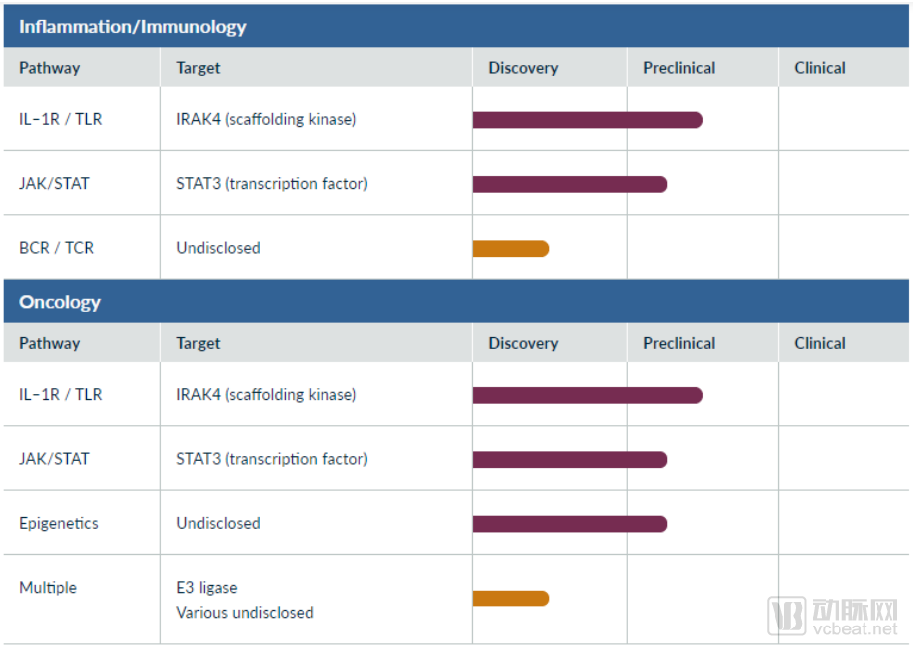
Kymera’s R&D Pipeline Source: Company Website
Kymera has established partnerships with multiple companies, including WuXi AppTec in China.
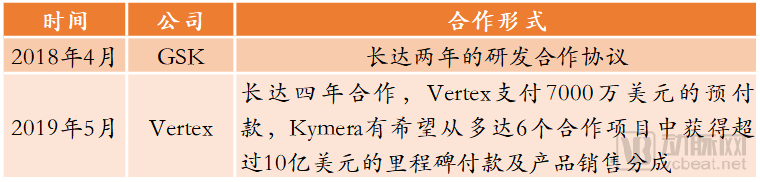
Kymera’s Strategic Partnerships Source: Company Website
C4 Therapeutics
C4 Therapeutics was co-founded in 2015 by Marc A. Cohen, a director at Harvard University’s Dana-Farber Cancer Institute, and three Dana-Farber professors: Ken, Nathanael, and James Bradner. The company has fewer than 100 employees. James Bradner currently leads PROTAC research and development at the Novartis Institutes for Biomedical Research.

C4T's Financing Status Source: Crunchbase
The company is dedicated to developing novel therapeutics for cancer, neurological disorders, and other significant protein-mediated diseases. Leveraging the Degronimid technology pioneered by James Bradner for targeted protein degradation, the company is developing PROTAC molecules that target CRBN to degrade BRD4. The company’s current R&D pipeline has not been disclosed.
The company has collaborated with multiple enterprises, including Calico and C4 to jointly develop anti-aging drugs; Roche and C4 to develop anti-tumor drugs; and Biogen and C4 to develop therapeutic drugs for neurological diseases.
Vividion
Vividion was founded in 2014, with its core technology primarily derived from the Scripps Research Institute. Its founders include Benjamin Cravatt, Phil Baran, and Jin-Quan Yu.
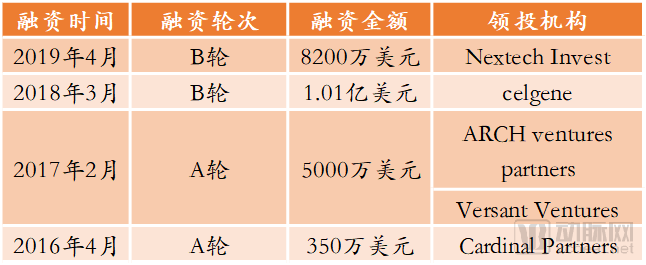
Vividion's Funding Status Source: Crunchbase
Vividion is dedicated to targeting “undruggable” targets, while the Cravatt laboratory is committed to leveraging proteome-wide small-molecule screening technologies and synthetic chemistry to establish a library of small-molecule fragments equipped with covalent warheads.
The company’s current R&D pipeline has not yet been disclosed, with a primary focus on immune-related diseases. It is advancing four distinct drug candidates and aims to move 4–5 projects into clinical trials over the next 4–5 years, while also propelling novel protein-degradation therapeutics into clinical development and expanding its early-stage therapeutic pipeline.
Nurix
Nurix was founded in 2009 and is headquartered in San Francisco, California. Its three founders are renowned scholars specializing in E3 ligases. John Kuriyan is an expert in the structural dynamics of ubiquitin ligases and other signaling complexes; Dr. Michael Rape is an expert in ubiquitin-dependent cell cycle progression and cancer biology; and Arthur Weiss is an expert in immunology and signal transduction.
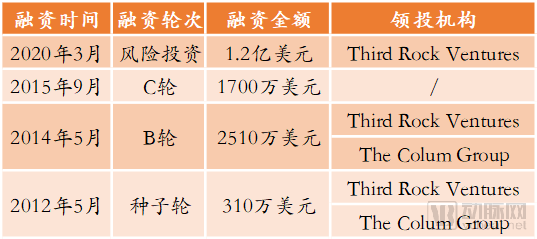
Nurix’s Funding Status Source: Crunchbase
Nurix possesses a unique E3 ligase platform that leverages DEL high-throughput screening to identify E3 ligase ligands, thereby modulating target proteins through the utilization or inhibition of E3 ligases.
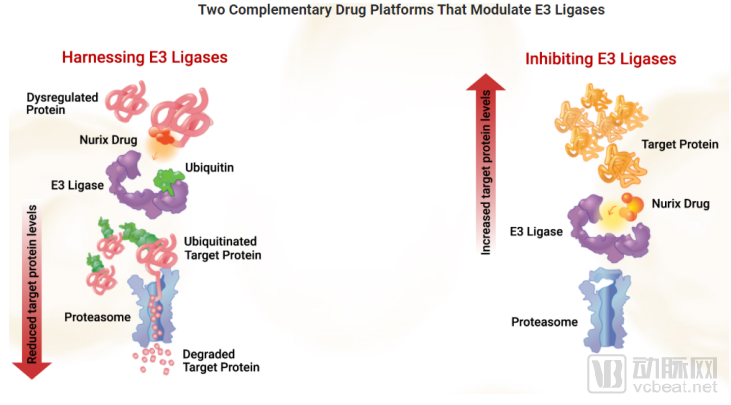
Nurix’s E3 Ligase Platform Source: Company Website
Nurix’s R&D pipeline is focused on developing drugs for immune-mediated diseases and hematologic cancers, including immuno-oncology therapies. The most advanced candidate in its current pipeline is an oral BTK degrader, with an Investigational New Drug (IND) application to the FDA expected in the second half of 2020. Another product is a CBL-B E3 ligase inhibitor, which can stimulate T-cell activation and IL-2 secretion. Both candidates are derived from Nurix’s E3 ligase platform.
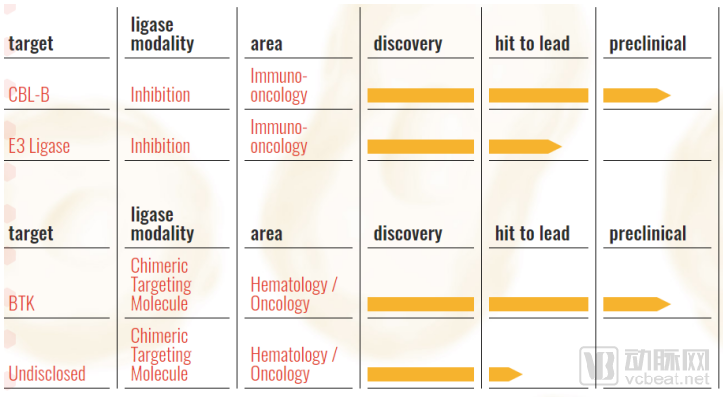
Nurix’s R&D Pipeline Source: Company Website
Nurix has established partnerships with multiple companies: in 2015, it entered into a collaboration and development agreement with Celgene, under which Nurix was responsible for candidate compound screening and Phase I clinical trials, with a focus on the selection and development of E3 ubiquitin ligase ligands; in June 2019, it reached a global strategic collaboration with Gilead Sciences valued at $2.345 billion; and in January 2020, it secured a $2.5 billion strategic partnership with Sanofi.
Oncopia Therapeutics
Oncopia Therapeutics, established in 2017, is a wholly-owned subsidiary of Suzhou Anbao Pharmaceutical. The Chairman of Suzhou Anbao Pharmaceutical is Dr. Shaomeng Wang, a renowned medicinal chemist and tenured full professor at the University of Michigan. Oncopia’s angel round was invested by HighTide Capital.

Oncopia’s Funding Status Source: Crunchbase
In 2019, Wang Shaomeng led his research team to publish a paper in *Cancer Cell*, in which they reported the design of PROTAC molecules capable of targeting STAT3 protein for degradation. This approach completely abrogated STAT3 activity, thereby overcoming the limitations of conventional STAT3 inhibitors that merely suppress enzymatic activity.
Oncopia plans to submit one Investigational New Drug (IND) application in China and the United States within the next 18 months, and to submit two to three additional IND applications in these countries over the following 24–36 months to initiate clinical trials.
Cedilla Therapeutics
The founders of Cedilla Therapeutics include three professors from Harvard Medical School—Alan D’Andrea, Steve Gygi, and William Kaelin—and two professors from the University of California—Matthew Jacobson and Jack Taunton.

Cedilla's Funding Status Source: Crunchbase
The company selects regulatory nodes by modulating the degradation kinetics of different targets to reduce their stability, thereby enabling recognition and degradation by existing intracellular degradation mechanisms. They are utilizing traditional small-molecule drugs, with eight early-stage projects currently underway; however, the specific R&D pipeline has not yet been disclosed.
Cullgen
Cullgen was founded in 2018. Dr. Ying Luo serves as the company’s Chairman of the Board and President; he previously founded Shanghai Genomics in 2001, which has since been acquired by GNI Group. Professor Jin Jian is another co-founder, whose latest research, published in Science Advances, demonstrated the use of light-induced PROTAC technology for tumor treatment.
Cullgen has its own Usmite™ technology platform, dedicated to developing first-in-class (FIC) new chemical entities for the treatment of diseases that lack effective therapies. In 2019, it received investment from Sequoia Capital and Honghui Capital.

Cullgen’s Financing Status Source: Crunchbase
Novartis
Novartis’s PROTAC lead is James Bradner, one of the founders of C4 Therapeutics. The Novartis Institutes for BioMedical Research has successfully induced targeted degradation for more than 40 targets, many of which were previously considered undruggable.
Amgen
Amgen, led by Raymond Deshaies in PROTAC R&D—Raymond being one of the founders of PROTACs—has developed a PROTAC that demonstrates efficacy at both cellular and animal levels, though the specific cancer target has not been disclosed.
Linko Pharma
Lingke Pharmaceuticals was founded by Dr. Wan Zhaokui, former Head of Chemistry R&D at Johnson & Johnson’s Asia-Pacific R&D Center (Shanghai); Dr. Wang Jun, former Vice President of the Biology Department at Medicilon Inc.; and Dr. Vazquez, former Director of Medicinal Chemistry at Pfizer. The company focuses on the research and development of small-molecule drugs for oncology and autoimmune diseases, engaging in early-stage new drug discovery.
The company’s senior founders possess distinct technical advantages: Wan Zhaokui has experience in building targeted protein degradation platforms; Wang Jun conducted research on Ras many years ago; and Michael Vazquez and Wan Zhaokui have extensive expertise in drug design. In May 2018, Linka Therapeutics won first place in the biomedical industry finals of the 7th China Innovation and Entrepreneurship Competition.
In April 2018, Linko Pharma secured tens of millions of U.S. dollars in angel financing, led by C Capital, with participation from Mifang Capital and Sinopharm Capital.
Fendi Technology
Fendi Technology, founded in 2014, targets unmet clinical needs by flexibly leveraging big data, artificial intelligence (AI), and molecular simulation technologies, seamlessly integrating them with biological experiments to innovatively, efficiently, and systematically develop breakthrough protein-degrading novel drugs with new mechanisms of action.
Fendi Technology has established the PRODEDTM small-molecule targeted protein degradation platform for novel drug development. This platform integrates protein degradation with immune self-regulation mechanisms and leverages technologies such as artificial intelligence, molecular simulation, and combinatorial chemistry to accelerate the discovery of highly druggable small-molecule lead compounds, thereby advancing the development of small-molecule drugs for novel immunotherapies.
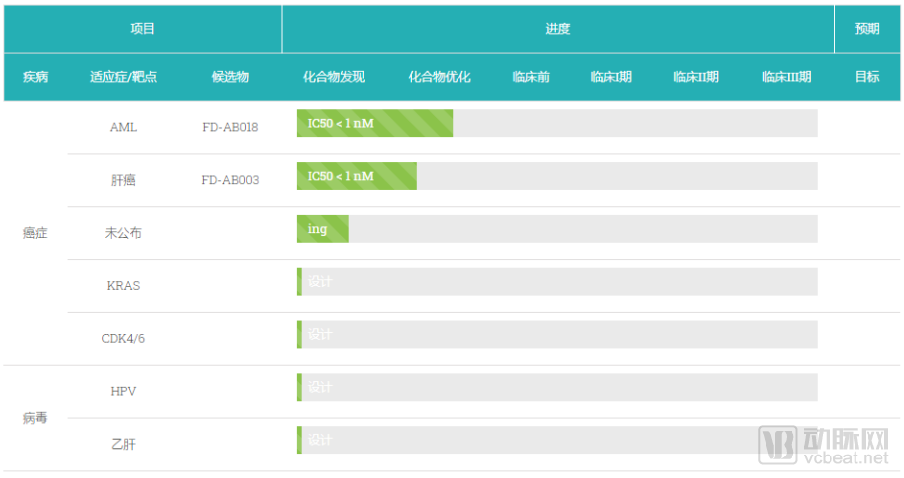
Fendi Technology's R&D Pipeline Source: Company Official Website
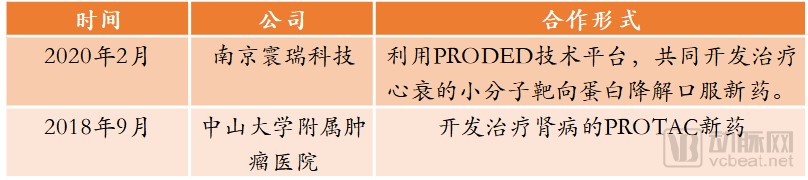
A Partial Summary of Fendi Technology’s Strategic Partnerships, Compiled by Probe Capital
Suzhou Kintor Pharmaceuticals
Kintor Pharmaceutical was established in 2009 and listed on China’s New Third Board in 2016. It was delisted in June 2018, with a market capitalization of approximately RMB 2.038 billion prior to delisting. In October 2019, the company completed a USD 45 million financing round, led by Shanghai Free Trade Zone Fund, with participation from Huajin Capital, CCB Science and Technology Innovation Fund, Yicheng Hongtai, Yirong Science and Technology Innovation, Chengfa Fund, and other co-investors. Pre-planned investor Hui Capital also participated in this round. During the same period, its subsidiary, Fortune Pharma, secured USD 62 million in financing.
The company focuses on developing “best-in-class” and “first-in-class” drugs, with R&D efforts centered on prostate cancer, breast cancer, and liver cancer. Its core product, proxalutamide, is one of only two AR antagonists worldwide that are being developed for both monotherapy and combination therapy indications. Both development programs are in Phase III clinical trials, progressing at a comparable pace. In contrast, SHR-3680, a competing drug in the same class from Hengrui Medicine, is currently in Phase II clinical trials.
The PROTAC protein is still in the stage of screening compounds for confirmation.
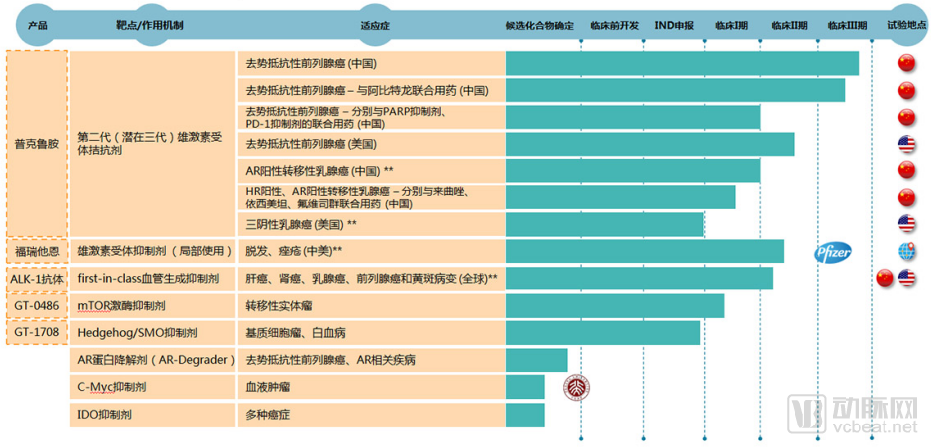
Kintor Pharmaceutical’s R&D Pipeline Source: Company Website
Wuyuan Bio
Wuyuan Biology was established in 2015. Located in the Zhongxing Technology Park within the Nanchang High-Tech Industrial Development Zone, the company’s core businesses include the research and development of novel anti-tumor drugs, the establishment and operation of AI-driven organoid big data biobanks, precision medicine and bionic medicine, as well as intellectual property transactions and capital operations in the biopharmaceutical industry.
In 2018, Wuyuan Biology’s PROTAC technology was selected for the Jiangxi Province “Double Thousand Plan” High-Level Entrepreneurial Team Project, making it one of only three biology-related projects chosen in the province. Wuyuan Biology aims to integrate this technology with organoids, leveraging organoid technology to facilitate the discovery and validation of new drug targets and to provide efficacy and safety assessments for PROTAC molecules. This approach significantly enhances the success rate of new drug development while reducing both the time and cost involved, thereby offering distinct advantages in the field of pharmaceutical R&D.
Chengdu Haichuang Pharmaceutical Co., Ltd.
Haichuang Pharmaceutical was established in 2013, with its headquarters located in Chengdu, China. The company has branches in the United States, Australia, and other regions, conducting new drug research and industrialization for the global market.
Leveraging globally leading technological platforms in deuterium substitution, PROTAC, and advanced drug delivery systems, the company is developing innovative new drugs with significant market potential. Currently, multiple innovative drug candidates for the treatment of conditions such as prostate cancer, breast cancer, and gout are at various stages of clinical and preclinical research. Within its existing product pipeline, HC-1119 (a novel therapeutic for castration-resistant prostate cancer) has initiated a global multi-center Phase III clinical trial and is expected to be launched simultaneously in China, the United States, and other regions in 2023. HP501 (a novel therapeutic for gout and hyperuricemia) has received the "Clinical Trial Notification" from the National Medical Products Administration (NMPA) and is currently undergoing a Phase I clinical trial at the GCP Center of West China Hospital, Sichuan University.
The company has filed over 100 PCT and Chinese invention patent applications, and has been granted more than 20 patents in China, the United States, Japan, Europe, and other countries and regions.
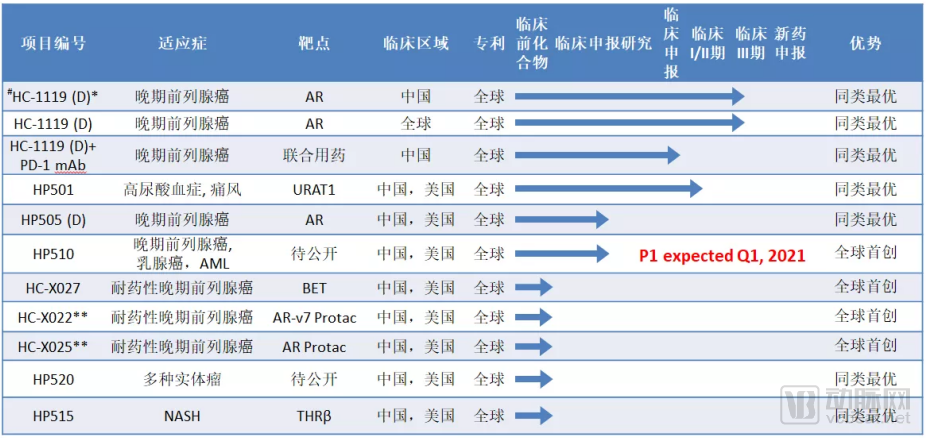
HaiChuang Pharma’s R&D Pipeline Source: Company Website
Currently, Haichuang Pharmaceutical has completed three rounds of financing. In September 2019, it closed a $40 million Series B round, led by Tongde Capital and Fosun Pharma.
Meizhi Pharmaceutical
Shanghai Meizhi Pharmaceutical, founded in 2017 by a team of senior industry scientists, specializes in the development of novel drugs with independent intellectual property rights using PROTAC technology. The company has established multiple R&D pipelines for anti-tumor PROTAC therapeutics and has filed a total of 10 PROTAC-related patents, including 5 PCT patents.
Hengrui Medicine
In July 2019, Hengrui and Shanghai Hongchuang Medical Technology Co., Ltd. acquired a 31% equity stake in Princeps Therapeutics, with Hengrui contributing USD 1.2 million and Shanghai Hongchuang Medical Technology Co., Ltd. contributing USD 2.8 million. Princeps Therapeutics is a biotechnology company developing E3 ligase inhibitors.