

The Undervalued Commercial Frontier of Brain Science: How AI Drives Its Industrialization
Brain science is considered the final frontier of human scientific exploration. Although the physical brain resides within the small confines of the human skull, studying it is no simpler than exploring the vast universe.
While many still regard neuroscience as an elusive jewel atop the crown of scientific research, billions of dollars in funding have already flowed into the field. These investors are none other than governments around the world.
Since the United States launched its Brain Initiative in 2013, countries and regions including the United States, the European Union, Japan, Australia, and South Korea have successively introduced their own brain science research programs. Brain science and brain-inspired research have become a focal point at the forefront of international science and technology, regarded by nations as new drivers of future economic growth and transformative engines leading technological innovation.
However, human understanding of the brain remains relatively superficial to date. In his new book, *The Brain from Inside Out*, György Buzsáki, Professor of Neuroscience at New York University School of Medicine, writes, “We are making continuous progress, but the problems remain highly challenging.”
In the realm of brain science research, it remains unclear whether we are in the darkness before dawn or have just stepped into an eternal night. However, one thing is certain: the technologies currently used for brain research are blurring traditional disciplinary boundaries. Computer science disciplines, including artificial intelligence, cloud computing, and big data, are converging with biology to explore the brain. The introduction of these new variables may well lead to novel discoveries.
VCBeat’s analysis reveals that in the field of brain science, epilepsy serves as an excellent model for neuroscience research among neurological disorders, beyond the widely focused-on Alzheimer’s disease. Particularly in refractory epilepsy, “deep brain signals” obtained via stereoelectroencephalography (SEEG) provide a wealth of scarce neural data for brain science research. Clearly, in an era characterized by the large-scale generation of electroencephalogram (EEG) data, manual data processing methods are no longer sufficient, and the integration of artificial intelligence (AI) has introduced novel approaches to data mining.
In fact, this is not the only entry point for AI to explore brain science through epilepsy research. Beyond scientific research, what are the pathways for AI-EEG integration in terms of commercialization and industrialization? How vast is its potential? VCBeat has compiled an analysis.
The current stage of brain science development is comparable to the state of physics and chemistry in the early 20th century. While scientists have achieved breakthroughs in many specialized fields, major conceptual understanding and transformative breakthroughs have yet to emerge. The most critical issue in contemporary neuroscience is that our understanding of various brain functions and the working principles of neural networks remains rudimentary. We can only grasp the general relationships between brain regions and their functions, while finer details remain unclear.
The edifice of brain science has yet to be fully constructed; in laying its foundation, we require more fundamental theories of brain science. This aligns with the priorities of China’s Brain Project. Around 2019, after more than five years of deliberation, a basic consensus was reached within the Chinese scientific community on the “one body, two wings” research framework for the Brain Project.
China’s Brain Project, with its “One Body, Two Wings” framework, focuses on “fundamental issues in brain science; diagnosis and treatment of brain disorders; and brain-inspired artificial intelligence.”
“The One Body” refers to the “Cognitive Brain,” focusing on understanding the origins of human cognitive functions. Its core lies in elucidating the essence of structural and functional neural networks within cognitive brain regions, aiming to clarify how the brain works.
As described by Academician Mu-Ming Poo, a leader and advocate of the China Brain Project, “To analyze the function of a computer, we must understand its architecture; similarly, to understand brain function, we must elucidate the brain’s network architecture. This is referred to as ‘Whole-Brain Mesoscale Neural Connectivity Atlas’, is also a key component of our grand plan.”
The two wings point to the two main strategic directions: “brain protection” and “brain creation.”
“Brain Protection” primarily focuses on improving the diagnosis and treatment of major brain disorders, including Alzheimer’s disease, epilepsy, Parkinson’s disease, and depression. In this sector of neurological diseases, there is significant potential for the emergence of billion-dollar unicorn companies.
“Brain Creation” primarily focuses on the research and development of brain-inspired artificial intelligence, with its core strategic goal being the development of brain-like computers. This initiative will consist of two parts: first, the advancement of brain-type devices and architectures; second, the design and development of brain-type information generation and processing systems.
The immense value of the China Brain Project lies in its sustained implementation over the next five to ten years, which will vigorously promote the deep integration of artificial intelligence and brain science. Its research achievements will significantly advance the development of brain-inspired artificial intelligence technologies, and breakthroughs in this field will lead a new round of technological revolution.
Within the “one body, two wings” framework, which area demands more urgent research? The answer is undoubtedly the diagnosis and treatment of major brain diseases.
According to statistics from the World Health Organization, brain-related diseases—including various neurological and psychiatric disorders such as Alzheimer’s disease, Parkinson’s disease, epilepsy, schizophrenia, and depression—impose the greatest societal burden among all diseases, accounting for more than 28%. These conditions have surpassed cardiovascular diseases and cancer to become the leading factor affecting human quality of life.
Therefore, the diagnosis, treatment, and intervention of major brain disorders will become the most practically significant and forward-looking priority area in national brain initiatives across countries.
As is well known, the human brain contains nearly 100 billion neurons. The neural network is extraordinarily complex, with a vast number of neurons, each exhibiting distinct firing patterns, coding schemes, and information processing mechanisms. Therefore, to understand how this complex system functions, it is essential to first have the means and tools for continuous recording of human brain activity data. With the scientific community’s ongoing efforts in recording, extracting, analyzing, and studying electroencephalographic (EEG) signals, increasingly profound insights into brain function are being uncovered.
Among the various brain disorders, which type holds the greatest potential for advancing research on cognitive enhancement and brain-inspired intelligence?
Epilepsy is undoubtedly an excellent model for neuroscience research.
Unlike degenerative neurological disorders such as Alzheimer’s and Parkinson’s diseases, as well as psychiatric conditions like depression, epilepsy is a chronic brain disease that transcends race, age, and gender, affecting individuals throughout their entire lifespan.
The etiologies of epilepsy are diverse, ranging from congenital genetic defects to acquired developmental abnormalities and intracranial or extracranial trauma. However, these causes converge on a core characteristic: sudden, abnormal neuronal discharges originating in specific intracranial regions (the epileptogenic zone). These discharges propagate via neural conduction pathways to various functional areas throughout the brain, ultimately resulting in transient cerebral dysfunction and physical impairment.
It is precisely the transient functional deprivation of specific brain regions, resulting from the nature of epileptic seizures, that enables humans to effectively record—through specific techniques such as stereoelectroencephalography (SEEG) electrodes—the propagation pathways of abnormal electrical activity within cerebral neural networks during seizures, as well as to compare characteristics before and after the loss of function in specific brain areas. Each epileptic seizure undoubtedly provides invaluable “deep-space information” for humanity’s understanding of the brain.
If the study of the human brain is regarded as the final frontier in natural science, then research on epilepsy serves as a signpost for humanity’s exploration of this last frontier. Furthermore, epilepsy research holds profound social significance.
The World Health Organization’s report, “Epilepsy: A Public Health Imperative,” states that epilepsy is one of the most common chronic neurological diseases worldwide, affecting approximately 55 million people of all ages globally. Epilepsy imposes a substantial and long-term burden on nations, societies, healthcare systems, patients’ families, and patients themselves.
In developing countries, due to a lack of proper understanding of epilepsy and scarce medical resources, most patients with epilepsy do not receive rational and effective treatment, resulting in a significant “treatment gap.” In China, the treatment gap for patients with active epilepsy reaches 63%. Based on this estimate, approximately 4 million patients with active epilepsy in China are not receiving appropriate treatment.
Surgical interventions are particularly critical. China has over 10 million epilepsy patients, accounting for approximately 7‰ of the total population. Among them, about 3 million suffer from drug-resistant epilepsy, a condition that cannot be effectively controlled with medication alone, necessitating treatment with more advanced surgical techniques.
Despite a substantial increase in the number of antiepileptic drugs over the past two decades, approximately one-third of patients remain resistant to pharmacological treatment. Although surgical outcomes have improved, with more than half of surgical patients achieving long-term seizure freedom, only a small proportion of drug-resistant patients undergo epilepsy surgery.
Although there is a significant treatment gap, epilepsy is not as frightening as it may seem. With current therapeutic approaches, 90% of patients with epilepsy can achieve cure or effective control. In terms of treatment modalities, 60%–70% of patients can have their seizures controlled with antiepileptic drugs, while the remaining 30% require surgical intervention.
However, the fact that epilepsy is curable and treatable does not mean that there are no dilemmas in epilepsy treatment in China. This is especially true given the scarcity of medical resources and the higher prevalence of epilepsy in the country.
The gaps that existing diagnostic and treatment processes fail to address provide fertile ground for AI-driven exploration in EEG research.
Across every stage of epilepsy diagnosis and treatment—from initial assessment to confirmed diagnosis, from ongoing monitoring to routine pharmacological management and control, and from the identification of drug-resistant epilepsy to surgical intervention—what emerging technologies are permeating this ancient disease and driving tangible change? Which stages hold significant investment potential? VCBeat has conducted a comprehensive review.
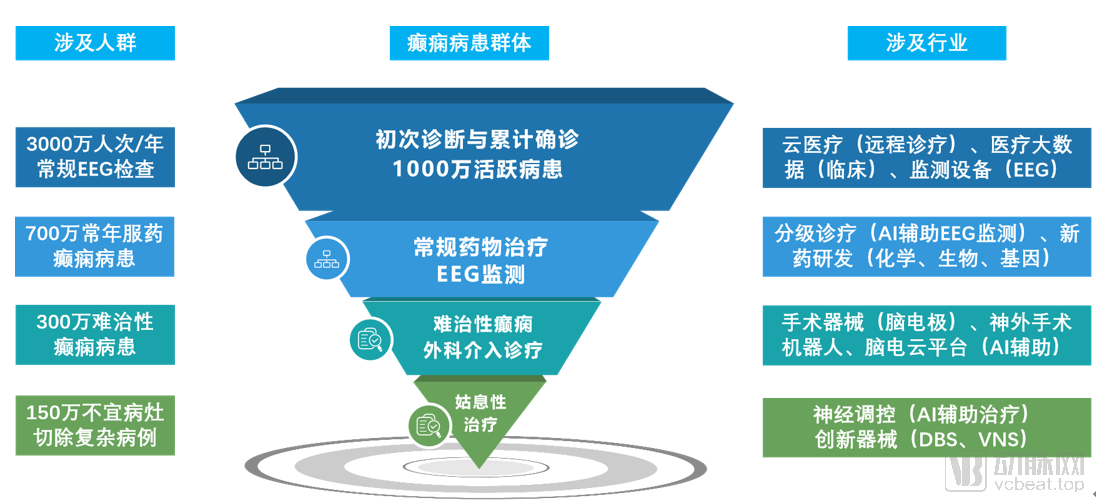
We can divide the integration of AI into epilepsy diagnosis and treatment into three stages: initial diagnosis, medication monitoring and early warning, and diagnosis and treatment of drug-resistant epilepsy.
1. Initial Diagnosis and Cumulative Confirmed Cases
During the initial diagnosis and cumulative confirmation stages, from the first abnormal seizure to the final confirmed diagnosis of epilepsy, electroencephalogram (EEG) examination is a routine step in the diagnostic process. Generally, EEG examinations reveal abnormalities in the interictal period for approximately 80% of patients with epilepsy, while only 5%-20% of patients may show normal EEG results during the interictal period.
Clinical Dilemma 1: The Diagnostic and Triage Dilemma
The greatest challenge at this stage is the scarcity of manual diagnostic and treatment resources. China faces a severe shortage of electroencephalogram (EEG) technicians. Due to limitations in EEG equipment, algorithms, and specialized personnel, the diagnosis and treatment of epilepsy are significantly constrained. Furthermore, since EEG technicians with extensive diagnostic experience and neurologists specializing in clinical care are predominantly concentrated in key epilepsy centers, and given the uncertainty and panic among patients and their families regarding initial epileptic seizures, the majority of patients flock to tertiary Grade A hospitals across various provinces and municipalities. This results in ineffective patient triage, while the accurate diagnosis and effective differentiation of a large number of suspected epilepsy cases and first-onset epilepsy patients have become prominent clinical challenges.
Clinical Dilemma 2: The Supply-Demand Imbalance.
From a clinical perspective, patients initially presenting with symptoms and subsequently diagnosed with epilepsy account for approximately 20% of all epilepsy-related consultations. Based on an annual incidence of 400,000 new epilepsy cases in China, the number of individuals undergoing initial diagnostic EEG monitoring alone approaches 2 million per year. This figure is in addition to the cumulative total of nearly 10 million patients already diagnosed with epilepsy.
Confirming diagnoses for first-time patients and conducting routine EEG monitoring for diagnosed patients often involve multiple clinical centers and repeated routine electroencephalogram (EEG) assessments (approximately 2.5 times per year for confirmed cases), leading to substantial consumption of existing medical diagnostic resources and imposing a heavy burden on healthcare systems across various regions.
Taking an epilepsy center in a district of Beijing as an example, the annual volume of routine EEG examinations reaches 15,000 patient visits. The diagnostic fee per patient is approximately RMB 800 per session. The center is equipped with 15 routine EEG machines and employs more than 20 EEG technologists. However, due to excessive monitoring workloads, monotonous working conditions, and limited career advancement opportunities, the turnover rate among EEG technologists remains high. This exacerbates the mismatch between patient demand for medical services and the available healthcare supply.
Industry Value and Key Stakeholders in the Initial Diagnosis Phase:
The massive demand for EEG monitoring among epilepsy patients, coupled with the temporal nature of EEG data (which makes the review process time-consuming), has rendered the heavy reliance on manual identification and diagnostic reporting unsustainable. In this context, leveraging AI algorithms to rapidly extract key pathological EEG features has become a major trend.
Currently, numerous technology companies have entered this field. Many domestic and international tech firms and internet giants, including Alibaba Health (which launched the Alibaba Epilepsy EEG Analysis Engine in May 2019), have actively engaged in the field of epilepsy diagnosis. They aim to alleviate the shortage of medical diagnostic resources through AI algorithms. Driven by the development of new 5G infrastructure, these entities are leveraging cloud healthcare and remote big data solutions to address the uneven distribution of clinical resources.
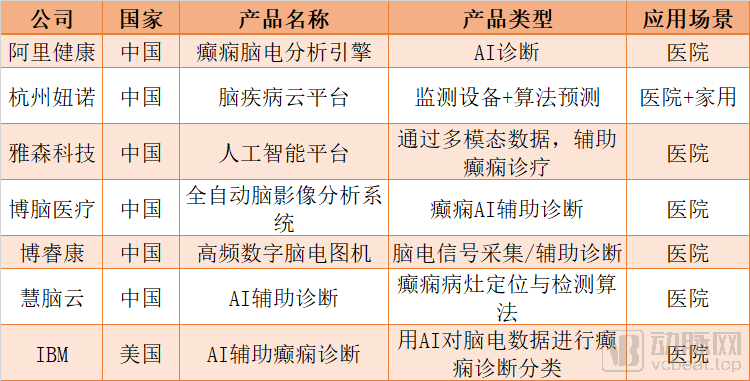
Relevance to the Brain Science Industry: ★★☆☆☆
From the perspective of current corporate strategies in AI-based EEG diagnosis for epilepsy, these companies are not primarily focused on epilepsy diagnosis and treatment per se, but rather recognize the research value of electroencephalography (EEG) underlying such clinical applications. Indeed, EEG monitoring holds substantial value for brain activity research; however, numerous challenges must still be addressed to achieve its effective utilization.
Electroencephalography (EEG) monitoring has a long history, and top academic institutions worldwide have been deeply involved in research on non-invasive monitoring. However, due to the poor signal-to-noise ratio of scalp EEG data, the difficulty in decoupling effective feature data, and multiple constraints such as monitoring environments and individual characteristics, it is extremely challenging for the neuroscience community to further extract deeper cognitive insights from these data.
VCBeat once communicated with a scholar in the field of computational neuroscience in the United States, who vividly likened the process of EEG decoding to “standing outside a massive football stadium and trying to understand what specific fans seated in a particular section are saying.” He noted that after initial signal coupling, many neurons generate a vast and noisy background, making it difficult to discern meaningful information. Only during special events, such as a goal being scored, can one roughly distinguish the cheers from fans of a particular team. The field of non-invasive brain-computer interfaces (BCI) faces similar challenges; it can primarily capture regional trend signals but cannot further interpret deeper meanings.
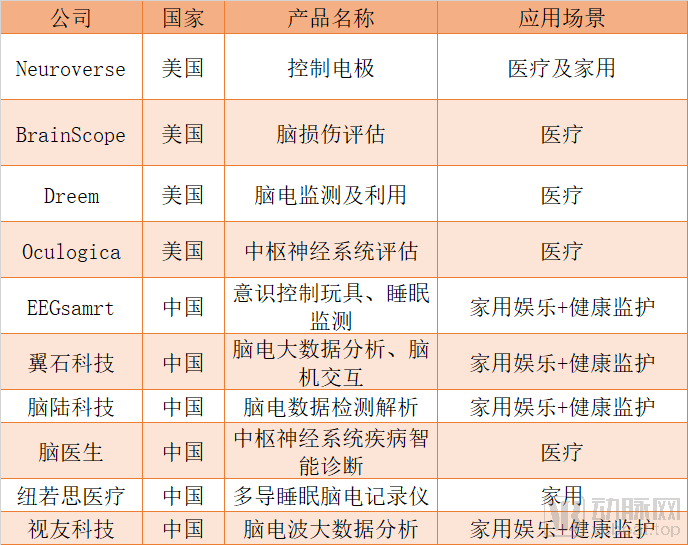
The limited interpretability of non-invasive BCI (brain-computer interface) signals is a key reason why many BCI companies are concentrating on areas such as superficial thought control and sleep monitoring. Startups in this field are largely confined to attempting to decode activity in specific brain regions (e.g., the motor cortex) and monitoring episodes with distinct EEG features (such as epileptic seizures), all aimed at the development and application of non-invasive BCIs. The sector is more heavily focused on so-called “thought” control applications, such as remote-controlled toys, often integrating limb movement and electromyographic (EMG) feedback to penetrate the broader entertainment industry. Domestic examples include EEGSmarT, while international counterparts include Neuroverse; both are startups targeting the consumer home-use market and mental care sectors, particularly sleep health.
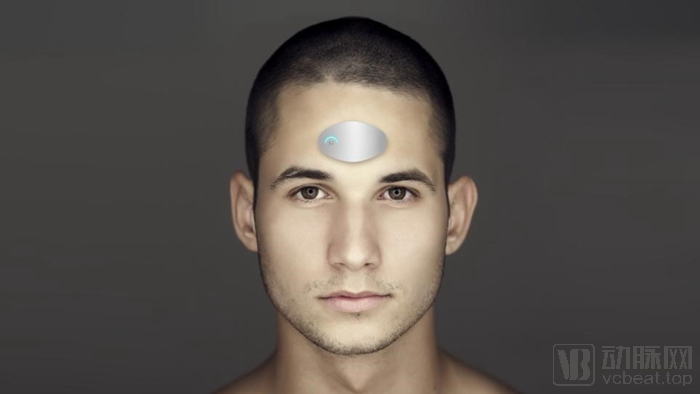
NeuroVerse – Non-invasive BCI
Companies in this sector that have disclosed past financing rounds include:
AI can alleviate the supply-demand imbalance in the initial diagnosis and treatment of epilepsy by leveraging its ability to efficiently process complex data, enabling more patients to access pharmacological interventions; however, this has led to a growing challenge of drug resistance in routine antiepileptic therapy following diagnosis.
Clinical Dilemma 1: The Drug Resistance Dilemma
In the treatment of epilepsy, pharmacotherapy with various antiepileptic drugs is the mainstream approach. During medication-based seizure control, patients with epilepsy require both periodic and regular routine electroencephalogram (EEG) monitoring to track and assess treatment efficacy and drug resistance.
For the 55 million people with active epilepsy worldwide, long-term, continuous use of antiepileptic drugs can lead to drug resistance. Extensive clinical statistics and studies indicate that approximately 30% of patients do not achieve complete seizure control with antiepileptic drug therapy. These cases present significant treatment challenges and prolonged symptom duration, with imaging often revealing brain lesions such as hippocampal sclerosis. The majority of these drug-resistant patients fall into the category of refractory epilepsy, which is generally defined as the failure to adequately control seizures despite trials of two or more antiepileptic medications.
Clinical Dilemma 2: The Challenges of Epilepsy Care and Seizure Prediction
The large population of individuals with epilepsy imposes a significant burden on the nation, society, families, and individuals alike. Patients themselves, in particular, endure immense psychological pressure due to the sudden and unpredictable nature of seizures. Many lose their ability to live independently, while others’ urgent desire for social integration leads them to deliberately conceal their medical history, thereby creating substantial hidden risks for both society and families.
Industry Value and Key Stakeholders:
Major global biopharmaceutical companies have made substantial long-term investments in research and development, aiming to create novel anti-epileptic drugs that are replaceable and sustainably effective. In the field of drug development, gene therapies have emerged, alongside the use of new approaches (such as genetic testing) to identify the primary types of epilepsy, enabling more targeted and precise management and control of seizure activity.
In February 2019, startup Arvelle Therapeutics secured $180 million in Series A financing to advance the development of gene therapy treatments for epilepsy.
To address the issue of drug-resistant epilepsy, in addition to developing root-cause solutions such as new drugs and novel therapies, achieving better epilepsy care and seizure prediction is also a way to mitigate the problem.
Addressing the effective care and seizure prediction for the vast population of individuals with epilepsy, thereby preventing them from being placed in dangerous situations, is a challenging problem that the global scientific, medical, and industrial communities are striving to solve.
Seizure prediction systems can monitor patients’ medication adherence, identify changes in seizure patterns, and quantify seizure data. With the miniaturization and wearability of EEG monitoring devices, even a 30-second to one-minute warning window before a seizure can help patients reduce their exposure to environmental risks.
Furthermore, long-term effective monitoring of epilepsy patients can also accumulate health evaluation indices for this population. For some patients with mild conditions who were previously uncovered by insurance, this approach will facilitate an expansion of insurance coverage. Current startup projects in the fields of patient care and epilepsy early warning include:
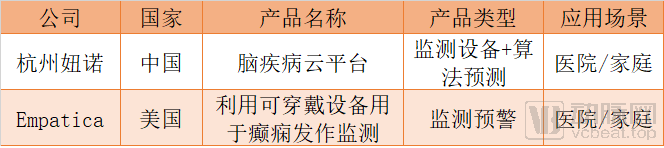
Relevance of Related Industries to Brain Science: ★★★☆☆
From the perspective of advancing brain science research, home care for epilepsy and seizure prediction remain underdeveloped in the field of neuroscience.
The primary reason is also constrained by the lack of significant breakthroughs in fundamental research on seizure mechanisms within the field of functional neuroscience of the brain. This includes the inability to simultaneously achieve miniaturization of wearable devices and effective EEG monitoring algorithms, as well as the need for rigorous validation of AI algorithm efficacy when applying conventional EEG methods, which relies on feeding the algorithms with more feature-rich sample data.
The fundamental reason for the current immaturity lies in the fact that we have not yet obtained a more refined “whole-brain mesoscale neural connectivity map” based on the human brain, nor have we fully elucidated the underlying mechanisms linking EEG features with functional neural networks and epileptic seizures. Only after achieving this breakthrough can we leverage high-bandwidth, low-latency data transmission technologies such as 5G, combined with the computational power of more advanced cloud-based EEG platforms, to perform real-time rapid monitoring and predictive output for epilepsy patients.
As the primary application scenarios in this field target general healthcare and home settings, the acquisition of key data remains confined to operational data—such as medical records and histories, manually assisted diagnoses, and conventional EEG analyses—as well as superficial medical data, without yet accessing the critical core data essential for major breakthroughs in brain science.
If AI’s involvement in the first two stages has expanded access to precision diagnosis and treatment for epilepsy patients, thereby increasing the supply of care, then in the case of drug-resistant epilepsy, AI’s role is to enhance the capacity of healthcare institutions and physicians to manage and respond to the substantial demand.
Clinical Dilemma 1: Failure of Conventional Pharmacological Therapies
According to the simplified global definition, intractable epilepsy, also known as refractory epilepsy, refers to a condition in which seizures remain inadequately controlled and daily life is impaired despite standardized treatment with two or more appropriately chosen first-line antiepileptic drugs at therapeutic serum concentrations.
A significant proportion of patients with refractory epilepsy, due to long-term medication use, experience progressive and irreversible organic lesions in the brain’s core functional areas. This leads to the gradual development of single or multiple intracranial epileptogenic zones, which may be unilateral or even bilateral and multifocal. In these cases, the abnormal electrical discharges from the epileptogenic zones can no longer be effectively intervened or controlled by two or more conventional antiepileptic drugs.
Globally, drug-resistant epilepsy accounts for nearly 30% of all active epilepsy cases. In China, approximately 3 million patients with epilepsy fall into the category of drug-resistant epilepsy. Meanwhile, there are an estimated 400,000 newly diagnosed epilepsy cases each year, of which about 100,000 are classified as drug-resistant epilepsy.
Compared with generalized epilepsy, whose seizures can be effectively controlled with medication, drug-resistant epilepsy poses a far greater burden on families and society. The tragic May 16 major traffic accident in Shenzhen in 2019, which resulted in three deaths and 18 injuries, was caused by a seizure occurring during the patient’s medication period. This incident inflicted irreparable harm on four families, including that of the patient with drug-resistant epilepsy. Consequently, effectively alleviating seizures and reducing their frequency have become central objectives of numerous clinical interventions.
Addressing the diagnosis and treatment of a large number of patients with refractory epilepsy has become a critical challenge that must be overcome by the neuroscience and clinical communities.
Clinical Dilemma 2: Limited Treatment Options for Refractory Epilepsy
From the perspective of diagnosis and treatment modalities for refractory epilepsy, neurosurgical intervention is currently the key focus area.
Neurosurgical procedures for refractory epilepsy aim to address the root cause of the condition. Prior to resecting the epileptogenic zone, neurosurgeons must implant intracranial electrodes and utilize stereoelectroencephalography (SEEG) to precisely localize the epileptogenic zone within the brain. Subsequently, a decision is made regarding whether to proceed with definitive interventions that directly ablate the epileptic focus—such as surgical resection, radiofrequency ablation, or laser interstitial thermal therapy—or to opt for palliative treatments employing neuromodulation techniques, including deep brain stimulation (DBS), vagus nerve stimulation (VNS), and responsive neurostimulation (RNS), which actively intervene by modulating abnormal discharges from the epileptic focus in the corresponding brain regions.
Since 2000, stereoelectroencephalography (SEEG) has been promoted and widely applied in the treatment of drug-resistant epilepsy in North America. Recent statistics indicate that SEEG has become the most important method of intracranial monitoring, accounting for 43.1% of all intracranial monitoring procedures. In France, the country of origin for this technology, the application rate of SEEG for pre-surgical evaluation in epilepsy surgery has exceeded 60%. In China, the proportion of SEEG procedures among surgeries for drug-resistant epilepsy has rapidly increased from less than 5% previously to approximately 25% currently. Compared with European and American countries where SEEG technology is already mature, China still holds significant potential for growth.
As the most renowned Mayo Clinic in the United States, since the introduction of epilepsy surgery, the number of epilepsy centers has increased from the original 14 to the current 94. Among them, adult centers increased from 14 in 2003 to 66 in 2012, and pediatric centers increased from 3 in 2003 to 28 in 2012. The data shows that the effectiveness of surgical treatment for epilepsy has greatly promoted the construction of epilepsy centers.
In China, epilepsy surgery for therapeutic purposes has also witnessed rapid development over the past five years. According to data from the Chinese Association Against Epilepsy, incomplete statistics show that the annual number of epilepsy surgeries nationwide increased from approximately 4,000 in 2015 to nearly 20,000 in 2018. Meanwhile, stereoelectroencephalography (SEEG), a critical preoperative intracranial deep electrode monitoring technique for epilepsy surgery, has been widely adopted since it was introduced to China around 2013 by Professor Liu Xingzhou, one of the country’s leading figures in neuroscience. The number of SEEG procedures rose rapidly from fewer than 100 in 2014 to nearly 5,000 in 2019, with the number of epilepsy centers capable of performing SEEG surgeries increasing from 6 in 2014 to nearly 200 in 2019.
The primary and most critical clinical value of epilepsy surgery lies in the accurate identification and precise delineation of the epileptogenic zone, as well as in defining the neural network connections between the epileptogenic focus and surrounding normal functional brain regions. Only with this prerequisite can surgical intervention maximally mitigate the impact of the epileptogenic zone on adjacent normal brain function.
Here, we borrow a metaphor from a renowned neurosurgeon in the clinical community: “Each epileptic seizure is like a raging fire igniting in a vast grassland, with the epileptogenic zone serving as the point of origin. The most effective way to control the spread of the fire is to isolate the source from the surrounding grassland.”
Industry Value and Key Stakeholders:
Refractory epilepsy, as a complex and high-barrier field, has attracted considerable industry attention. Currently, numerous industry players in China have entered the field of functional neurosurgery for epilepsy.
The epilepsy diagnosis and treatment industry chain encompasses global medical giants that develop large-scale medical equipment, such as Nihon Kohden, GE, and Philips, as well as innovative solutions including surgical robots and AI-assisted diagnostic systems.
Currently, leading domestic functional neurosurgical surgical robots from companies such as Huake Jingzhun (Huake Precision), Ruimi, and Huazhi Weichuang have completed their market deployment. In the realm of high-value surgical consumables, medical device manufacturers including Huake Hengsheng, Nuoer Medical, and Ruishean are achieving import substitution for overseas-imported electrodes (Class III high-value consumables) from brands such as ALICS, PMT, and ADtech.
According to incomplete statistics, Nihon Kohden of Japan and Nicolet of the United States, renowned manufacturers in the global electroencephalogram (EEG) machine market, have cumulatively deployed more than 300 high-channel EEG machines in the Chinese market over the past two years to meet the demand for epilepsy surgery center construction at numerous Grade III hospitals in China. The procurement of these 128–256 channel high-channel EEG machines, specifically designed for stereoelectroencephalography (SEEG) electrodes, is also regarded as a leading indicator of the exponential growth in surgical capabilities for epilepsy treatment.
Furthermore, neurosurgical robots, which rapidly enhance surgical efficiency, have been undergoing rapid commercialization over the past two years. In addition to the internationally renowned ROSA neurosurgical robot, a number of domestically developed neurosurgical robots with independent intellectual property rights—including those from Huake Jingzhun, Remee, and Huazhi Minimally Invasive—have also been deployed in clinical practice on a large scale over the past two years. According to incomplete statistics, by the end of 2019, the cumulative number of devices installed in China by these neurosurgical robotic manufacturers had exceeded 150 units.
The proliferation of newly established epilepsy centers, the widespread adoption of key clinical techniques such as stereoelectroencephalography (SEEG), and the continuous large-scale deployment of critical equipment—including high-channel EEG systems and neurosurgical robots—also indirectly reflect that many global venture capital firms and industrial investors with keen business acumen are actively positioning themselves in the epilepsy care sector, which serves a patient population of 55 million, to meet the rapidly growing demand for epilepsy diagnosis and treatment.
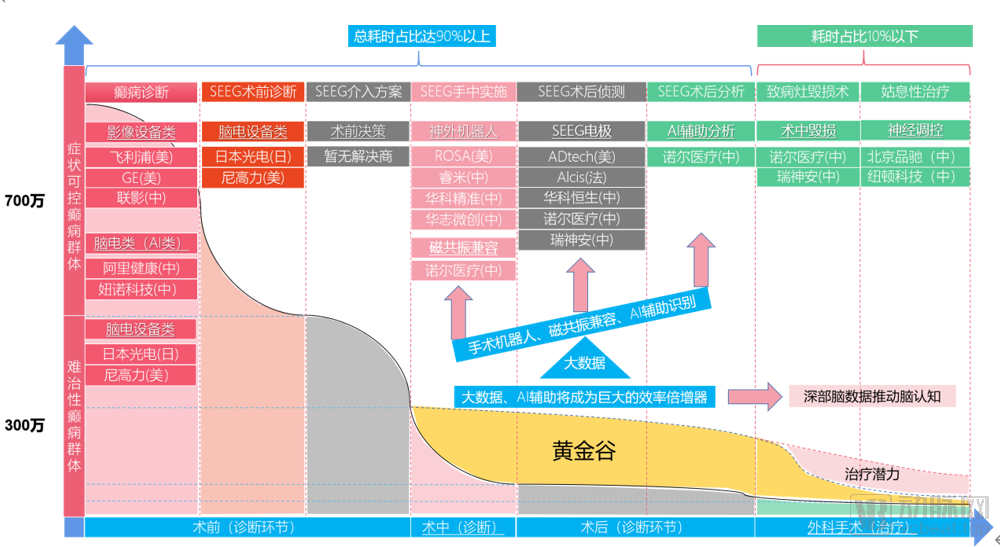
Epilepsy Diagnosis and Treatment: A Comprehensive Upstream and Downstream Landscape
In the niche field of refractory epilepsy treatment, different stakeholders aim to address distinct challenges. Surgical robots have significantly enhanced the precision and efficiency of procedures, while MRI-compatible intracranial electrodes enable physicians to accurately localize epileptogenic zones, among other advancements.
However, in terms of addressing core clinical pain points, the key lies in the rapid and precise identification and analysis of deep brain SEEG signals, as well as the integration of multimodal fusion algorithms to couple intracranial 3D imaging with SEEG data for accurate localization of epileptogenic zones, coupled with a profound understanding of heterogeneous epilepsy network models.
The following diagnostic and treatment cycle chart also highlights the importance of the diagnostic phase in refractory epilepsy:
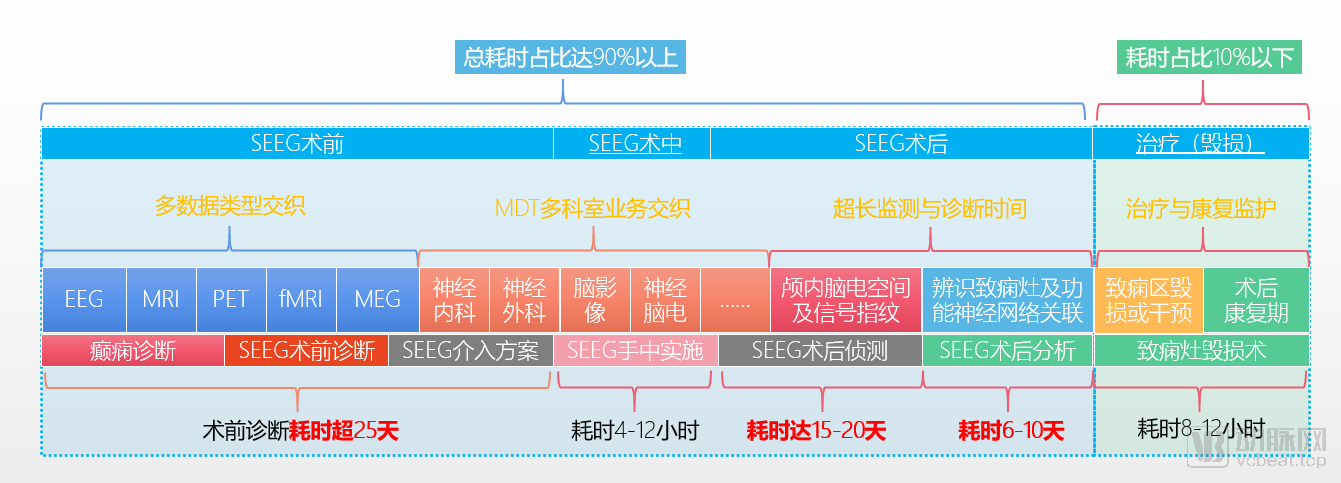
Diagnosis and Treatment of Refractory Epilepsy Based on SEEG Surgical Approach
As clearly shown in the figure, the monitoring phase following SEEG surgery is the most time-consuming step. Meanwhile, it is foreseeable that the promotion of products and technologies such as neurosurgical robots, iterative upgrades of key clinical devices (e.g., 3.0T MRI-compatible SEEG electrodes), and AI-assisted decision-making for SEEG EEG will enhance the efficiency of diagnosis and treatment for drug-resistant epilepsy across all stages. Consequently, the number of SEEG procedures performed in China is expected to increase rapidly in the future.
For example, we have noted that Nuoer Medical, in addition to its strategic positioning in high-value intraoperative consumables such as SEEG brain electrodes, has also expanded downstream with significant investments in the AI-assisted identification and analysis of SEEG electroencephalographic signals.
Relevance to Brain Science: ★★★★☆
Based on the figure above, we believe that with the widespread application of 5G, big data, and AI technologies, a “golden valley” of opportunity will emerge in the field of epilepsy, particularly for refractory epilepsy. Electroencephalographic (EEG) information from deep brain structures may serve as a key to exploring and unlocking brain research, helping scientists gain a better understanding of the brain.
In the past two years, several studies using stereoelectroencephalography (SEEG) as an entry point to investigate fundamental cognitive processes in the brain have been published in core prestigious journals such as *Science* and *Nature*.
We may conceptualize SEEG brain electrodes as “deep-space probes,” responsible for recording vast amounts of deep-brain information, which is then interpreted by experienced cosmic physicists—neurosurgeons—to unravel the mysteries of the brain.
In our exchanges with experts in the field of brain science, we have observed that stereoelectroencephalography (SEEG) depth electrodes enable the acquisition of large-scale, scarce deep brain electrical data during the diagnosis and treatment of refractory epilepsy. In recent years, numerous top-tier research institutions worldwide have begun leveraging this valuable information to develop a more comprehensive understanding of the brain. From the perspective of the “One Body, Two Wings” framework of the China Brain Project, we use the figure below to illustrate the critical role of SEEG deep brain electroencephalography in advancing the understanding, protection, and enhancement of brain function.
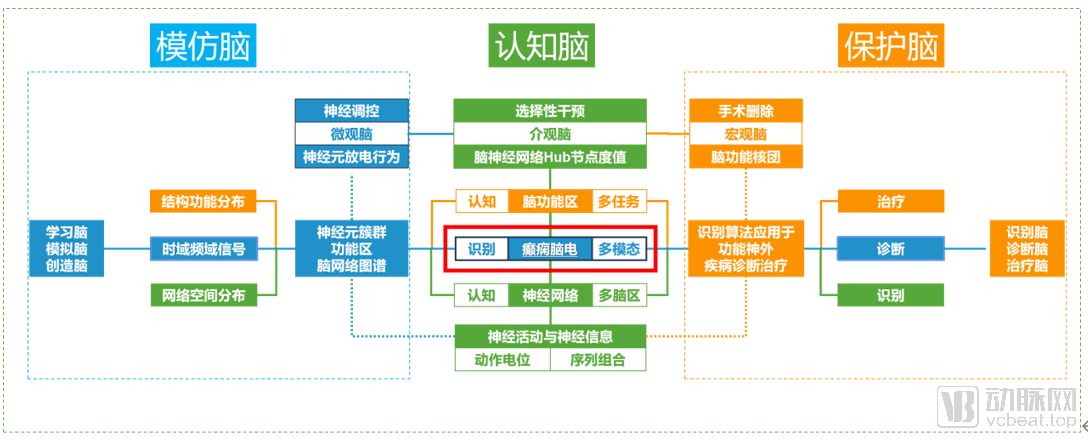
This figure provides a more comprehensive understanding of how the epilepsy diagnosis process, particularly through the integration of SEEG surgical logic and imaging modalities such as fMRI, PET, and CT, generates 3D brain images. By leveraging deep brain electrical signals (e.g., pHFO high-frequency oscillations) recorded from specific neuronal clusters via SEEG electrodes, we can achieve a topological understanding of functional brain networks. This is accomplished by coupling information across the time domain, frequency domain, and spatial distribution, a process that is directly applicable to the mapping of brain functional network atlases.
To achieve the important goal of constructing the “whole-brain functional atlas” as described by Academician Mu-Ming Poo, it is essential to leverage the more than 200 SEEG electrode contacts (IOTs) distributed throughout the brain during epileptic seizures. By recording the propagation effects of electroencephalographic signals under seizure-induced states, a substantial amount of valuable cognitive data can ultimately be obtained.
VCBeat will continue to monitor advancements in brain science, tracking breakthroughs in the field. As a key to unlocking the black box of the human brain, how is stereoelectroencephalography (SEEG) being implemented in China? How can deep brain data bring about epochal changes in the field of epilepsy? VCBeat will provide ongoing coverage and reports. With the advent of deep learning and artificial intelligence, which have introduced new tools for data collection and processing, we hope that SEEG-derived deep brain data will drive advances in the diagnosis and treatment of epilepsy and further exploration of the electroencephalographic world. Perhaps substantial breakthroughs in neuroscience are just around the corner.