

Aibang Smart Tech Files for IPO: Pioneering Medical-Grade Flexible ECG-Integrated Smart Apparel
One is a leading expert with 17 years of in-depth experience in the apparel industry, and the other is a specialist who has designed flexible sensors for national astronauts. Established in 2016, Aibang Intelligent Technology may appear to be a “newcomer” on the surface, but it actually possesses a strong core, backed by a team of seasoned veterans from the industry.
“I met my co-founder, Zhang Hui, at a competition. We instantly clicked on the concept of developing intelligent ECG monitoring devices,” said Li Jun, founder and chairman of Aibang Intelligent Technology. Li holds degrees in economics and management from Central South University and previously served as deputy general manager at Romon Group, a well-known domestic clothing brand.
Co-founder Zhang Hui is a postdoctoral fellow at The Hong Kong Polytechnic University, an expert in smart clothing and flexible sensors, and the project leader for intelligent robotics at the Institute of Computing Technology, Chinese Academy of Sciences. With nearly 20 years of experience in research and education in smart clothing, he specializes in the research and application of flexible electrodes and robotic skin. In 2003, he participated in the National Aerospace Program, providing electrocardiogram (ECG) monitoring technology for astronauts inside space capsules.
In recent years, the smart wearable device sector has seen not only a surge of medical companies vying for market share but also the entry of consumer electronics giants such as Apple, Huawei, Xiaomi, and OPPO into the competitive landscape. What sparks will fly from the cross-industry fusion of apparel and technology? And how will Aibang Smart Technology navigate this shift to achieve overtaking on a bend?
Currently, cardiovascular disease (CVD) in China is showing a polarized trend toward affecting both younger and older populations. The large base of CVD patients is accompanied by high mortality rates. According to the Report on Cardiovascular Diseases in China 2018, there are currently 290 million CVD patients in China, including 13 million with stroke, 11 million with coronary heart disease, 4.5 million with heart failure, 5 million with cor pulmonale, 2.5 million with rheumatic heart disease, 2 million with congenital heart disease, and 270 million with hypertension. Cardiovascular disease is the leading cause of death among both urban and rural residents, accounting for 45.01% of deaths in rural areas and 42.61% in urban areas.
Data estimates indicate that nearly one person dies from cardiovascular disease every 10 seconds, and one person suffers sudden cardiac death due to heart disease every minute, highlighting a severe situation. How can sudden cardiac death be prevented? The average treatment time for acute heart attacks has remained at four hours for the past two decades without any reduction. Therefore, continuous dynamic electrocardiogram (ECG) monitoring can be considered the most effective preventive measure.
From a market perspective,The market for chronic cardiovascular disease management is vast, and the user base for smart hardware and telemedicine is continuously expanding.
First, the patient base is enormous. Second, China faces a shortage of medical resources, and prevention and treatment efforts for cardiovascular diseases are relatively inadequate. Driven by policies promoting tiered diagnosis and treatment as well as “Internet Plus Healthcare,” vast potential markets in both urban and rural areas are favorable to the widespread adoption of smart hardware and telemedicine products.
Currently, the main categories of cardiovascular disease monitoring devices available on the market include: smart wearable devices, ECG monitoring equipment, and medical-grade portable ECG monitors.
Intelligent Wearable Health Monitoring System refers to a system that utilizes wearable biosensors to collect human motion and physiological parameters, enabling non-invasive, continuous, and non-interventional diagnostic monitoring to assist wearers in managing their exercise and health.Wearable devices on the market are primarily used to monitor users' physiological data, such as heart rate and step count, and do not possess significant medical value.
ECG Monitoring Devices: Commonly available ECG monitoring devices on the market typically utilize traditional hydrogel electrodes.Prolonged contact between hydrogel electrodes and human skin may also lead to side effects such as allergic reactions and even ulceration, failing to meet the medical industry’s requirements for 365-day/24-hour monitoring and management of chronic diseases.
Medical-Grade Smart Portable ECG Monitor: The mainstream medical-grade portable ambulatory ECG monitors currently on the market are primarily Holter monitors; a new wave of smart ECG devices has emerged, predominantly featuring patch-based, single-lead designs.Smart ECG Garment Products Are Mostly in the Conceptual Stage, some projects are facing difficulties, mainly because the conductive fabric electrodes they use are mostly coated on materials, resulting in poor washability and oxidation resistance, ultimately leading to unstable signals and signal distortion.
“Overall, most wearable devices on the market today remain at the stage of being ‘worn’ as accessories. What AiBang Intelligent Technology aims to address is the challenge of true ‘wearability,’ enabling dynamic monitoring in the genuine sense. This is the core competitive barrier we are building,” said Li Jun.
“My family has practiced medicine for five generations, and all my siblings and cousins of the same age have also entered the medical field. Influenced by my family environment, I have always harbored a dream of working in healthcare. After graduating from Central South University, I worked at a bank and even quit my job with the intention of retaking the entrance examinations for medical school. However, things did not go as planned. By chance, I later entered the apparel industry, where I have been working for 17 years,” said Li Jun.
After many years in the apparel industry, Li Jun resolved to step out of his comfort zone, challenge himself, and embark on an entrepreneurial journey, driven by his foresight into internet and technological trends and a long-held dream of working in healthcare.
In March 2016, Aibang Intelligent Technology was established in Ningbo. The company positions itself as a provider of intelligent wearable system solutions based on flexible technology, specializing in the monitoring and diagnosis of vital sign signals such as electrocardiogram (ECG), electroencephalogram (EEG), electromyogram (EMG), and respiration.
Focusing on the research and development of flexible technology, at the end of 2017, Aibang Intelligent Technology launched its core product—the first batch of “Aibang Inch of Grass Heart” smart ECG garments.
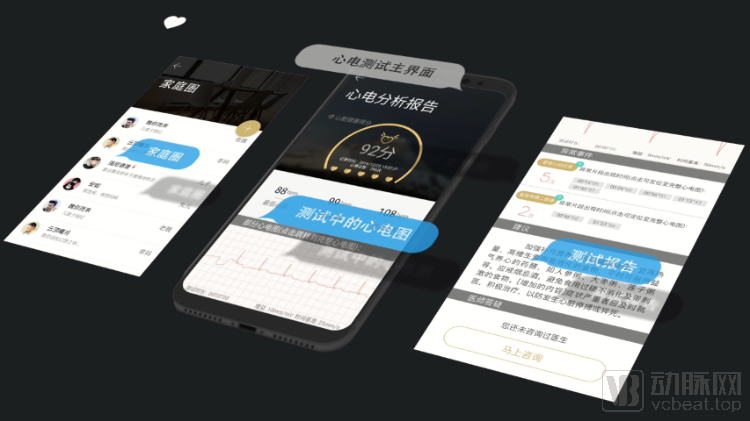
“What is the ‘Aibang Inch of Grass Heart’ smart ECG garment?” Li Jun introduced,With each heartbeat, the heart emits extremely weak electrical signals that are difficult for conventional sensing and monitoring devices to capture. Aibang Intelligent Technology has leveraged its proprietary dry electrodes—developed by modifying the physical and chemical properties of textile materials—to create flexible sensors with higher sensitivity than the gel electrodes currently used in medical practice. These sensors extract human physiological signals, which are then transmitted to an ultra-lightweight ECG acquisition device and ultimately fed into a terminal database. Users can view the data in real time via a mobile app, while professional physicians provide remote monitoring through the backend system.
This smart ECG garment enables comprehensive screening and monitoring of cardiovascular diseases, as well as postoperative rehabilitation management. Product forms include T-shirts, vests, compression garments (men's and women's sports versions), bras, and ECG straps.
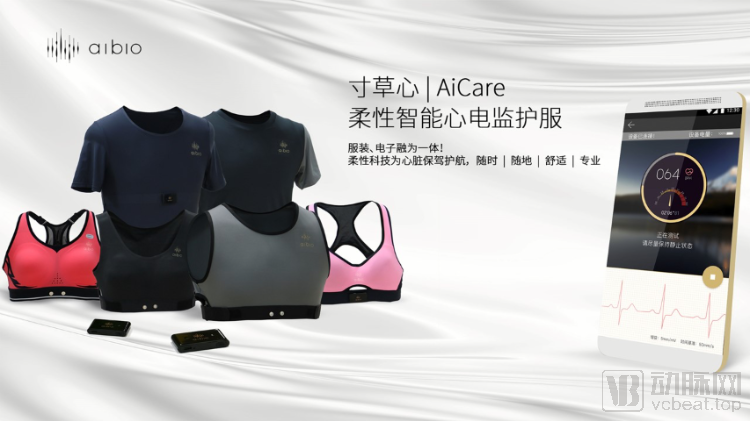
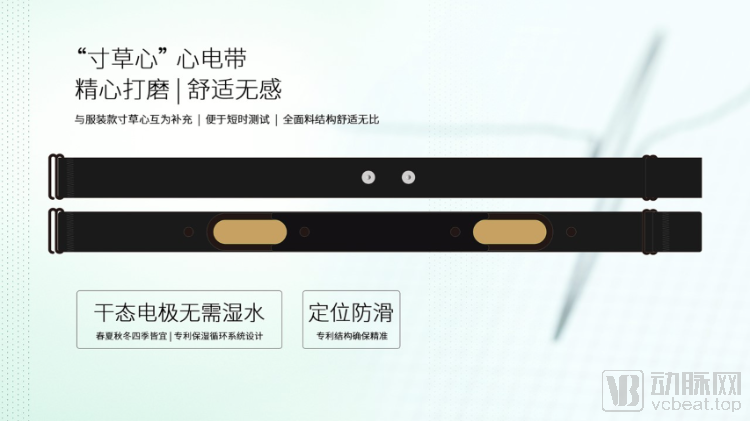
Product AdvantagesThere are the following aspects: First,The clothing style is comfortable, convenient, and washable;Secondly,Dry-state flexible textile electrodes: safe, stable, and consumable-free;Finally,Medical-grade professional ECG algorithms, with cloud technology enabling remote monitoring, consultation, and management.
“Our core advantage lies in the integrated design of electrode signals and garments. We utilize textile-structured flexible electrodes to replace traditional rubber electrodes, employ flexible circuit technology to transform clothing into circuit boards, and incorporate an anti-slip bionic structure that adheres closely to the skin for enhanced comfort and slip resistance,” introduced Li Jun.
Professor Guo Jihong, Director of the Department of Cardiology at Peking University People’s Hospital, commented: “Electrocardiogram (ECG) data is highly specialized; when presented to non-professional users, it appears cold and unintelligible. Without interpretation of the current measurement results, users cannot determine whether any dangerous events have occurred. This is the primary reason why ECG machines have long failed to gain widespread adoption as home medical devices. However, by transmitting ECG data in real time to a service platform via the internet, where professional physicians analyze and interpret the results, and promptly provide feedback on the findings and potential risks to users, this technology enables home-based detection of hazardous events, truly achieving early warning of such risks.”
Currently, the Cun Cao Xin product series has secured over 30 patents and is in the process of applying for Class II medical device registration with the National Medical Products Administration (NMPA), with approval expected by June.Meanwhile, the company is also establishing collaborations with the Yinzhou District Center for Disease Control and Prevention in Ningbo and relevant hospitals to conduct the first batch of pilot programs.Li Jun pointed out that there are more than 70,000 patients with heart disease in Yinzhou District, and he hopes to help them better monitor their cardiac health through the products of Aibang Intelligent Technology. In addition, Aibang alsoDeep Integration with Specialized Industries, for exampleIntelligent Vital Signs Monitoring Workwear System Engineering for Mining Enterprises, this system enables real-time monitoring of miners' vital signs, providing timely health alerts and emergency rescue interventions.
Regarding future plans, he stated that the currently promoted Cun Cao Xin series products are single-lead electrodes capable of monitoring 16 common heart rate variability-related cardiac conditions.The technical team is developing smart ECG garment electrodes with eight-lead and twelve-lead configurations, which will enable the monitoring and detection of over 140 types of cardiac diseases, thereby facilitating more comprehensive management of heart conditions.
Furthermore, regarding the product pipeline, we will strategically position ourselves in the fields of electroencephalography (EEG) and electromyography (EMG), gradually advancing the research and development of products for sleep monitoring and bionics. In terms of financing,The company plans to raise RMB 10 million in financing this year, with the funds allocated to strengthening its talent pool—including algorithm and medical professionals—to help broaden its business layout.