

Shaanxi Aid-Tibet Medical Team Brings Smart Healthcare to the Roof of the World
“This is the most touching moment in the four years since the Innovation Competition was launched,” commented Huang Weihong, Deputy Director of the Joint Laboratory of Mobile Medical Education Ministry and China Mobile at Xiangya Hospital of Central South University.
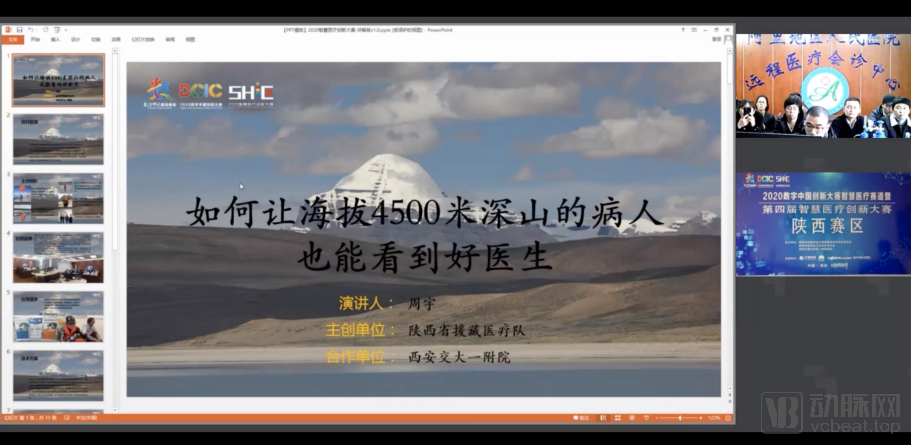
(Video Presentation by the Shaanxi Provincial Medical Aid Team to Tibet at the Competition Venue)
On the morning of April 9, the finals of the Smart Healthcare Track of the 2020 Digital China Innovation Competition and the Shaanxi Division of the 4th Smart Healthcare Innovation Competition were officially launched. Due to the impact of the COVID-19 pandemic, the event was conducted via live streaming. Among the presentations of nearly 100 competing projects, the performance of the Shaanxi Provincial Medical Team Aid to Tibet deeply moved all the guests and judges present.
At an altitude of 4,500 meters in the Ngari Prefecture of the Tibet Autonomous Region, they delivered presentations while receiving oxygen therapy. Their talks focused on how they advanced health information infrastructure in Ngari, a region with scarce medical resources, and leveraged telemedicine to enhance local healthcare capabilities, ensuring that Tibetan residents could benefit from favorable national policies and achieve “accessible and quality healthcare.”
During a speech lasting just over ten minutes, Zhou Yu, the representative of the competing team—a member of the fifth batch of Shaanxi Province’s medical aid team to Tibet, an information technology specialist at Ankang Traditional Chinese Medicine Hospital in Shaanxi Province, and Director of the Information Department at Ngari Prefecture People’s Hospital in Tibet—spoke with shortness of breath and coughed several times due to the thin air.
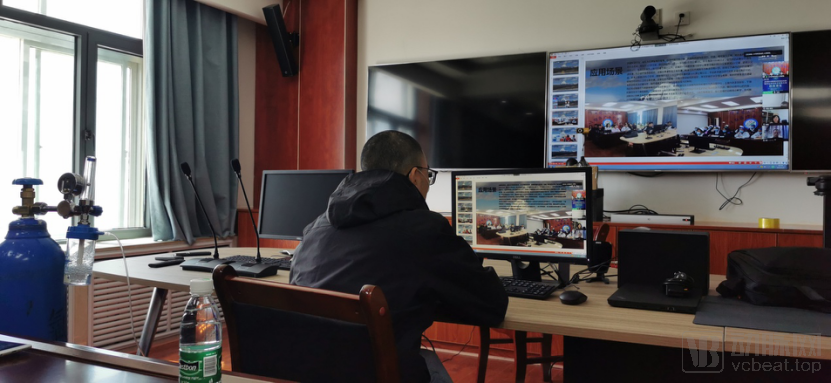
(Zhou Yu, a representative of the Shaanxi Provincial Medical Team Aid to Tibet, delivering a speech while inhaling oxygen at the competition venue)
In July 2019, the fifth batch of medical aid teams from Shaanxi Province arrived in the Ngari Prefecture of the Tibet Autonomous Region. Addressing pain points such as vast territory with sparse population, inconvenient transportation, harsh natural conditions, and limited access to medical care, the aid team introduced mainland China’s telemedicine and medical consortium models to the People’s Hospital of Ngari Prefecture. Leveraging the Smart Hospital APP donated by the First Affiliated Hospital of Xi’an Jiaotong University to the People’s Hospital of Ngari Prefecture, and capitalizing on the time- and location-independent nature of telemedicine, the initiative significantly enhanced the healthcare experience for patients in the Ngari region.
“Enabling patients in the remote mountains at an altitude of 4,500 meters to access more high-quality medical care is the mission that has brought us thousands of miles to Ngari,” Zhou Yu stated emphatically during his presentation.
From Scratch to the Frontier: How Did the Medical Aid Teams Help Build a Telemedicine System in Ngari, Tibet? VCBeat Conducted an Exclusive Interview with Zhou Yu and Members of the Shaanxi Provincial Medical Aid Team to Provide Insights.
“Although conditions are rudimentary in the remote Ngari Prefecture, this does not dampen our resolve to treat every patient. We will spare no effort to save patients’ lives!” This was a message posted by Zhou Yu on his WeChat Moments.
At that time, Zhao Yuefeng, a deputy chief physician in the Department of Neurosurgery at Shangluo Central Hospital in Shaanxi Province and an expert with the Shaanxi Provincial Medical Team Aid to Tibet, successfully performed cranioplasty on a patient in the Ngari Prefecture who had bilateral skull defects following surgery for traumatic brain injury. Despite hypoxic conditions, the procedure lasted five hours. This marked the first cranioplasty ever performed in the region.
The successful treatment of this patient was hailed as a “miracle” locally. Previously, there were no effective interventions for similar conditions.
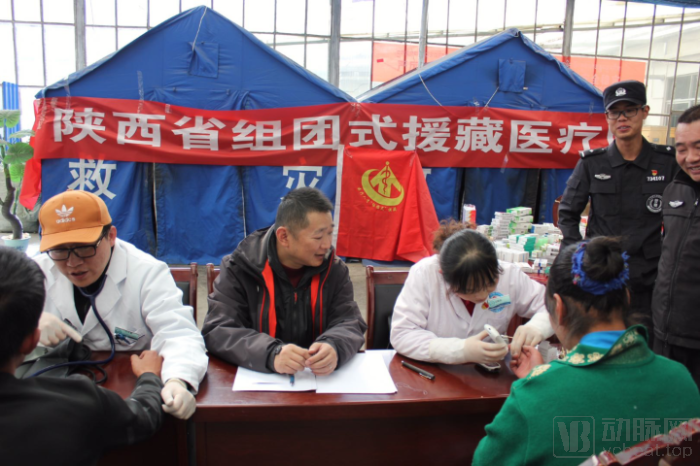
(Shaanxi Provincial Medical Team Assisting Tibet Conducts Free Clinic in Ngari Prefecture)
Located on China’s southwestern frontier, the Ngari Prefecture has an average altitude of 4,500 meters, with atmospheric oxygen levels less than 50% of those in inland regions. Living here is akin to carrying a 20-kilogram burden every day, earning it the reputation as a “forbidden zone for life.” While the average life expectancy in inland China has reached 70–80 years, residents of Ngari have an average life expectancy of only 60 years. As the only prefecture in the Tibet Autonomous Region without a Grade 3A hospital, difficulty in accessing medical care is the norm. Patients with complex or rare conditions must be transferred to Lhasa or inland areas for treatment; these transfers involve journeys exceeding 1,000 kilometers, which not only entail arduous travel but also risk delaying optimal treatment windows.
“Many patients are often forced to abandon treatment due to the long distances they must travel, missing the optimal window for intervention; some even give up on treatment altogether. This is a true reflection of the reality faced by people in the Ngari Prefecture,” said Zhou Yu.
Prior to 2016, there were no classified hospitals in this region. With the phased assistance provided by the Shaanxi Provincial Medical Aid Team to Tibet and the continuous development of the Ngari Prefecture Central Hospital (Ngari Prefecture People's Hospital), the hospital was successfully accredited as a "Grade II, Class A" institution in 2016 and upgraded to a "Grade III, Class B" hospital in 2018.
Zhou Yu introduced that the fifth batch of the Shaanxi Provincial Medical Aid Team to Tibet, comprising 21 medical experts, has arrived in the Ngari Prefecture. The team includes specialists from multiple departments, such as pathology, neurology, gynecology, and surgery. Based at the Ngari Prefecture People’s Hospital, the medical aid team is comprehensively assisting in elevating local healthcare standards and safeguarding the health of the local population. Their assistance initiatives include departmental development, talent workforce building, establishment of telemedicine systems, and supporting the hospital’s accreditation as a Grade A Tertiary (Class III, Grade A) facility.
The team members for this project include: Han Jun, Captain of the Shaanxi Provincial Medical Aid Team to Tibet and President of Ngari Prefecture People’s Hospital, who is primarily responsible for overall project leadership; Chu Dake, a member of the Shaanxi Provincial Medical Aid Team to Tibet and Director of the Internal Medicine Department at Ngari Prefecture People’s Hospital, who is primarily responsible for deploying online clinical consultation services; Zhou Yu, a member of the Shaanxi Provincial Medical Aid Team to Tibet and Chief of the Information Department at Ngari Prefecture People’s Hospital, who is primarily responsible for deploying the project’s health information technology infrastructure; Wei Rong, Chief of the Information Department at the First Affiliated Hospital of Xi’an Jiaotong University, who is primarily responsible for developing and deploying the smart hospital mobile application; and all staff members of the Information Department at Ngari Prefecture People’s Hospital, who are primarily responsible for constructing the telemedicine center at Ngari Prefecture People’s Hospital.
In an interview with VCBeat, a representative of the laboratory medicine experts from the medical team aiding Tibet stated that, thanks to strong national policy support, the gap in medical equipment between the Ngari Prefecture and mainland China is now minimal. The disparities mainly lie in inadequate departmental development, weak technical foundations among personnel, and a shortage of healthcare workers.
“Often, after receiving assistance, the experts leave, and the development of the entire department basically stagnates; furthermore, due to extremely harsh conditions, it is difficult to retain talent, resulting in a very slow improvement in medical standards,” introduced a representative of the laboratory medicine experts from the medical team aiding Tibet.
At the People's Hospital of Ngari Prefecture, many departments have not fully developed due to a scarcity of talent. Although much of the equipment is highly advanced, many services cannot be effectively implemented owing to a lack of skilled technical personnel.
“Assistance should not only provide immediate relief but also foster self-sustainability.” To effectively address the key healthcare challenges in Ngari Prefecture and ensure its residents have sustained access to high-quality medical resources, the Shaanxi Provincial Medical Team aiding Tibet considers telemedicine a promising solution.
In fact, the telemedicine model is already highly mature in mainland China, yet its deployment and implementation in the Ngari Prefecture of Tibet mark a “first.”
Zhou Yu stated that the telemedicine model is particularly well-suited to the Ngari Prefecture in Tibet, given its vast territory, sparse population, high altitude, and limited transportation access. The medical aid team dispatched to Tibet has introduced telemedicine and the medical consortium model to the People's Hospital of Ngari Prefecture, integrating these approaches with the Shaanxi Province's medical aid framework to establish a smart hospital system at the institution.
The core of the initiative is to establish Ngari Prefecture People's Hospital as the telemedicine hub for Ngari Prefecture, connecting upward with hospitals at all levels in mainland China and downward with the seven county-level hospitals in the prefecture. This will enable residents of the seven counties and districts to access advanced medical resources from mainland China without leaving their respective counties.
The first phase of the telemedicine center construction involved connecting with 10 hospitals in Shaanxi Province and 2 hospitals in Sichuan Province at the upstream level, providing free remote consultations for patients in the Ngari Prefecture. The second phase, led by the People’s Hospital of Ngari Prefecture, extended downstream to seven county-level hospitals to establish a collaborative network for remote consultations. Additionally, implemented in parallel was an assistance agreement signed between the First Affiliated Hospital of Xi’an Jiaotong University and Ngari Prefecture. The core of this agreement was to provide support to Ngari Prefecture in areas such as medical personnel assistance, educational support, and hardware and software resources.
“Through the concerted efforts of all members of the Information Department at Ngari Prefecture People’s Hospital, the Telemedicine Center was finally completed after a full four months. ‘It was an arduous journey to transform what was once a dilapidated room into a fully equipped telemedicine center; we built everything from the ground up. Due to the extremely high altitude, it was very difficult to find construction teams, so every step, from installation to deployment, was carried out bit by bit by the staff of the Information Department,’ introduced Zhou Yu.”
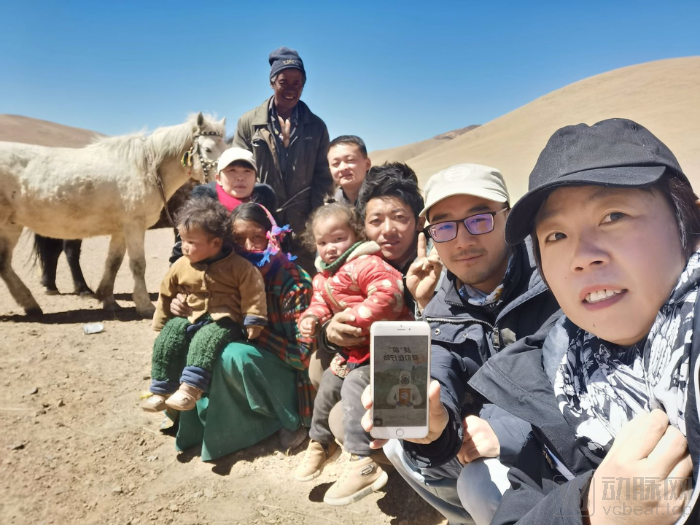
(Zhou Yu's team teaches Tibetan residents in the Ngari Prefecture how to use the Smart Good Hospital app)
“The wind blows all year round, from spring to winter. In Ngari, as far as the eye can see, there is hardly any greenery apart from stipa grass and sand-fixing grass on the ground... ‘Only when you truly set foot on this land do you realize that nature’s magnificence is matched only by its cruelty!’ remarked Zhou Yu. The high altitude means many areas lack network coverage, posing significant challenges to informatization development. Furthermore, the harsh climate often causes equipment malfunctions during transportation, preventing normal operation and presenting a major test for the construction of telemedicine systems.”
“We ordered a CT scanner, but when it was time for delivery, the manufacturer stated that they could not ship to high-altitude regions, as the equipment might fail to operate properly. This was an unprecedented situation for us; we never realized that medical devices could also suffer from ‘altitude sickness,’” recounted a member of the equipment department of the medical aid team to Tibet.
Members of the medical aid team to Tibet have withstood numerous challenges through their dedicated and patient efforts. Currently, the implementation of telemedicine at the People's Hospital of Ngari Prefecture has begun to yield initial results. For instance, a remote consultation conducted by the Department of Integrated Traditional Chinese and Western Medicine for a Tibetan patient resulted in significant therapeutic improvement. Furthermore, training and mentorship programs delivered via remote information systems have effectively enhanced the professional competencies of healthcare workers in Ngari Prefecture and played a crucial role in the prevention and control of COVID-19.
Following the outbreak of the epidemic, President Han Jun volunteered to lead his team in returning swiftly to their posts and established the Ngari Prefecture Epidemic Prevention and Control Task Force. Disregarding hypoxia and altitude sickness, he immediately immersed himself in epidemic prevention and control efforts. Even before any cases were reported in Tibet, he conducted remote training sessions for local healthcare workers on novel coronavirus prevention and control as well as personal protective measures, thereby enhancing the overall capacity for epidemic response and management and safeguarding the health of the people in Ngari Prefecture.
Currently, the Smart Hospital app provided by the First Affiliated Hospital of Xi’an Jiaotong University is being comprehensively promoted and extended to remote pastoral areas across all counties and townships in the Ngari Prefecture. Regardless of high altitude or remoteness, Tibetan residents in these far-flung mountainous regions can access advanced medical resources from home, as long as they are in areas with network coverage.
Telemedicine is an integral component of healthcare informatization. With the support of the Shaanxi Provincial Medical Aid Team to Tibet, the healthcare informatization infrastructure in the Ngari Prefecture has been progressively enhanced, including the implementation of online appointment registration systems and the establishment of information systems for clinical departments.
“Telemedicine can leave behind more direct and effective medical resources locally—even after the aid personnel return from Tibet, this system can continue to provide long-term, stable medical services to the Tibetan regions via the internet, which is precisely the ultimate goal of medical aid to Tibet. Through the intergenerational inheritance of the spirit of aiding Tibet and the tireless efforts of successive medical teams deployed to the region, the aim is to cultivate a ‘medical team that will never leave’!” stated Zhou Yu with conviction at the conclusion of his presentation at the 4th Smart Healthcare Innovation Competition.
“Not only to give people a ride, but also to teach them how to ride.” Compared with simply providing services to patients in the Tibetan regions, sustained medical assistance holds greater significance.
“Let data do the running, so patients don’t have to; bridge the ‘last mile’ of informatization in remote mountainous areas.” Zhou Yu brought this philosophy from Shaanxi to Ngari, Tibet. He believes that, through the efforts of the medical aid team, healthcare standards in the Ngari region will be significantly improved.
The medical assistance provided by the Shaanxi Provincial Medical Team Aid to Tibet in the Ngari Prefecture has received high praise from the competition organizing committee. Professor Hu Jianzhong, Deputy Secretary of the Party Committee of Xiangya Hospital of Central South University, Director of the Joint Laboratory of Mobile Medical Education and China Mobile, and founder of the Smart Healthcare Innovation Competition, stated, “It is both gratifying and moving to see outstanding projects such as the Shaanxi Provincial Medical Team Aid to Tibet participating in the competition. The original intention behind launching the Smart Healthcare Innovation Competition was to effectively identify and promote national models of digitalization, intelligence, application, and innovation in healthcare through a nationally influential event, thereby making information technology universally beneficial to health and accessible to the general public. We aim to ensure that innovations originate from existing hospital systems and are implemented to practically address patients’ healthcare challenges, continuously driving industrial development and application innovation in smart healthcare, and contributing to the construction of a Healthy China.”
As the organizer of the Smart Healthcare Track of the 2020 Digital China Innovation Competition and the 4th Smart Healthcare Innovation Competition, the Fuzhou Data Technology Institute has also taken note of this participating team. Dr. Lv Hairong, Secretary-General of the Smart Healthcare Track of the 2020 Digital China Innovation Competition and Convener of the Expert Team at the Fuzhou Data Technology Institute, commented: “The mission of technological innovation is to make life better for everyone. From this perspective, the Shaanxi Aid-to-Tibet project is of great significance. It not only enhances the medical standards in the Ngari Prefecture but also offers a replicable model that can be applied to other remote areas in the future, thereby promoting health-focused poverty alleviation. This ensures that innovation is no longer confined to an ‘ivory tower’ but becomes universally accessible to all citizens. This aligns with the original aspiration of the Tsinghua-Fuzhou Data Technology Institute in organizing this Smart Healthcare Innovation Competition.”
The Smart Healthcare Innovation Competition was initiated by the Joint Laboratory of Mobile Medical Education and China Mobile, and co-hosted by relevant institutions across China. Since its inception in 2017, the competition has been successfully held for three sessions, covering most provinces and municipalities in China, hospitals at all levels, and healthcare IT enterprises. It has attracted tens of millions of online views and accumulated over 100 million industry impressions.
The 2020 Digital China Innovation Competition – Smart Healthcare Track, concurrently held as the 4th Smart Healthcare Innovation Competition, saw 111 teams selected from over 20 provinces and municipalities advance to the national finals. The competition was hosted by the Leading Group Office for Digital Fujian Construction of Fujian Province, the Department of Industry and Information Technology of Fujian Province, the People’s Government of Fuzhou City, the MOE-China Mobile Joint Laboratory on Mobile Healthcare, and the Tsinghua–Fuzhou Data Technology Research Institute. It was co-organized by relevant societies, associations, research institutes, and industry alliances from across China, and undertaken by Fuzhou Data Technology Research Institute Co., Ltd. It is currently one of the most influential platforms for interdisciplinary innovation and exchange between medicine and engineering in China.