

After Eight Years of Development, Vilight Medical's Domestic OCT System Receives Regulatory Approval

Vivolight
Developer of Biomedical Optical Imaging Systems
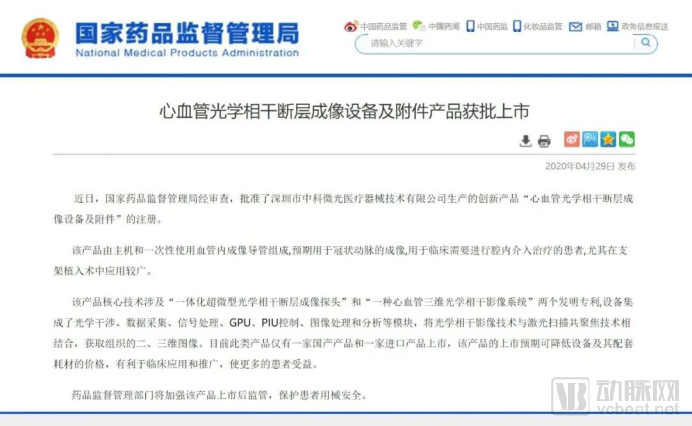
VCBeat (WeChat ID: vcbeat) has learned that on April 29, the National Medical Products Administration (NMPA) reviewed and approved the registration of the innovative product “Cardiovascular Optical Coherence Tomography Imaging System and Accessories” manufactured by Shenzhen Vivolight Medical Device & Technology Co., Ltd. (hereinafter referred to as Vivolight). The domestically developed OCT system, which took the team eight years to research and develop, has officially been approved for market launch. It will be used for patients requiring intravascular interventional therapy in clinical settings, particularly seeing wide application in stent implantation procedures.
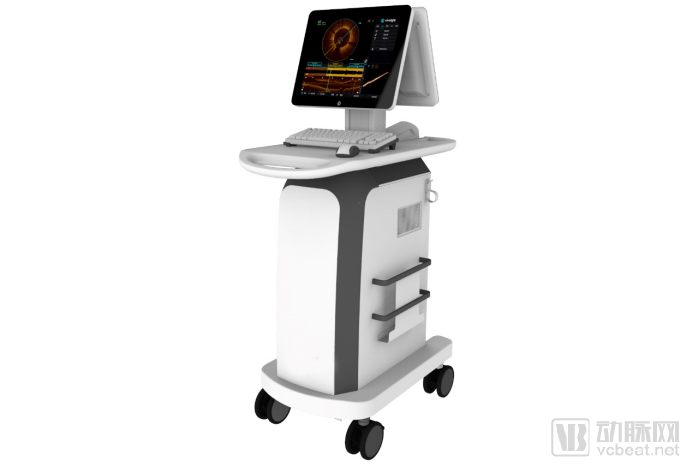
“Vivolight’s Cardiovascular Optical Coherence Tomography (OCT) System Approved for Market Launch
In recent years, driven by advancements in national medical technology, the maturation of supporting industrial chains, and macro-level policies such as healthcare reform, tiered diagnosis and treatment systems, and the National Integrated Circuit Industry Investment Fund (commonly referred to as the "Big Fund"), the trend of domestic medical devices replacing imported ones has been increasing year by year. In particular, the trade war and the COVID-19 pandemic have served as a profound warning, underscoring the urgent need for China to achieve self-reliance and controllability in its domestic medical device industry.
In March this year, during his inspection of scientific research efforts for COVID-19 prevention and control in Beijing, President Xi Jinping reiterated in his speech the need to accelerate the addressing of shortcomings in China’s high-end medical equipment, intensify breakthroughs in key core technologies, overcome bottlenecks in technical equipment, and achieve self-reliance and controllability in high-end medical equipment.
In terms of scale, China has already become the second-largest healthcare market globally. However, large-scale, high-end diagnostic equipment—such as CT scanners, magnetic resonance imaging (MRI) systems, nuclear medicine devices, and cardiovascular imaging systems—has long been monopolized by the “GPS” trio of foreign giants: General Electric (GE) from the United States, Philips from the Netherlands, and Siemens from Germany.
“As a worker must sharpen his tools to do his job well,” this holds especially true in the healthcare sector, where the “tools” refer to medical devices. In recent years, emerging domestic forces, represented by Chinese-made OCT (Optical Coherence Tomography) technology, have been steadily rising to break foreign dependence on critical medical equipment and reshape the competitive landscape of the medical device market. As a niche segment with relatively high technical barriers, the localization of OCT manufacturing has significantly advanced the precise treatment of cardiovascular diseases in China.
A prime example is Vivolight, whose devices have recently received market approval. As a hard-tech team dedicated to innovating imaging instruments for cardiovascular interventional procedures, Vivolight has leveraged over a decade of deep expertise in Optical Coherence Tomography (OCT) technology. After undergoing countless rigorous tests and clinical trials, the company has finally achieved breakthroughs in multiple areas, including technological independence, device reliability, and pricing.
As the intravascular imaging modality with the highest resolution currently available, optical coherence tomography (OCT) addresses the limitations of conventional imaging techniques. With the growing body of evidence-based medical data, its recommendation status in coronary intervention guidelines has been increasingly elevated. According to Professor Chen Yundai, a leading Chinese expert in OCT, renowned cardiovascular specialist, and Director of the Department of Cardiology at the PLA General Hospital, the 2013 ESC Guidelines on the management of stable angina assigned OCT a Class IIb recommendation, which was upgraded to Class IIa in the 2018 ESC/EACTS Guidelines.
“Traditional coronary angiography has limitations, often leading to misjudgment of the severity of stenosis and making it difficult to accurately determine whether a patient requires stent implantation,” said Zhu Rui, founder of Vivolight. With its high resolution, OCT offers superior tissue characterization capabilities, particularly in assessing calcification thickness and identifying fine structures, areas where even IVUS falls short. Our OCT technology facilitates easier image interpretation and enables effective identification of thin-cap fibroatheromas (TCFA), vulnerable plaques, thrombi, and in-stent restenosis, thereby guiding physicians in developing more scientific and effective treatment plans.
It is reported that since its establishment in 2012, Vivolight has invested substantial funds in research and development, completing the development of an engineering prototype in 2015. In June 2016, the Vivolight team conducted its first animal experiment involving cardiovascular stent implantation, using an OCT system to observe stent apposition post-implantation. Furthermore, Vivolight, in collaboration with the Chinese PLA General Hospital (301 Hospital), Beijing Anzhen Hospital affiliated with Capital Medical University, and Zhongshan Hospital affiliated with Fudan University, carried out rigorous clinical trials.
Rooted in the technological heritage of the Chinese Academy of Sciences, Vivolight has continuously advanced its technical research and development. As of April 30, 2020, the company had secured a total of 71 valid patents, including 29 invention patents, of which 8 had been granted. Furthermore, Vivolight is committed to fulfilling the national mission of translating scientific and technological achievements into practical applications. Guided by the philosophy of integrating medicine with engineering and driven by the mission of technology commercialization, the company places particular emphasis on industry-academia-research collaboration and deep alignment with market demands. Consequently, while continually strengthening its in-house R&D capabilities, Vivolight has established stable partnerships with renowned domestic and international medical technology institutions, including the Chinese Academy of Sciences, the China Cardiovascular Doctors Innovation Club (CCI) Innovation Institute, Harvard Medical School, Erasmus Medical Center in the Netherlands, and Massachusetts General Hospital in the United States. These collaborations have yielded innovative breakthroughs in areas such as automated detection of vulnerable plaques, intravascular pulsed laser debulking, and dual-modality integrated microcatheters.
Notably, owing to Vivolight’s technological leadership and broad market prospects, the company has attracted significant interest from social capital since its inception. To date, Vivolight has successfully completed multiple rounds of financing totaling over RMB 100 million, with participation from leading domestic investors such as CAS Star, Tus-Holdings Venture Capital, and Xi’an Hi-Tech Investment Group.
As an angel investor in Vivolight, CAS Star has made multiple additional investments in the company in recent years. Commenting on the recent market approval of Vivolight’s product, Mi Lei, Founding Partner of CAS Star, stated, “Vivolight is a leading deep-tech enterprise in China’s cardiovascular OCT sector, dedicated to developing high-end medical devices to improve public health. We have grown alongside Vivolight over the long term and hold strong confidence in the team’s technical capabilities and entrepreneurial vision. We will continue to closely monitor the market value of the OCT industry.”
Import substitution will be the dominant theme in the development of the medical device industry over the next decade. As more domestically produced OCT systems officially enter the market, the global dominance of foreign competitors in the field of cardiovascular interventional implantable devices will be broken. Zhu Rui stated that following regulatory approval for market entry, Vivolight will fully accelerate large-scale mass production to benefit more hospitals and patients. The company remains committed to promoting the innovation and widespread adoption of interventional imaging tools, providing physicians with precise and user-friendly integrated devices for interventional diagnosis and treatment.