

RuiZhiJie Files IPO Prospectus for Its Proprietary Open-Access Laboratory Automation Platform
With the rapid development in the field of medical laboratory science, clinical laboratory instruments have evolved from semi-automated to fully automated analysis, and laboratory workflows have transitioned from standalone automated equipment to fully automated total laboratory automation (TLA) lines. The Laboratory Automation Management System is key to implementing fully automated TLA lines. It integrates various independent automated instruments into a cohesive, fully automated workflow under the centralized control of information flow, thereby achieving large-scale automation of routine total laboratory testing processes.
The laboratory automation management system is characterized by the integration of advantageous resources, reduction of operational costs, mitigation of biohazard risks, and enhancement of work efficiency and management standards.However, it is not uncommon to observe that large tertiary hospitals operate multiple laboratory automation management systems, each connected to automated equipment from different manufacturers. Some of these systems even occupy an entire floor, significantly consuming hospital space and wasting resources.
Under these circumstances, a scientific, rational, and fully open laboratory automation management system has become an essential requirement for hospitals.
Qianhai Ruizhijie Automation Technology (Shenzhen) Co., Ltd. (hereinafter referred to as “Ruizhijie”) is committed to the development and construction of smart laboratories, having successfully developed a fully open medical laboratory automation management system with independent intellectual property rights—BIM Automation Platform enables automated connectivity across instruments from diverse manufacturers, breaks reagent lock-in, and achieves end-to-end intelligent management of pre-analytical and post-analytical processes, helping hospitals and laboratories improve efficiency, reduce labor costs and errors, and enhance biosafety.
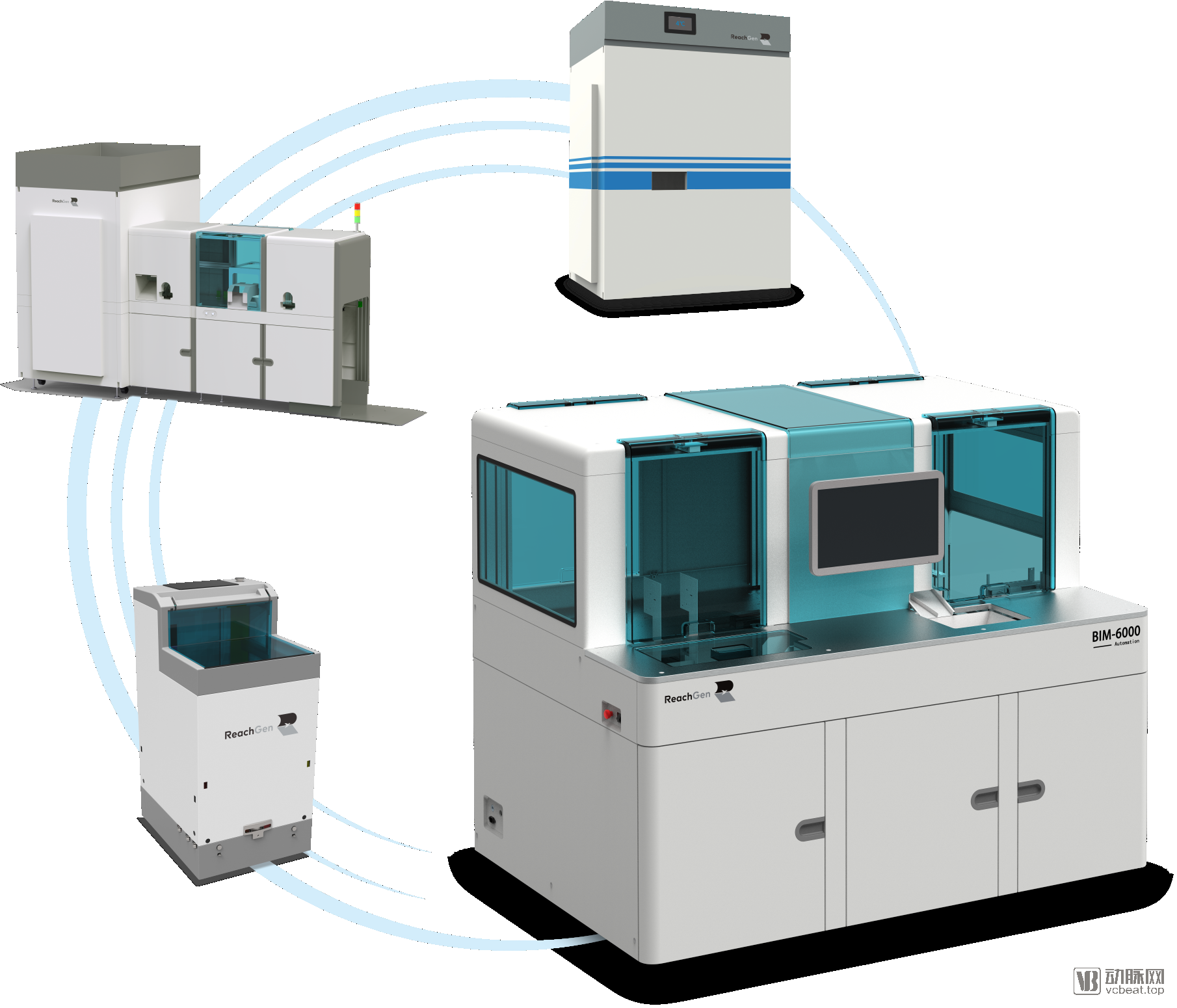
BIM Automation Platform
The founder previously established Heilongjiang Dian Diagnostics, demonstrating a profound understanding of laboratory automation needs.
Wu Di, founder of Qianhai Ruizhijie, graduated from Beijing Institute of Technology with a major in Precision Instruments. He has over 20 years of experience in the field of in vitro diagnostics (IVD) and has previously held positions at companies such as Mindray and Dian Diagnostics.
Wu Di has extensive experience in successful entrepreneurship. In 2011, Wu Di co-founded with Dian DiagnosticsHeilongjiang Dian Medical Laboratory Co., Ltd.. Years of work experience at Dian Diagnostics have given Wu Di a unique understanding and insight into the needs for laboratory automation.
According to Wu Di, the market for automated medical laboratory testing in China has been developing for no more than 10 years and has long been dominated by foreign in vitro diagnostic (IVD) manufacturers. Notably,Overseas in vitro diagnostic (IVD) manufacturers develop automation systems that can only connect to their own branded analytical instruments and are incompatible with those from other brands., forcing instruments from other brands to either purchase new automation systems or operate only in manual mode. By deploying automation systems free of charge to large tertiary Grade-A hospitals, foreign in vitro diagnostic (IVD) manufacturers have captured the majority of the market share.
In recent years, with the implementation of tiered diagnosis and treatment, as well as the continuous introduction of new testing methods and equipment, the specimen volume in the clinical laboratories of small tertiary (Grade 3A) hospitals and secondary (Grade 2) hospitals has increased manifold, leading to a substantial surge in demand for automated systems in medical testing laboratories. However, automated systems from foreign manufacturers are generally priced at over ten million RMB and can only connect with analytical instruments of their own brands. Consequently, if hospitals wish to achieve full automation across all equipment, they must purchase automated systems from multiple brands. These factors have hindered the rapid adoption of automated systems in small tertiary (Grade 3A) hospitals and secondary or lower-tier hospitals.
Wu Di believes that a fully open medical laboratory automation management system can effectively break through the bottlenecks in the development of laboratory automation. Therefore, in 2017, Wu Di founded Ruizhijie, focusing on the research and development of medical laboratory automation management systems with complete independent intellectual property rights.
Track + Robot: Filling the Gap in Laboratory Automation in China
Numerous solutions have emerged to address the many pain points in the automation market for medical testing laboratories. For instance, some in vitro diagnostic (IVD) manufacturers have launched their own automation systems compatible with instruments from other brands through overseas original equipment manufacturing (OEM) partnerships. However, such systems are only compatible with instruments from select manufacturers and remain primarily tied to the proprietary instruments and consumables of the originating vendor, resulting in significant limitations.
The BIM Automation platform, a medical laboratory automation management system developed by Ruizhijie, adoptsOrbit + Robotmodel, featuring advantages such as comprehensive functionality and a small footprint,After the sample pre-processing workflow is completed, samples are automatically navigated and delivered to analytical instruments by intelligent robots or track systems. The combined use of intelligent robots and automated tracks adapts to diverse site environments, eliminating the need for extensive engineering renovations in hospitals and significantly reducing costs.
BIM Automation Platform via Orbital + Robot-Compatible Docking ModeCovers all stages of sample pre-processing, transportation, and post-processing, streamlining the entire sample turnaround process.It enables automated functions including sample sorting, centrifugation, decapping, aerosol contamination filtration, transfer, identification of non-conforming samples, recapping, refrigerated storage, retesting, and disposal of expired samples, thereby improving laboratory work efficiency, reducing the risk of biological contamination, and enhancing overall laboratory operational quality.
Notably, during the COVID-19 pandemic, hospitals have placed unprecedented emphasis on aerosol contamination. The BIM Automation platform has addedHigh-Efficiency Air Filter, effectively adsorbs microbial aerosols generated during operations such as centrifugation and cap opening, thereby enhancing biosafety in biological laboratories.
Wu Di stated that automation systems have extremely high reliability requirements, with tasks such as automated cap crimping and automated decapping posing significant challenges in system development. Ruizhijie has already secured multiple patents in these areas.
More importantly, the BIM Automation platformIt enables automated connectivity with instruments from various manufacturers, compatible with mainstream domestic and international brands as well as diverse laboratory equipment—including clinical chemistry, immunoassay, hematology, and coagulation analyzers—thereby breaking the traditional closed-loop constraints of automated track systems on instruments and reagents, and reducing testing costs.
It is reported that by the end of 2019, the BIM-7000 had already achieved small-batch production. Currently, this product has been put into use at multiple hospitals, including Suihua Cancer Hospital and the Affiliated Hospital of Harbin Medical University, receiving consistent acclaim from numerous physicians and experts.
Wu Di believes that China’s laboratory automation sector is still in its nascent stage, and fully open laboratory automation management systems are inevitably the future trend for medical laboratories and hospital clinical laboratory departments.In particular, hospitals below the secondary level will have an increasing demand for fully open laboratory automation management systems.
“It is expected that the BIM Automation platform will obtain its registration certificate by the end of May 2020 and commence commercial sales.” According to Ruizhijie’s plans, the company will establish sales and after-sales service teams across various provinces and cities in China to facilitate the rapid deployment of its products in hospitals nationwide. Meanwhile, the company will continue to optimize its products.From Automated Laboratories to Intelligent Laboratories, enabling automated intelligent diagnosis to help personnel in hospitals below the secondary level, including primary healthcare institutions, efficiently and smoothly perform medical laboratory tests.