

How Kaiser Permanente Was Built: A Blueprint of Integrated Care and Sustainable Growth

Kaiser Permanente
Healthcare Service Provider
Recently, the privately held Kaiser Permanente disclosed its annual report. In 2019, Kaiser Permanente reported operating revenue of $84.5 billion and net income of $2.7 billion; its membership increased by 81,000 in 2019, bringing the total number of members to 12.2 million.
While these figures are striking, they are not the most compelling aspect of Kaiser Permanente. For instance, when compared by annual revenue for the same period, Kaiser Permanente’s revenue is approximately equivalent to 0.3 times that of UnitedHealth Group, 0.5 times that of Ping An Insurance, 1.7 times that of Alibaba Group, and 46 times that of Sohu.
As the largest private nonprofit healthcare provider in the United States, Kaiser Permanente’s most compelling feature is its operational model: the HMO. As the pioneer of the Health Maintenance Organization (HMO) model, Kaiser Permanente has gained global recognition for its effectiveness in controlling healthcare costs and ensuring medical quality.
During his push for universal healthcare coverage, former U.S. President Barack Obama repeatedly cited Kaiser Permanente as an industry model, stating, “If all medical institutions across the United States were as efficient as Kaiser Permanente, we would not be facing today’s healthcare cost crisis.”
In China, Kaiser Permanente also enjoys a high reputation. Recent healthcare reform policies—such as controlling medical insurance expenditures, promoting health management, and implementing the family doctor system—have all drawn inspiration from external models. Some companies describe their strategic positioning as “China’s Kaiser Permanente,” while entrepreneurs frequently pitch at financing roadshows with the claim, “We are adopting the Kaiser Permanente model.”
Under the Spotlight: How Was Kaiser Permanente Forged?Under what policy and market conditions did it emerge, and how did it establish its HMO model? What are its business metrics and development trends? What are the driving forces behind Kaiser Permanente’s enduring success? Most importantly, what insights can Kaiser Permanente offer to innovators in China? Who can become the true Chinese counterpart of Kaiser Permanente?
To this end, VCBeat has conducted an in-depth analysis of the Kaiser Permanente case to provide reference and insights for the industry.
In 1933, industrial magnate Henry Kaiser and other major construction contractors formed an insurance consortium named “Industrial Indemnity” to address the frequent issue of medical compensation for construction workers involved in large-scale infrastructure projects contracted by enterprises. The “party B” for this project was a small hospital established near the construction site by Dr. Sidney Garfield, whose facility was responsible for providing medical care to the 5,000 workers on site.
After signing the contract for the healthcare security project, a minor episode occurred between the two parties. Two executives from Kaiser and Garfield agreed on a new payment model: the insurance consortium would prepay 17.5% of premiums, or $1.50 per person per month, to cover work-related injury treatment; meanwhile, workers could pay five cents per day to cover non-work-related medical treatment. This prepaid healthcare payment model became the most critical foundation for the subsequent development of Kaiser Permanente.
Subsequently, Garfield and Kaiser Companies entered into a deep partnership. As Kaiser’s business expanded, the number of hospitals operated by Garfield continued to grow. By 1942, Garfield’s hospitals were providing medical services to 20,000 people. In the same year, “The Permanente Health Plan” was launched, through which Garfield promoted preventive care to its members, dedicating efforts to educating them on maintaining good health.
Kaiser Permanente dates its founding to 1945, with industrial magnate Henry Kaiser and physician Dr. Sidney Garfield as its founders. The rationale for marking 1945 as the starting point is that in this year, Dr. Garfield began expanding membership beyond industrial workers, making Kaiser’s healthcare services available to the general public in California, Oregon, and Washington State. This move allowed other employers to purchase services through group prepayment arrangements and vigorously promoted the enrollment of community members as new Kaiser Permanente participants. In 1948, Dr. Garfield’s sole proprietorship was restructured into a partnership, and the organization was renamed “The Permanente Medical Group.”
Over the following decade, Kaiser Permanente’s membership grew substantially, rising from 154,000 members in 1950 to 618,000 by 1958.
Following Garfield, the appointment of Keene as the new successor at Kaiser Permanente propelled the organization’s operations to new heights. By the 1970s, Kaiser Permanente’s membership had surpassed 3 million, establishing it as a nationally renowned health insurance group and a widely recognized brand across the United States.
Thereafter, Kaiser Permanente continued to expand into Maryland, Virginia, Georgia, the District of Columbia, San Francisco, Oakland, and beyond. By 1997, Kaiser Permanente’s membership had reached 9 million.
As of today, Kaiser Permanente has 12.2 million members. According to the 2019 annual report data on its official website, Kaiser Permanente currently owns and operates 39 hospitals, 50 clinics, and 712 medical offices; it employs 218,000 staff members, including 23,000 physicians.

“Everything we do is dedicated to maintaining your health, including healthcare. Everyone deserves access to simple, personalized, and burden-free medical care.”
The philosophy of preventive medicine and health maintenance embodied in this statement on the Kaiser Permanente website has been inherited and cultivated by Kaiser Permanente for nearly a century.
As we enter the second decade of the 21st century, many innovators mired in the dilemmas of current healthcare systems and models have looked to the light emanating from Kaiser Permanente, embracing it as a role model in their quest for the strength to rise from the ashes.
Organizational Structure
The core operational architecture of Kaiser Permanente can be divided into three main lines: Kaiser Foundation Health Plan, Inc. (KFHP) and its regional operating entities; Kaiser Foundation Hospitals; and The Permanente Medical Groups.
These three business lines operate in coordination to form a user-centric ecosystem.
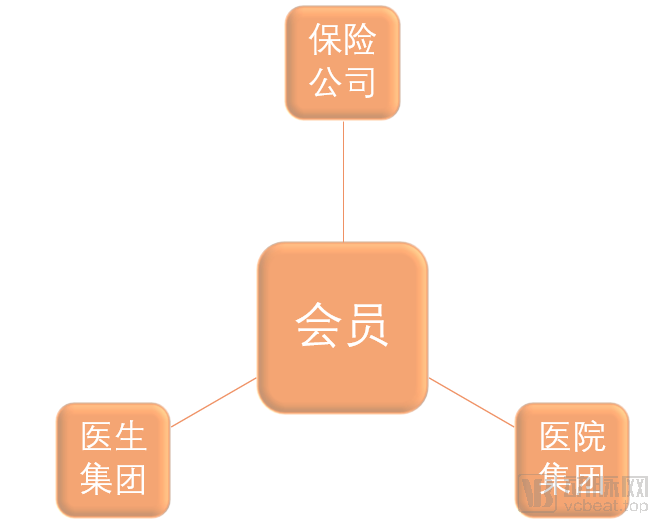
Although the three internal components of Kaiser Permanente are relatively independent, they are highly integrated. The insurance company is responsible for selling insurance policies and raising funds. Kaiser’s primary clients are corporate groups enrolling their employees collectively, with a smaller portion consisting of government-sponsored Medicare and Medicaid beneficiaries; the proportion of individuals enrolling directly is very small.
With a stable membership base, Kaiser Permanente secures predictable operating revenue. At this point, the insurance company and the hospital group responsible for medical facility operations become an integrated entity, tasked with utilizing limited funds to provide health management and medical services to members. Any surplus funds can be redistributed within the group. This model addresses the lack of financial incentive for cost containment inherent in the fee-for-service payment system.
The physician group is also relatively independent; it negotiates with the hospital group on a regular basis to secure funding. However, the physician group shares risks with the other two components. If physicians can effectively control costs, more surplus funds will be available for redistribution; conversely, poor cost control will lead to reduced physician income. Therefore, reducing disease incidence and healthcare costs has become a shared goal for both patients and providers. In terms of feedback, Kaiser Permanente employs peer review to evaluate medical staff, fostering seamless collaboration among primary care physicians and specialists, across different levels of medical personnel, and between specialists in various disciplines.
Within Kaiser Permanente’s physician team, approximately half are specialists, while the other half are family physicians. Each family physician is responsible for the healthcare of approximately 2,000 members.
Each entity within Kaiser Permanente maintains its own relatively independent management and governance structure, with maximum collaboration among entities based on their independent operations.
Overall,Kaiser Permanente’s organizational structure points to a dynamic value system with aligned interests, achieving integration among patients, physicians, healthcare institutions, and insurance providers.
Beyond its organizational structure, Kaiser Permanente has achieved a fully closed-loop operational model. The Kaiser Permanente model integrates health insurance and healthcare services, representing not merely a simple combination of the two, but a systemic management approach built upon a shared value system. This model has established it as a paradigm for integrated healthcare delivery in the United States.
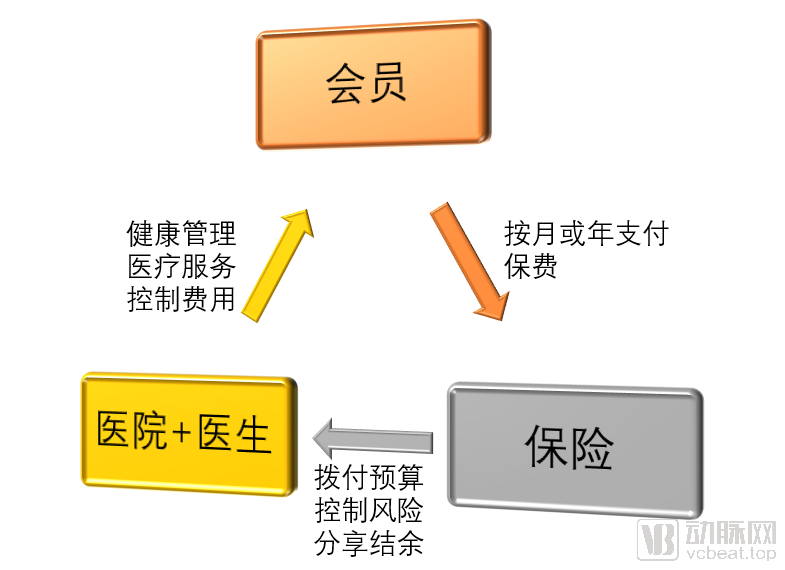
As shown in the figure above, premiums constitute the primary source of revenue for Kaiser Permanente. Its profitability model hinges on member health management and the control of medical expenses, with surplus funds generated from service delivery being redistributed within the group.
Within Kaiser Permanente’s ecosystem, given that annual premium revenue remains constant, an increase in total medical expenses leads to a decline in profits, a rise in premium pricing for the following year, decreased member satisfaction, and reduced system stability. Conversely, if total medical expenses decrease, profits rise, physician satisfaction improves, premium pricing for the following year remains unchanged or decreases, member satisfaction increases, and system stability is enhanced.
Under this model, nearly all of Kaiser Permanente’s strategies and operations revolve around a single objective:# User's HealthThus, Kaiser Permanente has made every effort in its operations to provide members with comprehensive, integrated health services, ensuring attentive care from medical professionals throughout disease prevention, diagnosis and treatment, and post-illness rehabilitation.
For example, physicians can access medical records, treatment guidelines, and electronic prescriptions in real time; establish electronic health records (EHRs) for patients, enabling them to schedule appointments, make payments, and receive health education information online; define their own goals and monitored indicators, with data shared among physicians and regularly reassessed to continuously update goals and approaches; identify changes in care pathways and their outcomes, thereby facilitating the selection of lower-cost or higher-quality service options as future care pathways; Kaiser Permanente’s workflows and service systems incorporate a degree of flexibility, centered on patients’ actual needs.
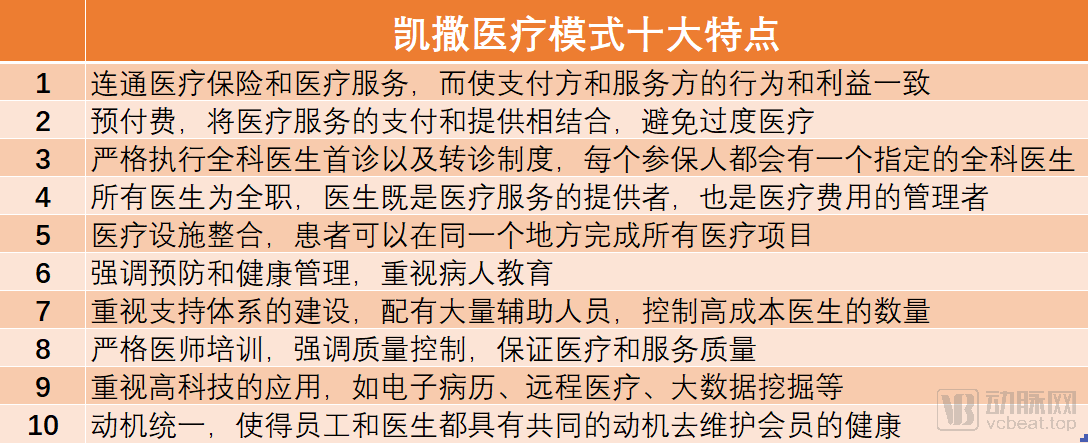
As shown in the figure above, the greatest advantages of the HMO model, represented by Kaiser Permanente, are the integration of healthcare and insurance, a strict tiered diagnosis and treatment system, and health management.
Furthermore, Kaiser Permanente’s model is, to some extent, closed-loop: its healthcare providers generally do not deliver medical services to members outside the health plan, and Kaiser Foundation Health Plan, Inc. does not directly engage with other healthcare providers. This structure safeguards the alliance and high degree of interdependence among the three entities.
Revenue Analysis
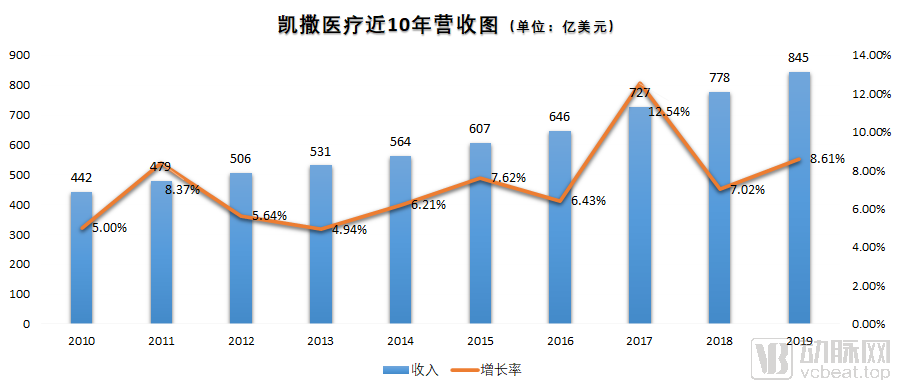
Over the past decade, Kaiser Permanente has maintained steady revenue growth, with a compound annual growth rate of approximately 7% and an average profit margin of around 3.1%, reflecting its stable operational capabilities.
In 2019, Kaiser Permanente reported a net profit of $7.4 billion (under different accounting standards), with nearly two-thirds of its performance derived from investment income. A review of Kaiser’s recent investment targets reveals that, as an operator of a large-scale healthcare service network, Kaiser has an urgent need for innovation in clinical medical devices; consequently, medical devices and innovative diagnostic technologies account for a significant share of its investments.
Furthermore, healthcare informatics, telemedicine, AI, and big data are also key focus areas of Kaiser Permanente’s venture capital investments.
In terms of operational regions, Kaiser Permanente’s largest regional branch is California, where it originated. The number of Kaiser Permanente members in California exceeds the total number of members in all other regions outside the state. In terms of premium sources, approximately 80% of Kaiser Permanente’s premium revenue comes from employer-sponsored insurance, with the remainder derived from government public healthcare programs, namely Medicare and Medicaid.
According to U.S. media data, Kaiser Permanente’s medical cost expenses are 18% lower than those of other hospitals, demonstrating its strong cost-containment capabilities. Within its integrated operational closed loop, Kaiser Permanente has achieved low-cost, high-efficiency operations.
In 2020, Kaiser Permanente reduced out-of-pocket costs for many of its Medicare Advantage members and enhanced benefits, keeping the average growth rate for individual and family plans at or below the projected inflation rate. Greg Adams, current Chairman and CEO of Kaiser Permanente, stated in an interview, “Our net income will be directly reinvested into our core mission: providing high-quality, affordable healthcare to our members and promoting their health and well-being.”
Leadership Transition
On November 10, 2019, Bernard James Tyson, a legendary figure in the corporate history of Kaiser Permanente, passed away in his sleep.

Bernard James Tyson
Bernard’s passion for healthcare began during his college years, when he worked as an administrative analyst at Vallejo General Hospital. After earning a Bachelor of Arts in Health Services Administration and an MBA in Health Services Administration from Golden Gate University, Bernard joined Kaiser Permanente. Following a six-month internship, he was hired into a full-time administrative role. Over the next 30 years, he successfully managed all major aspects of the organization, holding numerous leadership positions ranging from hospital administrator to division president. In 2013, Bernard assumed the role of CEO of Kaiser Permanente and was subsequently appointed Chairman of the Board.
Driven by passion, Bernard has long been committed to advancing reforms in the healthcare system and people’s lifestyles. He believes that direct medical care is not the most significant determinant of an individual’s overall health. Factors such as living environment, diet, physical activity, and daily stress levels play a crucial role in shaping health outcomes.His vision is to create a truly integrated healthcare system in which “information can flow freely.” He once said, “In the digital age that has already arrived, numbers represent unique individuals, and through them we can achieve equity.”
During Bernard’s six-year tenure at the helm of Kaiser Permanente, the organization’s revenue grew from $53.1 billion in 2013 to $84.5 billion in 2019, while its membership increased from 9.1 million to 12.2 million. Owing to his substantial influence and personal charisma, he has been hailed by numerous media outlets, including Time, Fast Company, and Modern Healthcare, as one of the most influential figures in the healthcare sector.

Gregory A. Adams
Following Bernard’s passing, Kaiser Permanente subsequently appointed Gregory A. Adams as Chairman and CEO. With 30 years of management experience in the healthcare industry, he has played an indispensable role in leading Kaiser Permanente’s transformation and improving patient care outcomes. Prior to assuming his current position, Mr. Adams served as Executive Vice President and Group President of Kaiser Permanente, where he was directly responsible for the health plan and hospital operations across all eight regions, serving 12.2 million members.
Corporate Strategy
Kaiser Permanente is further extending its unique integrated health model into communities. In 2019, Kaiser Permanente opened 17 new medical offices, with another 95 currently in the design or construction phase. As of December 31, 2019, Kaiser Permanente owned and operated 39 hospitals, 50 enterprise clinics, and 712 medical offices.
In 2019, members submitted nearly 35 million prescription requests through digital channels, viewed over 60 million laboratory test results online, and the number of patients utilizing telehealth services increased by 40% compared to previous years. Moving forward, Kaiser Permanente will continue to invest in technologies that enhance health management and medical services, thereby deepening and broadening the scope of care provided to its members.
In addition, Kaiser Permanente will undertake a major $700 million expansion of its behavioral health facilities over several years, including plans to add or renovate more than 220 behavioral health clinics.
“Our financial performance has enabled us to make capital investments and deploy new technologies to enhance our capacity to serve members,” revealed Kathy Lancaster, Chief Financial Officer of Kaiser Permanente, in an interview with the media.“Looking ahead, our strategy is to maintain innovation in a rapidly changing environment.”
Venture Capital
Recently, Kaiser Permanente Ventures announced the closing of its fifth investment fund, successfully raising $141 million. With this fundraising round, the total assets under management by Kaiser Permanente Ventures have exceeded $500 million. Investors in this new fund include Tufts Health Plan, Henry Ford Health System, Highmark Ventures, and a range of external strategic investors. The newly raised capital will be deployed to support the growth of innovative companies.
“As the U.S. healthcare system transitions to value-based care, we are poised for significant opportunities.”Chris Grant, co-founder of Kaiser Ventures, said,“To successfully achieve this transformation and help Kaiser Permanente further deliver high-quality, affordable, and cost-effective healthcare services, we will continue to seek out and invest in innovative enterprises that align with the development trajectory of healthcare systems and hold significant potential.”
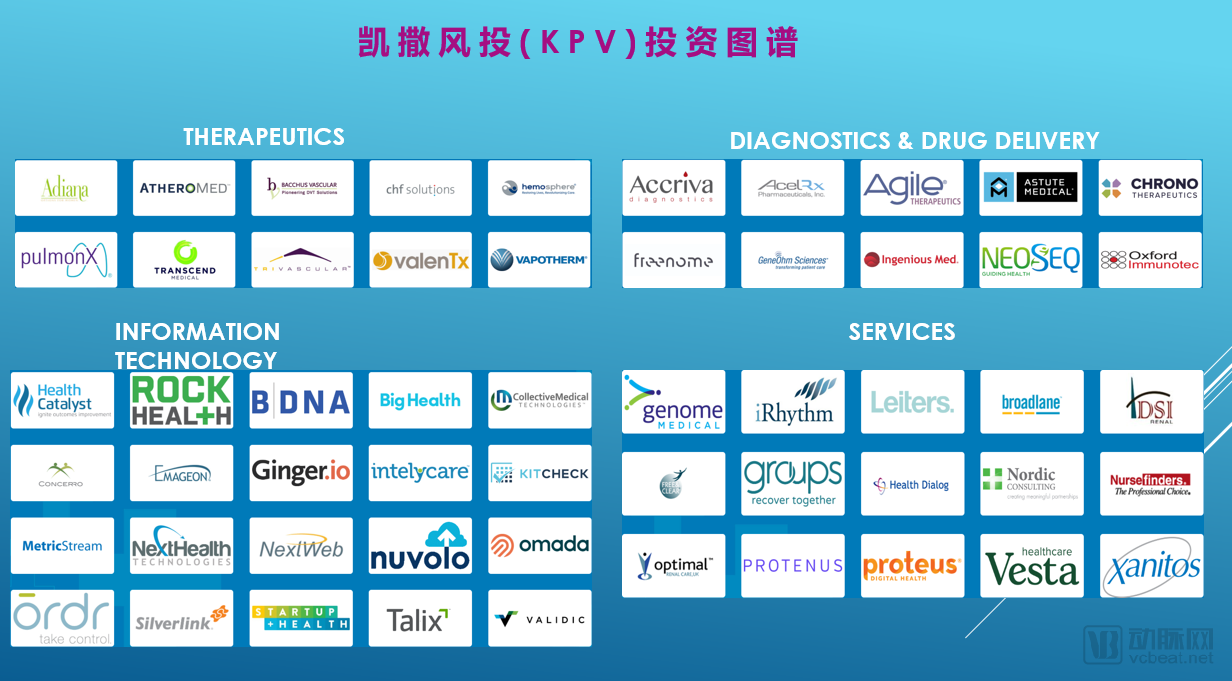
Since its establishment in 1998, KPV has invested in more than 70 companies through venture capital funds, with its investment portfolio representing the most significant innovations in the healthcare services sector, includingiRhythm (a provider of ambulatory cardiac monitoring), Health Catalyst (an industry leader in healthcare analytics and outcomes improvement solutions), and Omada Health (a pioneer in digital health and behavior change)and other unicorn companies.
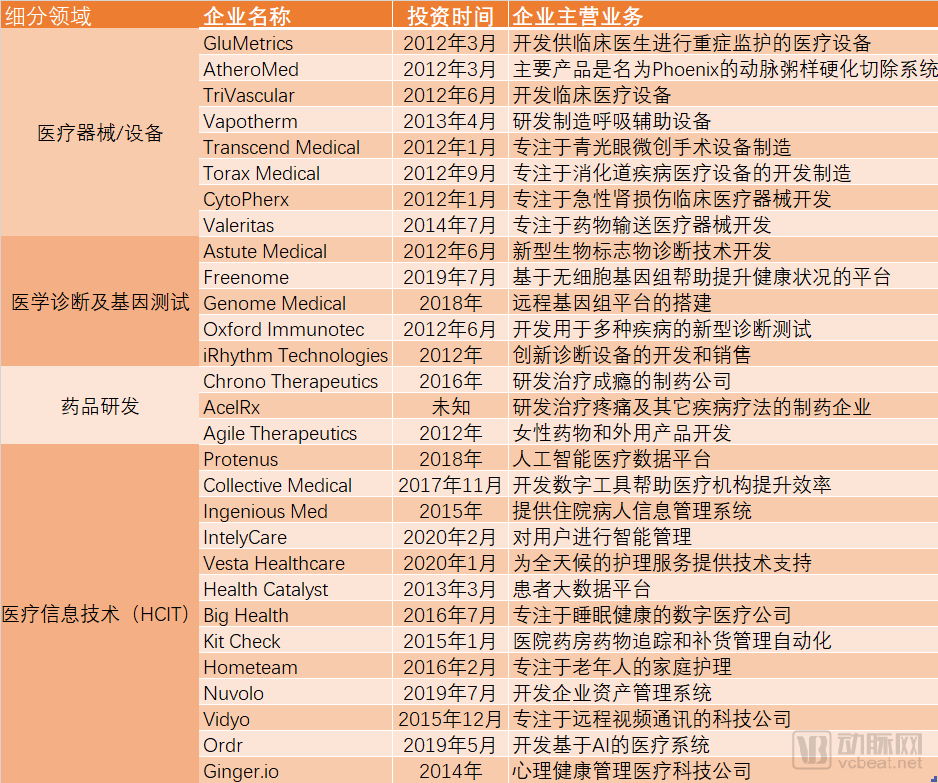
Summary of Select Investments by Kaiser Ventures (Note: The investment date listed in the table refers to the initial investment date)
As shown in the partial investment cases of Kaiser Permanente Ventures above, its investments span health information technology, digital health, healthcare services, medical devices, diagnostics, and precision medicine. Beyond the fundamental logic of seeking financial returns, its broader investment rationale lies inThe investment team will collaborate with portfolio companies to jointly advance solutions aligned with Kaiser Permanente’s pursuit of high-quality, low-cost, and affordable healthcare services.
Of the nearly 20 portfolio companies cited above, with the exception of CytoPherx, which has undergone bankruptcy liquidation, almost all others have advanced to subsequent financing rounds, and nearly ten have gone public. This investment track record positions Kaiser Ventures on par with leading venture capital firms such as Sequoia Capital and IDG Capital within the healthcare sector.
Viewing Kaiser Ventures within the organizational structure of Kaiser Permanente, it is evident that, within the boundaries of healthcare, Kaiser Permanente is, to some extent, transitioning toward a Tencent-like ecosystem strategy. By leveraging capital and its abundant resources in the healthcare sector (such as members, hospitals, and insurance) as core drivers, it supports and invests in innovative enterprises across the entire healthcare ecosystem, thereby embarking on a path of open investment. However, unlike Tencent’s ecosystem strategy, Kaiser Permanente has not “lost its product capabilities or spirit of innovation.”
As Kaiser Permanente’s venture capital performance becomes increasingly robust, venture capital is emerging as the second growth curve for Kaiser Permanente’s healthcare business.
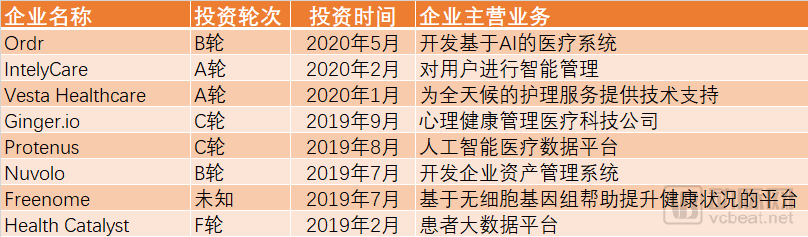
Major Investment Cases of Kaiser Permanente Ventures in 2019–2020
As shown in the charts above, Kaiser Permanente Ventures’ portfolio includes mid-to-late-stage deals, indicating that its investment strategy is not confined to early-stage enterprises; rather, its investment decisions are primarily driven by value and strategic considerations. Secondly, Kaiser Permanente Ventures exhibits a clear tendency toward follow-on investments. For instance, it first invested in Health Catalyst, a patient big data platform company, in 2013 and continued to increase its stake in subsequent funding rounds. The company went public in July 2019 and currently has a market capitalization of $946 million. Lastly, Kaiser Permanente Ventures’ investment preferences continue to align with its emphasis on technological innovation; nearly all companies invested in since 2019 are technology-driven innovators.
Kaiser Permanente CEO Adams revealed in an interview that, benefiting from the rapid growth of the investment market in 2019, the company’s total other income and expenses amounted to $4.7 billion in 2019, compared with $600 million in 2018. When these total other income and expenses are combined with operating performance, net income for 2019 reached $7.4 billion, with nearly two-thirds attributable to investment performance. (Note: As Kaiser Permanente is not publicly listed and does not disclose complete financial statements, providing only selected summary financial information, this article relies on the aforementioned news data.)
With the emergence of a second growth curve in its business, the returns on investment will enable Kaiser Permanente to optimize its cost structure, further enhance the stability of its Health Maintenance Organization (HMO) operations, and deliver benefits to all stakeholders within the system.
In the future, Kaiser Permanente will further expand its investment footprint.
In recent years, China’s healthcare reform has entered a critical phase, with regulators leveraging healthcare payment mechanisms to drive comprehensive systemic changes.
On March 5, 2020, the Central Committee of the Communist Party of China and the State Council issued the “Opinions on Deepening the Reform of the Medical Security System.” The “1+4+2” overall framework proposed in the document directly impacts the construction of China’s healthcare payment system and the trajectory of the entire healthcare industry. Although this document initiates reform from the perspective of deepening medical insurance reforms, it extensively involves the broader “tri-medical linkage” reform (coordinated reform of medical care, health insurance, and pharmaceuticals). It is widely regarded across sectors as a programmatic document that will set the tone for China’s healthcare reform over the next decade.
The document outlines that China’s future healthcare payment system will be developed into a multi-tiered medical security framework with participation from basic medical insurance, commercial health insurance, and online mutual aid programs.
Specifically in the field of health insurance, regulators have introduced several significant policies over the past six months. Phrases such as “20% of health insurance premiums may be allocated to health management” and “health insurance should be integrated with medical services” have been frequently cited. It appears that all industry stakeholders have reached a consensus on vigorously developing commercial health insurance.
In terms of capital, health insurance has been a hot spot pursued by venture capital firms in recent years, with frequent large-scale financing rounds and continuous capital injection. Well-known first- and second-tier venture capital firms in China, such as Sequoia Capital China, Qiming Venture Partners, Yunfeng Capital, and BlueRun Ventures, have all placed bets in this sector.
In terms of participating players, nearly every niche segment of China’s health insurance market now features formidable competitors, such as Chunyu Doctor in the field of remote consultations, Miao Jiankang in health management, Baoxian Jike in group health insurance, and Shuidi Company in internet-based health insurance. The achievements of these enterprises within their respective areas of focus are worthy of recognition.
Nevertheless, as one entrepreneur remarked, “Whether in healthcare or insurance, both industries are exceedingly difficult.” To date, no company in China has truly bridged the healthcare and insurance sectors; the notion of a “Chinese Kaiser Permanente” remains merely an ideal in the face of industry realities.
We can learn from and even surpass Kaiser Permanente in many details, such as providing a better user experience for remote consultations, superior insurance advisory services, and enhanced usability of health management devices. However, we can never truly become Kaiser Permanente.It is akin to medical aesthetics and plastic surgery: we can reshape a face into an idealized form, but we can never operate on the soul behind it.
In China’s current healthcare ecosystem, state-led medical services and health insurance are deeply entrenched, making it difficult, if not impossible, for individual enterprises to integrate and align healthcare delivery with insurance coverage. Innovative companies can only survive within the niches or gaps left by policy frameworks.
However, the history of the late 20th century has also revealed a clear logic: while the historical advantages of traditional production relations persist, new capital and technology are undoubtedly flowing toward novel production entities that are free from such constraints.
For any enterprise with ambition and aspiration, if you deliver user-satisfactory healthcare services in a specific niche, you have already become the Kaiser Permanente of China!
References:
1.《Kaiser Foundation Health Plan and Hospitals Report 2019 Annual Financial Results》,https://www.prnewswire.com/news-releases/kaiser-foundation-health-plan-and-hospitals-report-2019-annual-financial-results-301001178.html
2. 《Kaiser Permanente Ventures Sets Up $141 Million Fund To Invest In Healthcare Companies》, https://pulse2.com/kpv-fund-v-141-million/
3. 《Timely—And Highly Relevant—Insights From Healthcare Innovator And Leader: The Late Bernard Tyson》,https://www.forbes.com/sites/steveforbes/2019/11/25/timely-and-highly-relevant-insights-from-healthcare-innovator-and-leader-the-late-bernard-tyson/#6275c2554052
4. The list of Kaiser Permanente annual report.
5. “Observations on the U.S. Health Insurance Industry (V): Kaiser Permanente,” by Wang Guangying
https://mp.weixin.qq.com/s/QoR39WksSoaRjld7l1jKPg
6. "A Brief Analysis of the Kaiser Permanente Model and How China's Healthcare System Can Learn from It"
https://www.cnblogs.com/kakatadage/p/10030774.html
7. “Analysis of the Kaiser Permanente Model in the United States (Part I): Closed-Loop Management, Low Cost and High Efficiency | Lessons from Others,” Haier Medical Finance, https://www.sohu.com/a/253638709_100119490
8. “Analysis of the Kaiser Permanente Model (Part II): Management Model and Business Moat Analysis | Lessons from Others,” Haier Medical Finance