

West China Institute Launches Bluetooth-Based COVID-19 Prevention App for Contact Tracing, Prediction, and Outbreak Source Analysis
In February 2020, the COVID-19 pandemic erupted globally. In response, the Western Institute of Advanced Technology, Chinese Academy of Sciences (hereinafter referred to as the “Western Institute”), applied to the Science and Technology Innovation Bureau of Chongqing Liangjiang New Area to launch projects related to the prediction, source tracing, and prevention and control of SARS-CoV-2 transmission. Upon approval, the Western Institute officially commenced the development of relevant products on March 20. One month later,On April 28, the Western Research Institute completed internal testing of the system and publicly released the public beta version of the software for public testing and free use.
VCBeat (WeChat ID: vcbeat) rushed to the press conference site at the earliest opportunity to get a first-hand look at the latest R&D achievements of the Western Research Institute.
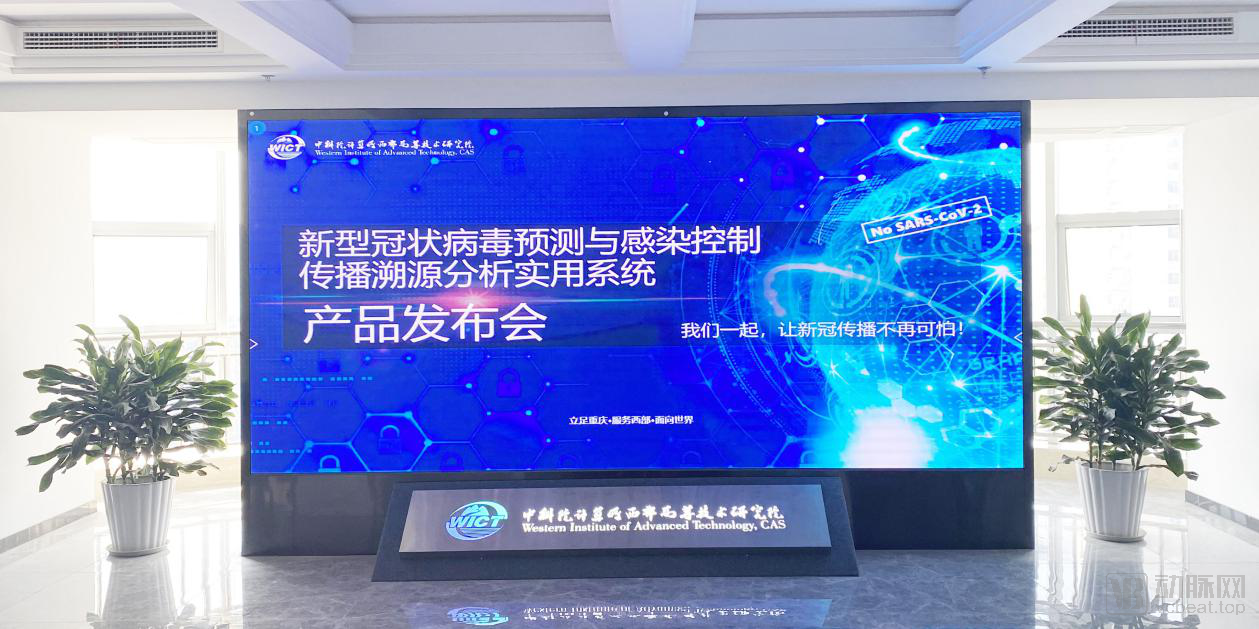
Product Launch Event
It is reported that the project is delivered via a mobile app integrated with a cloud platform. The app, named “Health Travel Manager,” is currently available for search and download on the Xiaomi App Store. Listings on other app stores are still under review; please stay tuned.
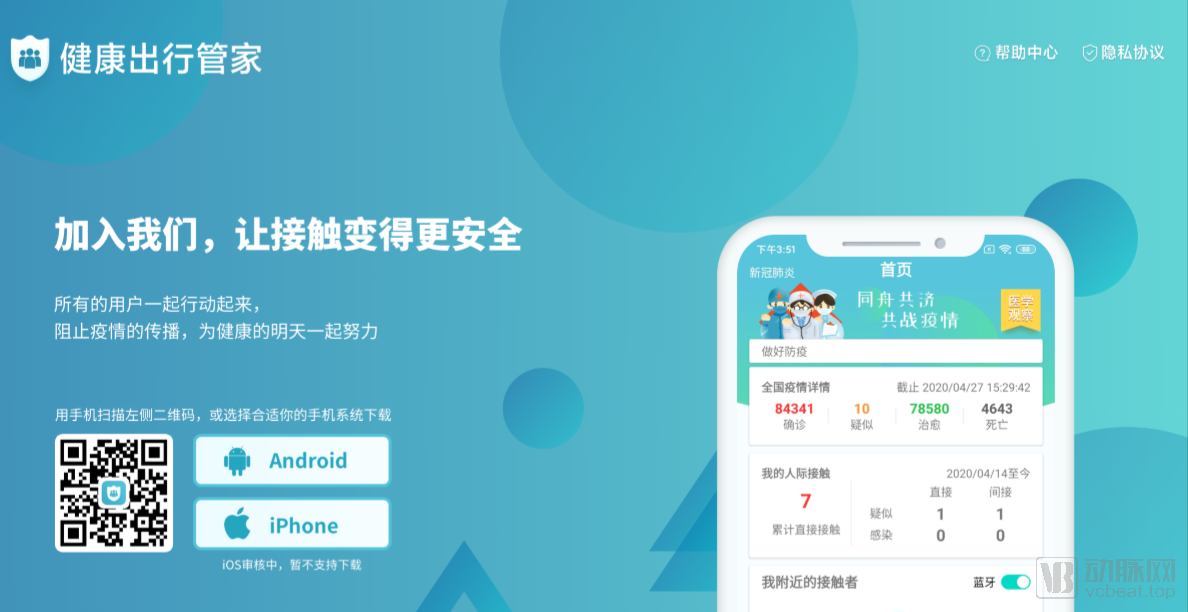
Schematic Diagram of the Healthy Travel Steward APP
The Western Institute of Advanced Technology (WIAT) is jointly established by the Institute of Computing Technology, Chinese Academy of Sciences, and the Administrative Committee of Chongqing Liangjiang New Area. Committed to building a high-end industrial technology R&D platform in western China that serves as a leading demonstration model with an innovative and open approach, WIAT aims to develop into a world-class innovation research institute. Currently, WIAT primarily leverages intelligent supercomputing technology as its foundational platform to empower two major industries—life information engineering science and the internet—thereby facilitating industrial upgrading.
The Xi’an Research Institute (XRI) has developed a COVID-19-related project officially titled “Practical System for Novel Coronavirus Prediction, Infection Control, and Transmission Source Tracing Analysis,” led by Deputy Director Duan Bo. The Life Information Center team at XRI boasts over a decade of interdisciplinary experience in information science and life sciences, with research interests spanning algorithms, chips, and computer architecture. Core members of the team have previously served as key personnel and principal investigators in national high-tech R&D programs, including the 863 Program, the 973 Program, and the National Key R&D Program. The Life Information Center prioritizes empowering the pharmaceutical industry through data intelligence, aiming to expand the sector via deep collaboration in drug development.
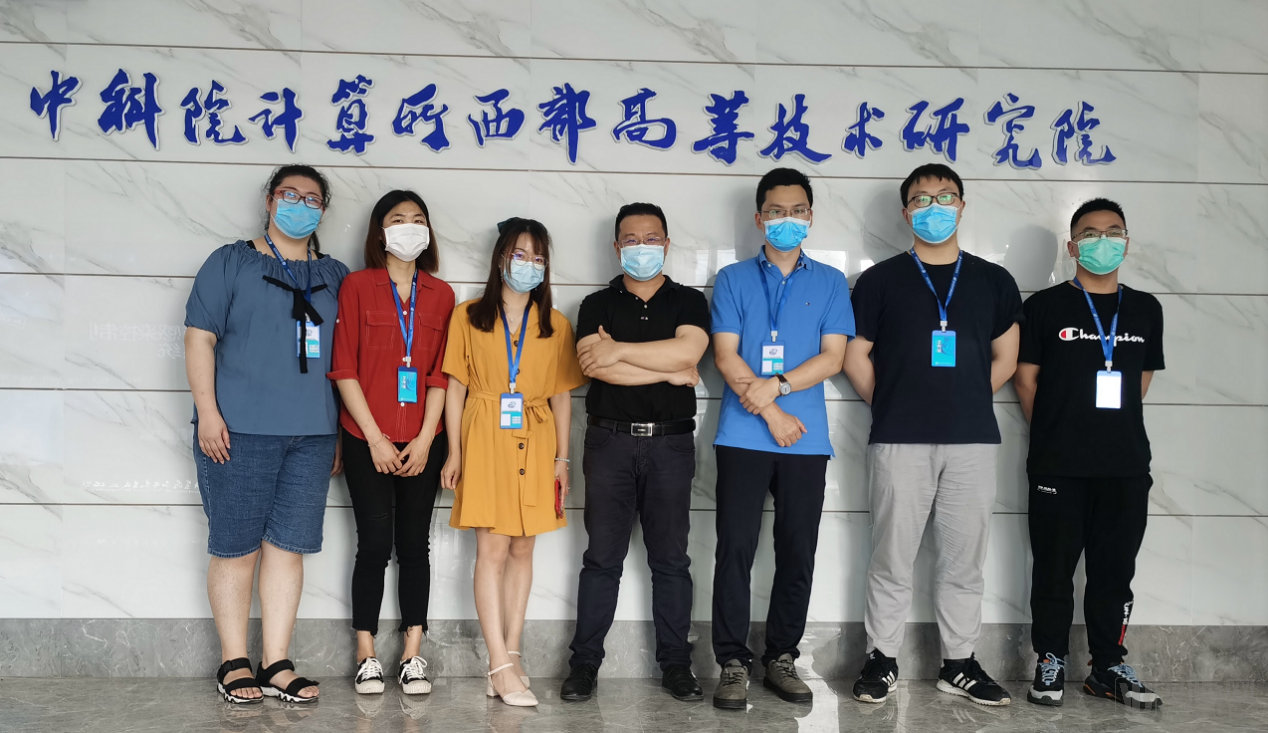
R&D Team of the Western Research Institute (Image provided by the institution)
At the product launch event, Vice President Duan Bo first shared the original intention behind the Western Research Institute’s creation of this project: (*Italicized text is presented as a personal account by Deputy President Duan Bo.*)
During the COVID-19 pandemic, we observed that although numerous tools emerged to promptly inform the public about locations where outbreaks occurred and spread, the lack of effective data on actual physical contacts made it difficult for individuals to determine whether they had been in close proximity to infected persons. Furthermore, contact tracing required substantial effort. In the "Pearl Project," a research initiative launched by Professor Bu Dongbo of our hospital in 2013 to predict the incidence and control measures for respiratory infectious diseases, mobile Bluetooth technology was adopted as a key approach to acquire data on actual physical contacts, yielding favorable results. This approach is well-positioned to contribute to COVID-19 prevention and control efforts. Therefore, to provide more precise and intelligent support for pandemic control, we developed the "Health Travel Assistant" based on the "Pearl Project." This system leverages mobile phones to sense and construct interpersonal contact network models, predict transmission trends, evaluate the effectiveness of control measures, and achieve precise contact tracing.
We adhere to four key principles during project evaluation and implementation: first, convenient deployment; second, precise results; third, rapid response; and fourth, privacy protection.
Our “Health Travel Concierge” already meets these four requirements. In my view, it will play a positive role in facilitating the resumption of work, production, and schooling.
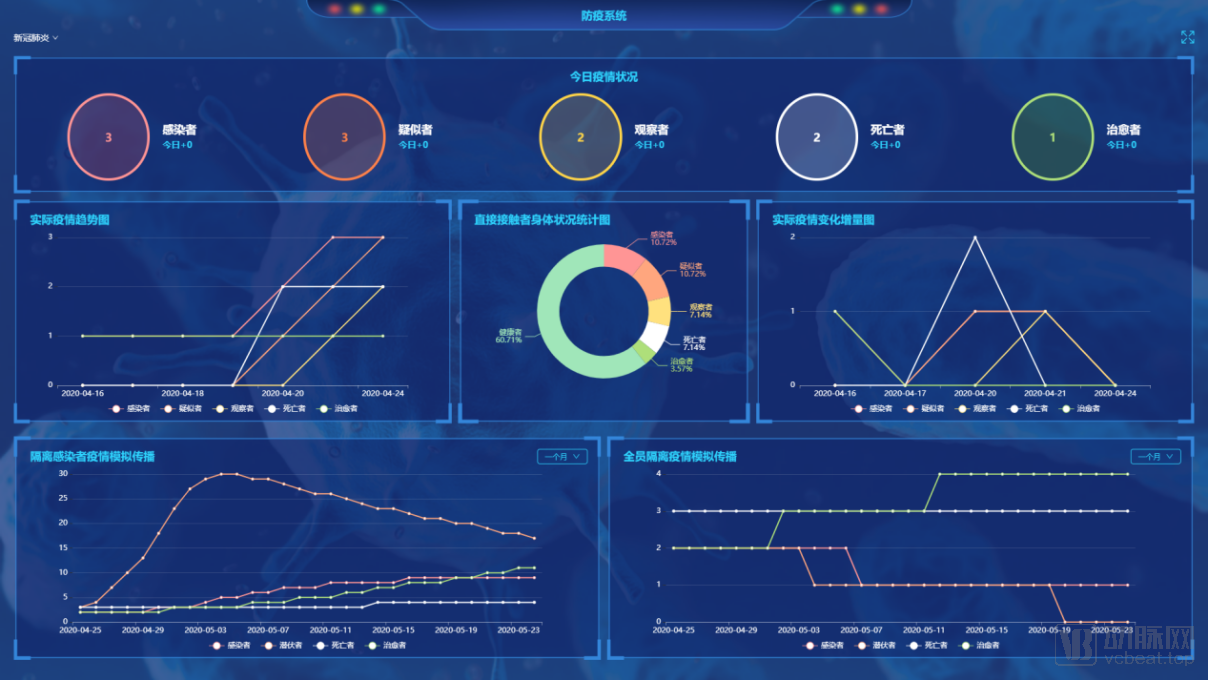
Cloud Platform Data Dashboard
VCBeat conducted an exclusive interview with Wu Shaofei, the project manager, and connected remotely with Professor Bu Dongbo, the proposer of the initiative, to further interpret the “Practical System for Novel Coronavirus Prediction, Infection Control, and Transmission Source Tracing Analysis” for our readers.
Among the many factors influencing the transmission of the novel coronavirus, patterns of close interpersonal contact are a decisive factor. This is because SARS-CoV-2 is primarily transmitted via droplet nuclei generated by coughing, through airborne routes, and via contact transmission, thereby causing infection in individuals in close proximity. In this context, the effective range for droplet nucleus transmission is approximately 6 meters, while the broader range generally attributed to airborne transmission is recognized as being between 10 and 20 meters.
This interpersonal perception distance aligns precisely with the range of Bluetooth technology for detecting close human contact, and the two share similarities in their propagation characteristics. Professor Bu Dongbo explained, “First, in terms of sensing range, the effective operational radius of Bluetooth detection is also 10 to 20 meters. Second, Bluetooth signals are easily blocked or attenuated by obstacles, meaning that even when two Bluetooth devices are physically very close, they may still fail to detect each other due to obstruction. This is analogous to the way obstacles block droplet nuclei carrying bacterial particles.”
“Bluetooth has become a key technology in the application of this project, and with the high penetration rate of smartphones among the general public, the implementation of the project has become more feasible. ‘After users enable Bluetooth, their devices scan and record the MAC addresses of surrounding Bluetooth devices every five minutes, and periodically upload contact data to the server automatically. This helps reflect participants’ activities and contacts in real time, facilitating the acquisition of highly accurate contact data,’ introduced Wu Shaofei.”
After obtaining real-world data on close interpersonal contacts, the Western Research Institute employed simulation strategies to predict the transmission dynamics of the novel coronavirus during an outbreak and to quantitatively assess the effectiveness of various infection control measures. Specifically, the SEIR model was used to illustrate the simulation process. In the SEIR infectious disease model, each individual may be in one of the following four states at any given time: Susceptible (S), Exposed (E), Infectious (I), and Recovered (R).
Regarding the acquisition of critical individual-level data on infected populations, the Western Research Institute has also launched two data upload channels: one involves collaboration with healthcare institutions involved in epidemic prevention and control to update individual data on infected persons in real time; the other supports self-upload of infection reports by infected users. In addition, the platform will desensitize and encrypt relevant data. Platform operators will not have direct access to these user trajectory data, and the general public can only see whether there are infected users in their vicinity on the platform, without being able to identify any specific individual.
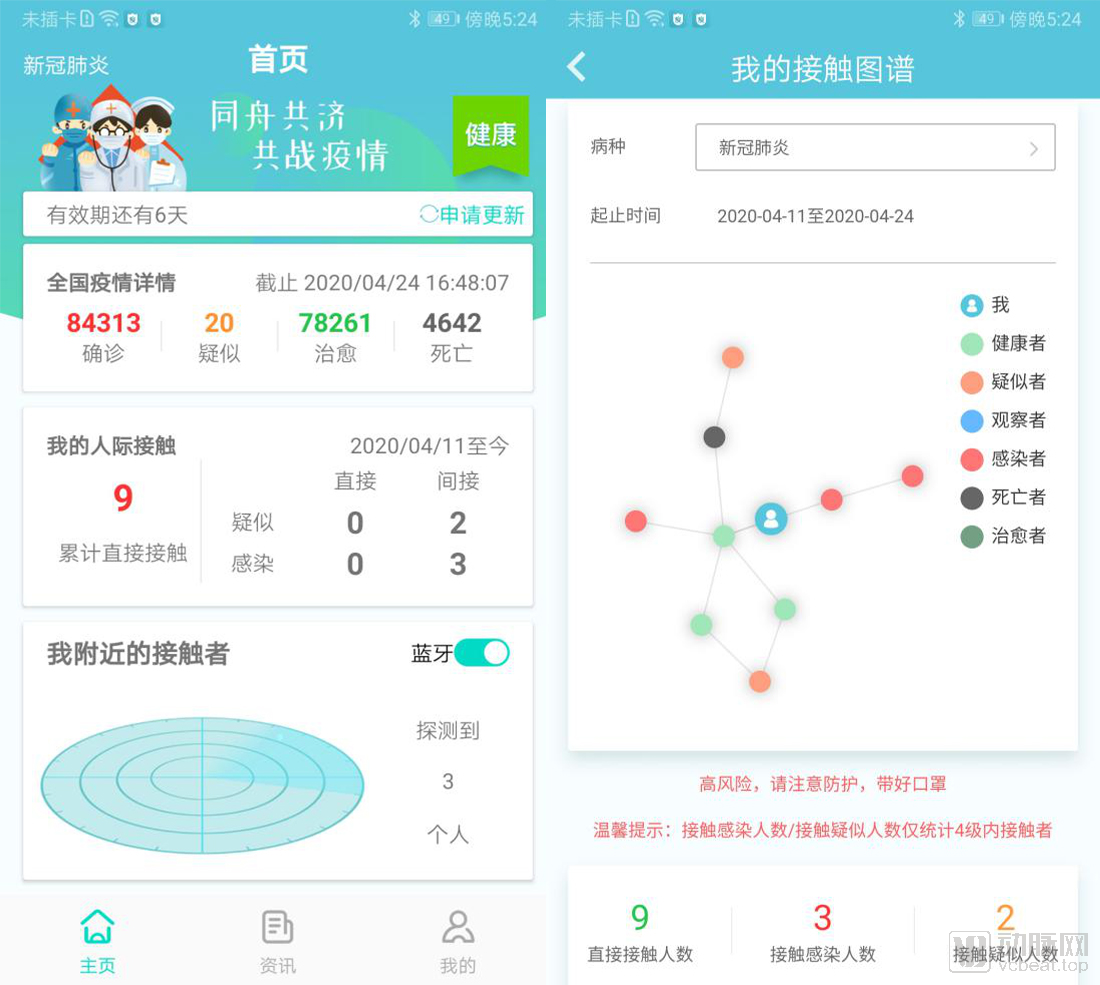
User App Interface Mockup
“The first person to install a telephone derived little value from it, as there was no one to call. However, as more telephones were installed, the value of each additional unit increased exponentially.” This analogy, offered by Deputy Director Duan Bo in an interview, remains memorable: the “Healthy Travel Steward” app requires broader adoption and wider population coverage for its value to be fully realized. Deputy Director Duan added, “In our subsequent product promotion efforts, we are also considering collaborations with schools and enterprises that have resumed work and production. We can start by rolling out the service in these localized areas to cultivate user habits. In the event of an infection, our precise epidemic source tracing and contact analysis capabilities will help avoid the consequence of indiscriminate quarantine of all students or employees.”
“Without foundational data, rational decision-making is impossible,” Bu Dongbo also emphasized. The implementation of the “Healthy Travel Steward” APP relies not only on promotion by the Western Research Institute but also on government support. As a fully public-welfare project, the current establishment of the platform represents only a milestone of initial success; the comprehensive deployment of subsequent applications will be the next top priority for the Western Research Institute.
It is reported that Singapore launched similar software in March this year, while Google and Apple also plan to release development tools with comparable features in May. Currently, there is no dedicated data platform in China for recording interpersonal contact information. The future applications of such a platform will not be limited to the prevention and prediction of COVID-19; it may also be used to study population contact patterns and mobility trends.