

China's First Seven-Axis Orthopedic Surgical Robot-Assisted Total Hip Arthroplasty Successfully Performed at the Second Affiliated Hospital of Xi’an Jiaotong University
On May 6, byShaanxi Provincial Society of Bone and JointProfessor Wang Kunzheng, President of the Chinese Orthopaedic Association, President-elect of the Chinese Society of Orthopaedics under the Chinese Medical Association, and Director of the Joint Surgery Center at the Second Affiliated Hospital of Xi’an Jiaotong University, served as the lead surgeon. He was assisted by Dr. Yang Pei, Chief Physician and Vice President of our society, and Associate Researcher Tian Run. Together, they successfully performed China’s first seven-axis collaborative robot-assisted total hip arthroplasty. The success of this procedure marks a significant advancement in joint surgery achieved by the Department of Bone and Joint Surgery at the Second Affiliated Hospital of Xi’an Jiaotong University, led by Professor Wang Kunzheng, and will bring hope to more patients suffering from joint diseases.
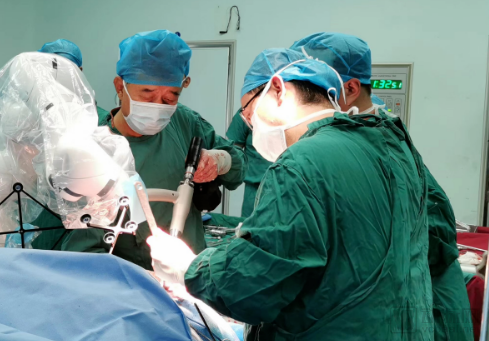
Total hip arthroplasty is one of the most successful surgical procedures of the 20th century, with over 400,000 hip replacement surgeries performed in China last year. The robotic system used in this procedure not only closely aligns with clinicians’ needs in practical applications—effectively addressing issues inherent in traditional hip replacement surgery, such as insufficient precision, uncertain clinical outcomes, and excessive reliance on surgeon experience—but also achieves independent innovation in key technologies. Currently, six-axis robots are predominantly used worldwide to assist surgeons. This case marks the first total hip arthroplasty in China performed using a seven-axis robot with fully independent intellectual property rights. Compared with six-axis surgical robots, the seven-axis robot offers absolute advantages in force-controlled interaction. It achieves comprehensive coverage of the entire procedural workflow: “preoperative—accurate reconstruction and intelligent planning; intraoperative—precise control and compliant haptic feedback; postoperative—comprehensive evaluation and real-time feedback.” This significantly improves the accuracy of prosthetic placement and substantially reduces the learning curve for surgeons performing hip surgeries. The hip prosthesis implanted in this surgery was the domestically produced, top-tier BE2 ceramic-on-ceramic implant, featuring a dual-offset and dual neck-shaft angle design. The BE2 prosthesis is designed based on anatomical data from the Chinese population and possesses independent intellectual property rights, truly promoting domestic products and import substitution.
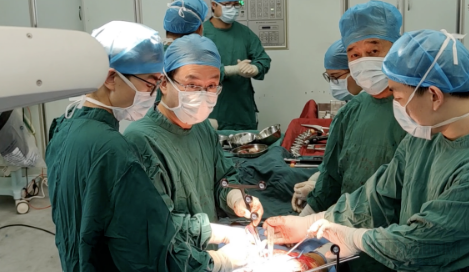
Following the surgery, Professor Wang Kunzheng stated, “The ARTHROBOT is the first seven-axis robotic system for hip replacement surgery independently developed by a Chinese team. It not only enables precise positioning, reaming, and prosthesis implantation on the acetabular side but also achieves accurate positioning and cutting on the femoral side, ensuring that deviations from the preoperative plan remain within 1 mm and angular errors in implantation are less than 1°. Furthermore, this procedure was performed using an orthopedic surgical robot independently developed in China and ceramic hip prostheses based on anatomical data from the Chinese population, thereby realizing the comprehensive localization of hip replacement surgery in the truest sense.”
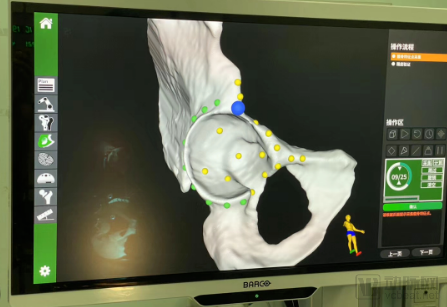
Professor Wang further stated that this seven-axis surgical robot for total hip arthroplasty has significantly addressed the clinical challenges of suboptimal precision and a steep learning curve associated with current hip replacement procedures. The development of robotic systems in joint surgery has, to a certain extent, driven progress across the entire field of joint surgery. We hope that more physicians, enterprises, and researchers will engage in the study of new orthopedic technologies to contribute to the advancement of orthopedics.