

Innovative HPV and AI-Based Detection Companies Compete for China's Cervical Cancer Early Screening Market Valued at Over RMB 30 Billion
Cervical cancer is a common malignant tumor in gynecology. The peak incidence age for carcinoma in situ is 30 to 35 years, while that for invasive carcinoma is 45 to 55 years; moreover, the incidence has shown a trend toward affecting younger individuals in recent years.
According to 2019 data from the World Health Organization (WHO), there were nearly 570,000 new cases of cervical cancer globally and approximately 310,000 deaths, making it the second most common malignant tumor among women aged 15 to 44, after breast cancer. The current status of cervical cancer in China also warrants significant attention. In January 2019, the National Cancer Center released the latest national cancer statistics report. The report indicated that in 2015, the incidence rate of cervical cancer was 6.25 per 100,000, ranking it sixth among malignant tumors in women.
Fortunately, the etiology of cervical cancer is well-defined, making it a malignancy that can be detected and prevented at an early stage. The World Health Organization (WHO) and the International Agency for Research on Cancer (IARC) have confirmed that persistent infection with high-risk human papillomavirus (HPV) is closely associated with cervical cancer. Furthermore, the progression from common cervical inflammation to invasive carcinoma typically takes 10 to 20 years, providing a favorable window for early detection and intervention.
It is understood that the survival rate for patients with Stage I cervical cancer (confined to the uterus) is as high as 80%-90%, while the survival rate for those with Stage II disease (tumor extending beyond the uterus but not involving the lower third of the vagina or reaching the pelvic wall) ranges from 60% to 70%. Once the disease progresses to invasive cancer, the survival rate drops to merely 10%. Data released by the National Cancer Center in 2018 indicated that 90% of cervical cancer patients were diagnosed at the invasive stage, resulting in significantly reduced survival rates and poorer prognosis. Therefore, promoting early screening for cervical cancer is a crucial approach to effectively preventing and reversing the progression of the disease.
In 2019, the World Health Organization released the Draft Global Strategy to Accelerate the Elimination of Cervical Cancer (2020–2030), calling for 70% of women aged 35–45 to undergo precision screening and 90% of patients with cervical lesions to receive treatment and care by 2030. Achieving this goal hinges on advancements in cervical cancer screening technologies.
The emergence of numerous new technologies, such as AI-based cytology screening and HPV testing, has further enhanced the accuracy and convenience of early cervical cancer screening, providing strong support for the widespread adoption of these methods and contributing to reduced incidence and mortality rates. This article primarily introduces AI-based cytology and HPV testing technologies, and provides an overview of relevant companies and products.
Limitations of Traditional Early Screening Methods for Cervical Cancer
Conventional methods for early cervical cancer screening include visual inspection, the Papanicolaou test (Pap Test), and thin-prep liquid-based cytology (TCT).
Visual inspection includes two methods: visual inspection with acetic acid (VIA) and visual inspection with Lugol’s iodine (VILI). VIA involves applying a 3%–5% acetic acid solution to the cervical surface. After one minute, the cervix is examined visually under a 100-watt incandescent light. Normal findings include pink squamous epithelium and red columnar epithelium. An acetowhite reaction (whitening after acetic acid application) indicates cervical pathology and warrants further evaluation.
VILI refers to the application of Lugol's iodine solution to the cervical surface for staining, followed by visual inspection of the cervical coloration. Normal cervical epithelium appears brownish-black, whereas a mustard-yellow or orange-yellow color indicates cervical pathology, warranting further examination.
VIA and VILI are simple to perform and low-cost, but they have low sensitivity and specificity, making them suitable only for initial screening.
The Pap smear involves collecting exfoliated cervical cells using a vaginal speculum and examining them under a microscope for abnormalities. Due to its low cost and suitability for population-wide screening, the Pap smear has been widely used for cervical cancer screening since its introduction in 1941, making significant contributions to reducing the incidence and mortality of cervical cancer.
The Papanicolaou (Pap) smear test demonstrates high specificity for high-grade cervical lesions and cervical cancer, but its low sensitivity and high false-negative rate limit its further clinical application and development.
Both TCT and the Pap smear are cytological examinations performed on exfoliated cervical cells. TCT involves sending the smear to a testing center, where it undergoes centrifugation, slide preparation, staining, and other procedures to produce high-quality, clear images. This method achieves a detection rate of up to 95% for abnormal cervical cells, effectively improving screening accuracy and reducing the rate of missed diagnoses. TCT addresses many of the limitations of the Pap smear and has become the mainstream method for cervical cancer screening.
However, although TCT has a high screening rate and relatively low cost, it involves multiple manual procedures that require operation by professional pathologists. Furthermore, TCT testing is highly dependent on the expertise of pathologists; insufficient experience can easily lead to misdiagnosis and missed diagnoses.
Regrettably, China currently has fewer than 20,000 licensed pathologists. Based on the National Health Commission’s staffing requirement of one to two pathologists per 100 hospital beds, there is a shortfall of more than 90,000 pathologists. Furthermore, the cost of training a qualified pathologist is exceedingly high. After completing an undergraduate degree in clinical medicine, individuals must undergo standardized residency training to obtain qualification as a practicing pathologist. Subsequently, they require approximately ten years of clinical pathological diagnostic practice in the pathology departments of large hospitals before becoming independent, competent pathologists.
Due to the severe mismatch between the number of individuals requiring cervical cancer screening and the available number of pathologists, the capacity for ThinPrep Cytologic Test (TCT) examinations is far from adequate, compelling enterprises to develop new technologies and methodologies. The emergence of AI- and cloud-based cytology screening combined with HPV testing has significantly reduced reliance on pathologists, thereby promoting the widespread adoption of early cervical cancer screening and its extension to primary healthcare settings.
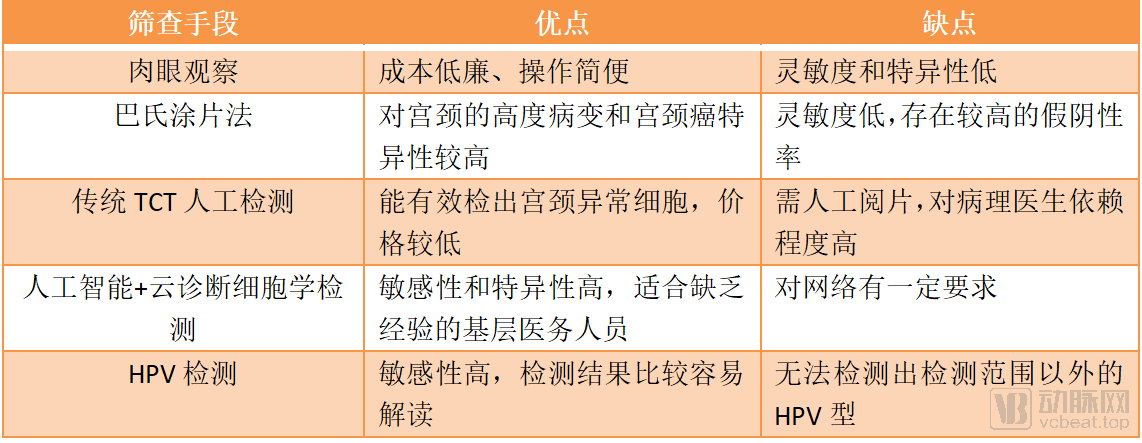
Comparison of the Advantages and Disadvantages of Cervical Cancer Screening Methods
Compared with other types of cancer, early screening for cervical cancer has become relatively widespread in China, with major health checkup centers offering cervical cancer screening packages. Meinian Onehealth’s “Two-Cancer” package for women employs both ThinPrep Cytologic Test (TCT) and HPV-DNA testing. iKang Guobin’s cervical cancer screening program utilizes TCT and HPV testing technologies. Ciming Health Checkup adopts TCT testing technology.
The cervical cancer screening programs offered by physical examination centers alone demonstrate that such screening is relatively widespread in China, with a high level of acceptance and adoption of HPV testing technologies.
In terms of screening coverage, cervical cancer also ranks among the cancers with higher early screening coverage rates. In 2019, at the 17th National Cervical Cancer Collaborative Group Working Conference, Song Li, Deputy Director of the Department of Maternal and Child Health under the National Health Commission, stated that from 2009 to 2017, a total of 73.985 million rural women in China were screened for cervical cancer. The number of counties, county-level cities, and districts implementing free screening programs increased from 221 in 2009 to over 2,200 in 2017. Coupled with provincial government-funded initiatives launched since 2017 to achieve full coverage of “two-cancer” (cervical and breast cancer) screening for impoverished women, these efforts have covered 54.1% of all counties, county-level cities, and districts nationwide, with the cumulative number of women screened exceeding 100 million. Data indicate that within the “two-cancer” screening program for rural women, the detection, follow-up, and treatment rates for cervical cancer and precancerous lesions have shown an overall upward trend.
Vigorously Promote Free Cervical Cancer Screening: Primary Care Is the Policy Focus
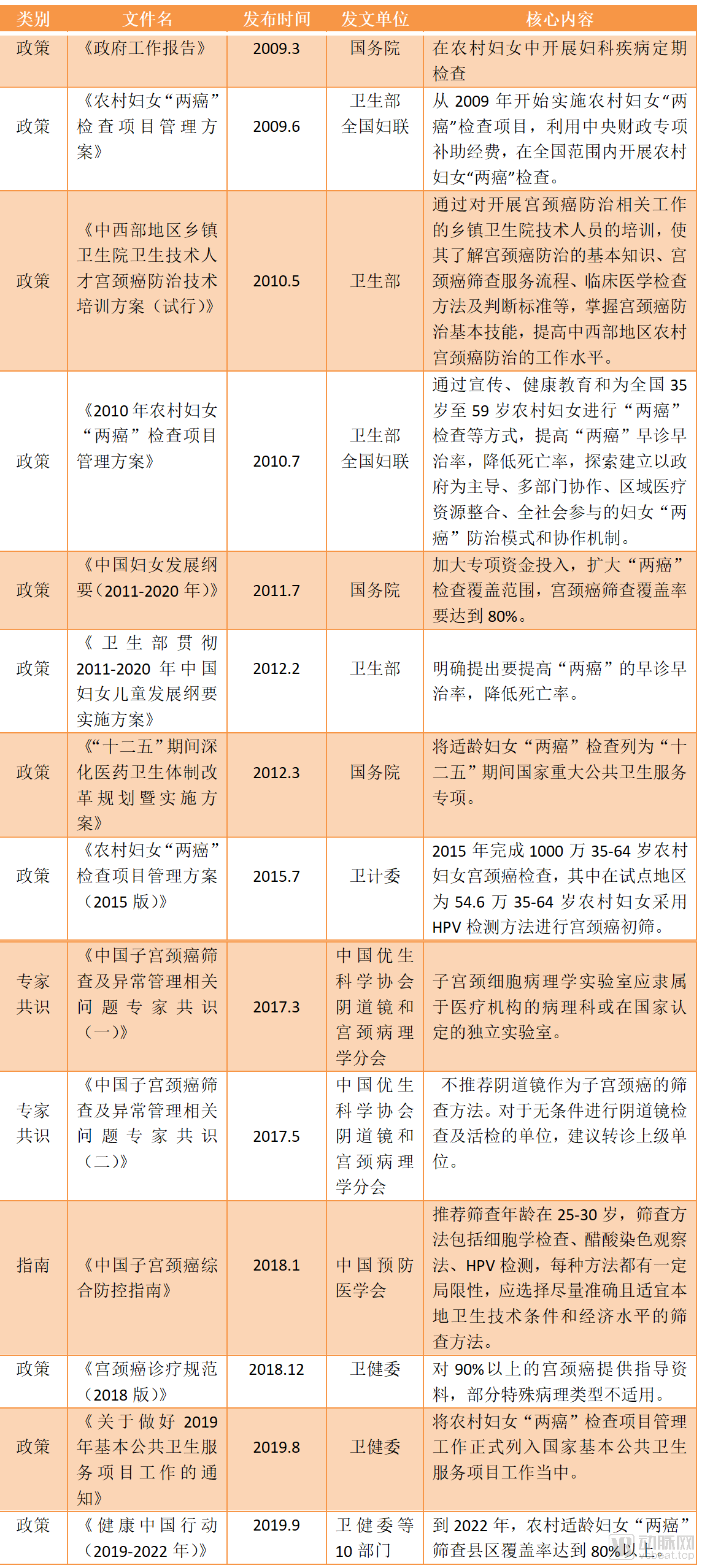
Screening for the “two cancers” was first launched in 2009, when the Ministry of Health and the All-China Women’s Federation began using special central government subsidy funds to implement a rural women’s “two cancers” screening program nationwide (covering 221 counties and districts). In July 2011, the Outline for the Development of Chinese Women (2011–2020) called for increased investment of special funds and an expansion of the coverage of “two cancers” screening, with the cervical cancer screening coverage rate reaching 80%. The Healthy China Action (2019–2022) stated that by 2022, the county-level coverage rate of “two cancers” screening for eligible rural women should reach 80%.
Strong policy support has created favorable conditions for the popularization of cervical cancer screening and the development of the industry. In 2019, Henan Province completed free cervical cancer screening for 1.4485 million women, while Hubei Province conducted AI-based cervical cancer screening for 1.2 million women between 2017 and 2019. As the coverage of cervical cancer screening continues to expand, market demand for early detection products is rising accordingly, driving rapid market growth.
Due to constraints in living conditions, economic status, healthcare services, and public awareness, rural areas have long remained a “blind spot” in the popularization and promotion of cervical cancer screening. The government has consistently provided free cervical cancer screening for age-eligible women in rural areas, aiming to reduce the incidence and mortality rates of cervical cancer in China by increasing screening coverage among rural women.
AI-Based Cytology Testing and HPV Testing Improve Screening Efficiency and Accuracy
Guangzheng Hengsheng estimates that the market size for early cervical cancer screening in China is RMB 34.5 billion. Faced with a market worth tens of billions, various companies have begun to compete for shares in the early cervical cancer screening market.
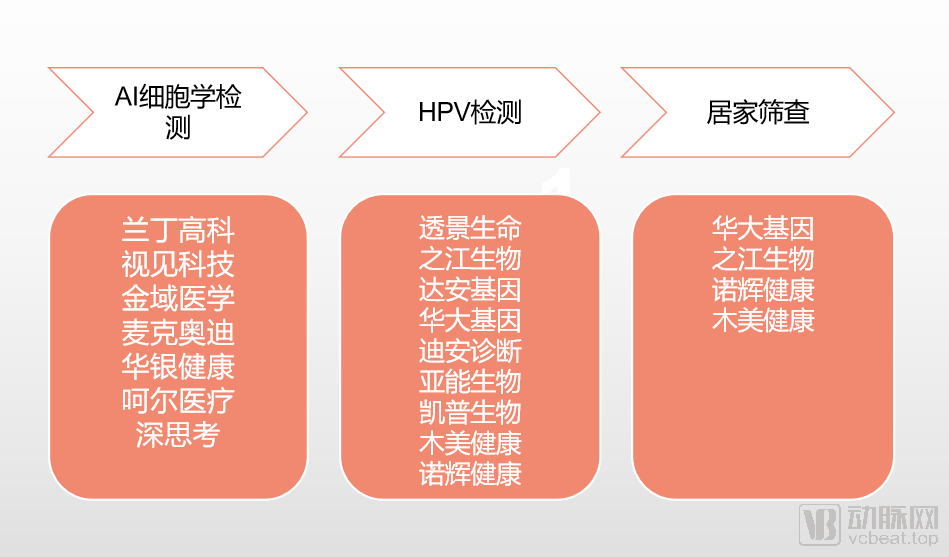
VCBeat has compiled a list of innovative companies positioning themselves in the cervical cancer early screening market, categorizing them into three groups: developers of AI-based cytology screening solutions, developers of HPV detection technologies, and developers of at-home early screening products. In terms of company numbers, there are more enterprises focused on AI-based cytology screening and HPV detection, while fewer are developing at-home cervical cancer screening products. At-home screening is an important means to conserve healthcare resources and improve screening accessibility; therefore, the number of companies in this category is expected to gradually increase in the future.
HPV testing can directly detect high-risk HPV infections with high sensitivity.
Cytological screening methods, such as the Pap smear and ThinPrep Cytologic Test (TCT), primarily detect abnormal cells in the cervix, whereas HPV testing identifies the presence of human papillomavirus (HPV) infection. Studies have shown that over 90% of cervical cancer cases are associated with high-risk HPV infection.
Currently, more than 100 HPV types have been identified and can be classified into low-risk and high-risk types. Low-risk types can cause lesions such as genital warts, while high-risk types can lead to cervical cancer and high-grade cervical intraepithelial neoplasia (CIN2/3). Common high-risk types include 16, 18, 31, 33, 35, 39, 45, 51, 52, 56, 58, 59, and 68. HPV testing screens for cervical cancer by detecting high-risk HPV types.
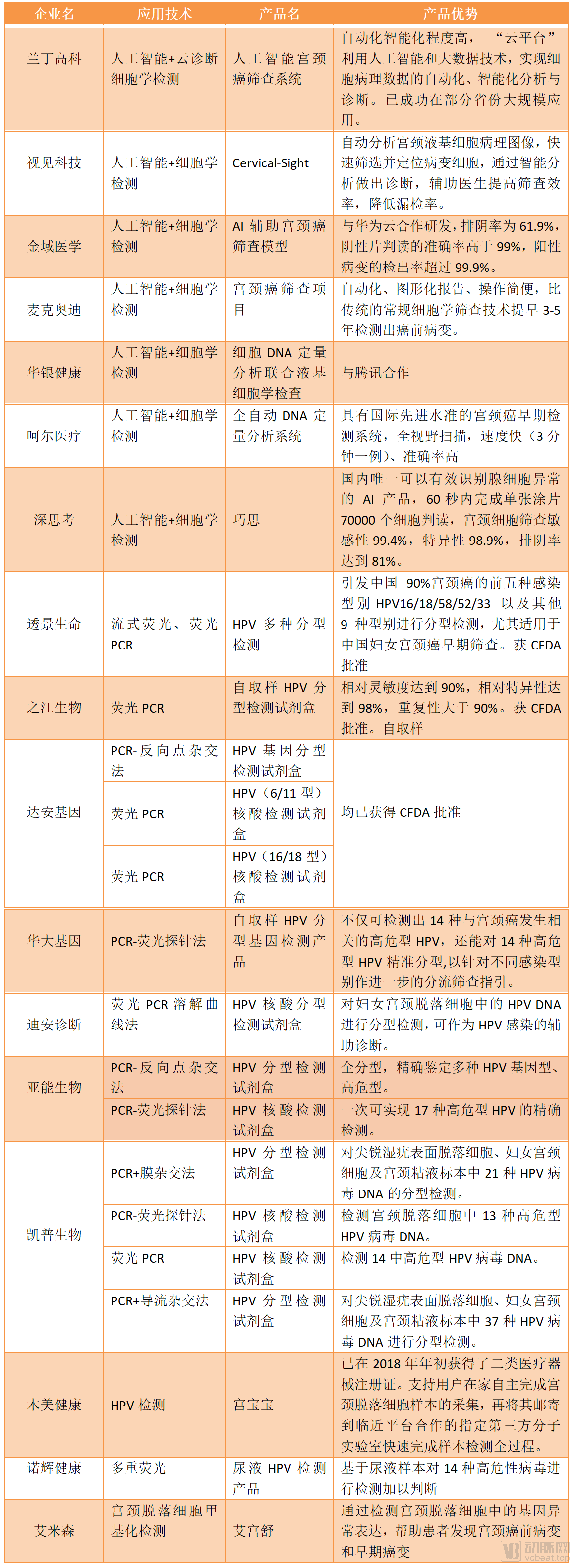
The technical barriers to developing HPV detection kits are not high, resulting in a large number of companies in this sector. Technologies employed by these companies include fluorescent PCR, hybrid capture, flow-through hybridization, and flow cytometry-based fluorescent hybridization.
As shown in the table, the majority of companies adopt the fluorescent PCR method. This method utilizes genotype-specific primers and probes to amplify viral DNA sequences for specific HPV genotypes. It has a relatively low technical threshold, can detect 14 high-risk HPV types, and offers high sensitivity and specificity.
HPV testing can directly detect high-risk HPV infections in women with a high detection rate. Furthermore, HPV test results are relatively easy to interpret, which can lower the requirements for pathologists to some extent and alleviate the shortage of pathologists.
However, the current limitation of HPV testing lies in its ability to detect only specific types of HPV, failing to identify those outside the detection scope, which can easily lead to missed diagnoses. Therefore, companies need to employ more innovative technologies to enhance the detection range, accuracy, and stability of HPV genotyping assay kits.
AI-Powered Cytology Detection: Enhancing Pathologists' Work Efficiency
Traditional TCT diagnosis offers the advantages of a high screening rate and low cost, but it involves multiple manual operational steps and requires execution by specialized pathologists. This heavy reliance on the professional expertise of pathologists means that insufficient experience can easily lead to misdiagnosis and missed diagnoses. The shortage of pathologists in China has hindered the widespread adoption of TCT testing.
Artificial intelligence is the breakthrough solution to the shortage of pathologists. Landin High-Tech has completed the research and development of AI-powered cloud-based cytological diagnostic technology and successfully achieved large-scale application. Characterized by intelligence, automation, and standardization, this technology integrates computer vision, artificial intelligence, big data, microscopic imaging, robotic control, the Internet of Things (IoT), and 5G. By conducting in-depth mining of millions of cytopathology cases accumulated over many years, Landin High-Tech has developed a comprehensive suite of AI-driven cytopathological diagnostic technologies tailored for large-scale cancer screening in China.
Currently, technical solutions from various providers all follow a similar workflow: samples are first collected and prepared into slides; the cells in the samples are then scanned by equipment and uploaded to a diagnostic system; an automated digital pathology system performs intelligent analysis and generates a preliminary report; finally, the report is reviewed by a pathologist.
The traditional TCT testing workflow consists of “slide staining and preparation – pathologist diagnosis – diagnostic report,” whereas the AI-based cytology detection workflow follows “slide staining and preparation – AI interpretation – pathologist review – diagnostic report.” The addition of the AI interpretation step enhances diagnostic accuracy and operational efficiency, reduces reliance on pathologists, alleviates the shortage of pathologists in primary care settings, and promotes the widespread adoption of early cervical cancer screening at the grassroots level.
Innovative Application Scenarios: Development of At-Home Cervical Cancer Screening Products
Currently, most cervical cancer early screening products on the market require sampling to be performed at hospitals or medical examination centers under the guidance of healthcare professionals. Cervical cancer screening in hospital settings involves using a professional speculum to insert sampling devices into the vaginal canal and cervix, resulting in poor patient experience and low screening compliance.
Therefore, in addition to technological innovation, some companies are also innovating at the application level, striving to develop home-based cervical cancer screening products that simplify sample collection, protect women’s privacy, and improve screening compliance.
In this sector, New Horizon Health has developed a urine-based HPV detection product. By detecting abnormal gene expression in exfoliated cervical cells, the product helps patients identify cervical precancerous lesions and early-stage cancer. Sampling can be performed at home, with the sample then mailed to a testing center.
In addition, BGI Genomics and ZJ Bio-Tech have also launched self-sampling HPV genotyping test products. By leveraging self-sampling technology, BGI Genomics enables users to conduct testing at home without leaving their residences. Sample collection takes approximately five minutes, and results can be accessed via mobile phone within five days after the samples are mailed back. This significantly enhances the convenience of screening, extends coverage to a broader population, and makes it feasible to carry out screening in areas with scarce medical resources.
Diversified and Individualized Screening Strategies Are Better Suited to China’s Current National Context
Overall, single cervical cancer screening methods such as TCT testing and HPV testing each have their own advantages and disadvantages. Given the unbalanced regional and urban-rural development in China, it is a more appropriate solution under the current national context to formulate diversified and individualized screening strategies tailored to the actual circumstances of different populations.
For instance, for individuals with greater financial capacity, a combined screening strategy involving TCT testing and higher-cost HPV testing may be adopted; in primary care settings, AI-based cytological analysis can be utilized; in remote, impoverished areas, or regions with a severe shortage of pathologists, VIA and VILI can be employed for initial screening, with suspected cases referred to higher-level medical institutions for confirmatory diagnosis; for those who are financially well-off and prioritize privacy and ease of use, at-home early screening products represent a preferable option.
Both emerging tech companies and established enterprises are positioning themselves in the field of early cervical cancer screening.
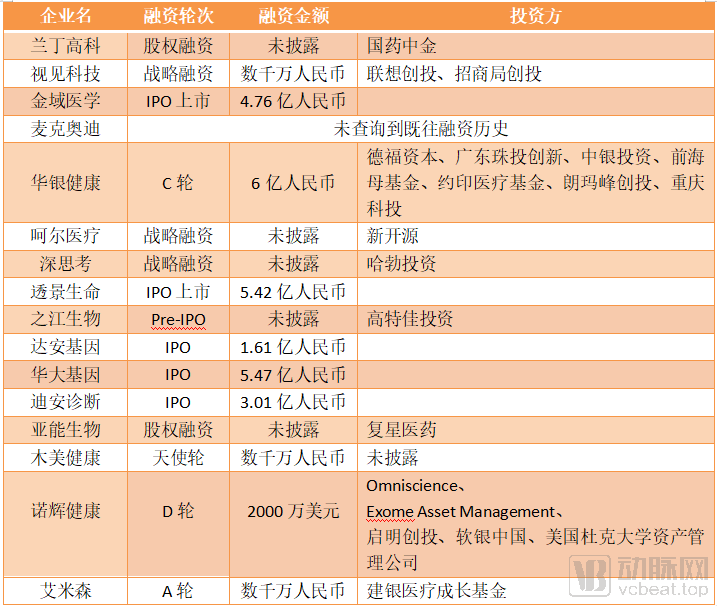
VCBeat has compiled information on the latest round of financing for companies developing early screening products for cervical cancer.
In terms of financing rounds, the cervical cancer early screening market attracts both emerging technology companies and established leaders in the in vitro diagnostics (IVD) industry. Most emerging technology companies remain private, indicating significant room for future growth. Established IVD enterprises, such as BGI Genomics, Daan Gene, and Dian Diagnostics, are already publicly listed and have entered a mature stage of development.
In terms of financing amounts, leading enterprises such as BGI Genomics, Zhejiang Zhijiang Biotechnology, and Tellgen Life Sciences have each secured over RMB 100 million in funding, repeatedly garnering favor from the capital market. Many companies raised tens of millions of yuan in both their Series A and Series B rounds. A total of six companies completed financing exceeding RMB 100 million: BGI Genomics, New Horizon Health, Dian Diagnostics, Daan Gene, Tellgen Life Sciences, Huayin Health, and KingMed Diagnostics.
Overseas Companies Lead the Development of Early Screening Technologies for Cervical Cancer
Cervical Cancer Early Screening Markets in Developed Countries Have Matured, with High Coverage Rates, Thanks to Innovative Overseas Companies Developing New Technologies and Products to Reduce Incidence and Mortality. VCBeat Has Compiled a List of Leading Overseas Cervical Cancer Early Screening Companies.
Hologic: Simultaneously offers ThinPrep Cytology Test (TCT) and the latest generation E6/E7 mRNA HPV test
Hologic, founded in 1985 and headquartered in Boston, Massachusetts, USA, is an innovative medical technology company that develops, manufactures, and markets diagnostic products, medical imaging systems, and surgical products for women's health. In 2019, Hologic reported revenues of $3.67 billion, with strong profit growth.
Hologic is currently the only company worldwide capable of simultaneously providing ThinPrep Cytology Test (TCT) and the latest generation E6/E7 mRNA HPV testing. Its Aptima® HPV Assay, which has received FDA clearance, effectively reduces the excessive false-positive rates associated with traditional methodologies.
Roche: Fully Automated HPV Sample Preparation and Testing
Headquartered in Basel, Switzerland, Roche is a global leader in the pharmaceutical and in vitro diagnostics sectors. Committed to its two core businesses—pharmaceuticals and diagnostics—the company provides innovative products and services spanning early detection, prevention, diagnosis, and treatment, thereby improving human health standards and quality of life.
Roche launched the Cobas® 4800 System for automated HPV sample preparation and testing. This FDA-approved technology is used for primary screening of cervical cancer. It employs fully automated sample preparation combined with real-time polymerase chain reaction (PCR) amplification and detection to provide results for HPV types 16 and 18, as well as a pooled result for 12 other high-risk HPV subtypes. In addition to detecting HPV, the system also detects beta-globin as an internal quality control measure to determine whether the sample contains factors that inhibit amplification.